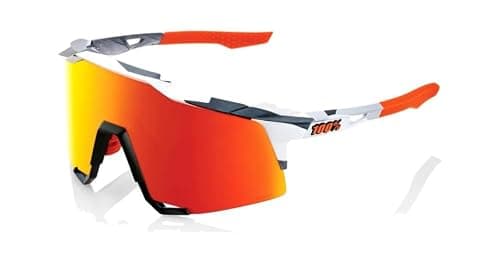
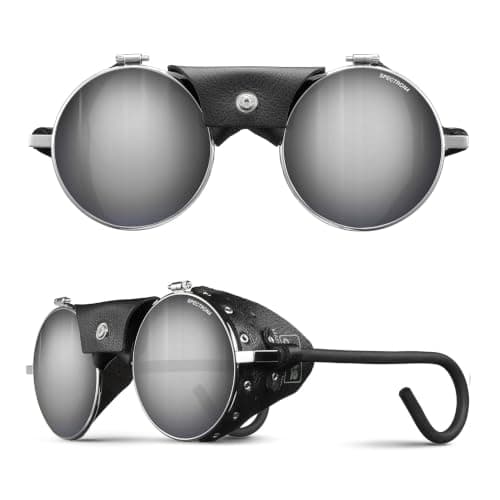
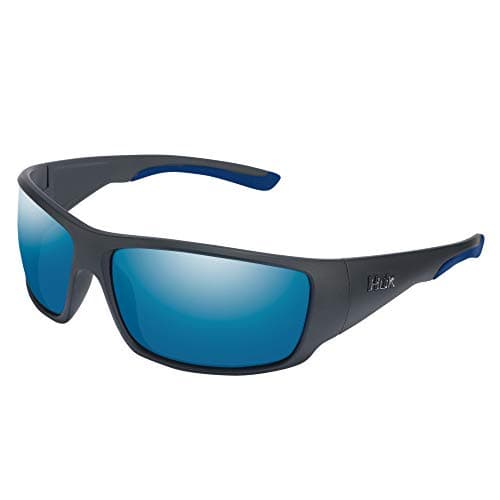
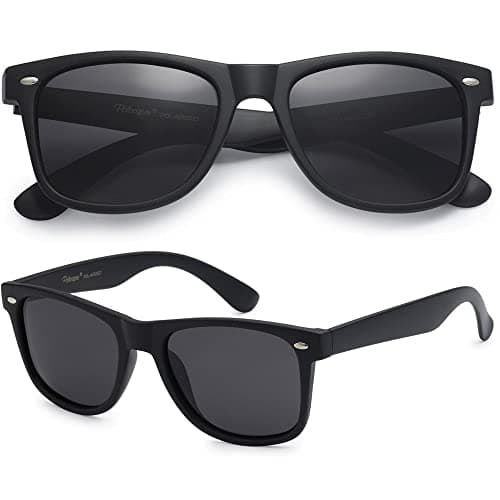
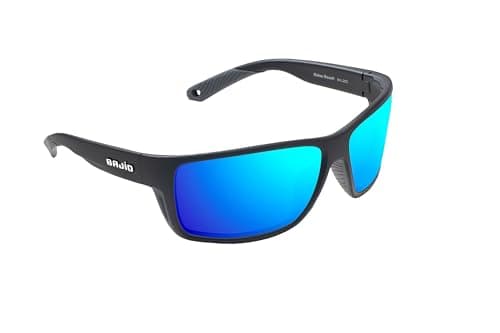
Buy a mirror coating when your environment is genuinely extreme — open water, snow, altitude, a bright flat. It rejects additional light before it reaches the lens, which is a real benefit that a darker tint alone does not replicate. Buy it for looks if you want, but know that you are paying for a layer that scratches more visibly than a plain lens.
The most useful thing to understand here is that a mirror is not a tint. Underneath every mirrored lens there is a base tint doing the color work — gray, copper, amber — and the mirror is a thin reflective coating applied on the outer surface on top of it. So when a listing says "blue mirror," that is describing the color of the reflection you see from outside, not what the world looks like from inside. Read the base tint to know how the lens behaves; read the mirror to know how it looks.
What the coating actually does
The mirror reflects a portion of incoming light away instead of transmitting or absorbing it. That matters most in environments where there is simply too much light for a tint alone to handle comfortably: fresh snow, open water at midday, a glacier, a bright sand flat. Rejecting light at the surface reduces the total load on the lens and on your eyes.
Secondary benefits are real but smaller. A mirror slightly reduces the internal reflection you can get off the back of a lens in certain lighting. And it hides your eyes, which matters to poker players and to anglers who would rather not telegraph where they are looking.
What it does not do
It does not add UV protection.UV blocking comes from the lens material and the UV filter in it, not the mirror — the American Optometric Association recommends 100% UVA and UVB regardless of any coating. A mirrored lens with no UV filter is just as bad for your eyes as any other dark lens without one.
It does not add polarization.These are independent. A lens can be mirrored and polarized, mirrored and not polarized, or polarized and not mirrored. If you want reflected glare canceled, look for polarization specifically — the mechanism is explained in polarized vs non-polarized.
It does not add contrast.Contrast comes from the base tint and from wavelength filtering like Costa's 580 or Oakley's Prizm. A mirror on top of a poor base tint is a poor lens that looks impressive.
The durability trade, stated plainly
This is the reason we do not recommend mirrors universally. The coating sits on the outermost surface of the lens, which is the surface that meets your shirt, your pocket, the sand and the dashboard. Scratches that would be nearly invisible on a plain lens show up as bright lines against a mirror, and worn patches in the coating are permanent and obvious.
The practical consequences: use the case, always; rinse before you wipe, because dragging grit across a mirror is how it dies; and think twice about a mirror on a knockabout pair that lives in a glovebox. Our cleaning guide matters more on a mirrored lens than on any other kind.
Who should buy one
Anglers on bright open water, skiers and mountain users, anyone at altitude, and people who spend long days in genuinely relentless glare. In those environments the extra light rejection is a comfort difference you notice within minutes.
Who should skip it: anyone buying a first everyday pair, anyone hard on their sunglasses, and anyone who mostly drives — where a good polarized gray does more for you than any mirror. The driving roundup explains why gray is the right default behind the wheel.
How we ranked these
Genuine light-rejection benefit in the environment the lens is built for first, base-lens quality second, coating durability third, price fourth. Scores follow the published rubric on how we rate; they are judgments from documented research and published specification rather than measurements we took.
Buying a mirrored lens
1. Read the base tint, not the mirror color
The mirror describes what people see looking at you. The base tint underneath describes what you see looking out.
2. Buy it for the environment, not the look
Snow, open water, altitude and bright flats are where the extra light rejection genuinely pays. Everywhere else it is a styling choice.
3. Confirm UV and polarization separately
A mirror adds neither. Check for UV400, and check for polarization if you want glare canceled.
4. Commit to the case
The coating is on the outermost surface and scratches show badly. If you will not use a case, buy a plain lens.