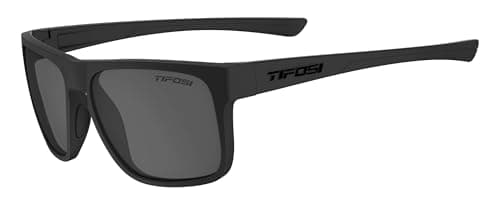
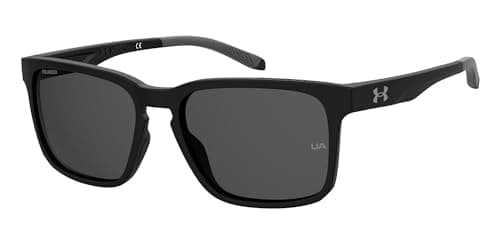
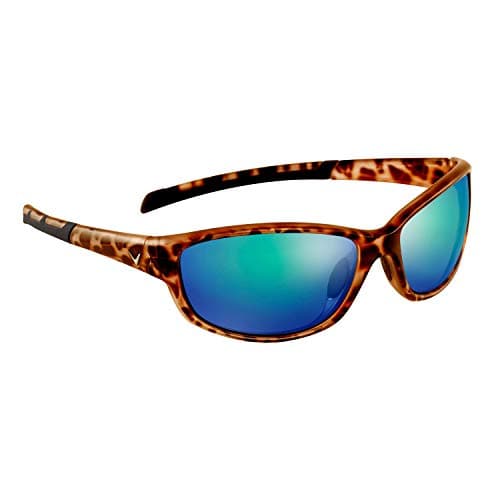
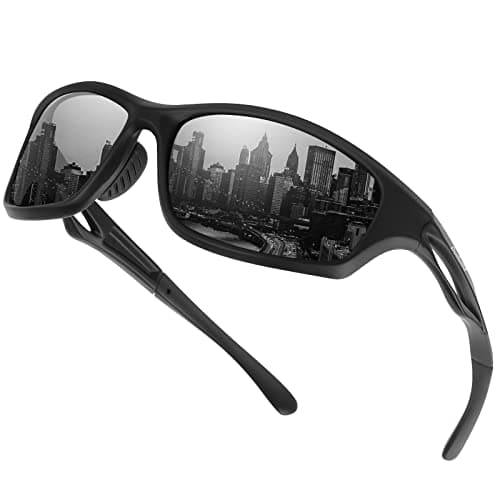
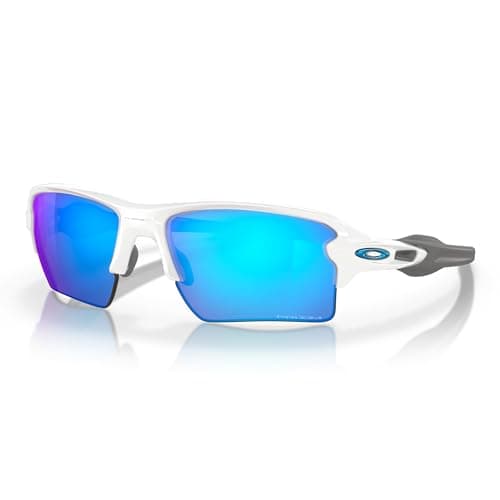
Buy the Oakley Flak 2.0 XL with a Prizm lens. The half-frame stays out of your sightline through the swing, and Prizm lifts the green-versus-fairway contrast that helps you read the course — without the polarized downside that trips up a lot of golfers. It is the default for good reasons.
Golf has a genuine, much-argued lens debate at its center, and it is worth understanding before you spend: should a golf lens be polarized?Polarized lenses cut glare beautifully, which is pleasant on a bright course. But many golfers and instructors argue that polarization can flatten the subtle surface reflections and slope cues you rely on when reading a green — the very depth information a putt depends on. That is why a lot of dedicated golf lenses, including Oakley's Prizm Golf, are deliberately non-polarized: they use contrast tuning to make the course pop instead. It is a real trade-off, not a settled question, and we cover both sides in our polarized sunglasses for golf guide.
Contrast, coverage and staying out of the way
What a golf lens should do is lift the specific contrasts that matter on a course — the transition between fairway, rough and green, and the texture of the grass that tells you the grain. Oakley's Prizm Golf is the reference here; it genuinely makes those transitions easier to read. Lower down the price range you are choosing a general tint that reduces brightness without the course-specific contrast tuning, which is fine — plenty of golfers just want glare relief and a stable frame.
The frame matters as much as the lens for golf, and in a specific way: it has to stay out of your sightline through the swing. A tall full frame can put a bar right where you are looking at address or through impact, which is distracting. This is why half-frame and rimless designs (the Flak, most golf-specific frames) dominate the category — the bottom of your vision stays clear. The frame also has to stay put while you walk 18 holes and swing hard, so grip pads that tack up with sweat and heat are worth having.
If you want one pair that also handles the boat or the drive to the course, the polarized crossover picks (Under Armour Assist) make sense — you trade a little green-reading precision for real glare control everywhere else. If golf is genuinely the only use, a contrast-tuned non-polarized lens is the more specialized tool. Both are defensible; just know which trade you are making before you buy.
How to choose a golf pair
Decide the polarized question first
Non-polarized contrast lenses (Prizm Golf) are the specialist green-reading choice. A polarized crossover pair trades some green-reading precision for glare control you can use off the course too. Pick based on whether golf is your only use.
Prioritize a swing-clear frame
Half-frame and rimless designs keep the bottom of your vision clear at address and through impact. A tall full frame can put a distracting bar right in your sightline.
Look for course-tuned contrast
A lens that lifts the fairway-rough-green transitions helps you read the course. Prizm Golf is the reference; general tints reduce brightness without the course-specific contrast work.
Check it stays put
Grip pads that tack up with sweat keep the pair stable while you walk 18 and swing hard. A pair that shifts through the swing is a distraction you will notice on every hole.
More on the brands above
Under Armour is the crossover pick here — a sport brand rather than an optics brand, which changes what you are buying. Our Under Armour sunglasses review covers the range, the lens options and where it sits against Oakley.
How we picked
We don't run a testing lab
We compile each pair's published specifications — lens material, polarization, coating, frame material, coverage, UV rating and price — normalize them, and score each against a published rubric. The scores are judgments from documented research; they are notmeasurements we took, because we don't own a lab and we're not going to pretend we do. Pairs we claim to have lab-tested: 0.