What you are actually buying
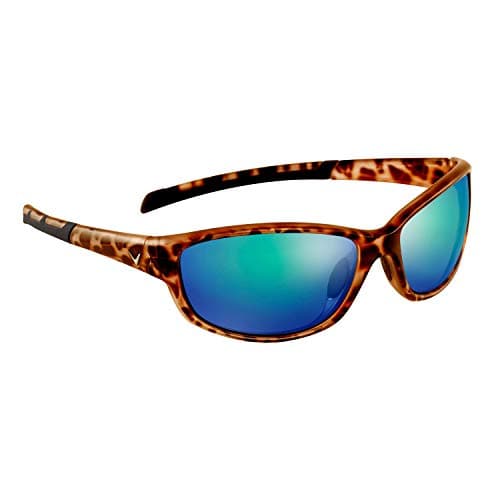
Callaway is a golf company that sells eyewear, not an optics company that sells to golfers, and that distinction explains most of what is good and limited about the product. What Callaway understands deeply is the golfer: what a frame does at address, how a pair behaves through a swing, what a five-hour round in changing light feels like, and what a golfer will actually wear walking into a clubhouse. What it does not have is a proprietary, documented lens technology of the kind Oakley publishes.
For a lot of golfers that is a perfectly good trade. The most common reason golfers do not wear sunglasses on the course is not lens performance — it is that the pair intrudes at address, moves during the swing, or simply feels wrong. A frame designed by people who play solves that problem first.
Fit through the swing is the real product
Golf has an unusual eyewear requirement that most sports do not: your head position changes dramatically between address, the top of the backswing and impact, and you are looking through different parts of the lens at each. A frame that sits slightly low, or has a thick upper rim in the wrong place, puts a line across your field of view exactly when you least want one.
Callaway's frames are shaped with that in mind — lightweight, sport-fitted, and positioned to stay out of the sightline at address. Grip at the nose and temples keeps the pair stable through the swing and over eighteen holes of walking. These are unglamorous virtues and they are the ones that determine whether a pair of golf sunglasses gets worn or left in the bag.
The lens conversation
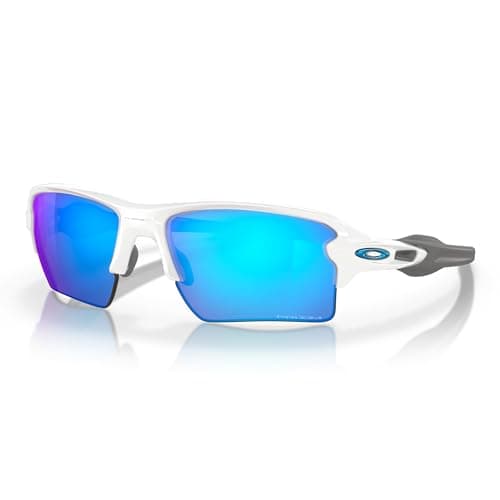
Here is where a golf brand meets an optics brand and gives ground. Oakley's Prizm Golf variant is engineered to boost the specific contrasts that separate green from fairway and make slope transitions legible — that is a documented, purpose-built technology with a stated mechanism, and it is the reference for course lenses. Callaway's lenses are good general golf tints. They reduce brightness, they are tuned toward the warm end that helps on grass, and they will not distort your read. They do not do what Prizm Golf does.
Whether that gap matters depends entirely on your game. If you are reading subtle breaks on fast greens and want every cue available, the tuned lens is a genuine advantage and worth the premium. If you want to stop squinting for five hours, see the ball against a bright sky, and not think about your sunglasses again, a good general golf tint does that completely.
The polarization question on a golf course
This is the one golf-specific lens issue every golfer should understand before buying anything, Callaway or otherwise. Polarized lenses remove reflected light — and some of the reflected light off a green is information. Many players find polarization flattens the subtle surface cues they use to read slope and grain, which is why so many dedicated golf lenses, including Oakley's Prizm Golf, are deliberately non-polarized.
The counter-argument is real too: if your course has water, if you drive to it in bright sun, or if you want one pair for golf and everything else, polarization is genuinely useful and the green-reading loss is subtle. There is no universal right answer, which is why we cover it properly in polarized sunglasses for golf. Check which lens type a specific Callaway model uses rather than assuming, because the line includes both.
Where the value sits
Callaway prices below the premium optics brands and above the generic sport wraps, which is a sensible place to be and matches what the product is. You are paying for a golf-appropriate frame from a brand that understands the customer, with a competent lens. You are not paying Oakley money and you are not getting Oakley's lens.
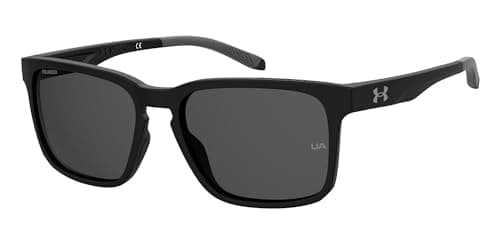
The honest alternative at a similar price is a polarized sport frame from a general athletic brand — the Under Armour above is the archetype — which crosses over to driving and general sport better than a golf-specific pair does. If your sunglasses need to work on the course and in the car, that crossover is worth more than golf-specific styling. Our golf sunglasses roundup ranks all of these together.
Limitations worth knowing
Colorway and model availability varies. Callaway eyewear does not have the catalog depth of a dedicated eyewear brand, and specific models come and go. If you find a fit you like, that is worth acting on.
Published lens documentation is thin. Compared with brands that publish transmission characteristics and a stated mechanism, there is less to evaluate. We treat that as a limitation on what we can claim rather than as evidence of a bad lens.
It is a golf frame. Sport-fitted golf styling is not a lifestyle shape, and a pair bought for the course will look like a pair bought for the course.
Are Callaway sunglasses worth it?
For a golfer who wants a frame that behaves properly through the swing, from a brand already in their bag, at a price below the premium optics tier — yes, and the fit is the reason. For a golfer chasing every possible green-reading cue, the tuned lens from a dedicated optics brand is the better buy and the gap is real. And for a golfer who wants one pair that also works in the car and on the water, a polarized crossover sport frame makes more sense than either.