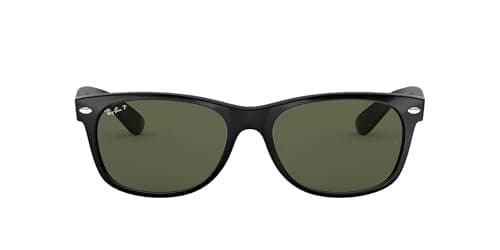
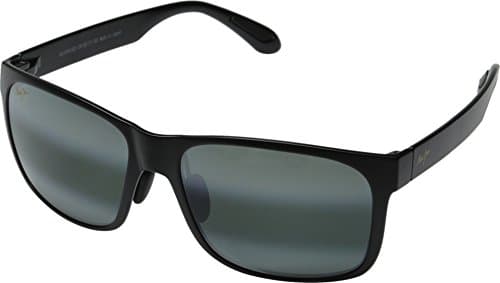
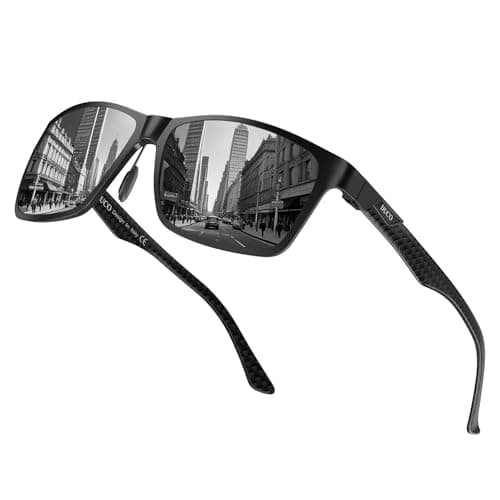
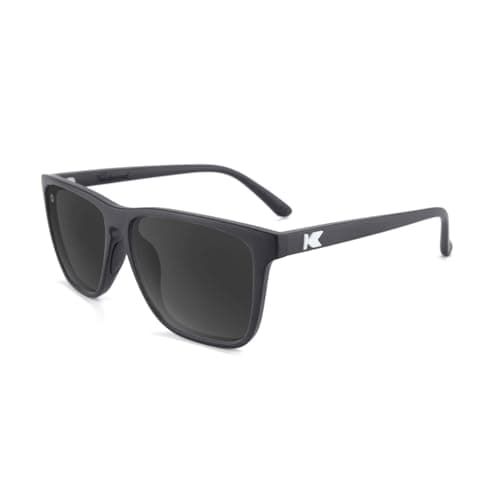
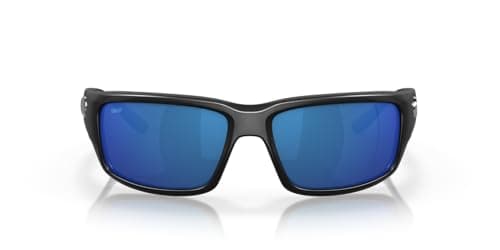
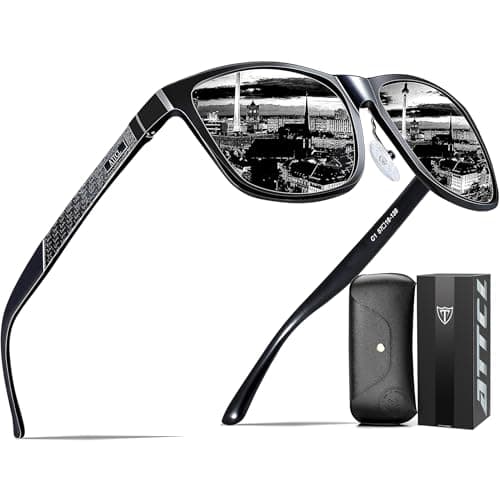
Buy a good polarized pair in the $25–$40 range and leave it in the car. That is the honest answer for driving, and the ATTCL above is our pick for it — polarized, UV400, an aluminum-magnesium frame, and cheap enough that living on a hot dashboard is not a tragedy. If you want the icon, the Ray-Ban New Wayfarer in its polarized version is the classic driving shape. If you want the best lens made and you will actually look after it, the Maui Jim Red Sands is the ceiling.
Driving is the use case where polarization earns its keep faster than anywhere else, including fishing. The glare a driver fights is almost entirely reflected light: sun bouncing off a wet road after rain, the mirror-flash off the hood of the car in front, the sheet of white that appears on a windshield at a low sun angle. All of that light comes back horizontally polarized, and a polarizing filter is a microscopic grid that cancels exactly that orientation. The effect is not that the road gets darker — it is that the shine comes off and the road underneath becomes readable again. The Cleveland Clinic has the plain-English version of the physics.
Why the expensive pair is usually the wrong buy for a car
Here is the part most driving roundups skip. Sunglasses that live in a car have a harder life than almost any other pair you own. They get left on a dashboard at 60 degrees Celsius, dropped into a door bin with keys and coins, sat on, and forgotten in a rental. The failure mode of a driving pair is not that the lens was not good enough — it is that the pair got destroyed or lost. That argues strongly for buying two competent cheap pairs, one for each car, over one expensive pair you carry around in a case and are annoyed to misplace.
And unlike fishing, driving does not reward contrast tuning. An angler pays for Costa's 580 or Bajío's LAPIS because those lenses filter specific wavelengths to lift a fish out of water. A driver does not need a fish lifted out of anything. A driver needs reflected glare gone, UV blocked, a lens dark enough for comfort but not so dark it slows adaptation in a tunnel, and a frame that is comfortable for four hours. Every one of those is available at $30. What you get for $250 is optical polish at the lens edges, better coatings, and a frame that survives a decade — real things, but not things that make you a safer driver.
The lens rules that actually matter behind the wheel
UV400, non-negotiable. The American Optometric Association recommends sunglasses that block 100% of both UVA and UVB, and notes that quality lenses filter roughly 75–90% of visible light. That is the health function of a sunglass and it costs essentially nothing — a $15 UV400 lens and a $250 UV400 lens block the same UV. Windshield glass already blocks most UVB, but side windows generally do not, which is why the left side of a long-time driver's face is the side that shows the sun damage.
Gray is the safe tint.The AOA specifically notes that gray lenses preserve accurate color recognition — which is exactly what you want when you are reading traffic lights, brake lights and signage. Brown and copper tints lift contrast and many drivers prefer them on dull days, and they are a legitimate choice. What you should avoid for driving is a heavy blue or a novelty tint that shifts how red and green read. Our lens colors guide covers the whole spectrum properly, and best lens color for drivingtakes the question apart for the road specifically — including the evidence against yellow night-driving lenses.
Not too dark.A very dark lens feels luxurious in a parking lot and becomes a problem entering a tunnel or an underground car park, because your eyes have to adapt from a heavily filtered scene to a dim one. Category 3 lenses — the standard dark tint on virtually every pair on this page — are the right level for driving. Category 4, the very dark mountaineering tint, is not legal for driving in many jurisdictions and is a genuinely bad idea regardless.
The one real downside of polarized in a car
Polarized lenses interact with LCD screens, and a modern car is full of them. Your infotainment display, digital instrument cluster, head-up display and phone mount can all darken or show a rainbow pattern through a polarized lens at certain head angles. Tilt your head and it usually comes back. For most drivers this is a minor nuisance; if your car has a head-up display you depend on, or you use your phone for navigation constantly, it is worth knowing before you buy. The full trade-off is in our polarized vs non-polarized guide.
The other thing worth stating plainly: none of these are for night driving. Sunglasses at night are unambiguously unsafe, and the yellow-tinted "night driving glasses" sold as a solution do not work — a controlled study found no improvement in pedestrian detection. We cover that in full in can you wear sunglasses at night.
How we ranked this list
Every pick here is genuinely polarized and UV400 — that is the entry requirement, not an achievement. From there we weighted the ranking for the driving buyer specifically: glare control and all-day comfort first, survivability in a car second, and optical refinement third. That is why a $28 pair sits above a $250 one on this page while the reverse is true on our polarized sunglasses roundup, where lens quality carries the most weight. Same scores, different job. The scoring method itself is published on how we rate, and the numbers are judgments from documented research — we do not run a lab and we do not pretend to.
How to choose a driving pair, in five decisions
1. Buy polarized, unless your head-up display says otherwise
For wet roads, low sun and windshield glare, polarization is the single most useful feature available. The exception is a driver who relies heavily on a head-up display or a dash-mounted phone, where the screen dimming can outweigh the glare benefit. One thing polarization does notfix is the sun shining straight into your eyes on a sunrise or sunset commute — that needs darkness and coverage instead, and we rank for it separately in best sunglasses for driving into the sun.
2. Choose gray first, brown second
Gray keeps traffic-light and brake-light colors accurate. Brown and copper lift contrast on flat, overcast days and are a reasonable preference. Avoid strong blues and novelty tints in a car.
3. Buy for the dashboard, not the display case
The pair that lives in your car will be baked, dropped and lost. Two competent $30 pairs beat one $250 pair for most drivers, and there is no safety difference between them.
4. Get the fit right for long wear
Four hours in a car is a long time. A frame that pinches at the temples or leaves a mark on the bridge of your nose will be off your face inside an hour. Frame width should match face width — a great lens in the wrong size is a wasted purchase.
5. Keep the coverage sensible
A light wrap blocks the side light that comes through a driver's window; a full sport shield is unnecessary and can slightly restrict the head-check view over your shoulder. The lifestyle and light-wrap shapes on this page are the right zone.
If the car is your office
Everything above assumes a commute. Drive for a living and the ranking changes: over twelve hours the deciding specs are frame weight and nose pressure rather than lens technology, a high seat and a wide windshield let light in over the top rim, and a digital dash can wash out behind a polarized lens. Best sunglasses for truck drivers ranks for that day, including the non-polarized option for screen-heavy cabs. Drivers in prescription glasses should start with best clip-on sunglasses— a flip-up clip is the cheapest way to get a polarized lens you can lift away for a tunnel or a screen — or with best fit-over sunglasses for driving if you want more coverage than a clip gives you.
More on the budget brand above
ATTCL is the value pick on this page and an unfamiliar name to most readers — an aluminum-magnesium frame with a real polarized lens at a fraction of the usual price. Our ATTCL sunglasses review covers the range and its limits.
If you are choosing between two premium names
The two brands drivers ask about most are Serengeti, for its photochromic mineral glass, and Ray-Ban, for the shapes. They are not competing on the same thing, which is why we compared them directly in Serengeti vs Ray-Ban.