The Oakley Holbrook in Prizm Polarized is the pick if you want one pair that handles both the low sun and the wet road after it; the ATTCL polarized Al-Mg is the value answer at under a tenth of the price. But the important part of this page is the physics: polarization does very little against sun shining straight into your eyes. For that you need a genuinely dark lens (category 3), coverage that stops light arriving above and beside the frame, and a clean windshield. Everything else is secondary.
Most "sunglasses for driving" advice — including our own best sunglasses for drivingroundup — is really about reflected glare: the sheet of white light off a wet road, the flare off the car hood in front of you, the dazzle off a windshield. That glare is polarized by the surface it bounces from, which is precisely why a polarized lens removes so much of it. The Cleveland Clinic describes the mechanism in those terms and notes how useful it is while driving.
Direct sun is a different animal. Light arriving straight from the sun at 10 degrees above the horizon has not bounced off anything, so it is not polarized in a single plane and a polarized filter has almost nothing to grip. What helps instead is brute reduction and geometry: fewer photons through the lens, and no gap for the rest to sneak through. That is why the ranking below weights tint depth and coverage ahead of lens technology, and why the cheapest pick on the page is a legitimate answer.
What actually helps against low direct sun
A dark lens, properly.Lens category 3 — the standard "bright sunshine" class — transmits only a small fraction of visible light, and that is the single biggest lever you have. Category 4 lenses exist but are not legal for driving in many places and are built for glaciers, not commutes. Our lens colours explained page covers the categories and what each tint does.
Coverage above and beside the lens.Low sun comes in under a visor and over the top rim of a small frame. A taller lens, a slight wrap, or simply a larger shape closes the route that light is taking to your eye. This is where aviators earned their reputation — the teardrop was specified to fill the eye socket's field of view for pilots looking at open sky.
A clean windshield, inside and out.The film on the inside of a windshield is a diffuser: every speck scatters the direct beam across your whole field of view, which is the milky white-out you get at sunset. No pair of sunglasses fixes that, and cleaning the glass costs nothing. Same for the lens itself — see how to clean sunglasses.
Not a mirror finish, usually. A mirrored lens reflects light away before it enters, which does help in high ambient glare. But mirrors also pick up reflections from inside the car and from your own face, and on a dark dashboard at dusk that trade can go the wrong way. If you want one, the field is in best mirrored sunglasses.
The short answer
Quick picks
#ad · Live prices from the Amazon Product API, as of October 19, 2026. Where we have no verified live price, we show none — we would rather leave a gap than print a number that has rotted.
In detail
The picks, in full
Driving, water and everyday Oakley wear
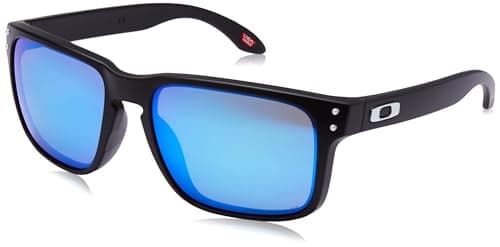
Oakley Holbrook (Prizm Polarized)
Prizm Sapphire PolarizedOO9102 HolbrookPlutonite lensSquare lifestyle frame
Oakley's polarized option in its most wearable frame — the version to buy if you are not buying Oakley for sport.
- Glare control
- 9
- Optics
- 9
- Fit & coverage
- 6
- Durability
- 9
- Value
- 5
Pros
- +Polarization and Prizm contrast tuning in one lens, so you are not choosing between glare control and contrast
- +The Holbrook is the Oakley frame that looks least like sports equipment, which is what most polarized buyers actually want
- +Plutonite and Oakley's frame build are why these survive years of daily wear rather than a season
Cons
- −A real premium over the non-polarized Prizm version of the same frame, for a filter a $25 lens also has
- −Flat-ish lifestyle shape lets side light in — it is not a wrap and does not pretend to be
Don't buy this if…
…your main use is cycling, golf or any sport where you read a head unit or a subtle surface reflection. Oakley leaves most of its sport lenses non-polarized on purpose, and here the polarized upgrade works against you.
Best budget driving pair
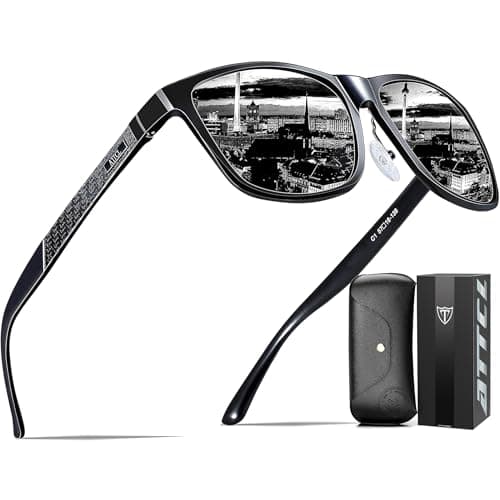
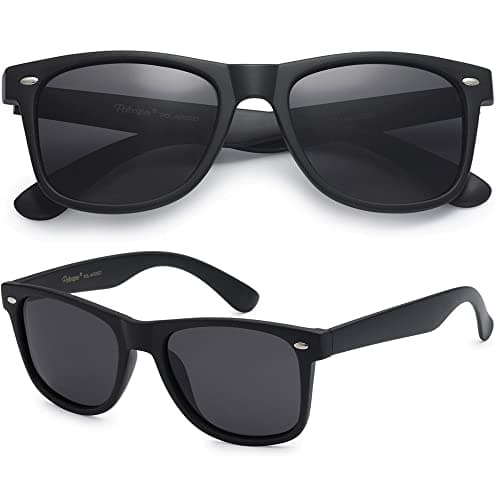
ATTCL Polarized Al-Mg (Driving)
Al-Mg alloy framePolarizedUV400Ultralight
A metal-framed polarized driver at a price that embarrasses the fashion houses.
- Glare control
- 8
- Optics
- 7
- Fit & coverage
- 6
- Durability
- 7
- Value
- 9
Pros
- +Polarized glare control is the single most useful sunglasses feature behind the wheel, and this delivers it cheaply
- +The aluminum-magnesium frame feels far more solid than the plastic competition at this price
- +Genuinely light, which matters on a long drive
Cons
- −Metal frames do not flex — sit on these and they stay bent
- −Optics are competent rather than crisp; the edges soften compared with a premium lens
Don't buy this if…
…you want one pair for driving and sport. Metal arms and a flat lens are the wrong tools for a sweaty run or a bright flat.
The icon, with a real polarized lens
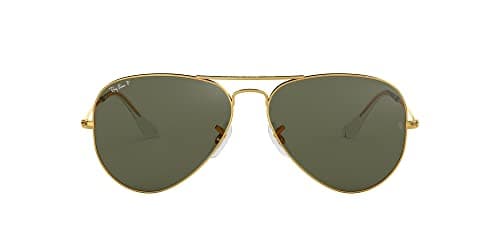
Ray-Ban Aviator Classic (RB3025, Polarized)
Metal framePolarized optionTeardrop lensAdjustable nose pads
The most recognizable sunglass ever made, in the version that actually cuts glare.
- Glare control
- 8
- Optics
- 9
- Fit & coverage
- 6
- Durability
- 7
- Value
- 5
Pros
- +The teardrop shape has softened faces for seventy years, and it flatters square and angular faces particularly well
- +Adjustable nose pads are rare at this level and let you dial in fit in a way molded bridges cannot
- +The polarized version does the real glare job on wet roads and water, not just the look
Cons
- −You pay a substantial brand premium — the glare control alone is available for a tenth of the price
- −Thin metal arms and a large lens mean modest side coverage and no grip when you sweat
Don't buy this if…
…you want a sport pair. Metal arms and a flat teardrop lens are the wrong tool for a run, a ride or a bright flat.
Drivers and anyone in and out of shade
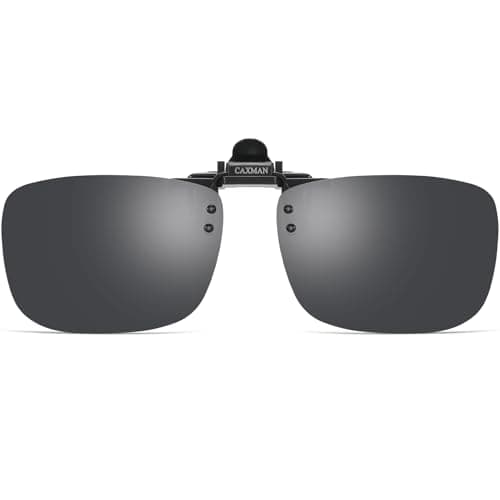
CAXMAN Flip-Up Clip-On (Rimless)
Flip-up clipPolarizedRimless lensMetal clip
A flip-up clip for people who move in and out of sun constantly and hate taking things off.
- Glare control
- 8
- Optics
- 6
- Fit & coverage
- 6
- Durability
- 5
- Value
- 10
Pros
- +Flipping the lens up beats removing and pocketing a clip every time you go inside or under trees
- +Rimless construction keeps the weight down on the bridge of your nose
- +Cheapest way to add polarization to glasses you already own
Cons
- −The flip hinge is the moving part, and moving parts at this price are the first thing to loosen
- −The clip's metal contact points can mark a soft lens coating if grit gets in
Don't buy this if…
…you want the most secure fit. A fixed clip or a fit-over stays put better than a hinge; the flip-up trades a little security for a lot of convenience.
A polarized metal frame on a budget
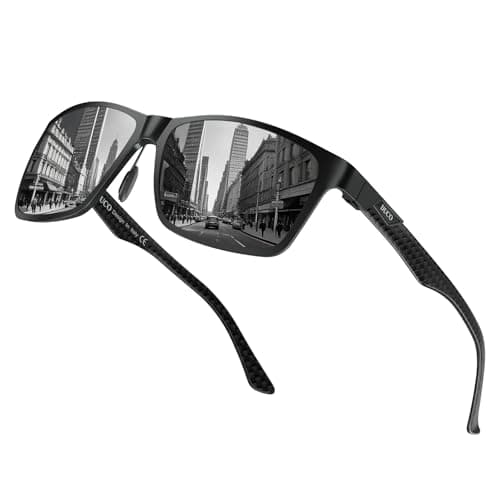
DUCO Polarized (Al-Mg)
Al-Mg framePolarizedUV400Spring hinges
A metal-framed polarized pair at a price that makes the premium brands look silly.
- Glare control
- 8
- Optics
- 7
- Fit & coverage
- 6
- Durability
- 7
- Value
- 9
Pros
- +An aluminum-magnesium frame at this price is unusual — it feels far more substantial than the plastic budget field
- +Polarized and UV400, which covers the two things that actually matter
- +Spring hinges take the abuse of being shoved in a pocket
Cons
- −The lens optics are good, not Maui-Jim good — you notice a touch less clarity at the edges
- −Metal frames are less forgiving than nylon if you sit on them
Don't buy this if…
…you want a sport wrap. This is a driving/everyday shape, and metal arms are the wrong tool for a sweaty trail run.
The spare pair you leave in the car
PolarSpex Polarized
PolarizedUV400Lightweight frameMany colorways
About as cheap as a genuinely polarized pair gets without becoming a tint pretending to be one.
- Glare control
- 7
- Optics
- 6
- Fit & coverage
- 6
- Durability
- 5
- Value
- 10
Pros
- +Real polarization and UV400 at a price where owning three is reasonable
- +Light and unfussy — the definition of a knock-around pair
- +Wide colorway range for a budget frame
Cons
- −Build quality is the first thing to go; hinges are the weak point
- −Optical clarity and coating life are at the floor of what we would still recommend
Don't buy this if…
…this is your only pair and you wear sunglasses daily. Buy something a tier up that will still be intact next summer.
Why we still rank polarized pairs first
If polarization does so little against direct sun, why is the top pick polarized? Because the drive is not only the ten minutes when the sun is in your eyes. The same journey includes wet tarmac, low-angle reflections off the car ahead, and the long stretches where reflected glare is the actual problem — and there a polarized lens is transformative. Buying unpolarized to optimise for the worst ten minutes would make the other fifty worse.
There is one real argument against polarized in a car and it is worth knowing: a polarized lens dims LCD screens, so a dashboard display or a phone mount can wash out, and on some windshields the filter reveals the stress pattern in the laminate as faint blotches. The FAA's pilot sunglasses brochure advises against polarized lenses in a cockpit for exactly these reasons — instrument displays with anti-glare filters can go dark, and laminated windscreens show striations. A car is a much more forgiving environment than a cockpit, but if your dashboard is a single large screen, test a pair before committing. The flip-up clip in the picks above exists partly for this: flip it up and the screen comes back.
The case for the cheap pair — and for two pairs
Sunglasses that live in a car get cooked, scratched, sat on and lost. That makes the car the one place where we actively recommend a cheap pair: the PolarSpex and the DUCO above are polarized, UV400 and cost less than a tank of fuel, and the American Optometric Association is clear that UV protection — the health function of a sunglass — is unrelated to price. A $15 pair in the door pocket that you actually have with you beats a $250 pair at home.
If you wear prescription glasses, the honest answer for a sunrise commute is a clip-on or a flip-up rather than a second prescription. The flip-up is the better of the two here precisely because low sun is intermittent: you flip the lens up entering a tunnel or a tree line and down again on the next straight. The whole set of options for glasses wearers is compared in prescription polarized sunglasses, and the fit-over route is ranked in sunglasses that fit over glasses.
What to do when sunglasses are not enough
Sometimes they are not, and pretending otherwise would be useless. Three things help more than another lens: drop the visor and use its edge to cut the sun specifically rather than darkening everything; increase your following distance, because your ability to see brake lights into the sun is genuinely reduced; and take the lane position that puts a tree line or building between you and the sun where the road offers one. None of that is sunglasses advice, and all of it matters more at 5pm in November than the lens you chose.
Also worth knowing: driving directly into the sun is not the same problem as driving at night, and dark lenses are dangerous after dusk. If that was your actual question, read can you wear sunglasses at night instead — the short answer is no, and the "night driving" yellow lenses sold for it reduce the light reaching your eye at the exact moment you need all of it.
The verdict, stated plainly
Buy a dark, well-covering polarized pair and keep it in the car. The Holbrook in Prizm Polarized is the one to own if the budget allows; the ATTCL is the one to buy if it does not, and the gap between them on this specific problem is far smaller than the gap in price. Then clean your windshield, and accept that the last ten degrees of a sunset are a driving problem rather than an eyewear one.
If you drive for a living
A working cab changes the priorities: twelve hours makes frame weight and nose pressure the deciding specs, a high seat and a huge windshield change where the light gets in, and a digital dash can wash out behind a polarized lens. Best sunglasses for truck drivers ranks for that day. And if your cockpit is an actual cockpit, the advice reverses entirely — can pilots wear polarized sunglasses sets out why both the FAA and the UK CAA discourage the filter in the air.
How to choose in 30 seconds
Is reflected road glare also a problem for you?
Almost certainly yes → buy polarized. It does little for direct sun and a great deal for everything else on the same journey.
Is your dashboard one big screen?
Then test polarized before you commit, or buy the flip-up clip so you can take the filter out of the way.
Do you wear prescription glasses?
A flip-up clip-on is the best answer for intermittent low sun. A fit-over works but is slower to deploy.
How much should you spend?
On a pair that lives in a hot car and gets lost: as little as buys a genuine polarized UV400 lens. That is roughly $15-$35.
Do you want a mirror?
Only if you drive mostly in high ambient brightness. Mirrors can throw interior reflections back at you at dusk.
How we picked
We don't run a testing lab
We compile each pair's published specifications — lens material, polarization, coating, frame material, coverage, UV rating and price — normalize them, and score each against a published rubric. The scores are judgments from documented research; they are notmeasurements we took, because we don't own a lab and we're not going to pretend we do. Pairs we claim to have lab-tested: 0.
Questions
Frequently asked
Do polarized sunglasses help when driving into the sun?+
Barely, for the direct beam. Polarization filters light that has been reflected off a surface and therefore oscillates mostly in one plane; sunlight arriving straight from the sun has not been reflected, so the filter has little to remove. Polarized lenses are still the right choice for driving overall, because they do enormous work on the reflected glare from wet roads and car hoods on the same trip. For direct sun, darkness and coverage are what help.
What lens tint is best for driving into low sun?+
A neutral grey or a brown/amber in category 3. Grey keeps colours closest to true; brown and copper tints lift contrast slightly, which some drivers prefer in hazy light. Avoid category 4 lenses, which are too dark to drive in legally in many places, and avoid yellow "night driving" tints entirely. See
lens colours explained.
Are aviators good for driving into the sun?+
They are a sensible shape for it. The teardrop lens is tall and fills more of your field of view than a small rectangular frame, so less light arrives over the top rim — the route low sun usually takes. Buy the polarized version if you want the lens to also handle wet-road glare. The metal frame does get hot in a parked car.
Why does the sun look worse through my windshield than through the side window?+
Because the inside of a windshield collects a film of haze — off-gassing from the dashboard, dust, fingerprints — and that film scatters direct sunlight across your whole field of view instead of letting it through as a beam. It is the single biggest improvement available to you and it costs nothing. Clean the inside of the glass, not just the outside.
Should I buy photochromic lenses for a sunrise commute?+
They are a reasonable compromise if you set off in the dark and finish in bright sun, but note two limits: most photochromic lenses react to UV, and a modern windshield blocks much of the UV that would trigger them, so they often stay lighter than you expect in a car. See
best photochromic sunglasses and
polarized vs photochromic.
Receipts
Sources
We do not run a testing lab, and we do not pretend to. Where a spec or measurement came from a manufacturer or a third party, we name and link it. Where we could not verify something, we say so on the page rather than quietly leaving it out. Read our full method.