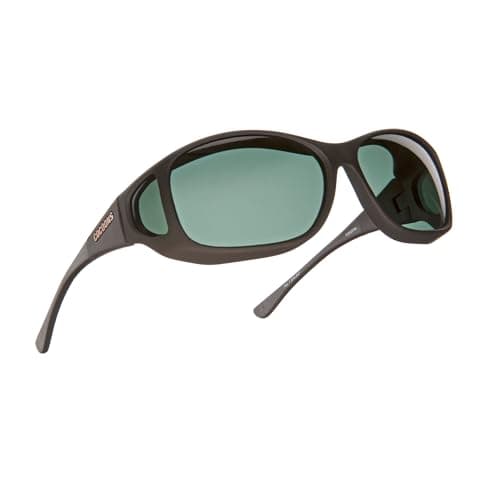
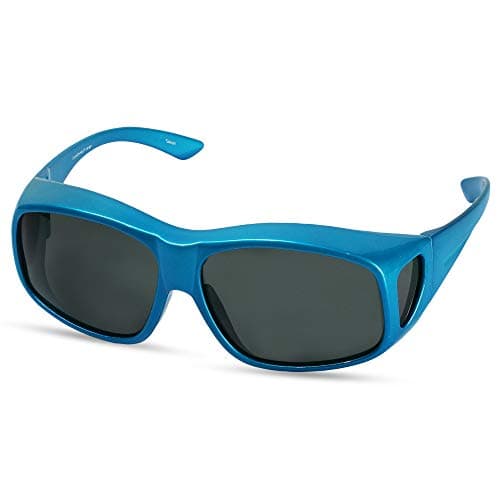
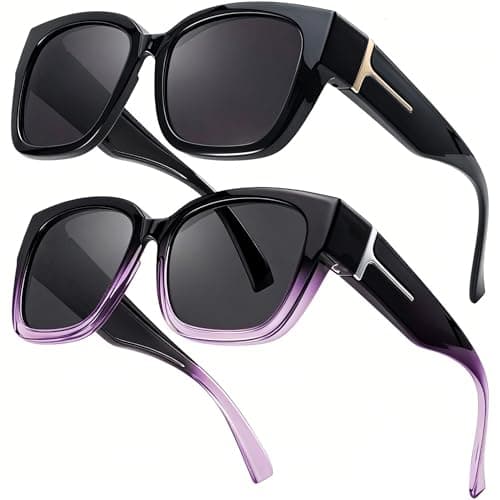
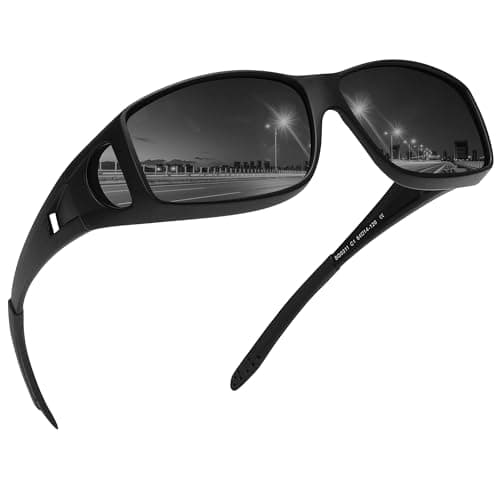
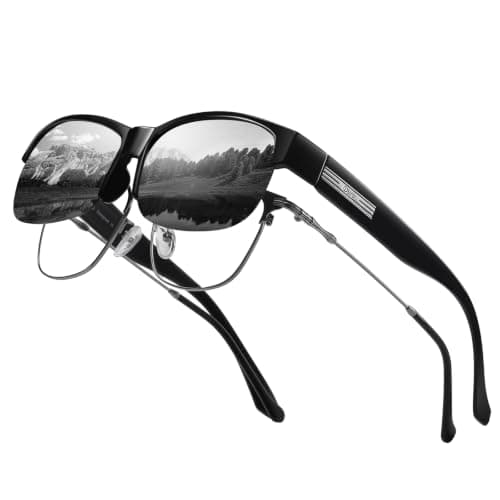
Measure your prescription frames before you buy anything. Every disappointing fit-over purchase traces back to the same mistake — the interior cavity was too small for the glasses it was meant to go over. Get a tape measure, note the total width and the lens height of your specs, and buy a fit-over rated to exceed both. The DUCO above is our pick for most people; the LensCovers is the one to buy if your frames are large.
Fit-over sunglasses — also sold as OTG ("over the glasses") or fitovers — are a genuinely sensible solution to a real problem, and they have a poor reputation almost entirely because the category was dominated for years by cheap, oversized, unpolarized slabs handed out after eye exams. That is not what the current market looks like. The picks on this page are genuinely polarized, UV400, and shaped closely enough to the face that they read as sunglasses rather than as protective equipment.
Fit-over versus clip-on versus prescription sunglasses
There are three honest answers to "I wear glasses and I need sunglasses," and they suit different people.
| Option | Upside | Downside | Rough cost |
|---|
| Fit-over (OTG) | Full coverage including the sides; works with almost any prescription; nothing touches your lenses | Bulkier; can fog; must match your frame size | Low to moderate |
| Clip-on | Discreet; light; folds into a pocket; cheapest option | Only fits certain lens shapes; the clip can mark your lenses; no side coverage | Lowest |
| Prescription sunglasses | Looks and feels like normal sunglasses; best optics | By far the most expensive; a second pair to carry and lose | Highest |
If you want the clip-on route instead, our prescription polarized guidecovers it in detail alongside a third option most people never consider — a sport frame with a prescription insert.
How to measure your glasses in two minutes
This is the whole game, and it takes less time than reading a review. Lay your glasses flat and measure:
- Total frame width— the widest point, temple hinge to temple hinge across the front. This is the number that most often defeats a fit-over.
- Lens height— the tallest point of one lens, top rim to bottom rim. Deep lenses need a taller fit-over cavity.
- Temple arm thickness— chunky arms need room in the fit-over's side channels, which is why some fit-overs with plenty of front room still will not close.
Then buy a fit-over whose published interior dimensions exceed all three, with a couple of millimeters to spare. Most listings publish these numbers; if one does not, treat that as information about the product.
What separates a good fit-over from a bad one
Genuine polarization.This is not universal in the category — plenty of fit-overs are simply tinted. Polarization is the reason to wear sunglasses over glasses in the first place if you drive or spend time near water, since it removes reflected glare rather than dimming it. The Cleveland Clinic explains the difference plainly. Every pick on this page is polarized.
Side coverage that actually blocks light.The specific failure of wearing normal sunglasses over glasses is side light: it comes in around the frame, bounces off the inside of your prescription lenses, and produces the veiling reflection that makes everything look washed out. A good fit-over has tinted side panels for exactly this. This is also the fit-over's genuine advantage over a clip-on.
A cavity that is close, not cavernous. The bulk that makes fit-overs unpopular is mostly unnecessary. A well-designed fit-over hugs the prescription frame rather than floating a centimeter away from it, which is both better looking and less prone to fogging. This is where the premium picks earn their money.
Size options. The single most useful thing a fit-over brand can do is offer more than one size. Cocoons does; most budget brands do not, which is why measuring matters more at the cheap end.
The fogging problem, honestly
Every fit-over fogs more readily than a normal pair of sunglasses, because you have created a semi-enclosed pocket of air in front of your face with a second lens surface in it. Nothing eliminates this. What helps: choosing a closer-fitting model rather than a cavernous one, choosing one with vents or a cutaway at the top rim, and not going straight from air conditioning into humidity. If you are buying primarily for hot, humid conditions, a clip-on has a real advantage here because it does not create the pocket at all.
Choosing a fit-over
1. Measure first, shop second
Frame width, lens height and temple arm thickness. Buy a cavity that exceeds all three. This is the only step that reliably separates a good purchase from a returned one.
2. Insist on polarized
Plenty of fit-overs are merely tinted. Polarization is what removes reflected glare off roads and water, and it is the reason to wear these at all if you drive.
3. Prefer close-fitting over cavernous
A fit-over that hugs your frames looks better and fogs less. Size up only as far as your measurements demand.
4. Match the pick to your frames
Large prescription frames need a large-cavity fit-over. Small or narrow frames are better served by a slimmer model, which also looks far less bulky.