Yes. A polarized fit-over removes glare exactly as well as a normal polarized pair, because it is the same filter — there is no optical penalty for sitting further from your face. The reason people are disappointed is almost never the lens: it is fit, bulk or scratching. Get the interior dimensions right and buy one with proper side coverage, and a fit-over is the cheapest good answer in prescription eyewear. The DUCO is the pair we would start with; the Cocoons Style Line is the one to buy if you want to keep it.
Fit-overs have a reputation problem rather than a performance problem. They look like what they are, they are associated with a cataract clinic rather than a beach, and plenty of people have bought a cheap one, found it rattling around on their face, and concluded the whole category does not work. It does. But there are three failure modes worth knowing before you spend, because each one has a specific fix.
What a fit-over genuinely does well
The glare control is real and unreduced. Polarization is a filter in the lens, not a function of how close the lens sits to your eye. As the Cleveland Clinic and Warby Parker both describe it, the filter blocks light reflecting off flat surfaces like water, snow and wet roads. A ten-dollar polarized fit-over and a three-hundred-dollar polarized sport frame do the same thing to that reflection.
UV protection is as good as the listing says. Look for UV400 or 100% UV, which the American Optometric Association recommends at any price. A fit-over has one real advantage here, and it is underrated: because it extends past the edge of your own frames, it blocks some of the light that would otherwise come in at the sides and bounce off the back of your prescription lenses.
It costs a fraction of prescription sunglasses. This is the honest headline. A second pair of prescription lenses in a tint is a significant spend and commits you to one lens color; a fit-over costs almost nothing and you can own two tints.
The three reasons people stop wearing them
- Fit, which is a measuring problem.Fit-overs are specified by interior dimensions and prescription frames are not a standard size, so "one size fits most" fails for anyone whose glasses are large, deep or narrow. Measure the width across the front of your frames and the height of the lens, then buy from a listing that publishes interior measurements that exceed both.
- Bulk and weight, which is a model problem.The heavy wrap-around styles are the most protective and the most noticeable. If you tried one and found it absurd, a smaller, lighter profile is a different experience — and a clip-on removes the bulk question entirely.
- Scratching, which is a hygiene problem. Two lens surfaces touching with grit between them is how prescription lenses get marked. The fix is boring and effective: rinse and dry both before putting them together, keep the fit-over in a case rather than loose in a bag, and do not buy the very tightest interior fit you can find.
| Worry | Is it real? | The fix |
|---|
| Weaker glare control than normal sunglasses | No — same polarizing filter | Just check the listing says polarized |
| Uncomfortable | Sometimes, and it is model-specific | A lighter profile, or a purpose-built fitover frame |
| Will not fit my glasses | Often, if you do not measure | Buy against published interior dimensions |
| Scratches my prescription lenses | Can happen | Rinse both, use a case, avoid the tightest fit |
| Looks obvious | Yes | A smaller frame or a rimless clip-on |
Who each pick is for
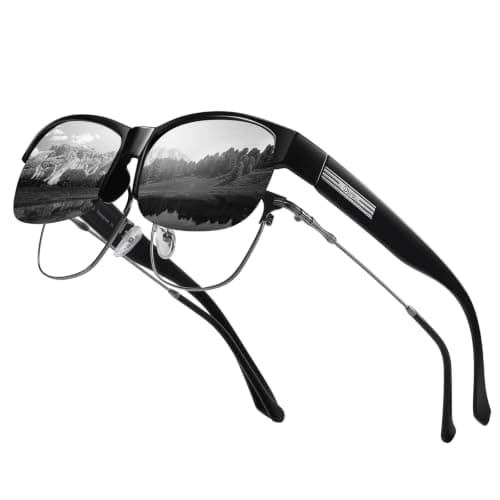
- DUCO HD Polarized Fit Over— where to start. Polarized, UV400, side shields, inexpensive. If a fit-over is going to suit you, this tells you cheaply.
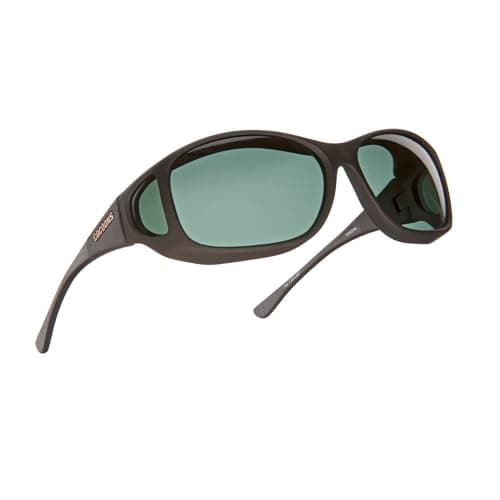
- Cocoons Style Line (Polarized)— the keeper, and the answer to the comfort objection. Purpose-built fitover frames in several sizes rather than a one-size box, which is what makes one feel like eyewear instead of a visor.
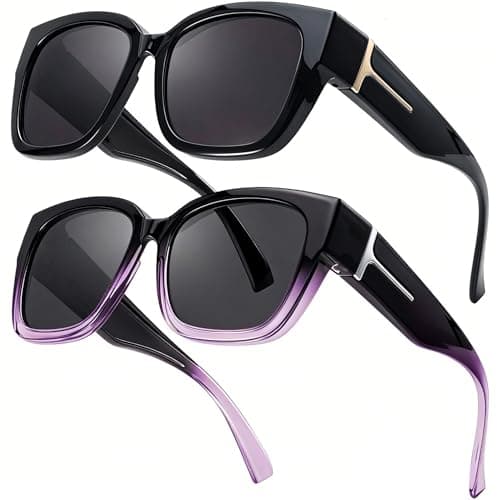
- LVIOE Polarized Fit Over— the answer to the bulk objection. Smaller and lighter, with less side coverage: the pair most likely to still be on your face in month three.
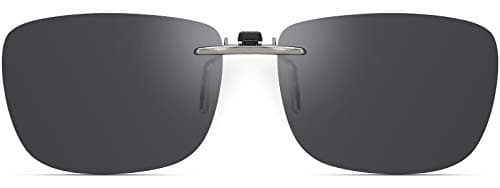
- CAXMAN Polarized Clip-On— the answer to the appearance objection. Not a fit-over at all: it clips a polarized lens to your own frames with no bulk and no side coverage. Only fits the frames it fits — see best clip-on sunglasses.
Fit-over vs clip-on vs prescription sunglasses
These are the three routes, and the honest answer is that they suit three different people.
Fit-over— the most protection for the least money. Best for water, snow, bright open ground and anyone who wants side coverage. Worst for looking discreet.
Clip-on— the lightest and least obvious, and the most likely to be in your pocket when you need it. Gives you the filter and essentially no coverage, and the mounting has to match your frames.
Prescription sunglasses— the best experience by a wide margin, the highest cost, and a commitment to one tint. Worth it if you are outdoors most days; hard to justify for a two-week vacation. Costs and routes in prescription polarized sunglasses.
Where fit-overs are the best answer available
On the water. Side coverage genuinely matters when glare arrives from below, and a cheap pair is the right pair on a boat. We rank them in best fit-over sunglasses for fishing.
After eye surgery or during light sensitivity. Enclosing the sides is the whole point when stray light is the problem rather than brightness. The one caveat: follow whatever your own clinician tells you, because we are not optometrists. See best sunglasses for sensitive eyes.
As a cheap second tint. Two fit-overs in two tints cost less than one prescription lens, which is a real advantage if you fish, hike or ski in changing light.
Where they are the wrong answer
Running and cycling. Too much weight too far from your face, and it bounces. Buy a sport frame and, if you need correction, contacts or prescription inserts.
City driving.The side shields sit in the part of your vision you use for mirror and blind-spot checks. A flip-up clip-on is the better tool — the full argument is in best fit-over sunglasses for driving.
When you want to look like you are not wearing two pairs of glasses. No fit-over solves this. A clip-on or prescription sunglasses do.
So, are they any good?
For the money, they are one of the best-value purchases in eyewear — genuine polarization, genuine UV protection and more side coverage than most normal sunglasses, for a fraction of the prescription route. The category deserves its reputation for being unglamorous and does not deserve its reputation for being ineffective. Buy one that fits, keep it in a case, and ignore what it looks like in the parking garage.
To choose a specific pair, the roundup is sunglasses that fit over glasses.
Five minutes before you buy
Measure your glasses
Width across the front, lens height. Write both down and compare to interior dimensions.
Check for the word polarized
"HD" and "anti-glare" are not polarization. The ten-second test works on any pair you already own.
Decide how much coverage you want
Water, snow and light sensitivity → more. City driving and discretion → less.
Buy a case
The scratching problem is almost entirely a storage problem. A hard case and a rinse solve it.