Skip to content
PolarizedClub

Comfort · Light sensitivity

The Best Sunglasses for Sensitive Eyes

If bright light hurts, the fix is rarely a darker lens. It is a lens that stops light arriving from the sides and from below — plus getting the cause looked at.

By Stephen V.Updated How we rate
#ad

We earn a commission when you buy through our Amazon links, at no extra cost to you. It never affects our rankings, and we say so when the cheaper pair is the better buy. How this works.

If bright light is genuinely uncomfortable, buy a polarized wraparound rather than a darker flat lens — the Bollé Anaconda is the pick here because the wrap is what stops light arriving from the side and bouncing off the back of the lens into your eye. If you wear prescription glasses, the Cocoons Style Line does the same job over them and encloses the sides more completely than anything else on this page. If your discomfort is worst when light changes— indoors to outdoors, shade to sun — a photochromic mineral lens like the Serengeti Ethan is the more useful answer than any fixed tint.

One thing first, because it matters more than any pick on this page: we are not clinicians, and light sensitivity is a symptom rather than a preference. The American Academy of Ophthalmology describes it as something that "causes a person to shield their eyes from light, often to prevent eye pain", and lists it alongside cataract, conjunctivitis, corneal abrasion, uveitis, migraine and eye allergies. Its advice is direct: "if you have any unusual vision symptoms, speak with your ophthalmologist". The Cleveland Clinic adds that dry eye is the most common condition associated with photophobia, and that you should report any new or worsening eye discomfort to a provider. If light has started bothering you more than it used to, book the appointment. Sunglasses are comfort, not treatment.

What actually helps, in order

With that said, the right sunglasses make a real difference, and the features that help are not the ones most people shop for.

  1. Coverage, not darkness.The light that hurts is usually not the light coming straight at you — it is the light arriving from the side, from above and up off the ground, some of which reflects off the back surface of your own lenses. A wrap, a tall lens or side shields address that. A darker flat lens does not, and it opens your pupils, which can make the stray light worse.
  2. Polarization.The Cleveland Clinic's own photophobia guidance is to "wear sunglasses with polarization and/or a hat when you're outside". The reason is mechanical: as Warby Parker and the Cleveland Clinic both explain, a polarizing filter removes the reflected glare bouncing off flat surfaces — water, wet roads, snow, pale pavement — which is the harshest light most people meet in a day.
  3. A lens that adapts. Fixed tints force a compromise: dark enough for the worst moment is too dark for the rest of the day. Photochromic lenses change with the light, which suits anyone whose problem is transitions rather than peak brightness.
  4. 100% UV, always. The American Optometric Association recommends 99–100% UVA and UVB blocking regardless of what you spend. An unrated dark lens is the worst of all options.
  5. A hat. Free, and named in the clinical guidance alongside the sunglasses. A brim handles the overhead light no lens design can.
What bothers youWhat to buyWhat will not help
Light creeping in at the sidesA wraparound, or a fit-over with side shieldsA darker flat lens
Glare off roads, water, snowA polarized lensA non-polarized mirror
Going indoors to outdoorsA photochromic lensTwo fixed pairs you will not swap
Screens and indoor lightingDimmers, natural light, screen brightnessWearing sunglasses indoors by default
New or worsening painAn appointmentAny pair of sunglasses

The short answer

Quick picks

#ProductBest forScorePrice
01
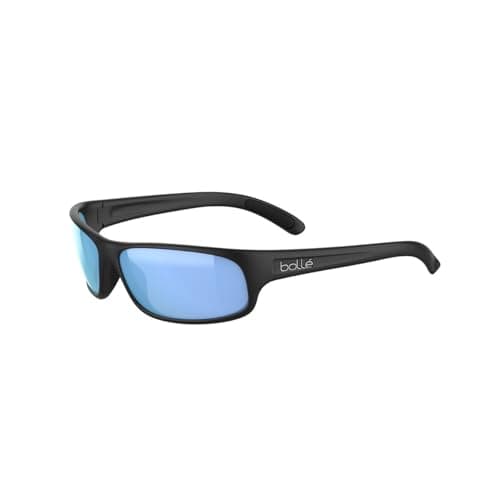
Bollé Bollé Anaconda (Polarized Wrap)
Bollé Anaconda (Polarized Wrap)

A big polarized wrap from a mountain-eyewear name — coverage for bright, open, reflective ground.

Wraparound coverage on bright open terrain
7.8
Check price →
02
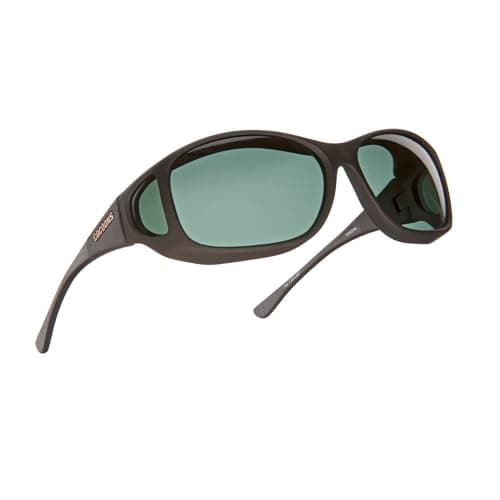
Cocoons Cocoons Style Line (Polarized)
Cocoons Style Line (Polarized)

The premium end of the fit-over category — better optics and a proper build, at a real price.

The fit-over you keep for years
7.8
$74.95Amazon
03
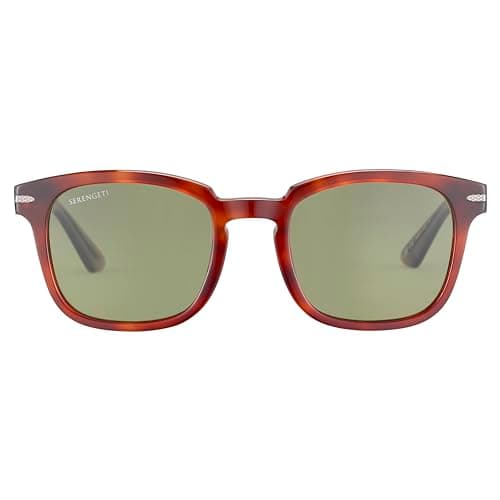
Serengeti Serengeti Ethan (Mineral Polarized 555nm)
Serengeti Ethan (Mineral Polarized 555nm)

Serengeti's lens argument in its purest form — polarized mineral glass that changes category with the light.

Driving and changing light
7.4
$330.00Amazon
04
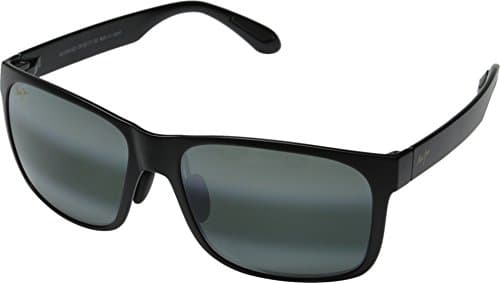
Maui Jim Maui Jim Red Sands (PolarizedPlus2)
Maui Jim Red Sands (PolarizedPlus2)

If glare control and color are the whole point, this is the ceiling — at a ceiling price.

The best-in-class polarized lens
8.2
$259.00Amazon
05
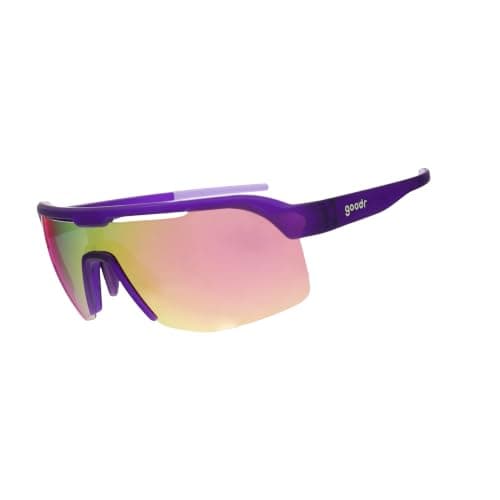
goodr goodr Bolt G (Polarized Wrap)
goodr Bolt G (Polarized Wrap)

The OG's grip coating in a vented wrap — goodr for runners who want coverage rather than a lifestyle shape.

Coverage without giving up the grip
7.8
$45.00Amazon
06
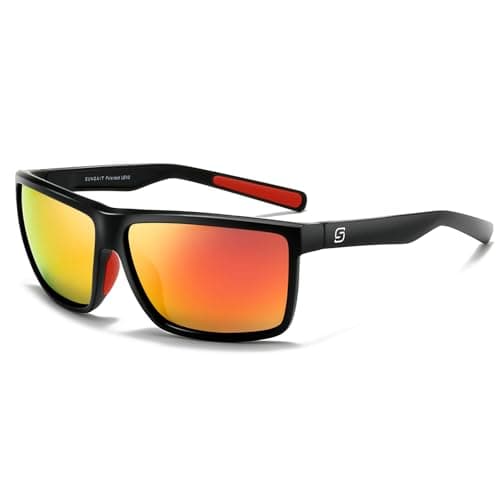
SUNGAIT SUNGAIT Square Polarized (Wraparound)
SUNGAIT Square Polarized (Wraparound)

An angular, slightly wrapped polarized frame — the cheap answer for a rounder face.

Angular shape on a budget
7.4
$19.99Amazon

#ad · Live prices from the Amazon Product API, as of October 19, 2026. Where we have no verified live price, we show none — we would rather leave a gap than print a number that has rotted.

In detail

The picks, in full

01
Bollé Bollé Anaconda (Polarized Wrap)

Wraparound coverage on bright open terrain

Bollé Anaconda (Polarized Wrap)

Wraparound framePolarizedLarge coverageUV protection
7.8/10

A big polarized wrap from a mountain-eyewear name — coverage for bright, open, reflective ground.

Glare control
9
Optics
7
Fit & coverage
9
Durability
7
Value
7

Pros

  • The wrap seals out reflected light coming from the sides, which is the specific problem on open snow, water and rock
  • Polarized, so it removes rather than dims the glare bouncing off those surfaces
  • A mountain-eyewear brand with a long track record in this exact use

Cons

  • Polarized lenses can mask the sheen that distinguishes ice from snow — a real consideration if you are moving fast downhill
  • Large wrap styling does not translate to everyday wear

Don't buy this if…

…you ski or ride fast on hardpack. Standard polarization makes ice harder to pick out; a non-polarized snow-tuned lens is the safer tool there.

Check price on Amazon →

No buyable offer at the last price check (October 19, 2026). We show nothing rather than a stale number.

#ad · we may earn a commission from this link to Bollé Anaconda (Polarized Wrap)

02
Cocoons Cocoons Style Line (Polarized)

The fit-over you keep for years

Cocoons Style Line (Polarized)

Fit-over (OveRx) designPolarizedSide shieldsMultiple frame sizes
7.8/10

The premium end of the fit-over category — better optics and a proper build, at a real price.

Glare control
9
Optics
8
Fit & coverage
8
Durability
8
Value
6

Pros

  • Cocoons builds fit-over eyewear as its core product line rather than as an afterthought, and the fit engineering shows
  • Polarized lens quality is a clear step above the sub-$25 fit-over field
  • Offered in several sizes, which is the single most useful thing a fit-over brand can do

Cons

  • Costs several times what a budget fit-over costs, which is a lot for a category most people treat as disposable
  • Still unmistakably a fit-over from the side — no fit-over solves that

Don't buy this if…

…you only need sunglasses over your specs a few times a year. The budget fit-overs do the same job well enough for occasional use, and this premium only pays back with regular wear.

$74.95View on Amazon

Price as of October 19, 2026. Prices change — Amazon's is the one that counts.

#ad · we may earn a commission from this link to Cocoons Style Line (Polarized)

03
Serengeti Serengeti Ethan (Mineral Polarized 555nm)

Driving and changing light

Serengeti Ethan (Mineral Polarized 555nm)

Mineral glass lensPolarized555nm contrast tintCat 3 to 3 photochromic
7.4/10

Serengeti's lens argument in its purest form — polarized mineral glass that changes category with the light.

Glare control
9
Optics
9
Fit & coverage
6
Durability
8
Value
5

Pros

  • Does the one thing no Ray-Ban lens does: lightens and darkens on its own, which is worth more on a commute than any fixed tint is
  • Mineral glass with a 555nm tint targets the wavelength the eye resolves best, reading as a lift in contrast rather than a color cast
  • Polarized as well as photochromic — the combination much of Serengeti's own range does not carry

Cons

  • Priced at the top of this page, above the Ray-Bans, which inverts Serengeti's usual value argument on Amazon
  • A lifestyle and driving frame, not a sport wrap — modest coverage and no grip material
  • Serengeti's Amazon stock is thin and moves between models; this listing showed only a handful of units when we resolved it

Don't buy this if…

…you want a predictably dark lens behind a windshield. A photochromic lens is UV-triggered and laminated glass blocks much of that UV, so it will sit lighter in the car than you expect — buy a fixed tint instead.

$330.00View on Amazon

Price as of October 19, 2026. Prices change — Amazon's is the one that counts.

#ad · we may earn a commission from this link to Serengeti Ethan (Mineral Polarized 555nm)

04
Maui Jim Maui Jim Red Sands (PolarizedPlus2)

The best-in-class polarized lens

Maui Jim Red Sands (PolarizedPlus2)

PolarizedPlus2MauiPure lensUV + blue-lightNylon frame
8.2/10

If glare control and color are the whole point, this is the ceiling — at a ceiling price.

Glare control
10
Optics
10
Fit & coverage
7
Durability
9
Value
5

Pros

  • Maui Jim's PolarizedPlus2 does more than cut glare — it lifts contrast and color, and the difference off water is real, not marketing
  • MauiPure lenses are lighter than glass and more optically true than most polycarbonate
  • Genuinely excellent build; the pair you keep for a decade

Cons

  • The most expensive pick on this site by a wide margin
  • Like any polarized lens it dims LCD and phone screens — a nuisance at a gas pump or a boat's chartplotter

Don't buy this if…

…you lose sunglasses. This is a heirloom-price lens, and the glare math that matters to a buyer is 90% there on pairs costing a fifth as much.

$259.00View on Amazon

Price as of October 19, 2026. Prices change — Amazon's is the one that counts.

#ad · we may earn a commission from this link to Maui Jim Red Sands (PolarizedPlus2)

05
goodr goodr Bolt G (Polarized Wrap)

Coverage without giving up the grip

goodr Bolt G (Polarized Wrap)

PolarizedUV400Vented wrap lensAdjustable nose piece
7.8/10

The OG's grip coating in a vented wrap — goodr for runners who want coverage rather than a lifestyle shape.

Glare control
8
Optics
7
Fit & coverage
9
Durability
7
Value
8

Pros

  • A wrap lens seals out the low, side-on sun that gets straight past goodr's flat OG frame
  • The adjustable nose piece is the thing the OG does not have — it is how you stop a wrap sitting wrong on a narrow or a high bridge
  • Same polarized UV400 lens and no-slip grip coating as the rest of the goodr line, so nothing is traded for the extra coverage

Cons

  • Half again the price of the OG, which is a lot for goodr money
  • More lens close to your face means more to fog at a slow, humid pace than the open OG frame, vents or not
  • goodr colorways rotate constantly and each listing is one color in one size — the exact pair here may sell through

Don't buy this if…

…you want one pair that works on the run and at dinner. The wrap reads as sports equipment in a way the OG does not, and that is the entire point of it.

$45.00View on Amazon

Price as of October 19, 2026. Prices change — Amazon's is the one that counts.

#ad · we may earn a commission from this link to goodr Bolt G (Polarized Wrap)

06
SUNGAIT SUNGAIT Square Polarized (Wraparound)

Angular shape on a budget

SUNGAIT Square Polarized (Wraparound)

Square/rectangle shapePolarizedUV400Light wrap
7.4/10

An angular, slightly wrapped polarized frame — the cheap answer for a rounder face.

Glare control
8
Optics
6
Fit & coverage
7
Durability
6
Value
10

Pros

  • The strong horizontal line of a square frame is the standard counterweight to a rounder face
  • A light wrap gives more side coverage than a flat lifestyle lens without looking like sports eyewear
  • Polarized and UV400 for very little money

Cons

  • Budget lens coatings; keep it in a case or accept scratches
  • One size, so a very wide or very narrow face may not land well

Don't buy this if…

…you have a square or strongly angular face. A square frame on a square face doubles the angles instead of balancing them.

$19.99View on Amazon

Price as of October 19, 2026. Prices change — Amazon's is the one that counts.

#ad · we may earn a commission from this link to SUNGAIT Square Polarized (Wraparound)

Who each pick is for

  • Bollé Anaconda (Polarized Wrap)— the general answer. A polarized wraparound with large coverage, which is the single most useful shape if side light is what hurts. Not discreet, and that is the trade. The brand sits mid-tier and we say why in our Bollé sunglasses review.
  • Cocoons Style Line (Polarized)— for anyone who wears prescription glasses, and the most complete enclosure here. Purpose-built fitover frames in several sizes with side shields, worn over your own glasses. Also the pair people are most often pointed to after eye surgery — follow your own clinician's advice on timing, not ours.
  • Serengeti Ethan (Mineral Polarized 555nm)— for sensitivity to changinglight. Serengeti's published technology is a photochromic mineral glass lens with its 555nm Spectral Control tint and 99.9% glare elimination; the practical effect is a lens that darkens and clears instead of making you choose. Glass is heavier, and this is the most expensive route on the page.
  • Maui Jim Red Sands (PolarizedPlus2)— for the reader who wants the best lens quality available and will pay for it. Be deliberate about tint: Red Sands is a warm contrast lens, which many people find kinder in hazy light, while a neutral gray is the choice if you want brightness reduced without any color shift. Maui Jim publishes both.
  • goodr Bolt G (Polarized Wrap)— the inexpensive version of the right shape. A vented polarized wrap with an adjustable nose piece, so you get coverage without spending much. Vents mean a little more stray light than a sealed wrap.
  • SUNGAIT Square Polarized (Wraparound)— the cheapest entry here, and the pair to buy if you want to find out whether more coverage helps you before committing real money. Polarized, UV400, light wrap.

Why darker is the wrong instinct

Almost everyone with light sensitivity shops for the darkest lens they can find, and it is an understandable instinct that works against itself in two ways.

The first is pupil size: a very dark lens in a flat frame opens your pupils while leaving a clear path for light to arrive from the side and from below. You have made the light that reaches your retina from the edges moreeffective rather than less. The second is adaptation: a very dark lens makes stepping into a shop, a tunnel or a parking garage briefly disabling, so you push the glasses up — and then you are outdoors with no filter at all.

A moderately dark, polarized lens in a frame that wraps is more comfortable than a very dark lens in a frame that does not. That is the central practical finding of this page, and it is why the ranking above leads with shape.

Wearing sunglasses indoors

Worth addressing because so many people with light sensitivity end up doing it. The Cleveland Clinic's indoor suggestions are environmental rather than optical: avoid fluorescent lighting in favor of natural light, use dimmers, and turn down device screen brightness. Its sunglasses advice is specifically for being outside.

We are not going to tell you not to wear sunglasses indoors if they are the only thing making a day workable — but it is worth knowing that the published guidance treats indoor comfort as a lighting problem, and that persistent indoor light sensitivity is one of the clearer reasons to get the cause investigated rather than managed.

Migraine, dry eye and the honest limits of this page

Light sensitivity shows up alongside migraine often enough that the two are frequently discussed together, and dry eye is the most common associated condition per the Cleveland Clinic. There are specialist tints marketed for migraine; we have not evaluated them, we have no documented basis for ranking them, and we are not going to pretend otherwise. What we can say with confidence is the part that is physics rather than medicine: coverage reduces stray light, polarization removes reflected glare, photochromic lenses handle transitions, and UV400 is non-negotiable.

For everything beyond that, the appointment is the right next step. If a pair of sunglasses is the difference between going outside and not, buy the pair — and still make the appointment.

Related reading on this site

If headaches rather than discomfort are the symptom, the mechanical causes are worth ruling out first — see why sunglasses give you a headache, which covers frame pressure, prism and over-dark lenses. For the UV side, UV protection explained is the plain-English version. For prescription routes, sunglasses that fit over glasses and prescription polarized sunglasses are the two options. And if you are specifically bothered by snow glare, the brightest common environment there is, that is best sunglasses for snow and skiing.

Choosing, in four questions

Where does the light that bothers you come from?

The sides and below → a wrap or side shields. Straight ahead only → a standard polarized lens is probably enough.

Do you wear prescription glasses?

Then the fit-over is the cheap and highly effective route. The alternative is prescription sunglasses, which cost several times as much and commit you to one tint.

Is it brightness, or is it change?

Peak brightness → a fixed darker polarized lens. Transitions → photochromic, which is the only thing that genuinely solves it.

Is this new?

Then make an appointment before you make a purchase. New or worsening sensitivity is on both the AAO's and the Cleveland Clinic's list of things to report.
How we picked

We don't run a testing lab

We compile each pair's published specifications — lens material, polarization, coating, frame material, coverage, UV rating and price — normalize them, and score each against a published rubric. The scores are judgments from documented research; they are notmeasurements we took, because we don't own a lab and we're not going to pretend we do. Pairs we claim to have lab-tested: 0.

Questions

Frequently asked

What sunglasses are best for sensitive eyes?
A polarized lens in a frame that wraps, rather than the darkest lens you can find. The Cleveland Clinic's photophobia guidance is to wear sunglasses with polarization and a hat outdoors; the coverage part is what stops light arriving from the sides and reflecting off the back of the lens. If you wear glasses, a fit-over with side shields does the same job over them.
Should sunglasses for light sensitivity be as dark as possible?
No, and this is the most common mistake. A very dark flat lens opens your pupils while leaving light free to arrive from the sides, and it makes going indoors briefly disabling so you end up taking the glasses off outside. A moderately dark polarized lens in a wraparound frame is more comfortable in practice.
Do polarized lenses help with light sensitivity?
Yes, for the reflected part of the problem, which is most of the harsh light in a normal day — roads, water, snow, pale pavement. The filter removes light reflecting off flat surfaces rather than dimming everything. It is not a substitute for coverage, and it is not treatment for whatever is causing the sensitivity. See polarized vs non-polarized for the mechanism.
Are photochromic lenses good for sensitive eyes?
They are the best answer if your problem is changing light rather than peak brightness, because a fixed tint forces you to choose between being under-protected outdoors and over-dark indoors. The trade-offs are cost, and that most photochromic lenses do not darken fully behind a car windshield.
Is it bad to wear sunglasses indoors?
The published advice treats indoor comfort as a lighting problem: the Cleveland Clinic suggests natural light over fluorescents, dimmers, and lower screen brightness rather than sunglasses indoors, and reserves the sunglasses recommendation for outdoors. If indoor light is painful, that is a reason to get the cause looked at rather than something to solve with a purchase.
Can sunglasses help with migraine light sensitivity?
Many people find coverage and polarization help with the glare component, and migraine is one of the conditions the AAO lists alongside light sensitivity. Specialist migraine tints exist; we have not evaluated them and will not rank them on this page. Discuss persistent migraine-related light sensitivity with a clinician — that is the path to a real answer.

Keep reading

Receipts

Sources

We do not run a testing lab, and we do not pretend to. Where a spec or measurement came from a manufacturer or a third party, we name and link it. Where we could not verify something, we say so on the page rather than quietly leaving it out. Read our full method.