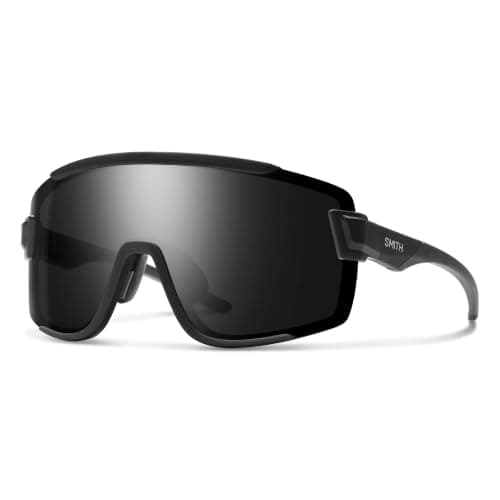
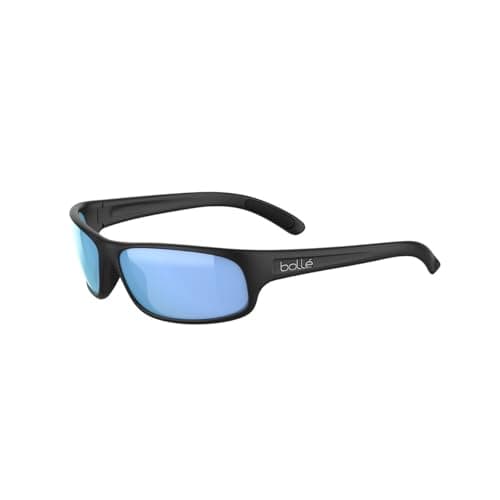
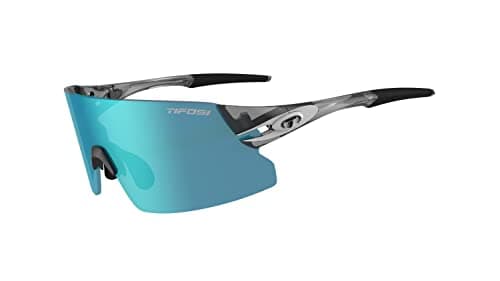
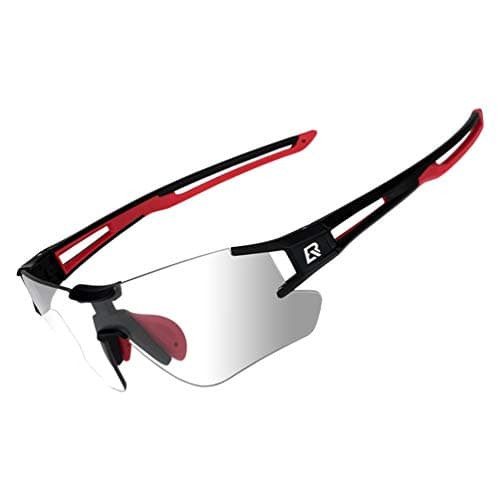
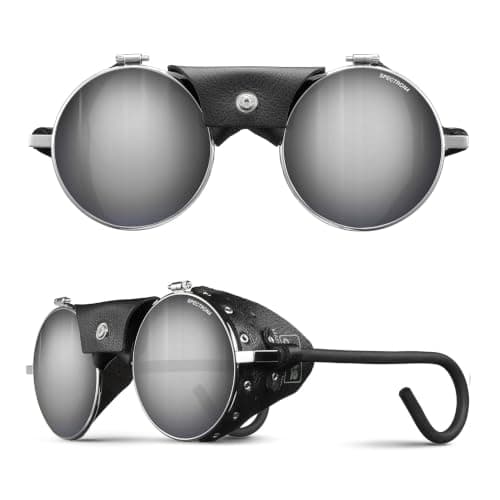
For sitting, walking, touring or spring skiing in bright snow, a category 4 lens with side shields is the correct tool and the Julbo Vermont Classic is the reference. For anything fast on hardpack, think carefully before choosing a standard polarized lens: sports opticians consistently warn that ordinary polarization makes it harder to distinguish ice from snow, which is exactly the cue you need at speed.
This is the guide where we contradict most of the rest of the site, so it is worth being precise about why. Everywhere else, polarization is the single most useful lens feature you can buy: it cancels the horizontally aligned light reflecting off water, roads and painted metal, and the result is a scene with the glare removed rather than merely dimmed. On snow it does the same thing — and one of the reflections it removes is the specular sheen that tells you the patch ahead is ice rather than soft snow.
The ice-versus-snow problem
Sports eyewear specialists are direct about this. SportRx, writing about snow and ski eyewear, advises staying away from traditional polarized lenses on the slopes because a standard polarizing filter makes it hard to distinguish ice from snow — a safety issue when you are moving downhill quickly. That is the same physics that makes polarized lenses hide black ice on a winter road, which we flag in polarized vs non-polarized.
The nuance worth adding, and the reason this is not a blanket ban: some brands build snow-specific polarized lenses tuned to preserve hardpack and ice definition, and several premium snow lenses use contrast tuning rather than polarization to lift terrain detail. So the honest rule is not "never polarized on snow" — it is never a generic polarized lens for fast skiing. If you are walking a snowy trail, sitting on a chairlift, or touring uphill, polarization is comfortable and the ice-reading risk is much lower.
Snow is the brightest thing you will look at
Fresh snow reflects an enormous share of the light hitting it, and it throws that light back up into your eyes from below, where a normal frame offers nothing. Add altitude, which increases ultraviolet exposure because there is less atmosphere absorbing it, and you have the two conditions that make snow eyewear a genuinely different product.
That is what a category 4 lens is for. Where a standard category 3 dark tint is the right level for a bright summer day, category 4 transmits only a few percent of visible light and exists specifically for glaciers, snowfields and high-altitude brightness. Side shields — the distinguishing feature of classic glacier glasses — block the reflected light arriving from below and around the frame. The one thing you must know: category 4 lenses are not permitted for driving in many places, and are unsafe for it everywhere. They are equipment, not everyday sunglasses.
Sunglasses or goggles?
Honestly: for fast downhill skiing in variable weather, goggles are the better tool, and we are not going to pretend otherwise on a sunglasses site. Goggles seal against wind, handle falling snow, and work with a helmet. Sunglasses win for uphill touring, spring slush laps in warm weather, snowshoeing, walking, and anything where goggle fogging on a sustained effort is the bigger problem. Many people who do both own both, and use the sunglasses on the way up and the goggles on the way down.
If your snow use is mostly walking and touring, this page is the right page. If you ski hard in bad weather, buy goggles and keep a pair of these for the rest of the time.
Fogging is the failure mode
Cold air outside, warm damp air inside, and a lens surface in between: snow use is the single worst fogging environment for eyewear. Vented frames and vented lenses help genuinely, as does not stopping abruptly after a climb. What does not help is a sealed wrap chosen purely for coverage. This is one of the few places where slightly less coverage in exchange for real airflow is the right trade.
How we ranked these
Brightness handling and reflected-glare control first, ice and terrain readability second, fogging resistance third, price fourth. The category 4 glacier pick tops the list for its intended job rather than as a general recommendation, and we flag polarization as a caveat rather than a feature on every pick where it applies. Method on how we rate; scores are judgments from documented research, not lab measurements.
Buying for snow
1. Match the lens category to the brightness
Category 4 for glacier, snowfield and sustained altitude. Category 3 for treeline and below, and for overcast days when a 4 is simply too dark.
2. Be deliberate about polarization
A generic polarized lens makes ice harder to pick out. For fast skiing choose a contrast lens or a snow-specific design; for touring and walking, polarized is comfortable and low-risk.
3. Get light blocked from below
Snow reflects up at you. Side shields or a genuine wrap are the only things that address that; a flat lifestyle frame does not.
4. Prioritize venting
Snow is the worst fogging environment there is. Vented lenses and frames beat maximum sealed coverage on a sustained effort.
5. Keep a normal pair for the drive
Category 4 lenses are not legal for driving in many jurisdictions and are unsafe regardless.