Skip to content
PolarizedClub

Lens tech · Photochromic

The Best Photochromic Sunglasses

A lens that darkens with the sun solves the problem no fixed tint can — light that changes during the session. Here is what it genuinely does, and the three places it falls short.

By Stephen V.Updated How we rate
#ad

We earn a commission when you buy through our Amazon links, at no extra cost to you. It never affects our rankings, and we say so when the cheaper pair is the better buy. How this works.

Buy photochromic when your light changes during a single session and you cannot stop to swap lenses — a ride that starts at dawn, a trail that moves in and out of tree cover, a round that runs into dusk. The Julbo Fury with its REACTIV 1-3 range is the widest-range lens here and the one to buy if budget is not the constraint; the ROCKBROS and KAPVOE shields deliver most of the practical benefit for a fraction of it.

A photochromic lens contains molecules that change shape when they absorb ultraviolet light, darkening the lens, and revert when the UV goes away. It is a genuinely clever piece of chemistry and it solves a problem that no amount of money spent on a fixed tint can solve: a single lens that is correct at 6am and correct at noon. That is why it dominates cycling and trail use, where stopping to change lenses is at best annoying and at worst impossible.

What photochromic is good at

Sessions that outlast one light condition. The obvious case. A long ride, a multi-hour hike, a dawn run, a trail with heavy tree cover. A fixed tint is wrong for part of every one of those, and carrying a spare lens means carrying a case and stopping to swap.

Being the non-polarized answer.This is underrated. Most photochromic sport lenses are not polarized, and for cycling that is the correct choice — polarization dims a bike computer and can mask the sheen that tells you a corner is wet. So photochromic often lets you sidestep the polarized trade-off entirely rather than choosing a side. The argument in full is in are polarized lenses good for cycling.

Simplicity. One lens, one case, nothing to forget. For a lot of people that is worth more than the last increment of optical quality.

The three limitations nobody advertises

1. Cold slows it down.The chemical reaction that darkens the lens is temperature-sensitive, and photochromic lenses transition more slowly — and often go darker and stay darker — in cold weather. On a winter ride that means a lens that is slow to clear when you drop into a shaded valley. This is inherent to the technology, not a defect in a particular product.

2. They never get as dark as a dedicated bright-sun lens.A photochromic lens is engineered to cover a range, and covering a range costs you the extremes. If you spend your time in relentless open glare — a bright flat, a snowfield, a summer criterium — a fixed dark tint is genuinely better at that one job. That is also why photochromic is not the answer for snow: see best sunglasses for snow and skiing.

3. They barely work in a car.This one catches people out constantly. The reaction is triggered by ultraviolet light, and modern windshields block most UV — so a photochromic lens sits stubbornly pale while you squint through it on a sunny drive. If you want one pair for the bike and the car, photochromic is the wrong choice for the car half. Our driving sunglasses roundup covers what to use instead.

Photochromic vs interchangeable lenses

These are the two answers to changing light and they suit different people. An interchangeable set — several fixed lenses in a case, like the Tifosi Rail ships with — gives you better optical quality at each condition and costs less per unit of quality. A photochromic gives you one lens that is never perfect and never badly wrong, with nothing to carry.

The deciding question is simple: can you predict the conditions before you start, and will you actually swap? If yes, an interchangeable set is better value and better optics. If the light changes mid-session or you know you will never stop to change a lens, photochromic wins. Plenty of riders own both and use the kit lenses for races and the photochromic for everything else.

Can a lens be photochromic and polarized?

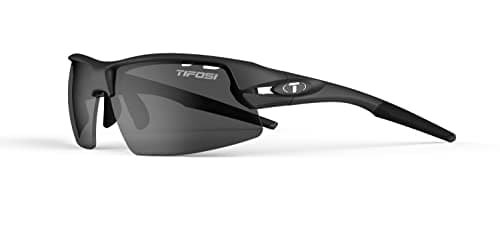
Yes, and the Tifosi Crit above is one. It is rarer than you would expect because the two technologies are layered rather than combined, which adds cost. Worth knowing: making a photochromic lens polarized reintroduces every polarized downside — the dimmed bike computer, the masked wet-road sheen — so a polarized photochromic is the right buy for someone who wants adaptive tint for driving, water or hiking, and the wrong buy for a cyclist. Do not assume the combination is strictly better; it is a different tool.

UV, and a small irony

A photochromic lens needs UV to activate, but UV protection is a separate property built into the lens regardless of how dark it currently is. A photochromic lens in its clear state still blocks UV. The American Optometric Association recommends 100% UVA and UVB blocking whatever the tint, and we treat that as a pass/fail floor on every product on this site — the separation between tint and UV is explained in UV protection explained.

How we ranked these

Range of the transition first, transition speed second, frame and coverage quality third, price fourth. Scores use the published rubric on how we rateand are judgments from documented research and manufacturer specification, not lab measurements — we do not own a spectrophotometer and will not pretend we measured a transmission curve.

The short answer

Quick picks

#ProductBest forScorePrice
01
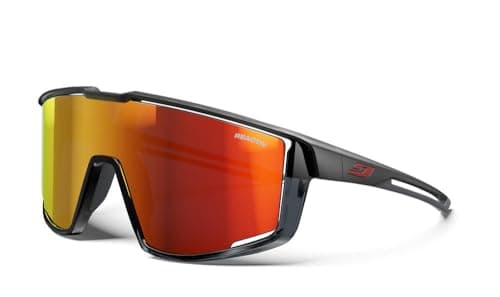
Julbo Julbo Fury (REACTIV 1-3)
Julbo Fury (REACTIV 1-3)

The reference photochromic sport lens — a category 1-3 range that genuinely covers dawn to glare.

The widest photochromic range in one lens
7.6
$239.95Amazon
02
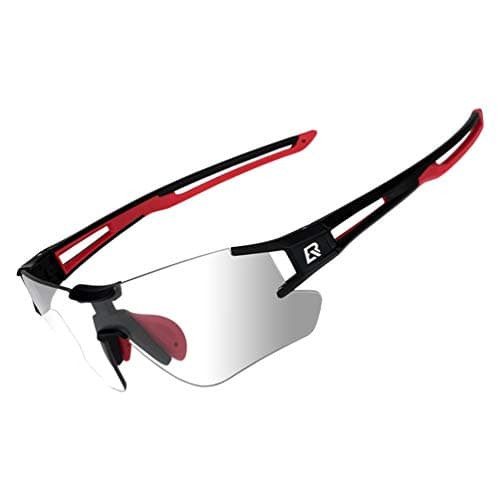
ROCKBROS ROCKBROS Photochromic
ROCKBROS Photochromic

A photochromic lens that darkens with the sun — the budget cyclist's clever pick.

One lens for all-day changing light
7.4
$29.99Amazon
03
Tifosi Tifosi Crit (Polarized Fototec)
Tifosi Crit (Polarized Fototec)

The rare lens that is both polarized and photochromic — glare control that also tracks the light.

Polarized glare control in changing light
7.6
$99.95Amazon
04
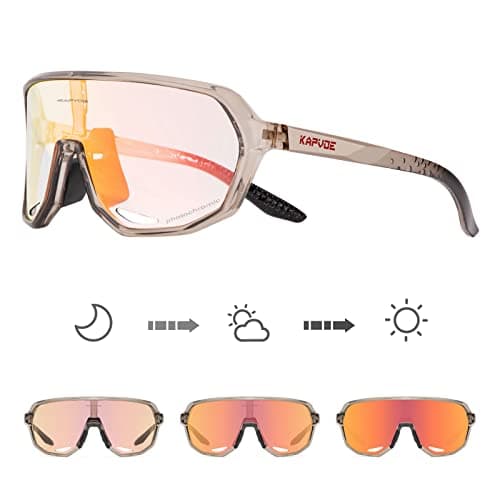
KAPVOE KAPVOE Photochromic (K63)
KAPVOE Photochromic (K63)

A photochromic sport shield at a price that makes the premium photochromics hard to justify.

Cheapest usable photochromic shield
7.2
$34.99Amazon
05
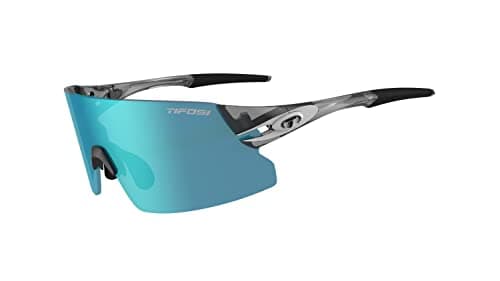
Tifosi Tifosi Rail XC (Interchangeable)
Tifosi Rail XC (Interchangeable)

The value pick for cyclists: big coverage and three lenses for changing light.

Best cycling sunglasses for the money
8.2
$79.95Amazon

#ad · Live prices from the Amazon Product API, as of Sep 5, 2026. Where we have no verified live price, we show none — we would rather leave a gap than print a number that has rotted.

In detail

The picks, in full

01
Julbo Julbo Fury (REACTIV 1-3)

The widest photochromic range in one lens

Julbo Fury (REACTIV 1-3)

REACTIV 1-3 photochromicMultilayer mirrorVented shieldSport fit
7.6/10

The reference photochromic sport lens — a category 1-3 range that genuinely covers dawn to glare.

Glare control
6
Optics
9
Fit & coverage
9
Durability
8
Value
6

Pros

  • The REACTIV 1-3 range is wide enough to leave in low light and finish in full sun without carrying a spare lens
  • Julbo builds mountain eyewear first, so the venting and the wrap are tuned for effort rather than for looks
  • Mirror layer sheds extra light at the bright end of the range

Cons

  • Premium price — several times what a budget photochromic costs
  • Like every photochromic it transitions slower in the cold, and it barely activates behind a car windshield

Don't buy this if…

your light is reliably constant. A fixed tint at a fraction of the price is optically better in a single condition; photochromic buys range, not peak quality.

$239.95View on Amazon

Price as of Sep 5, 2026. Prices change — Amazon's is the one that counts.

#ad · we may earn a commission from this link to Julbo Fury (REACTIV 1-3)

02
ROCKBROS ROCKBROS Photochromic

One lens for all-day changing light

ROCKBROS Photochromic

Photochromic lensUV40022gMyopia insert
7.4/10

A photochromic lens that darkens with the sun — the budget cyclist's clever pick.

Glare control
6
Optics
7
Fit & coverage
8
Durability
6
Value
10

Pros

  • The lens auto-darkens in bright light and clears in shade — one lens covers a whole ride, no swapping
  • Photochromic (not polarized) is arguably the right choice on a bike: it doesn't mask wet-road sheen or dim a Garmin
  • Includes a myopia insert for prescription wearers, which is rare at this price

Cons

  • Photochromic lenses transition slower in the cold and never go as dark as a dedicated bright-sun lens
  • Budget build; the hinges are the weak point

Don't buy this if…

you ride in extreme bright glare and want the darkest possible lens — a dedicated dark tint beats a photochromic at its darkest.

$29.99View on Amazon

Price as of Sep 5, 2026. Prices change — Amazon's is the one that counts.

#ad · we may earn a commission from this link to ROCKBROS Photochromic

03
Tifosi Tifosi Crit (Polarized Fototec)

Polarized glare control in changing light

Tifosi Crit (Polarized Fototec)

Fototec photochromicPolarizedSport frameHydrophilic grip
7.6/10

The rare lens that is both polarized and photochromic — glare control that also tracks the light.

Glare control
8
Optics
8
Fit & coverage
8
Durability
7
Value
7

Pros

  • Combines the two lens tricks most brands make you choose between: it darkens with the light AND cancels reflected glare
  • Sport shape and grip pads mean it stays put through a ride, a run or a long day outside
  • A far cheaper route to a polarized photochromic lens than the premium marques charge

Cons

  • Being polarized, it still dims a bike computer or a boat chartplotter — the photochromic half does not fix that
  • Photochromic lenses transition slower in the cold and never reach the darkness of a fixed bright-sun tint

Don't buy this if…

you ride with a head unit. A polarized lens is the wrong tool there no matter how clever the photochromic layer is — take a non-polarized photochromic instead.

$99.95View on Amazon

Price as of Sep 5, 2026. Prices change — Amazon's is the one that counts.

#ad · we may earn a commission from this link to Tifosi Crit (Polarized Fototec)

04
KAPVOE KAPVOE Photochromic (K63)

Cheapest usable photochromic shield

KAPVOE Photochromic (K63)

Photochromic lensUV400Large shieldLightweight frame
7.2/10

A photochromic sport shield at a price that makes the premium photochromics hard to justify.

Glare control
6
Optics
6
Fit & coverage
8
Durability
6
Value
10

Pros

  • Gets you the one-lens-covers-the-ride advantage for the price of a couple of inner tubes
  • Big shield coverage that a lifestyle frame cannot match at any price
  • Non-polarized, which is the correct choice for reading a bike computer

Cons

  • The transition is narrower and slower than a premium photochromic, and slower again in the cold
  • Budget hinges and coatings; treat it as a season-or-two frame

Don't buy this if…

you want the widest possible light range. The premium photochromics genuinely cover more of the spectrum and switch faster.

$34.99View on Amazon

Price as of Sep 5, 2026. Prices change — Amazon's is the one that counts.

#ad · we may earn a commission from this link to KAPVOE Photochromic (K63)

05
Tifosi Tifosi Rail XC (Interchangeable)

Best cycling sunglasses for the money

Tifosi Rail XC (Interchangeable)

Interchangeable lensesBig shieldVentedVery light
8.2/10

The value pick for cyclists: big coverage and three lenses for changing light.

Glare control
6
Optics
8
Fit & coverage
10
Durability
8
Value
9

Pros

  • Ships with multiple lenses so you swap for bright sun, overcast and low light — the right answer for a sport where light changes mid-ride
  • Large shield gives the coverage a road or gravel cyclist actually needs at speed
  • A fraction of the price of the Italian marquee brands for comparable coverage

Cons

  • The included lenses are tinted/contrast, not polarized — deliberate, since polarized can mask road sheen and dims a bike computer
  • Big-shield look isn't for everyone off the bike

Don't buy this if…

you want a do-everything lifestyle frame. This is a cycling tool — glorious on the bike, a lot of sunglasses at a cafe.

$79.95View on Amazon

Price as of Sep 5, 2026. Prices change — Amazon's is the one that counts.

#ad · we may earn a commission from this link to Tifosi Rail XC (Interchangeable)

Buying a photochromic lens

1. Check the stated category range

A 1-3 range covers low light to bright sun. A narrower range covers less. This number tells you more than any marketing phrase on the box.

2. Do not buy it for the car

Windshields block the UV that triggers the reaction, so a photochromic lens stays pale on a sunny drive. Buy a fixed polarized tint for driving.

3. Expect it to be slower in the cold

The chemistry is temperature-sensitive. Winter riders should know the lens will lag when they drop into shade.

4. Decide against an interchangeable set honestly

If you can predict the conditions and will actually swap, a lens kit is better optics for less money. If you will not, photochromic wins.

5. Polarized photochromic is a different tool

Great for driving, water and hiking. Wrong for cycling, because it brings back the dimmed head unit and the masked wet-road sheen.
How we picked

We don't run a testing lab

We compile each pair's published specifications — lens material, polarization, coating, frame material, coverage, UV rating and price — normalize them, and score each against a published rubric. The scores are judgments from documented research; they are notmeasurements we took, because we don't own a lab and we're not going to pretend we do. Pairs we claim to have lab-tested: 0.

Questions

Frequently asked

Are photochromic sunglasses worth it?
For any activity where the light changes during a single session and you cannot stop to swap lenses, yes — that is the exact problem they solve and no fixed tint can. For constant bright glare, or for driving, a fixed lens is better. The honest limits are slower transitions in cold, a maximum darkness below a dedicated bright-sun lens, and poor activation behind a windshield.
Do photochromic lenses work in the car?
Barely. The lens darkens in response to ultraviolet light, and modern car windshields block most UV, so the lens stays much lighter than the conditions warrant. If you want one pair for the bike and the car, buy a fixed polarized tint for driving — our driving roundup covers those.
How long do photochromic lenses take to change?
Seconds to darken and typically longer to clear, and both are slower in cold weather because the reaction is temperature-sensitive. That is fast enough for a ride moving between sun and shade over minutes, and too slow for a trail that flickers between full sun and deep shade every few seconds.
Can photochromic lenses be polarized?
Yes, though it is less common because the two technologies are layered rather than combined, which adds cost. Be deliberate: adding polarization reintroduces every polarized downside, including a dimmed bike computer and a masked wet-road sheen. A polarized photochromic is a good buy for driving, water and hiking, and the wrong buy for cycling.
Photochromic or interchangeable lenses for cycling?
Interchangeable if you can predict conditions and will genuinely swap before you ride — you get better optics per dollar. Photochromic if the light changes mid-ride or you know you will never stop to change a lens. Both are ranked in our cycling sunglasses roundup.

Keep reading

Receipts

Sources

We do not run a testing lab, and we do not pretend to. Where a spec or measurement came from a manufacturer or a third party, we name and link it. Where we could not verify something, we say so on the page rather than quietly leaving it out. Read our full method.