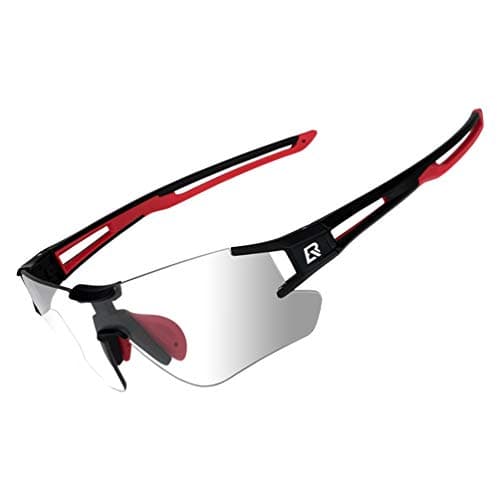
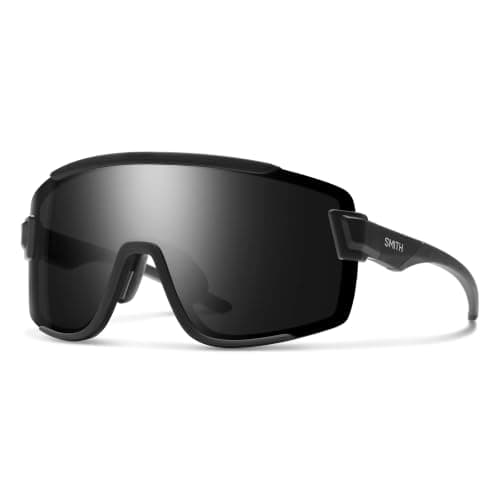
For most riders the Julbo Fury in REACTIV 1-3 is the pick: a vented shield whose lens tracks the light from a bright afternoon into dusk, which is the single most useful property eyewear can have on a bike. The ROCKBROS photochromic is the budget version of the same idea at a fraction of the price and is the honest answer for a commuter. But read the next paragraph before you buy anything, because there is a category of eyewear that beats everything on this page for one specific job, and we do not sell it.
Every pick here is a sport sunglass. None of them is a foam-gasketed, wind-sealed riding frame, and none of them carries a verified Z87+marking on the lens. If your riding is long-distance, open-face-helmet or highway-speed touring, the thing you actually want is purpose-built riding eyewear with a removable foam eyecup and a Z87+ stamp — a category we have no verified, currently-purchasable listing for, so we are not going to pretend one of these is it. What follows is the best of what a well-chosen sport sunglass can do for a rider, which is a lot if you ride in a full-face helmet, and less if you do not.
What actually matters on a motorcycle, in order
1. Impact rating, and the marking that proves it. This is the one hard safety spec in riding eyewear and it is routinely fudged. The ANSI Z87.1 standard has two levels, and 7eye's breakdown of it describes both: basic impact (Z87) is a steel ball dropped from 50 inches onto the lens, while high impact (Z87+) fires a 6.35mm steel ball at the lens at 45.7 meters per second — roughly 102mph. The second number is the one that matches what hits a rider. The rating is etched or printed on the lens itself, so a product description claiming "ANSI compliance" without a Z87 or Z87+ mark on the part is telling you nothing you can check. Same source is blunt about the limits: Z87.1 says nothing about wind protection, nothing about UV accumulated over a long day, and nothing about whether the frame stays put at highway speed. Passing it is "necessary but not sufficient for dedicated motorcycle use".
2. Wind, and the dry-eye problem it causes.Moving air across an open eye strips the tear film, and the result after an hour is the red, gritty, watering eyes most riders just accept. A wraparound closes some of that path; only a foam seal closes it properly. Harley-Davidson's own rider advice on sunglasses makes the same split — wraparound or foam-lined frames to shield against wind, dust and bugs, with goggles as the full-seal option for open-face and touring use and riding glasses as the partial-seal option under a full-face helmet. If you ride a full-face, the helmet is doing most of the sealing work and a wrap is genuinely enough.
3. A lens that handles changing light.A ride that starts in sun and ends after sunset is the normal case, and swapping lenses at the roadside in gloves is the thing nobody actually does. Photochromic solves it in one lens. Two caveats we would rather state than hide: most photochromic lenses are triggered by UV, and a windscreen or a tinted visor filters UV, so behind either one the lens will stay lighter than it would in open air. And no photochromic lens goes clear instantly — plan for a couple of minutes, not seconds.
4. Temple shape, because the helmet decides it.Thin, flat temple arms slide between a helmet's cheek pad and your head. Thick, sculpted, rubber-wrapped sport arms fight it, and on a long ride a pressure point above the ear becomes the whole experience. This is the single most common reason a rider's favorite sunglasses do not work on a bike, and it has nothing to do with the lens. If you wear a full-face, put the glasses on first, then the helmet.
5. Polarized or not — and here we lean against it. Polarization removes reflected glare, which is genuinely useful on wet tarmac in open country. It also dims LCD instrument panels and, as Selle Anatomica explains for cyclists, a polarized lens reveals the stress pattern in tempered glass and makes a car's side and rear windows harder to see through — which is exactly how you check whether the driver at the junction has seen you. On a bicycle we call that a reason to skip the filter; on a motorcycle, where the same junction is arriving faster, we call it a stronger one. Three of the six picks below are non-polarized for this reason. The full argument is in are polarized lenses good for cycling.
6. UV400. Free, universal, and the only part of a sunglass that protects your eye health rather than your comfort. The American Optometric Association treats UV blocking as the actual medical function of sunglasses, and it is unrelated to price — every pick here has it, as does a $15 pair. See UV protection explained.
The short answer
Quick picks
#ad · Live prices from the Amazon Product API, as of October 19, 2026. Where we have no verified live price, we show none — we would rather leave a gap than print a number that has rotted.
In detail
The picks, in full
The widest photochromic range in one lens
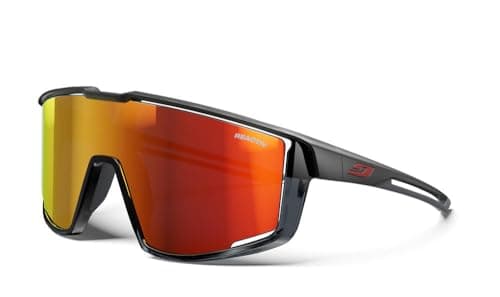
Julbo Fury (REACTIV 1-3)
REACTIV 1-3 photochromicMultilayer mirrorVented shieldSport fit
The reference photochromic sport lens — a category 1-3 range that genuinely covers dawn to glare.
- Glare control
- 6
- Optics
- 9
- Fit & coverage
- 9
- Durability
- 8
- Value
- 6
Pros
- +The REACTIV 1-3 range is wide enough to leave in low light and finish in full sun without carrying a spare lens
- +Julbo builds mountain eyewear first, so the venting and the wrap are tuned for effort rather than for looks
- +Mirror layer sheds extra light at the bright end of the range
Cons
- −Premium price — several times what a budget photochromic costs
- −Like every photochromic it transitions slower in the cold, and it barely activates behind a car windshield
Don't buy this if…
…your light is reliably constant. A fixed tint at a fraction of the price is optically better in a single condition; photochromic buys range, not peak quality.
One lens for all-day changing light
ROCKBROS Photochromic
Photochromic lensUV40022gMyopia insert
A photochromic lens that darkens with the sun — the budget cyclist's clever pick.
- Glare control
- 6
- Optics
- 7
- Fit & coverage
- 8
- Durability
- 6
- Value
- 10
Pros
- +The lens auto-darkens in bright light and clears in shade — one lens covers a whole ride, no swapping
- +Photochromic (not polarized) is arguably the right choice on a bike: it doesn't mask wet-road sheen or dim a Garmin
- +Includes a myopia insert for prescription wearers, which is rare at this price
Cons
- −Photochromic lenses transition slower in the cold and never go as dark as a dedicated bright-sun lens
- −Budget build; the hinges are the weak point
Don't buy this if…
…you ride in extreme bright glare and want the darkest possible lens — a dedicated dark tint beats a photochromic at its darkest.
Mountain biking and high-speed trail coverage
Smith Wildcat (ChromaPop)
ChromaPop lensGoggle-scale shieldRemovable frameVented
The mountain-bike shield reviewers keep landing on — goggle-scale coverage with contrast-tuned optics.
- Glare control
- 6
- Optics
- 9
- Fit & coverage
- 10
- Durability
- 8
- Value
- 6
Pros
- +Coverage closer to a goggle than a sunglass, which is what you want against trail debris and roost at speed
- +ChromaPop contrast tuning genuinely helps root and rock definition register earlier in dappled light
- +The frame detaches from the lens, so it converts between a framed and rimless look
Cons
- −Premium price, and the sheer size is a lot of eyewear anywhere other than a trail
- −Large lens area fogs more readily than a smaller frame on slow technical climbs
Don't buy this if…
…you ride mostly road or want one pair for everyday. This is a purpose-built trail tool and it looks like one.
Wraparound coverage on bright open terrain
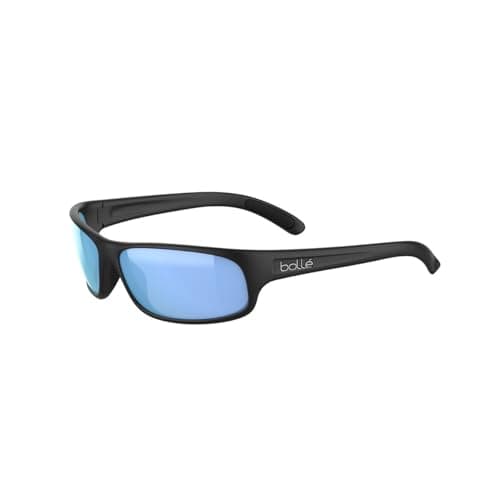
Bollé Anaconda (Polarized Wrap)
Wraparound framePolarizedLarge coverageUV protection
A big polarized wrap from a mountain-eyewear name — coverage for bright, open, reflective ground.
- Glare control
- 9
- Optics
- 7
- Fit & coverage
- 9
- Durability
- 7
- Value
- 7
Pros
- +The wrap seals out reflected light coming from the sides, which is the specific problem on open snow, water and rock
- +Polarized, so it removes rather than dims the glare bouncing off those surfaces
- +A mountain-eyewear brand with a long track record in this exact use
Cons
- −Polarized lenses can mask the sheen that distinguishes ice from snow — a real consideration if you are moving fast downhill
- −Large wrap styling does not translate to everyday wear
Don't buy this if…
…you ski or ride fast on hardpack. Standard polarization makes ice harder to pick out; a non-polarized snow-tuned lens is the safer tool there.
Best cycling sunglasses for the money
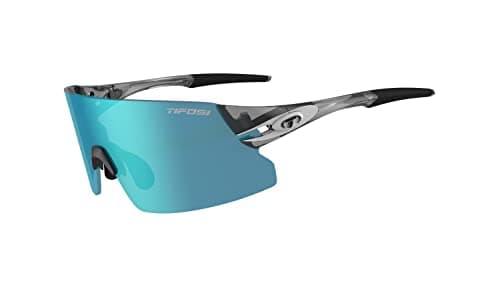
Tifosi Rail XC (Interchangeable)
Interchangeable lensesBig shieldVentedVery light
The value pick for cyclists: big coverage and three lenses for changing light.
- Glare control
- 6
- Optics
- 8
- Fit & coverage
- 10
- Durability
- 8
- Value
- 9
Pros
- +Ships with multiple lenses so you swap for bright sun, overcast and low light — the right answer for a sport where light changes mid-ride
- +Large shield gives the coverage a road or gravel cyclist actually needs at speed
- +A fraction of the price of the Italian marquee brands for comparable coverage
Cons
- −The included lenses are tinted/contrast, not polarized — deliberate, since polarized can mask road sheen and dims a bike computer
- −Big-shield look isn't for everyone off the bike
Don't buy this if…
…you want a do-everything lifestyle frame. This is a cycling tool — glorious on the bike, a lot of sunglasses at a cafe.
Cheapest usable photochromic shield
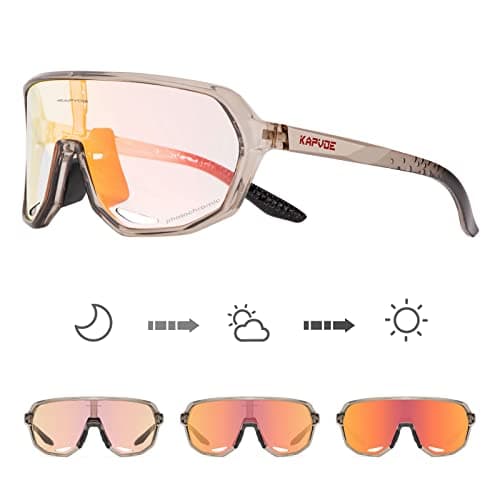
KAPVOE Photochromic (K63)
Photochromic lensUV400Large shieldLightweight frame
A photochromic sport shield at a price that makes the premium photochromics hard to justify.
- Glare control
- 6
- Optics
- 6
- Fit & coverage
- 8
- Durability
- 6
- Value
- 10
Pros
- +Gets you the one-lens-covers-the-ride advantage for the price of a couple of inner tubes
- +Big shield coverage that a lifestyle frame cannot match at any price
- +Non-polarized, which is the correct choice for reading a bike computer
Cons
- −The transition is narrower and slower than a premium photochromic, and slower again in the cold
- −Budget hinges and coatings; treat it as a season-or-two frame
Don't buy this if…
…you want the widest possible light range. The premium photochromics genuinely cover more of the spectrum and switch faster.
Why the photochromic picks rank above the better lenses
On paper the Smith Wildcat has the best coverage here and the Bollé Anaconda has the most glare control. Both are ranked below two photochromic frames, and the reason is the shape of a real ride rather than the shape of a spec sheet. A fixed dark lens is correct for about four hours of a summer day. Outside those four hours it is either not enough or too much, and "too much" at dusk on a road you do not know is the version that matters. A lens that moves through its range on its own removes the decision entirely, and removing decisions is most of what good riding kit does.
Julbo publishes its REACTIV lenses by category range — the Fury is a 1-3, meaning it lightens to a category 1 tint in low light and darkens to a category 3 in bright sun, per Julbo's own documentation. That is the widest span in this list and it is why it leads. The ROCKBROS does the same job with less range and less optical polish, at roughly an eighth of the money, and its published 22g weight and myopia-insert option make it the easiest recommendation on the page for a commuter who also wears glasses. ROCKBROS states its cycling lenses are UV400 with anti-fog and hydrophobic coatings on a TR-family frame; the brand's own product documentation is explicit that its polarized models are a different product and are not photochromic, so check which one you are ordering. Our ROCKBROS review covers where the budget shows.
Coverage: how much is enough under a helmet
More coverage is better right up to the point where the frame touches the helmet, and then it is worse. A goggle-scale shield like the Wildcat is superb on an adventure bike with goggles-style clearance and awkward in a snug full-face, where the top rim can catch on the brow pad. A moderate wrap like the Anaconda or the Rail XC fits most helmets without argument. If you ride an open-face or a half helmet, take the biggest lens you can get: there is no visor doing any of the work and light is arriving from above, beside and below you off the road surface.
One practical note that applies to every pick: interchangeable-lens frames like the Rail XC give you a clear lens for night riding, and a clear lens in a wrapped frame is a genuinely good piece of night kit because it blocks wind and grit without taking any light away. A dark lens after dusk is the opposite — see can you wear sunglasses at night, which is unambiguous about it.
Bug splatter, grit and keeping a lens alive
Riding is the hardest environment on a lens coating that any of our pages covers, and almost all of the damage is self-inflicted at the end of the ride. A dried insect on a lens is cemented protein; wiping it dry drags the hard parts across the coating and that is a permanent scratch. Flood it with water first, let it soften, then lift it off — never rub a dry lens, ever. Same rule for road grit. Our how to clean sunglasses page has the full method, and the add-ons below are the ones that method actually calls for. Budget on replacing a riding lens more often than any other kind; the replacement guide covers when a scratched lens is genuinely finished rather than just marked.
If you wear prescription glasses
Three workable routes and one that is not. The ROCKBROS above takes a myopia insert — a small carrier behind the main lens that your optician glazes — which gives you a sealed wrap with correct vision for far less than prescription sport eyewear. A flip-up or clip-on over your own frames is cheap and fine for short rides but is the wrong choice at speed, because a clip can lift. A fit-over worn alone works but is bulky under a helmet. The route that does not work is contact lenses plus a vented frame: moving air dries a contact lens faster than it dries an eye. All four options are compared properly in prescription polarized sunglasses, and the fit-over field is ranked in sunglasses that fit over glasses.
Fit, and the measurement to take before you order
Take the total frame width you already wear comfortably and match it, because a riding frame that is too wide will not clear your helmet's cheek pads and one that is too narrow will press. Wider faces should start from the XL end of a range rather than hoping; narrow faces get temple gaps where wind arrives. Our sizing guide has the numbers, frames for big heads covers the wide end, and if pairs creep on you regardless, how to stop sunglasses slipping is the fix list.
The verdict, stated plainly
Buy the Julbo Fury REACTIV 1-3 if you ride enough that one lens covering the whole day is worth real money. Buy the ROCKBROS photochromicif you commute, wear glasses, or simply refuse to spend Julbo money on something a bug will eventually ruin — it is the value pick and we would not argue with anyone who chose it first. Buy the Smith Wildcat for maximum coverage on an adventure bike, the Bollé Anaconda if you want polarized glare control and ride mostly in open country away from junctions, and the Tifosi Rail XC if you want one frame with a clear lens for night and a dark one for day. And if your riding is long, fast and open-face, take the honest answer from the top of this page: go and find a foam-sealed Z87+ frame, because none of these will seal out the wind.
For the road-going lens argument in a car rather than on a bike, see the best sunglasses for driving and best sunglasses for driving into the sun. For the two budget sport brands that appear most often in this category, our Tifosi vs ROCKBROS comparison settles which one suits which rider.
The cheap stuff that matters
Essentials under $40
The add-ons this page already told you to get. None of these is scored — our rubric measures glare control, optics, fit, durability and value, and four of those mean nothing for a cleaning cloth. So you get a reason and a live price instead of a number we'd have had to invent.
MagicFiber
MagicFiber Microfiber Cleaning Cloths (6-pack)
Buy a multipack for one reason: a dirty microfiber cloth is sandpaper. Six means you can retire the gritty one instead of rubbing it across a lens.
Koala
Koala Eyeglass Lens Cleaner Spray Kit (4-piece)
A lens-safe spray for when there is no tap. Sold specifically for coated lenses, which is the point — it is the household glass cleaners that attack coatings.
MyEyeglassCase
MyEyeglassCase Extra Large EVA Zip Hard Case
Sized for large and wrap frames, which is the catch with most cheap cases — a sport frame will not close in a case cut for slim readers.
#ad · Live prices as of October 19, 2026, hidden when our data goes stale. We may earn a commission, at no cost to you. How this works.
How we picked
We don't run a testing lab
We compile each pair's published specifications — lens material, polarization, coating, frame material, coverage, UV rating and price — normalize them, and score each against a published rubric. The scores are judgments from documented research; they are notmeasurements we took, because we don't own a lab and we're not going to pretend we do. Pairs we claim to have lab-tested: 0.
Questions
Frequently asked
Can you wear normal sunglasses on a motorcycle?+
In a full-face helmet, yes — the visor is doing the wind-sealing and a wrapped sport sunglass with thin temple arms works well. In an open-face or half helmet, normal sunglasses are a poor choice: there is nothing stopping moving air, grit or an insect, and a lifestyle frame with a flat lens and no impact rating is the worst case. Prioritize a Z87+ marked lens and a wraparound shape, and accept that a foam-sealed riding frame beats all of it.
What does Z87+ mean, and do I need it?+
Z87+ is the high-impact level of the ANSI Z87.1 eye-protection standard. Basic Z87 is tested with a steel ball dropped from 50 inches; Z87+ fires a 6.35mm steel ball at the lens at about 102mph. For riding, Z87+ is the level that corresponds to what actually hits you, and the mark is etched on the lens itself rather than only claimed in the listing. It is worth seeking out — but note it certifies impact only, not wind sealing, not retention at speed and not cumulative UV exposure.
Should motorcycle sunglasses be polarized?+
We lean no. A polarized lens removes reflected glare, which helps on wet open road, but it also dims LCD instrument displays and makes it harder to see through the tempered side and rear windows of the car at the junction next to you — which is how you judge whether its driver has noticed you. On a bicycle that is a reason to skip the filter; on a motorcycle the same situation arrives faster. If you want polarized anyway, the Bollé Anaconda in the picks above is the one to take.
Are photochromic lenses good for riding?+
They are the most useful lens type on a bike, because a ride that starts in sun and finishes after sunset is normal and nobody changes lenses at the roadside. Two limits to know: most photochromic lenses are triggered by UV, so behind a windscreen or a tinted visor they stay lighter than they would in open air, and the transition takes a couple of minutes rather than seconds. See
best photochromic sunglasses.
How do I stop sunglasses pressing on my head inside a helmet?+
Buy flat, thin temple arms rather than thick rubber-wrapped sport arms, match the frame width to what you already wear, and put the glasses on before the helmet rather than threading them in afterwards. A pressure point above the ear is almost always a temple-thickness problem, not a sizing one. Our
sizing guide has the measurements.
What about riding at night?+
Use a clear lens in a wrapped frame: you keep the wind and grit protection and give up no light at all. That is the real argument for an interchangeable-lens frame like the Rail XC. Never ride in a dark or yellow "night driving" lens — see
can you wear sunglasses at night for the evidence on why the yellow ones do not work.
Receipts
Sources
We do not run a testing lab, and we do not pretend to. Where a spec or measurement came from a manufacturer or a third party, we name and link it. Where we could not verify something, we say so on the page rather than quietly leaving it out. Read our full method.