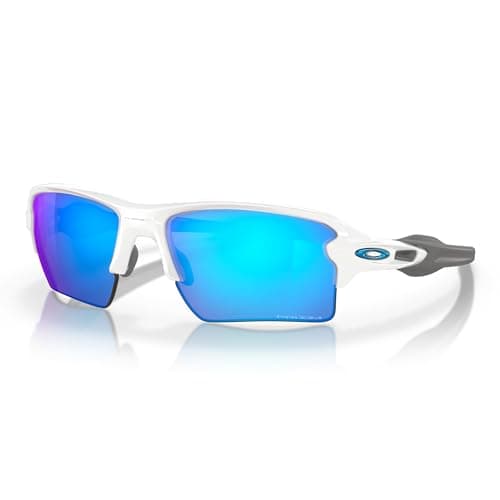
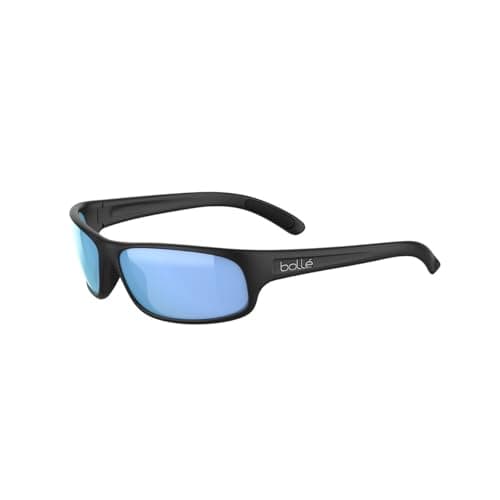
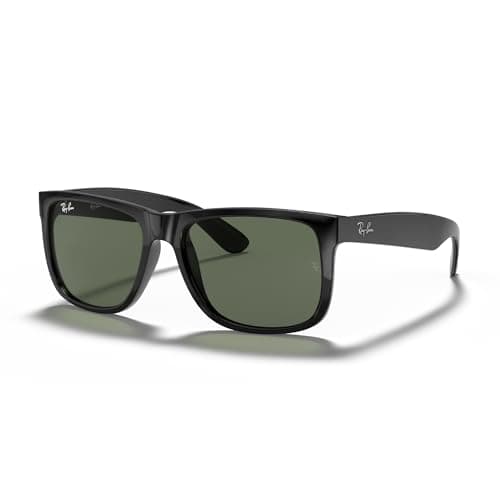
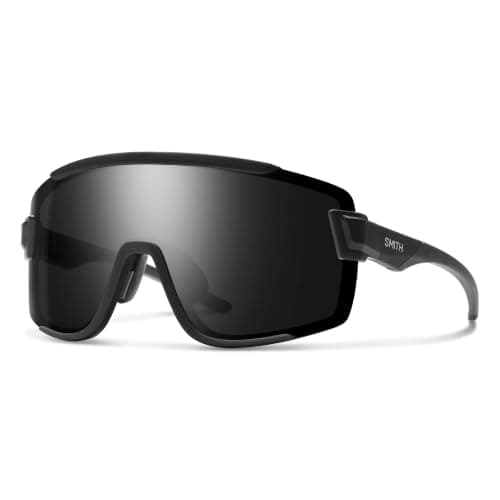
Stop shopping by shape and start shopping by total frame width. If sunglasses pinch your temples, leave marks behind your ears or pop off when you look down, you need a frame around 145 mm wide or more — not a different style. The Tifosi Swank XL is the easiest recommendation because it is an explicitly XL version of a frame that already fits well; the Oakley Flak 2.0 XL is the sport answer; the Bollé Anaconda is the wraparound for open ground.
Eyewear sizing is quietly standardized around a fairly narrow band, and if your head sits outside it every pair you try feels subtly wrong without it being obvious why. The good news is that this is a solvable measurement problem rather than a taste problem, and once you know your number the shopping gets much faster.
1. The number that decides everything
Total frame width — the outside edge of one hinge to the other — is what determines whether a frame fits a wide face. Most adult sunglasses land between 135 mm and 145 mm. Frames marketed as XL, wide or large generally run 145 mm to 155 mm.
The three numbers printed inside the temple arm (lens width, bridge width, temple length, e.g. 58-17-140) do not directly give you total width, but they let you approximate it: roughly two lens widths plus the bridge, plus a few millimeters for the hinges. A 58-17 frame is about 137 mm across the front. We walk through reading those numbers properly in how to choose sunglasses size.
The quickest self-diagnosis: take a pair you own, put it on, and look straight into a mirror. If the hinges sit inside the outline of your face rather than at its edge, the frame is too narrow, and every symptom below follows from that.
2. The symptoms, and what each one means
Pinching at the temples.The frame front is narrower than your face, so the arms are being sprung outward and are squeezing back. This is the one that gives people headaches, and no amount of adjustment fixes it — the front is the wrong size. The pressure mechanism is covered in why sunglasses give you a headache.
Marks behind the ears. Temple length is too short, so the arms bend around your head instead of running along it. Look for 145 mm+ temple length, and for straight or gently curved arms rather than sharply hooked ones.
The frame pops off when you look down. Sprung arms store energy and release it the moment the geometry changes. It is the clearest sign the front is too narrow.
Lens edge in your peripheral vision. A narrow frame puts its outer edge inside your field of view. On a bike or in a car that is a genuine distraction rather than a comfort complaint.
3. Where the wide frames actually are
The honest answer is that sport brands serve wide faces far better than fashion brands do, because sport frames are designed to wrap around a head rather than perch on a nose. Tifosi, Oakley, Bollé and Smith all publish explicitly larger fits, and several of them use XL in the model name.
Wraparound frames also help for a second reason: a curved front covers more face per millimeter of frame width, so the coverage feels right even where a flat frame of the same width would look undersized. That is why so much of this page is sport eyewear even though most people asking the question want an everyday pair.
Among everyday shapes, the larger squares and oversized rectangles are the reliable category. A wide face carries a big lens easily — what it cannot carry is a small one, which reads as borrowed.
4. Fit-over frames are a legitimate shortcut
Fit-over sunglasses are designed to go over prescription glasses, which means they are built several sizes larger than ordinary frames by definition. If you have struggled to find anything wide enough, a fit-over worn on its own is a genuinely usable wide frame, and the large models are very wide indeed. Our fit-over guide ranks the field.
5. What not to do
Do not bend the arms outward. It works for a week, stresses the hinge, and on a metal frame it eventually snaps. Buy the right width instead.
Do not buy oversized-but-narrow fashion frames.Large lenses on a narrow front is a common design, and it does not solve a wide-face problem — the hinges are still in the wrong place.
Do not assume a men's frame is wider. Sizing is not consistently gendered. The number is the number; read the specification rather than the label.
How we ranked these
Frame width first, temple length second, coverage third, price fourth. Every pick is UV400 — the protection the American Optometric Association recommends and the only property here that is about your health rather than your comfort. Scores come from the rubric on how we rate; they are judgments compiled from published specifications, not lab measurements.
Buying for a wide face
1. Find your total frame width
Try a pair that fits acceptably and read the numbers inside the arm, or measure temple-to-temple across your own face. Under 140 mm is standard; 145 mm+ is what you are looking for.
2. Check temple length separately
145 mm or longer if you get marks behind your ears. It is a different number from frame width.
3. Prefer sport and wraparound fronts
They are designed around a head rather than a nose, and a curved front covers more face for the same width.
4. Consider a fit-over worn on its own
Built oversized by definition, and the large models are wider than almost anything sold as ordinary eyewear.
5. Never bend the arms to make it fit
Temporary, hard on the hinge, and it ends with a broken frame.