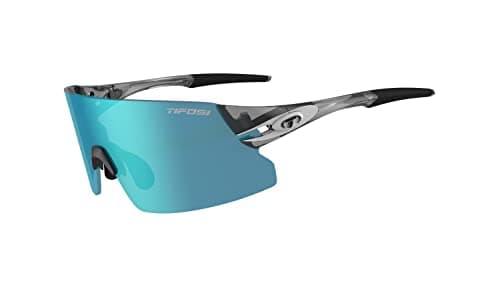
Buy Tifosi if fit is your problem or you want one frame to last years — the adjustable nose and arm hardware, the published XL sizing and the lifetime defect warranty are things ROCKBROS does not match, and the Rail XC is the pick for most riders. Buy ROCKBROS if you want a photochromic lens or a prescription insert for the least money anyone charges for either — the photochromic model is the best value on this page and the right answer for a commuter or a rider who wears glasses. Both are genuinely good at this price. They are good at different things.
This is the most useful comparison in budget sport eyewear and almost nobody writes it honestly, because the two brands are usually reviewed in different places — Tifosi in cycling and running roundups, ROCKBROS in "cheap Amazon gear" lists. They belong in the same conversation. Both sell wrapped sport frames in the $20-$100 band, both publish real specs, and both have one feature the other cannot answer.
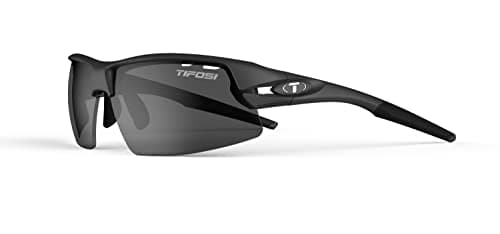
Tifosi's case is engineering and service. Grilamid TR-90 frames, hydrophilic rubber at the nose and temple tips that grips harder as it gets damp, adjustable nose pieces, an explicit XL sizing line, interchangeable lens sets on the shields, and a manufacturer's defect warranty for the life of the product. Its Crit product page publishes a 31g frame weight and lists Smoke Polarized Fototec as a lens option.
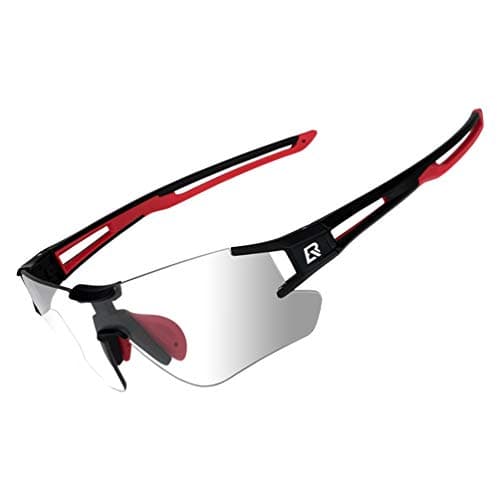
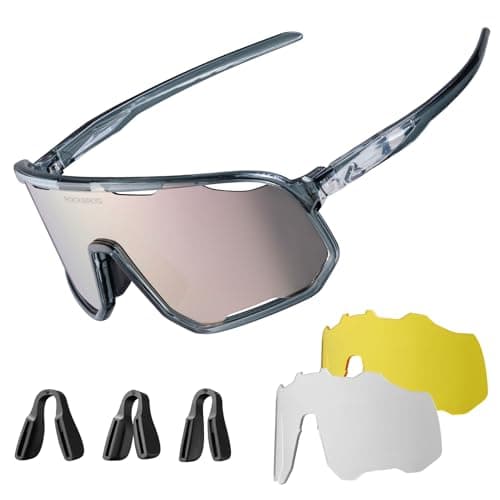
ROCKBROS's case is reach: it puts two features into the sub-$35 bracket that the rest of the market treats as premium. Its photochromic model is published at 22g with a myopia-insert option, and its polarized cycling line is documented at 26g per pair on a TR93 memory-polymer frame with TAC polarized UV400 lenses, anti-fog and hydrophobic coatings, adjustable non-slip nose pads and soft rubber ear frames — plus a stated 2-year product warranty and a 30-day return window. That same page is explicit that the polarized models are notphotochromic, which is the single most common mix-up when ordering from this brand.
| Factor | Tifosi | ROCKBROS |
|---|
| Typical price | Low-$20s to around $100 | Around $20 to the mid-$30s |
| Photochromic | Yes — Fototec, including two Polarized Fototec tints | Yes, and far cheaper — it is the brand's signature |
| Polarized | On selected models only; much of the range is deliberately not | On selected models only — a separate product from the photochromic ones |
| Published weight | 31g on the Crit | 22g photochromic, 26g polarized cycling |
| Fit adjustment | Adjustable nose pieces and arms; published XL sizing line | Adjustable non-slip nose pads; no XL line |
| Prescription route | Not a consumer feature on the standard frames | Myopia insert carrier on several models |
| Interchangeable lenses | Yes on the shields (Rail family) | Yes on the kit models (3-lens sets) |
| Warranty | Manufacturer defects for the life of the product, original US purchaser | Stated 2-year product warranty, 30-day returns |
| Best for | Fit problems, wider faces, a frame you keep for years | Photochromic on a budget, glasses wearers, a pair you can replace |
The decision usually comes down to one question: photochromic or fit?
Both brands sell photochromic and both sell adjustable frames, so on paper this looks like a tie. It is not, because of where each brand puts its best version. Tifosi's Fototec photochromic sits on its mid and upper frames — the Crit in Polarized Fototec is around the hundred-dollar mark, which is real money in this segment. ROCKBROS puts photochromic on its cheapest sport wrap. If photochromic is the feature you came for, ROCKBROS gets you there for roughly a quarter of what Tifosi charges, and the honest summary is that you are giving up optical polish and brand service rather than the function itself.
Fit runs the other way. Tifosi's adjustable nose pieces and arm tips plus a published XL sizing line turn "will this shape suit my face" from a gamble into a fitting, and that matters more than any lens spec if you are at either end of the width range. ROCKBROS adjusts at the nose and nowhere else, and does not publish a wide-fit line. For a wider face, Tifosi is the safer order — see frames for big heads, and how to choose sunglasses size for the measurement to take first.
Lens options: read the model name, not the brand
This trips up buyers of both brands and it is worth being precise. With Tifosi, a large part of the sport range is non-polarized on purpose: the standard Fototec lens, the golf-specific tints and the Rail interchange kits are contrast lenses rather than glare filters, because a rider using a head unit or reading wet tarmac needs the reflections a polarized lens deletes. Tifosi does sell polarized versions of its lifestyle-sport shapes, and two of its Fototec tints are Polarized Fototec. Our are Tifosi sunglasses polarized page lists which lines are which.
With ROCKBROS, polarized and photochromic are two separate products and the brand says so plainly on its own listing. A photochromic ROCKBROS is not polarized; a polarized ROCKBROS does not change tint. The 3-lens polarized kit in the picks above is the closest thing to having both — a polarized dark lens for bright sun plus yellow and clear spares for everything else — and swapping a lens by hand is the trade for not having one that adapts. Our ROCKBROS reviewis the page that answers "are they any good" directly.
Build quality and what actually fails
Neither brand is a premium optic and neither pretends to be. What separates them in practice is not the first week, it is year two. Tifosi's Grilamid frames and its lifetime defect warranty mean a hinge or a frame fault is a warranty claim; the warranty explicitly excludes the things that normally kill cheap eyewear — normal wear, scratches, loss, sitting on them — so read it as a defect policy rather than an accident policy. ROCKBROS states a 2-year warranty on defects plus a 30-day return window, which is a shorter but perfectly reasonable promise at the price.
Coating life is the honest weak point for both. Budget lens coatings scratch sooner than premium ones, and the anti-fog and hydrophobic layers both brands advertise wear off with cleaning. Treat either as a one-to-three-season pair rather than a decade pair, clean them properly, and the economics work out fine — our cleaning method is the single biggest determinant of how long a cheap lens survives, and when to replace sunglasses covers the point at which a marked lens is actually finished.
Where each brand wins outright
Tifosi winsfor anyone whose recurring problem is fit — too wide, too narrow, pairs that slide — and for anyone who wants one frame with several tints they can swap. It also wins on a hot face: hydrophilic grip that tightens as it dampens is a better solution than a rubber nose pad, which is why Tifosi appears throughout our running and cycling roundups.
ROCKBROS winson two features and one philosophy. Photochromic at the bottom of the market is a genuine achievement and the right lens for a commute that starts and ends in different light. A myopia insert at this price is the cheapest honest route to correct vision in a sealed sport wrap, which is otherwise an expensive problem. And because the pairs cost so little, losing or wrecking one is a shrug — which, for eyewear that lives on a bike, in a car door pocket or in a helmet bag, is worth more than most spec-sheet advantages.
Which to buy for which sport
Road cycling:Tifosi Rail XC for coverage and swappable lenses, ROCKBROS photochromic if you would rather spend the difference on tires. Keep both non-polarized if you run a head unit — see are polarized lenses good for cycling, or best polarized cycling sunglasses if you have already decided you want the filter anyway.
Running: Tifosi, for the grip. A damp face is where hydrophilic pads earn their keep. The field is ranked in best budget running sunglasses.
Motorcycling: ROCKBROS photochromic, because a ride spans more light than a fixed lens covers and the insert option solves prescriptions under a helmet. Both brands feature in best sunglasses for motorcycling.
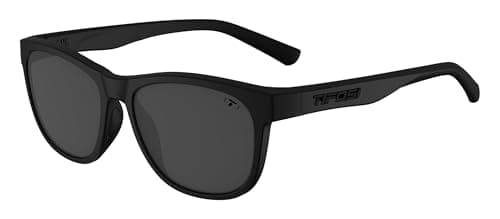
Everyday and driving:Tifosi's lifestyle-sport shapes (the Swank in the picks above) look least like equipment, and the polarized version is the one to get for a car.
The verdict, stated plainly
If you can only buy one and you do not know which: Tifosi Rail XC. It fits more faces, survives longer, and the interchangeable lenses cover the light range that would otherwise push you toward photochromic. If photochromic specifically is what you want, or you wear glasses, or the budget is genuinely tight: ROCKBROS photochromic, and it is not a compromise so much as a different, cheaper route to the same ride. For the wider budget field including the lifestyle brands, see Knockaround vs Tifosi and best cheap polarized sunglasses.
How to decide in 30 seconds
Do you want a photochromic lens?
ROCKBROS. Tifosi makes a good one (Fototec) but charges several times more for it.
Is fit your recurring problem?
Tifosi — adjustable nose and arms plus a published XL line. ROCKBROS adjusts at the nose only.
Do you wear prescription glasses?
ROCKBROS, for the myopia insert. It is the cheapest honest way to get correct vision inside a sport wrap.
Do you want polarized?
Check the model, not the brand — both sell polarized and non-polarized versions, and with ROCKBROS the polarized models are a different product from the photochromic ones.
Is this a keeper or a consumable?
Keeper → Tifosi, for the frame and the lifetime defect warranty. Consumable → ROCKBROS, and buy a spare with the difference.