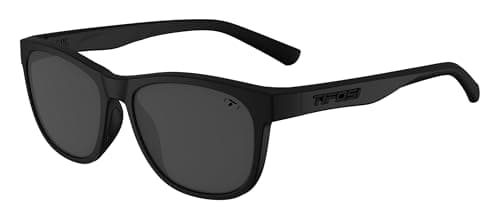
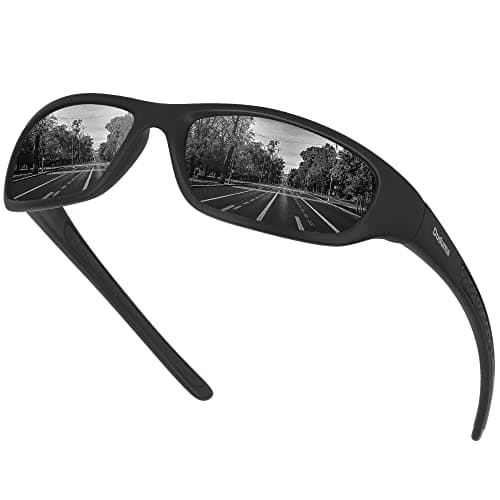
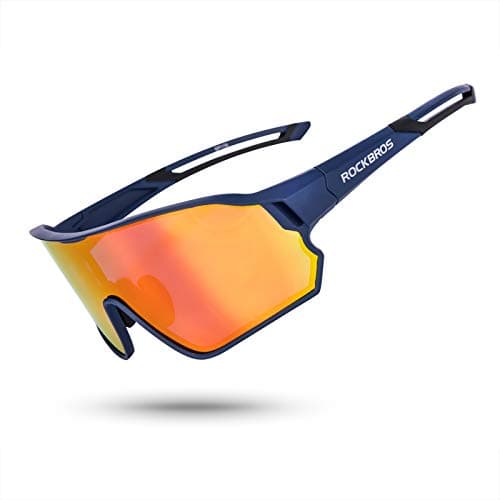
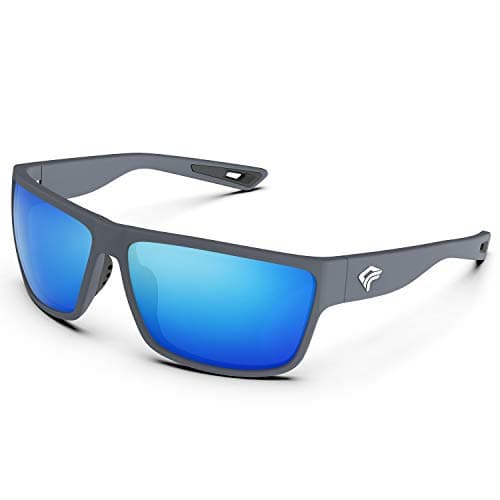
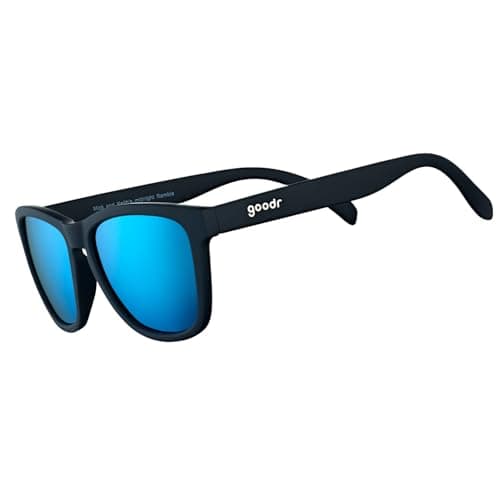
Buy light, and buy grip. Under $35, a running frame that weighs almost nothing and has hydrophilic or rubberized contact points at the nose and temples will do the job as well as anything costing five times more. The goodr OG is the reference pick because the grip coating is the best-executed at this price; the Tifosi Swank is the same idea in a slightly more grown-up frame; the Duduma TR8116 is the floor of the market and still perfectly usable.
Running is unusual among sports in how well it tolerates a cheap pair. A cyclist descending at speed has a genuine argument for premium optics; an angler reading water has a genuine argument for a contrast-tuned lens. A runner mostly needs eyewear that stays on their face, does not bounce, and blocks UV — and none of those three things cost much to deliver.
1. The two specs that actually decide it
Grip material.This is the whole game. Ordinary smooth plastic gets slicker as it wets, which is why a fashion frame is on your nose at mile one and in your hand at mile three. Hydrophilic or rubberized compounds at the nose pads and temple tips do the opposite — they get tackier as they dampen. It is not an expensive material, and its presence or absence separates a usable cheap running frame from an unusable one. The mechanism is in how to stop sunglasses slipping.
Weight. Every gram generates downward force on every footstrike, and over an hour that compounds into slipping and pressure points. The good news is that light is cheap: thin nylon frames weigh less than metal ones, and a budget running frame is often lighter than a premium lifestyle one.
2. The specs that do not matter as much as the listing implies
Polarization. Genuinely useful, genuinely cheap, and genuinely not the point on a run. Road running near water or on wet tarmac benefits; trail and park running barely notices. Do not pay a premium for it, and do not avoid it either. If you want to check a pair actually has it, the tests are in how to tell if sunglasses are polarized.
Contrast tints and mirror coatings. Pleasant, and a long way down the list for running. You are not resolving fine detail at distance; you are avoiding squinting.
Enormous coverage. A goggle-scale shield is a cycling and mountain-biking solution. At running pace it restricts airflow and fogs, and it is heavier than you want.
3. The one spec you must not compromise on
UV400. The American Optometric Association recommends lenses that block 100% of UVA and UVB, and this is the only thing on the page about your health rather than your comfort. It is also free: a cheap UV400 lens blocks UV as completely as a premium one.
The actual danger is a dark lens with no confirmed UV rating. A dark tint opens your pupils, so an unprotected dark lens lets more UV reach your retina than wearing nothing at all. That is the one genuinely bad purchase in this category, and it is easy to avoid: buy from a brand that states UV400, not from an unbranded listing that does not. More in UV protection explained.
4. What you are actually giving up under $35
We are not going to pretend the tier is free of compromise.
Coatings scratch.Expect visible fine scratching within a season or two, faster if you push them onto your head with sweaty hands and wipe them on your shirt. Rinsing before wiping genuinely doubles that — see how to clean sunglasses.
Optics soften at the edges. Irrelevant at running pace, so this is the trade you should be happiest to make.
One lens, one fit.No interchangeable sets, no size options within a frame, no adjustable nose pads. If it does not fit your face, it does not fit — and how to choose sunglasses size is worth five minutes before you buy.
Frame lifespan. A season or two of hard use is realistic. Which is a reasonable trade for the price of a couple of gels.
5. Where spending more genuinely helps a runner
Three cases, and only three. If you run trails in changing light, an interchangeable or photochromic lens is worth real money — see best sunglasses for trail running. If you have an unusual face width, the mid tier offers size options the budget tier does not. And if you keep sunglasses for years rather than seasons, better coatings change the arithmetic; that band is ranked in best sunglasses under $100.
How we ranked these
Grip first, weight second, lens quality third, price fourth. That ordering is why a $30 frame with an excellent grip coating beats a $30 frame with a slightly better lens. Scores come from the rubric on how we rate: judgments compiled from published specifications, not lab measurements. We do not run a lab.
Buying cheap for running
1. Grip material is the whole decision
Hydrophilic or rubberized nose and temple pads. Without it, nothing else about the pair matters.
2. Light beats everything else
Weight becomes force on every footstrike. Thin nylon frames are both the lightest and the cheapest.
3. Confirm UV400 explicitly
Free, binary, and the only health-relevant spec. A dark lens without a stated rating is the one bad buy.
4. Skip the big shield
Goggle-scale coverage is a cycling answer. At running pace it fogs and adds weight.
5. Treat them as seasonal
Coatings will haze eventually. Rinse before wiping and you will get a lot longer out of them.