Skip to content
PolarizedClub

Running · Trail

The Best Sunglasses for Trail Running

Road running is a glare problem. Trail running is a light-changing problem — in and out of tree cover, up out of a valley — and that needs a different lens.

By Stephen V.Updated How we rate
#ad

We earn a commission when you buy through our Amazon links, at no extra cost to you. It never affects our rankings, and we say so when the cheaper pair is the better buy. How this works.

Buy for changing light, not for maximum darkness. On a trail you are in and out of tree cover constantly, and a fixed dark tint is wrong for half the run. The Tifosi Rail XC solves it with three interchangeable lenses at a fair price; the Julbo Fury REACTIV solves it properly with a photochromic lens that spans three categories on its own. Everything else — grip, weight, coverage — follows the ordinary running rules.

The running hub on this site covers frames that stay on when you sweat, which is the problem road running poses. A trail adds three things: light that changes minute to minute, terrain that throws dust and branches at your face, and descents where a frame shifting on your nose is a real hazard rather than an annoyance.

1. Changing light is the trail-specific problem

Consider an ordinary hour on a wooded trail. You start in shade under canopy, break onto an exposed ridge in full sun, drop back into a valley, and finish as the light goes flat. A single dark tint is correct for perhaps a third of that, too dark for the rest, and genuinely unsafe on a technical descent under trees where you need to read root and rock.

There are two real solutions. A photochromic lensdarkens and clears on its own — the most elegant answer, and the reason Julbo's REACTIV lenses matter here: the published range spans categories 1 to 3, which covers deep shade to open sun in one lens. An interchangeable set gives you two or three lenses to swap before the run, which is cheaper and works well if your route is predictable but is useless mid-run.

The mechanisms and the trade-offs are compared in polarized vs photochromic, and the adaptive field is ranked in best photochromic sunglasses.

2. Polarized is usually the wrong choice on a trail

This runs against the grain of a polarized-sunglasses site, and it is still true. Polarization removes horizontally aligned reflected light, which on a trail includes the sheen that distinguishes a wet rock from a dry one and the surface reflection that tells you a stream crossing is deeper than it looks.

Trails also have very little of the flat reflective surface that makes polarization valuable — no water, no wet tarmac, no car bonnets. So you pay a small safety cost for very little benefit. Non-polarized contrast lenses are the more sensible default on technical ground, and polarized is fine on open fire roads and coastal paths. Same logic as are polarized lenses good for cycling.

3. Grip, because a descent is where it matters

A frame that slides down your nose on a road run is annoying. On a technical descent, at the exact moment you are reading foot placement three steps ahead, it is a genuine problem — you look over the top of the lens, your eye adjusts, and you miss a step.

The mechanism is the same as everywhere else on this site: hydrophilic or rubberized contact points that get tackier as they dampen, rather than a tighter frame. Squeezing a too-small frame onto your head is not a substitute and gives you a headache instead — the full diagnosis is in how to stop sunglasses slipping.

4. Coverage: more than a road frame, less than a bike shield

Trail running sits between road running and mountain biking on coverage. You want more than a minimal road frame, because branches, dust and grit are real at trail pace, and you are often running behind someone kicking up dirt.

You do not want a full goggle-scale shield, because you are moving slowly enough that airflow across the lens is limited and the thing will fog on a climb. That is the difference between this page and best mountain bike sunglasses: a mountain biker generates far more airflow and takes far more impacts.

Practical shape guidance: a medium sport shield with venting at the top of the lens. Enough coverage to keep grit out, enough gap to keep air moving on a climb.

5. Weight, and the ultra-distance argument

Over a two-hour trail run, a heavy frame becomes a pressure point at the bridge or behind the ears, and pressure points end runs. Very light sport frames are worth more here than optical excellence, particularly if you race long.

The other long-distance consideration is that you will take them on and off — into a pack, onto your head, back on when you break cover. Frames that survive being shoved into a vest pocket, and that do not have a fragile hinge, last a lot longer. Flexible nylon frames handle this far better than acetate.

6. UV goes up with altitude

Trail running often means climbing, and UV exposure increases with elevation. The American Optometric Association recommends lenses blocking 100% of UVA and UVB, and that protection is identical at every price — a $25 UV400 lens protects exactly as well as a $250 one. Never buy a dark lens without a confirmed rating; a dark tint opens your pupils, so an unprotected dark lens is worse than none.

How we ranked these

Lens adaptability first, then grip, then weight, then coverage and price. That is why an interchangeable frame outranks better fixed-lens sunglasses here — on a trail, the right lens at the right moment beats a better lens at the wrong one. Scores come from the rubric on how we rate: judgments compiled from published specifications, not lab measurements. We do not run a lab.

The short answer

Quick picks

#ProductBest forScorePrice
01
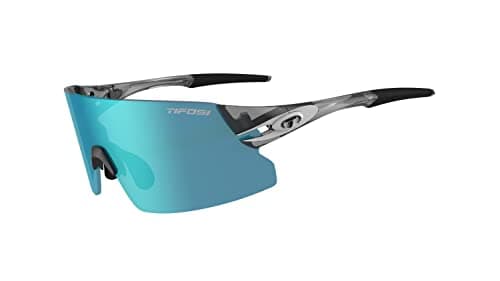
Tifosi Tifosi Rail XC (Interchangeable)
Tifosi Rail XC (Interchangeable)

The value pick for cyclists: big coverage and three lenses for changing light.

Best cycling sunglasses for the money
8.2
$79.95Amazon
02
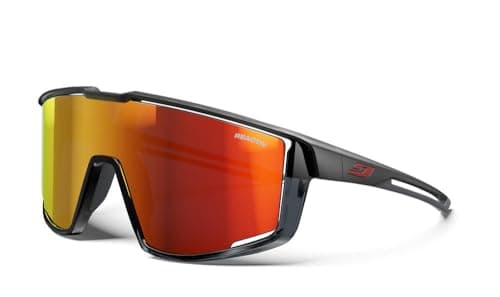
Julbo Julbo Fury (REACTIV 1-3)
Julbo Fury (REACTIV 1-3)

The reference photochromic sport lens — a category 1-3 range that genuinely covers dawn to glare.

The widest photochromic range in one lens
7.6
$239.95Amazon
03
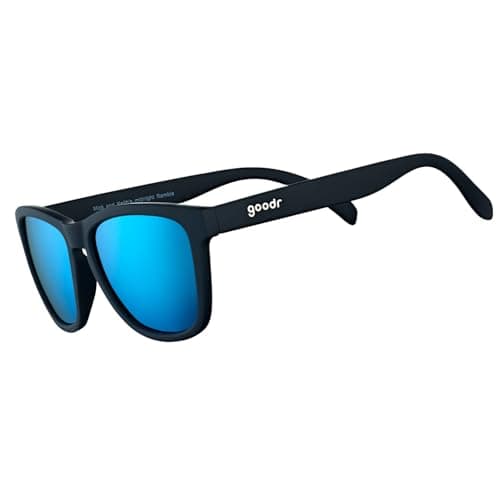
goodr goodr OG (Polarized)
goodr OG (Polarized)

The runner's default: polarized, no-slip, and cheap enough to not baby.

Best running sunglasses overall
8.0
$30.00Amazon
04
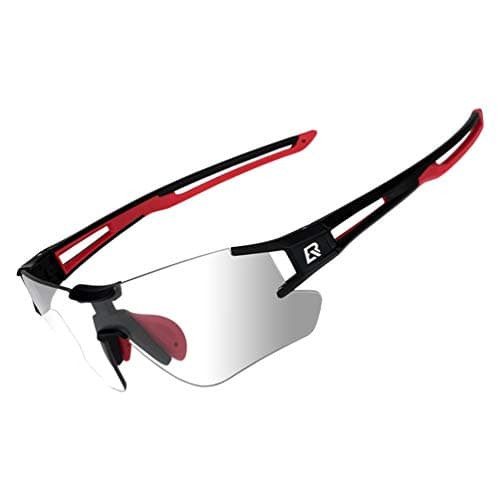
ROCKBROS ROCKBROS Photochromic
ROCKBROS Photochromic

A photochromic lens that darkens with the sun — the budget cyclist's clever pick.

One lens for all-day changing light
7.4
$29.99Amazon
05
Native Breck (Polarized)

A trail-and-town polarized frame from a brand built around mountain use — mid price, real fit engineering.

Hiking that ends in a bar
7.8
Check price →

#ad · Live prices from the Amazon Product API, as of Sep 5, 2026. Where we have no verified live price, we show none — we would rather leave a gap than print a number that has rotted.

In detail

The picks, in full

01
Tifosi Tifosi Rail XC (Interchangeable)

Best cycling sunglasses for the money

Tifosi Rail XC (Interchangeable)

Interchangeable lensesBig shieldVentedVery light
8.2/10

The value pick for cyclists: big coverage and three lenses for changing light.

Glare control
6
Optics
8
Fit & coverage
10
Durability
8
Value
9

Pros

  • Ships with multiple lenses so you swap for bright sun, overcast and low light — the right answer for a sport where light changes mid-ride
  • Large shield gives the coverage a road or gravel cyclist actually needs at speed
  • A fraction of the price of the Italian marquee brands for comparable coverage

Cons

  • The included lenses are tinted/contrast, not polarized — deliberate, since polarized can mask road sheen and dims a bike computer
  • Big-shield look isn't for everyone off the bike

Don't buy this if…

you want a do-everything lifestyle frame. This is a cycling tool — glorious on the bike, a lot of sunglasses at a cafe.

$79.95View on Amazon

Price as of Sep 5, 2026. Prices change — Amazon's is the one that counts.

#ad · we may earn a commission from this link to Tifosi Rail XC (Interchangeable)

02
Julbo Julbo Fury (REACTIV 1-3)

The widest photochromic range in one lens

Julbo Fury (REACTIV 1-3)

REACTIV 1-3 photochromicMultilayer mirrorVented shieldSport fit
7.6/10

The reference photochromic sport lens — a category 1-3 range that genuinely covers dawn to glare.

Glare control
6
Optics
9
Fit & coverage
9
Durability
8
Value
6

Pros

  • The REACTIV 1-3 range is wide enough to leave in low light and finish in full sun without carrying a spare lens
  • Julbo builds mountain eyewear first, so the venting and the wrap are tuned for effort rather than for looks
  • Mirror layer sheds extra light at the bright end of the range

Cons

  • Premium price — several times what a budget photochromic costs
  • Like every photochromic it transitions slower in the cold, and it barely activates behind a car windshield

Don't buy this if…

your light is reliably constant. A fixed tint at a fraction of the price is optically better in a single condition; photochromic buys range, not peak quality.

$239.95View on Amazon

Price as of Sep 5, 2026. Prices change — Amazon's is the one that counts.

#ad · we may earn a commission from this link to Julbo Fury (REACTIV 1-3)

03
goodr goodr OG (Polarized)

Best running sunglasses overall

goodr OG (Polarized)

PolarizedUV400No-slip grip coating~ standard fit
8.0/10

The runner's default: polarized, no-slip, and cheap enough to not baby.

Glare control
8
Optics
7
Fit & coverage
8
Durability
7
Value
10

Pros

  • goodr's grip coating genuinely stops the bounce and slide that ruins a run in a lifestyle frame
  • Polarized and UV400 at a price where losing a pair doesn't sting
  • Light enough that you forget you're wearing them by mile two

Cons

  • One size; a very narrow or very wide face may not get a perfect seal
  • Flat-ish lens gives less side coverage than a true sport shield

Don't buy this if…

you want maximum wraparound coverage or interchangeable lenses for changing light. goodr is fit-and-forget, not a modular system.

$30.00View on Amazon

Price as of Sep 5, 2026. Prices change — Amazon's is the one that counts.

#ad · we may earn a commission from this link to goodr OG (Polarized)

04
ROCKBROS ROCKBROS Photochromic

One lens for all-day changing light

ROCKBROS Photochromic

Photochromic lensUV40022gMyopia insert
7.4/10

A photochromic lens that darkens with the sun — the budget cyclist's clever pick.

Glare control
6
Optics
7
Fit & coverage
8
Durability
6
Value
10

Pros

  • The lens auto-darkens in bright light and clears in shade — one lens covers a whole ride, no swapping
  • Photochromic (not polarized) is arguably the right choice on a bike: it doesn't mask wet-road sheen or dim a Garmin
  • Includes a myopia insert for prescription wearers, which is rare at this price

Cons

  • Photochromic lenses transition slower in the cold and never go as dark as a dedicated bright-sun lens
  • Budget build; the hinges are the weak point

Don't buy this if…

you ride in extreme bright glare and want the darkest possible lens — a dedicated dark tint beats a photochromic at its darkest.

$29.99View on Amazon

Price as of Sep 5, 2026. Prices change — Amazon's is the one that counts.

#ad · we may earn a commission from this link to ROCKBROS Photochromic

05

Hiking that ends in a bar

Native Breck (Polarized)

PolarizedMid-size frameRubber grip pointsReplaceable lenses
7.8/10

A trail-and-town polarized frame from a brand built around mountain use — mid price, real fit engineering.

Glare control
8
Optics
8
Fit & coverage
8
Durability
8
Value
7

Pros

  • Sits between the sport shields and the lifestyle frames — enough grip and coverage for a trail, restrained enough for anywhere else
  • Native builds around mountain use, so the nose and temple grip are tuned for sweat rather than for a photo
  • Lens replacement is offered, which meaningfully extends the life of a mid-price pair

Cons

  • Less coverage than a true wrap in strong low-angle sun on an exposed ridge
  • Mid-price means you are past the point where value is obvious and short of documented premium lens technology

Don't buy this if…

you want maximum coverage at altitude. A wrap or a glacier lens is the right tool above the treeline; this is a treeline-and-below frame.

Check price on Amazon →

We don't have a verified live price for this right now, so we aren't showing one.

#ad · we may earn a commission from this link to Native Breck (Polarized)

Buying for the trail

1. Solve changing light first

Photochromic if you can afford it, interchangeable lenses if you cannot. A single dark tint is wrong half the run.

2. Skip polarized on technical ground

It removes the sheen that tells you a rock is wet, and there is almost no glare on a trail to justify the trade.

3. Grip material at nose and temples

Hydrophilic or rubberized. A frame that slides on a descent is a hazard, not an irritation.

4. Medium coverage with venting

Enough to keep grit out, open enough that it does not fog on a slow climb.

5. Light and flexible over premium and rigid

Weight becomes a pressure point over hours, and a nylon frame survives being stuffed into a vest.
The cheap stuff that matters

Essentials under $40

The add-ons this page already told you to get. None of these is scored — our rubric measures glare control, optics, fit, durability and value, and four of those mean nothing for a cleaning cloth. So you get a reason and a live price instead of a number we'd have had to invent.

  • SMARTTOP

    SMARTTOP Silicone Eyeglass Ear Grips (18 pairs)

    Soft sleeves that slide onto the temple arms so they grip skin instead of sliding on it. The cheapest real fix for a frame that is otherwise the right size.

  • Chums

    Chums Original Cotton Retainer

    The plain cotton eyewear keeper. Adjustable, washable, and the version most people mean when they say Croakies. Colorways vary on the listing.

  • Generic

    Floating Sunglasses Straps for Water (4-pack)

    A buoyant strap for boats, kayaks and wading. Note what this is: the STRAP provides the flotation. Do not assume any pair floats on its own.

#ad · Live prices as of Sep 5, 2026, hidden when our data goes stale. We may earn a commission, at no cost to you. How this works.

How we picked

We don't run a testing lab

We compile each pair's published specifications — lens material, polarization, coating, frame material, coverage, UV rating and price — normalize them, and score each against a published rubric. The scores are judgments from documented research; they are notmeasurements we took, because we don't own a lab and we're not going to pretend we do. Pairs we claim to have lab-tested: 0.

Questions

Frequently asked

What sunglasses are best for trail running?
Ones that handle changing light: a photochromic lens, or a frame with interchangeable lenses you can match to the route. On a trail you move in and out of tree cover constantly, and a fixed dark tint is too dark for a large part of the run. Add grip material and a medium vented shield and you have the specification.
Should trail running sunglasses be polarized?
Usually not. Polarization removes the reflected sheen that distinguishes a wet rock from a dry one, and a trail has very little of the flat reflective surface that makes polarization useful in the first place. On open fire roads and coastal paths it is fine; on technical ground, a non-polarized contrast lens is safer.
Are photochromic lenses good for trail running?
They are close to ideal, because they solve the trail's defining problem without you having to think about it. The thing to check is the published range — a lens spanning several categories is far more useful than one that shifts slightly. Ranked in best photochromic sunglasses.
Do trail running sunglasses fog up?
They can, particularly climbing slowly in humid air, because you are not generating the airflow a cyclist does. Vents at the top of the lens and a frame that sits fractionally off your face both help; a full goggle-scale shield makes it worse rather than better at running pace.
Do I need different sunglasses for trail and road running?
Not necessarily, but the priorities differ. Road running is mostly a glare and grip problem, so a light fixed-tint frame is fine. Trail adds changing light and debris, which favors an adaptive or interchangeable lens and slightly more coverage. The road field is ranked in the running roundup.

Keep reading

Receipts

Sources

We do not run a testing lab, and we do not pretend to. Where a spec or measurement came from a manufacturer or a third party, we name and link it. Where we could not verify something, we say so on the page rather than quietly leaving it out. Read our full method.