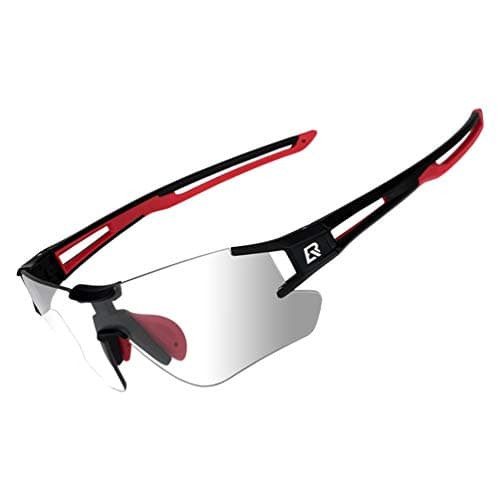
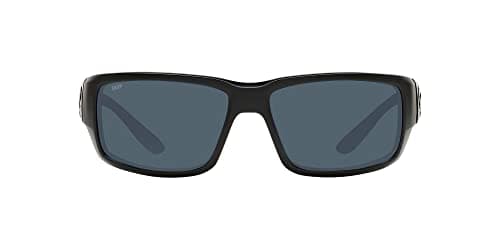
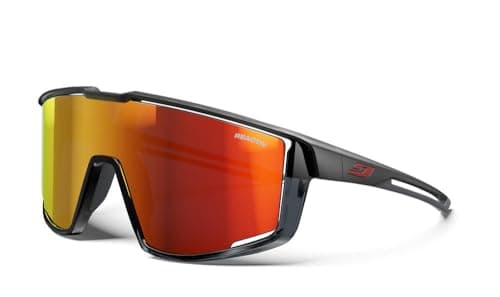
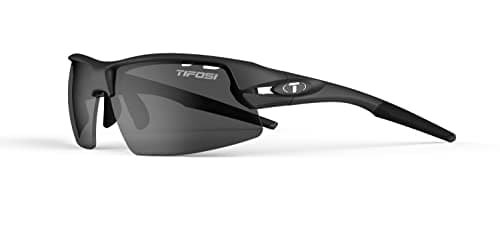
These are not competing answers to the same question. Polarization removes reflected glare and does nothing about brightness changing through the day. Photochromic changes darkness with the light and does nothing about reflected glare. Buy polarized for driving, water and everyday glare; buy photochromic for cycling, trails and any session that outlasts one light condition.
Nearly every confused sunglasses purchase we can think of comes from treating these two as a single spectrum of "good lens technology." They are unrelated mechanisms solving unrelated problems, and understanding the difference in two minutes will save you from buying the wrong pair.
| Factor | Polarized | Photochromic |
|---|
| What it does | Blocks horizontally aligned reflected light | Darkens and clears in response to ultraviolet |
| Solves | Glare off water, wet roads, painted metal, snow | Light that changes during a single session |
| Darkness | Fixed — whatever the tint is | Variable across a stated category range |
| LCD screens | Dims or rainbows them at some angles | No effect |
| In a car | Excellent — the single best driving feature | Barely activates; windshields block the UV trigger |
| In the cold | Unaffected | Transitions more slowly |
| Best for | Driving, fishing, boating, everyday | Cycling, trail running, hiking, mountain biking |
Polarization, in one paragraph
Light bouncing off a flat surface comes back to your eyes mostly aligned in one horizontal direction, and that organized reflected light is what you experience as glare. A polarizing film is a microscopic grid that blocks light traveling in that orientation while letting the rest through. The result is not a dimmer scene — it is the same scene with the reflected haze stripped out, so you look into water instead of at it. The Cleveland Clinic and Warby Parker both have plain-English versions. Crucially, polarization does not change how dark the lens is; a polarized lens can be pale or very dark.
Photochromic, in one paragraph
A photochromic lens contains molecules that change shape when they absorb ultraviolet light, making the lens darker, and revert when the UV goes away. It is a brightness mechanism and nothing else. It does not distinguish reflected light from direct light, so it does nothing whatsoever about glare off a lake — it just makes the whole scene, glare included, uniformly darker.
Where each one is the right answer
Choose polarized for driving, fishing, boating, beaches, and general everyday wear. The glare you are fighting in all of those is reflected glare, which is precisely what the filter cancels. The trade-offs are that polarized lenses dim LCD screens and can mask the sheen that reveals black ice, which is why we flag them for cyclists and skiers in polarized vs non-polarized.
Choose photochromicfor cycling, mountain biking, trail running and hiking — anything where you are out for hours, the light changes, and you cannot stop to swap lenses. It also happens to be the non-polarized answer, which is a genuine bonus on a bike where polarization would dim your head unit.
Choose both if you want adaptive tint for driving, water or hiking. A polarized photochromic like the Tifosi Crit exists and it works. Just understand you are buying polarizationandits downsides — this is the wrong pair for a cyclist, not a strictly better one.
Choose neitherif you want the best possible lens for one fixed condition. A plain contrast-tuned lens like Costa's 580 or Oakley's Prizm is doing a third thing entirely — filtering specific wavelengths to lift a fish or a fairway out of its background — and for a dedicated sight-fisher or golfer that is worth more than either technology here.
The confusion that costs people money
Three specific mistakes we see repeatedly:
- Buying photochromic for driving. Windshields block the UV that triggers the reaction, so the lens stays pale exactly when you want it dark. This is the single most common disappointed purchase in this category.
- Buying polarized for cycling. It dims the bike computer and hides the sheen on a wet corner. Photochromic or a plain contrast tint is the right tool.
- Assuming either one implies UV protection.They do not. UV blocking is a separate property — the American Optometric Association recommends 100% UVA and UVB regardless of what else the lens does. Check for UV400 on any pair, however clever the marketing is.
The one-sentence version
Polarized answers "there is too much glare"; photochromic answers "the light keeps changing." Work out which sentence describes your problem and the choice makes itself. If both describe it, the polarized photochromic exists — and if neither does, buy a good fixed tint and spend the difference on a frame that fits.