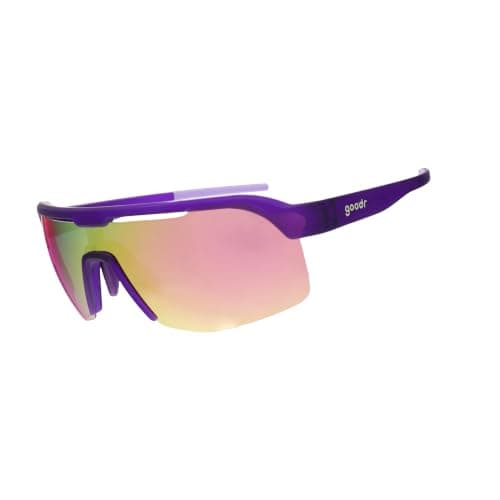
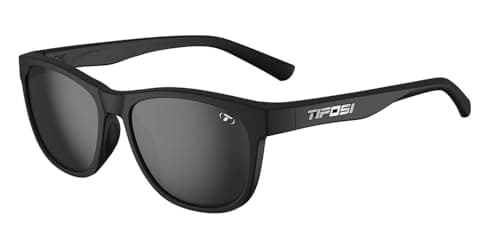
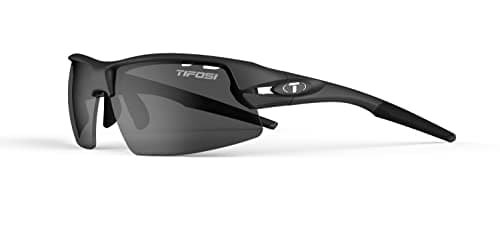
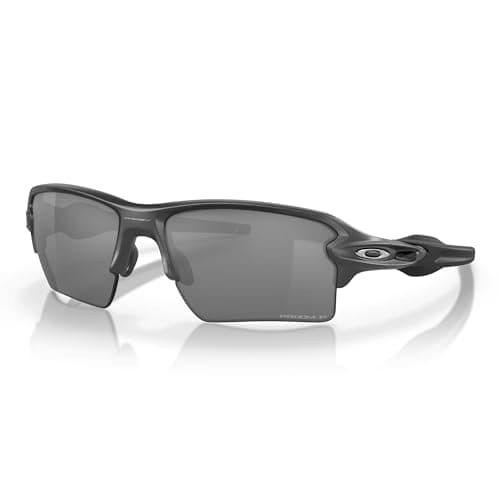
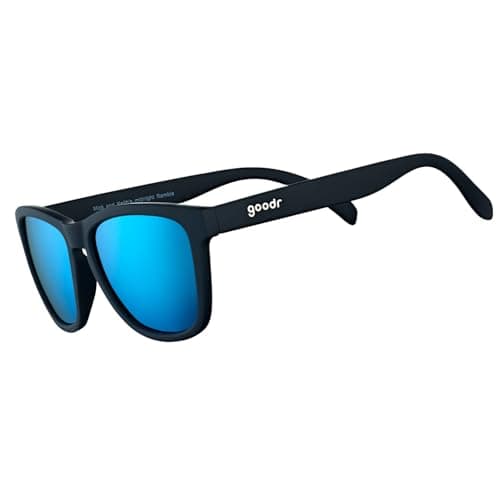
If you run on roads, buy the goodr OG. It is polarized, it grips harder as you sweat, and it costs little enough that the polarized-or-not question stops being an investment decision. Take the goodr Bolt G instead if you want a wrap that seals out low side sun, the Tifosi Crit if your runs start before the light is properly up, and the Oakley only because you want the frame — the filter inside the most expensive lens here is the same filter as the one in the cheapest.
This is not the running roundup. That page ranks the whole running field on grip and weight, which is the right way to rank running sunglasses in general, and it carries a non-polarized pick on purpose. This page answers a narrower question that arrives here constantly in its own right: should a runner buy polarized at all, and which running frames actually are? Plenty of things sold as sport sunglasses are not polarized, several of them deliberately, and the listings are not always clear about which is which.
Every pick below is polarized and published as polarized by the brand that makes it. Nothing is here because a listing used the word "sport."
1. What polarization actually buys a runner
Light bouncing off a flat surface comes back horizontally aligned. A polarizing filter blocks light on that axis and leaves the rest of the scene alone, which is why the effect looks like glare vanishing rather than the world getting darker. The Cleveland Clinic sets out the mechanism plainly, and the longer version is in polarized vs non-polarized.
Now list the flat surfaces on an ordinary road run: wet tarmac after overnight rain, painted crossings and lane markings, the roofs, hoods and windshields of parked cars, a canal or a seafront path, and a low sun coming straight up the road at seven in the morning. A road is close to a best-case environment for a polarizing filter, which is the honest reason this page exists while the trail running guide argues the opposite case for technical ground.
Two things polarization is not. It is not a darkness upgrade — that is the tint, and it is a separate decision covered below. And it is not a UV upgrade. The American Optometric Association recommends lenses that block 100% of UVA and UVB, and a cheap UV400 lens does that exactly as well as an expensive one. Polarized and UV-protective are unrelated properties that happen to appear on the same listings.
2. The three times a runner should take the filter off
A page that only lists benefits is selling. Polarization costs you real information in three situations, and two of them turn up on ordinary road runs.
Your watch, and your phone. Many LCD displays carry their own polarizing layer, so a polarized lens can cancel them out. All About Vision describes the result as a dark or blacked-out image and the fix as rotating the screen. Garmin's own support documentation says the same about its devices: with polarized sunglasses on, the display can look darker than normal at certain viewing angles, and the advice is to change the angle. On a run that means a quarter-turn of the wrist to read a split, which most runners adapt to within a week and some never stop finding irritating. The full mechanism is in do polarized sunglasses block screens.
Technical trails.The sheen that tells you a rock is wet, or that a stream crossing is deeper than it looks, is reflected light — and reflected light is exactly what the filter removes. A trail also has very little of the flat reflective surface that makes polarization worth having. That is a bad trade on ground where you are reading foot placement three steps ahead, and it is why the trail page recommends a contrast tint instead. Open fire roads and coastal paths are fine; technical singletrack is not.
Ice. On a cold morning the glint that distinguishes a wet patch from a frozen one is the same reflected light. Winter road runners in places that actually freeze should know they are giving that cue up. Skiers make the same calculation, for the same reason, in best sunglasses for snow and skiing.
None of this makes polarized wrong for running. It makes it a road-and-daylight tool, which is what most running mileage is.
3. Grip decides whether you wear them at all
A polarized lens on a frame that slides down your nose is worth nothing, because after the first mile it is sitting on your forehead. This is the running hub's central argument and it does not stop being true because the lens got better: look for a sweat-activated grip coating, or hydrophilic rubber at the nose and temples, which tacks up as it dampens. Smooth plastic arms get slicker as you heat up, which is precisely backwards.
Squeezing a too-small frame onto your head is not a substitute for grip material — it buys you a pressure headache instead. If a pair you otherwise like will not stay put, the diagnosis and the cheap fixes are in how to stop sunglasses slipping, and silicone temple sleeves cost less than a gel.
4. Coverage, and why running fogs more than cycling
A flat lifestyle-shaped frame lets low, side-on sun straight past the lens, and that is the light you are running into at dawn and dusk. A wrap seals it off and blocks wind and grit as well. The trade is heat: you generate a cyclist's sweat at a fraction of a cyclist's airflow, so a running frame fogs more readily than a bike frame does, and more lens sitting closer to your face makes that worse.
Oberson's running and cycling guide puts the fix simply: frames that sit slightly away from the face promote air circulation and reduce fogging during hard efforts. In practice that means a vented wrap rather than a sealed one if you want coverage, and an open frame if you mostly run hot. The same trade, pushed further, is what separates this page from buying one pair for cycling and running.
5. The tint category is the decision people mistake for polarization
Polarization is binary: a lens either has the filter or it does not, and there is no premium version of it. How much light the lens lets through is a completely separate and far more consequential choice. Oberson's guide puts most running in category 2 or 3 — roughly 18–43% of light through for variable conditions, 8–18% for bright sun.
That is why a dark polarized lens is the wrong pair for a 6am run in October and a light tint with no filter at all is the right one. If you run at both ends of the day and want one pair, the useful answer is a lens that moves: the Tifosi Crit below is both polarized and photochromic, which is a rarer combination than the marketing around either one suggests. The trade-offs between the two technologies are laid out in polarized vs photochromic, and the full adaptive field is ranked in best photochromic sunglasses.
6. What your money does and does not buy
Spending more does not buy better polarization, and it does not buy better UV protection. It buys frame material and hinges that survive being sat on, lens geometry with less distortion at the edges, coatings that shed sweat and resist scratches, and in some cases a warranty worth using. On a running frame, which lives a hard and often short life, that argument is weaker than it is anywhere else on this site — the most expensive thing about running sunglasses remains losing them. The general version is in are expensive sunglasses worth it, and the sub-$35 field is ranked in best budget running sunglasses.
How we ranked these
Confirmed polarization was the entry requirement rather than a ranking factor — every frame here is published as polarized by its maker, and anything we could not confirm was left off. After that: grip first, then coverage and venting, then how flexible the lens is about the time of day, then price. That ordering is why a $30 frame outranks a frame costing eight times as much. Scores come from the rubric on how we rate— judgments compiled from published specifications and documented research, not lab measurements. We do not run a lab.
Buying a polarized pair for running
1. Confirm it is actually polarized
"Sport," "HD" and "UV400" do not mean polarized, and several sport brands leave their sport lenses unpolarized on purpose. Check the lens line, not the frame name — the same frame is often sold both ways at different prices.
2. Grip material before anything else
Sweat-activated coating or hydrophilic rubber at nose and temples. A lens you push back up your nose every half mile is a lens you stop wearing.
3. Match the tint to when you run
Category 2 for variable light, category 3 for bright sun, and a photochromic lens if you run at both ends of the day. Polarization does not substitute for getting this right.
4. Wrap for exposed roads, open frame if you run hot
A vented wrap earns its keep against low side sun and wind. If most of your running is slow and humid, the open frame fogs less.
5. Do not pay extra for the filter
Polarization is identical at every price. Pay for the frame, the coatings and the fit, or do not pay at all — both are defensible on a pair you will eventually sit on.