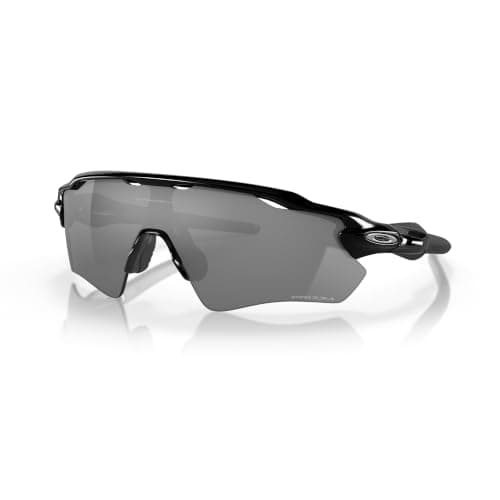
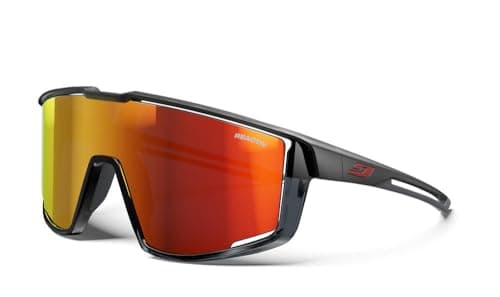
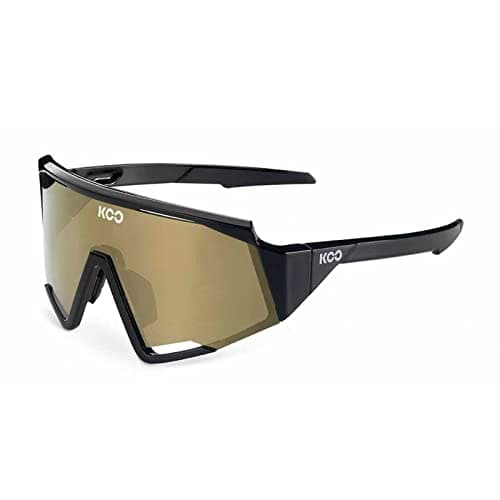
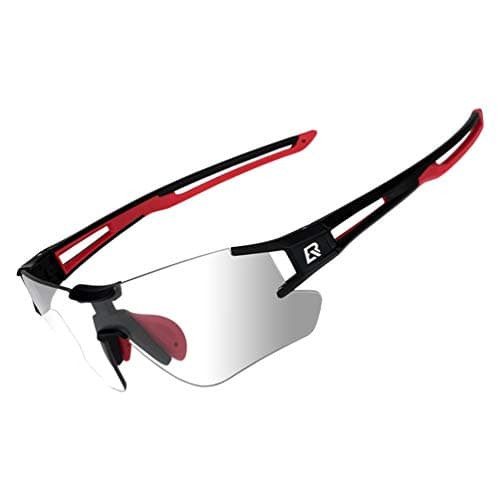
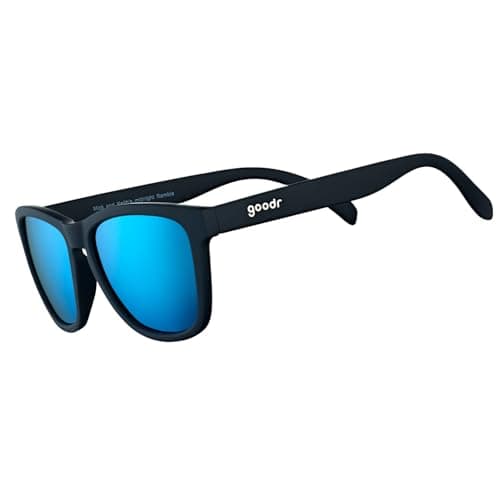
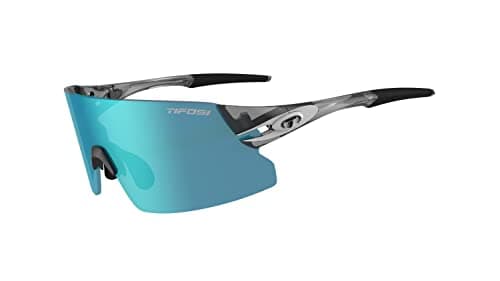
Yes, one pair can do both — buy a vented sport shield with grip at the nose and temples and an adaptive lens, not a dark fixed tint. The Tifosi Rail XC is the pick for most people because it has the coverage a head-down riding position needs, it is light enough not to bounce on the run, and its three interchangeable lenses cover both sports' light without any of them being polarized. The Oakley Radar EV Path is the premium version of the same answer. If you mostly run and occasionally ride, skip the shields entirely and read the last pick.
This page exists because the honest answer to "do I need two pairs?" is "probably not, but not for the reason you think." The two sports are not slight variations on each other. They disagree on four specific things, and a frame that resolves all four is a narrower set than the running and cycling roundups on this site would suggest on their own — those rank the best pair for one sport, which is a different question.
1. Where the two sports genuinely disagree
Cycling is a wind problem. You are moving at 15–25 mph with your head relatively still, so the frame has to keep air, grit and insects out of your eyes and stay out of the way of a helmet. Running is a bounce and sweat problem. You are moving at a third of the speed with your head taking an impact every footstrike, so the frame has to stay put on a face that is getting wetter by the mile.
That difference cascades. Cycling frames tend toward big aerodynamic shields with arms shaped to slot into helmet vents. Running frames tend toward lighter builds with more aggressive grip and a closer fit. Buying a big cycling shield and running in it usually fails on weight and bounce. Buying a light lifestyle-running frame and riding in it usually fails on coverage.
The pairs that genuinely do both sit in the middle: a vented sport shield in the low-30-gram range with hydrophilic grip at both contact points. That is the entire brief, and it is why the list below is short.
2. Coverage and lens height, with a helmet in the equation
On a bike, especially in a drop-bar position, you are looking through the top of the lens rather than the middle. A frame that is perfectly adequate walking around has a rim sitting across your view of the road the moment you get low. This is the single most common reason a pair that feels fine off the bike is unusable on it.
Which argues for a tall shield — up to a point. Go too tall and the lens contacts the brow of a low-fitting helmet, which is exactly the trade we set out in our Tifosi Rail XC review: the full-size Rail gives more coverage, and the XC is the one to buy for an average or smaller face, a low helmet brow, or technical terrain. Try the frame with your actual helmet before you decide the bigger one is better.
Running has no such ceiling, so a frame chosen for the bike will always clear on the run. Size for the helmet, not for the run — that ordering only works in one direction.
3. Fogging: running is the harder case, not cycling
Most people assume the faster sport is the one that fogs. It is the opposite. Fogging is heat and moisture against a lens with not enough airflow to clear it, and running produces more of the first two at a fraction of the airflow — especially on a climb, at a traffic light, or in the first mile before you are moving properly.
The fixes are structural rather than chemical. As Oberson's running and cycling guide puts it, glasses that sit "slightly away from the face promote air circulation and reduce fogging," and some models add "openings in the frame or lenses to improve air circulation." In practice: buy vented, and be suspicious of a sealed wrap that hugs the cheekbones, however good the coverage looks.
This is the one criterion where the cheap picks below are not obviously worse. A 22-gram vented budget shield fogs less than a sealed premium frame, because venting is geometry, not money.
4. Changing light across two sports: adaptive, not dark
A dual-sport pair sees more lighting conditions than a single-sport pair does, because you are out at more times of day. A dark fixed tint that is right for a midday ride is wrong for a pre-work run in the half-light, and squinting is not the only cost — a lens too dark for the conditions makes it harder to read the road surface at the moment you most need to.
Oberson's guide recommends category 2 or 3lenses as the best balance for most running and cycling outings, and calls photochromic lenses "a versatile option if you train in changing conditions" because they "eliminate the need to change lenses or carry multiple pairs." That is the whole argument for an adaptive lens on a dual-sport pair, stated by someone selling both kinds.
The two routes are the same as everywhere else on this site. A photochromic lens handles it automatically; an interchange set gives you a deeper dark end and a genuinely clear lens for a dark morning, at the cost of having to carry and swap them. The full field is ranked in best photochromic sunglasses, and the trade against polarization is in polarized vs photochromic.
On tint, the same guide is worth quoting: gray and green tints "reduce brightness without altering colors," while brown and amber "enhance contrast." For dual use, a contrast base is generally the better pick, because both sports involve reading a surface for holes, gravel and wet patches. More on this in sunglasses lens colors explained.
5. Polarized: the one place we say no twice over
Polarization removes horizontally aligned reflected light — the Cleveland Clinic explains the mechanism — and for a pair that has to work on a bike and on foot, that is mostly a liability rather than a feature.
On the bike it dims an LCD bike computer at some head angles, and it can mask the sheen that tells you a patch of road is wet rather than merely dark. We made that case at length in are polarized lenses good for cycling. On the run it does the same to a watch face, and off-road it costs you exactly the terrain read you want — Oberson notes that in wooded areas "some athletes prefer non-polarized lenses for better perception of terrain contours."
There is one honest exception. If your running is on open ground near water and your riding is casual, polarized is genuinely more comfortable and the screen problem is a minor irritation. The goodr pick at the bottom of this list is polarized for exactly that reader. For everyone else, non-polarized is the default here, which is unusual on a site called Polarized Club and is the correct answer anyway.
6. Grip and weight, which running decides
Running sets the floor on both. Every footstrike is a small downward shove, and once your face is wet, smooth plastic contact points become a slide. Hydrophilic rubber does the opposite — it tacks up as it dampens. Oberson's advice is to look for "anti-slip nose pads and temples, which ensure a good hold even when you sweat," and that is the spec to check before anything about the lens.
Weight matters less on the bike, where the frame is essentially static, and a great deal on the run, where you feel every gram at the bridge after an hour. Sport shields in the low 30s of grams are the practical ceiling for a pair you will run in; the budget photochromic below is 22g and it is the lightest thing here by some margin.
If you already own a frame that is nearly right and slides on the run, do not replace it before trying silicone temple sleeves — the full set of fixes is in how to stop sunglasses slipping.
7. When two pairs really is the right answer
We would rather say this than sell you a compromise. Buy two pairs if you race on the road in a low aero position andrun high mileage: the shield that serves the first is more frame than you want for the second, and both pairs can be inexpensive. Buy two if you ride with a head unit you check constantly and want polarized for everything else. And buy two if one of the sports is trail-based, because that is a coverage-and-contrast problem of its own — see best sunglasses for trail running and best mountain bike sunglasses.
For everyone else — commuters, club riders, half-marathon trainers, triathletes — one good pair is genuinely enough, and the money saved is better spent on a second lens than a second frame.
How we ranked these
Coverage in a head-down riding position first, then fogging behavior, then grip and weight under footstrike, then adaptive lens range, then price. Every pick is UV400 — the American Optometric Association recommends blocking 100% of UVA and UVB, and endurance training is a lot of accumulated hours outdoors. Scores come from the rubric on how we rate: judgments compiled from published specifications, not lab measurements. We do not run a lab and we have not ridden or run in these.