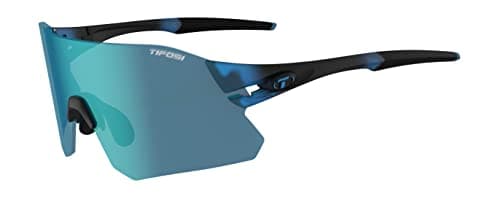
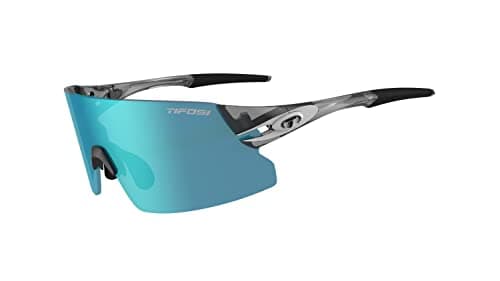
The Rail XC is the pair we point most cyclists at first, and it is the one that keeps winning our cycling sunglasses roundup. It is a rimless polycarbonate shield that Tifosi publishes at 31 grams, it ships with three interchangeable lenses covering bright sun through to near-dark, and it costs a fraction of what an Italian or marquee-brand shield costs. This page is the long version of why — and where it stops being the right answer.
What we did and did not do here
We do not run a lab and we did not ride in these. Every figure on this page is either published by Tifosi or measured by a named third-party reviewer, and it is attributed where it appears. The scores in the card above are judgments against a rubric we publish, built from those documented sources. If that is not the kind of review you want, that is a fair position — but you will at least always know where every number here came from.
What is actually in the box
The Crystal Smoke frame we link is the interchange version, and Tifosi lists it with three shatterproof polycarbonate lenses:
- Clarion Blue— a gray tint with a blue mirror finish, the bright-sun lens. Tifosi's own lens guidance puts the Clarion mirrors in bright conditions and notes they carry a hydrophobic coating that repels water and sweat.
- All-Conditions Red— a medium, high-contrast tint. This is the overcast, dappled-woodland, most-of-the-year lens, and the one many riders leave in permanently.
- Clear— not a sunglasses lens at all, but eye protection for dawn, dusk and night riding. Grit and branches do not care what time it is.
A zippered hardshell case and a microfiber bag come with it, which matters more than it sounds: an interchange kit you cannot carry safely is an interchange kit you stop carrying. Tifosi backs the frame with a lifetime warranty against manufacturer defects to the original owner, published on its Rail XC product page — unusually generous cover for this price tier, and worth reading before you assume a more expensive pair is better protected.
The XC part: a smaller lens, on purpose
The Rail XC is not a cheaper Rail. It is a smaller one. Tifosi describes it as the same design "streamlined" into a smaller lens and a lighter 31-gram build, against 32 grams for the full-size Rail. One gram is nothing. The lens height is the point.
Bike Perfect's reviewer, testing the full-size Rail, found that "the height of the lens is quite tall above the nose, and when riding chunky trails, I did find this could knock against the bottom edge of the brow of some helmets." The same publication's Rail XC review reports the opposite: the reduced lens size keeps it clear of the helmet, and the glasses "stayed put in some seriously chunky terrain." That reviewer weighed the XC at 30 grams and scored it four out of five on lens quality, fit and comfort, and value.
So the choice between the two is not better versus worse. It is a face-and-helmet question. Big face, high helmet brow, road riding where you want the absolute maximum coverage — take the full-size Rail. Average or smaller face, technical terrain, or a helmet that sits low — take the XC. Off-Piste Magazine reached the same conclusion from the other direction, noting the XC suits a medium-sized face and that larger faces may prefer the original.
Why it is not polarized, and why that is correct here
None of the three lenses in the kit is polarized, and buyers who skim the listing are sometimes annoyed by that. It is a deliberate design decision, not a cost saving.
A polarized filter removes horizontally reflected light — the mechanism the Cleveland Clinic describes, and the reason polarized lenses are transformative on water. On a bike, some of that reflected light is information you want: the sheen that tells you a corner is wet or oily, and the LCD on a bike computer, which a polarized lens can dim to unreadable at certain angles. It is telling that Tifosi's own cycling lens guidance runs through Fototec, All-Conditions Red and the Clarion mirrors without recommending a polarized lens for riding at all.
We work through the full argument in are polarized lenses good for cycling. The short version: if the pair is for riding, non-polarized is defensible and often better. If the pair is really for driving, fishing or the beach and you happen to ride sometimes, the Rail XC is the wrong tool and you want a polarized frame instead.
The Fototec version, and its honest catch
Tifosi also sells the Rail XC with a single Clarion Blue Fototec lens instead of the three-lens kit — a photochromic lens that darkens and clears with the light so you never swap anything. On paper it is the obvious upgrade for anyone who rides in and out of tree cover.
In practice there are two documented compromises, and both come from reviewers rather than from us. Bike Perfect rated the Fototec version four out of five and wrote that "the relatively slow reaction time to adapt to changing light conditions is the only thing stopping me awarding full marks," specifically when dropping from full sun into dense woodland. Off-Piste Magazine adds that the photochromic lens is "not quite as dark (at its darkest tint) as Tifosi's standard dark tint lens."
That is the permanent trade with adaptive lenses rather than a Tifosi failing — we cover it across the category in best photochromic sunglasses. Our read: take the three-lens interchange kit if you mostly ride in stable light and do not mind picking a lens before you leave, and take the Fototec if your rides swing constantly between sun and shade and you would rather accept a slower, shallower tint than stop to swap.
Where the Rail XC falls short
Three real limits, none of them dealbreakers, all of them worth knowing before you buy.
The lens-change system is functional, not slick.Off-Piste Magazine describes swapping as "relatively quick and easy" but "not as slick as some lens change systems." If you have used a magnetic quick-change shield, this will feel a step behind.
The optics are very good for the money, not the best money can buy.The same review puts the Rail XC against Smith's ChromaPop and concedes the premium lens offers a "slightly darker tint and higher contrast through broader light range." That is the honest ceiling on a value shield, and it is the one thing spending more actually buys.
Fogging reports are mixed.Some owners report fogging on slow climbs; Bike Perfect's reviewer reported none across intensive use. A rimless shield with open airflow is structurally on the good side of this problem, but no vented lens is immune when you are moving slowly in humid air.
How it compares with what else is out there
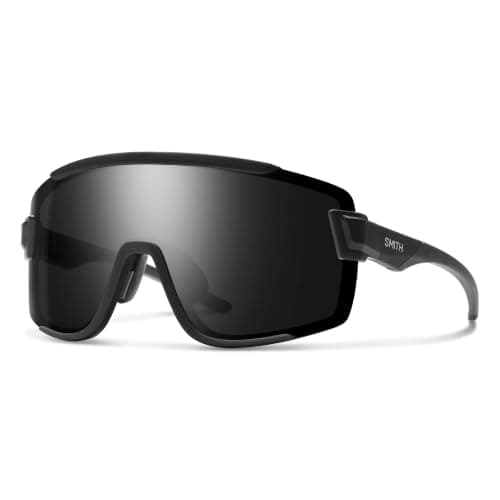
Against the premium end — Smith's Wildcat with ChromaPop, Oakley's Prizm range, the Zeiss-lensed Italian shields — the Rail XC gives up tuned contrast and the last few percent of optical clarity. It does not give up coverage, weight, grip or lens versatility, which is why it survives in a field of much more expensive pairs on our mountain bike sunglasses guide. If you want to understand exactly what the contrast lenses add, our Prizm explainer is the honest version.
Against the bottom of the market — the twenty-dollar sport wraps — the Rail XC wins on hinge quality, coating durability, the adjustable metal-cored arms and nose piece, and the simple fact that a three-lens kit costs more to make than one tinted lens. It sits in the band we argue is the best value in the whole category in the best sunglasses under $100.
Against the rest of its own brand, it is the sport end of the range. The Tifosi brand review covers the lighter Swank and Swick frames, which are the right answer for golf, easy runs and everyday wear rather than for speed and grit.
Living with interchangeable lenses
One practical note that applies to every interchange kit, this one included. Swapping lenses means handling lenses, and a mirrored coating plus fingerprints plus the corner of a cycling jersey equals fine scratches within a season. Keep the spares in the hardshell case rather than loose in a jersey pocket, and clean the lens with a lens-safe spray and a genuinely clean microfiber cloth — household glass cleaners are formulated to strip exactly the kind of coating a Clarion mirror is. Our how to clean sunglasses guide has the full method.
Is the Tifosi Rail XC worth it?
For most riders, yes, and it is not close. You get the coverage, the light weight, the adjustable sweat-grip fit and the lens versatility that decide whether a pair actually gets worn — and, per the American Optometric Association, full UV protection is the part that matters most for your eyes regardless of price. What you give up against a pair costing three times more is contrast tuning and a slightly slicker lens swap. Almost nobody will notice the first on a ride, and everybody notices the price.
Who should skip it
Skip it if you have a large face or a helmet with a low brow — go up to the full-size Rail for the extra coverage. Skip it if you want polarized glare control for driving or the water, because none of these lenses is polarized. Skip it if contrast-tuned optics are the whole reason you are shopping, in which case a ChromaPop or Prizm lens is where your money should go. And skip the interchange kit specifically if you know yourself well enough to admit you will never swap a lens — buy the Fototec version and let the lens do it for you.