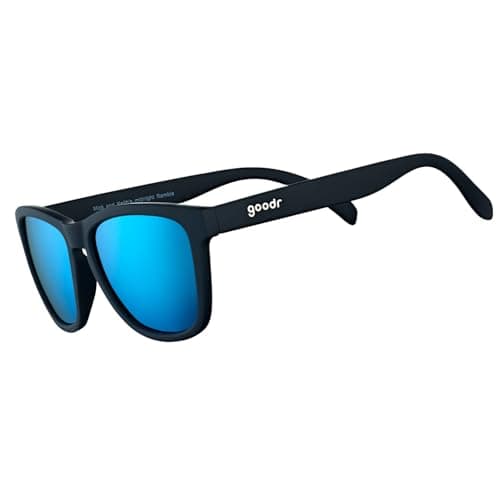
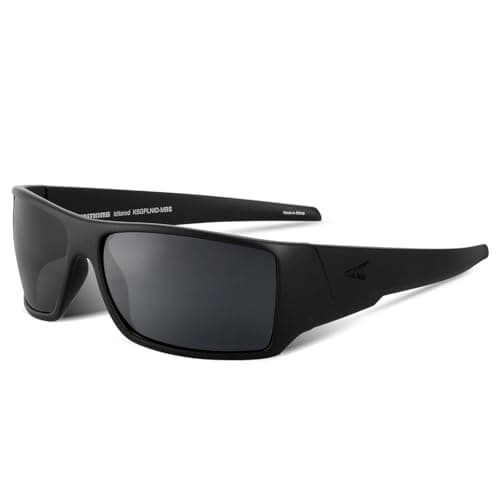
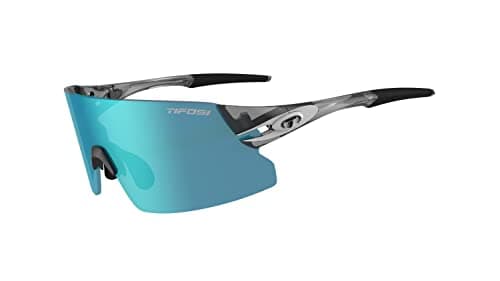
If you buy one pair of sunglasses and want them to last, buy in this band. Under $100 gets you harder coatings, cleaner edge optics, real grip material and frames that survive a season — the four things a $20 pair gives up. The Tifosi Rail XC is the best value on this page because it arrives with three interchangeable lenses; the Native Breck is the pick if you want one pair for outdoors and everyday.
There are three sunglasses markets, and they behave differently. Below about $35 you are buying polarization and UV protection and very little else. Above about $150 you are buying lens technology, brand and materials. In between sits the band nobody writes about, where each additional dollar buys the most tangible improvement of anywhere on the curve.
1. What actually improves under $100
Coatings. This is the biggest single difference and the one you notice over time. Budget lens coatings pick up fine scratching within a season or two of pocket-and-dashboard life. Coatings in this band survive normal life for years. If your last three pairs went hazy, this is what you were buying your way out of.
Edge optics. A cheap lens is clear in the center and softens toward the outer third. You will never notice walking around; you notice descending a hill on a bike or scanning water for structure. Lenses in this band hold sharpness much further out.
Grip material.Hydrophilic and rubberized contact points that get tackier as they dampen rather than slicker. This is the single feature that decides whether a pair stays on during anything with a heart rate, and it is essentially absent below $30 — the mechanism is in how to stop sunglasses slipping.
Frame materials and hinges. Grilamid and TR90-class nylons flex and return instead of snapping. Hinges are molded or properly pinned rather than screwed into thin plastic. This is why a $70 frame survives being sat on and a $15 one does not.
Lens options.This is the under-appreciated one. Several frames in this band ship with multiple interchangeable lenses, which solves changing light more completely than any single premium lens does — see best photochromic sunglasses for the other approach to the same problem.
2. What does not improve, at any price
UV protection. A UV400 lens at $15 blocks UV exactly as completely as a UV400 lens at $400. The American Optometric Association recommends blocking 100% of UVA and UVB, and that is a binary property. Anyone implying you buy better eye protection by spending more is selling you something.
Polarization. Also binary. The Cleveland Clinic explains the mechanism — a filter blocking horizontally aligned reflected light — and a lens either contains that layer or it does not. Glare off a wet road drops away the same amount through a $20 lens and a $200 one.
Those two facts are why the budget tier is genuinely viable for a spare pair, and why we rank it seriously in best cheap polarized sunglasses.
3. Where the $100 line sits relative to the premium tier
Going above $100 buys you engineered contrast lenses (Prizm, ChromaPop, Costa 580, Bajío LAPIS), glass lenses, adjustable fit systems and better warranties. Those are real things, and for sight-fishing or racing they earn their money.
For most people, most of the time, they do not. The honest version of that argument — including the cases where the premium spend genuinely is worth it — is in are expensive sunglasses worth it.
4. How to spend the money in this band
If you do one sport, buy the frame designed for it. Sport-specific geometry (sightline, coverage, venting) matters more at this price than lens branding does.
If your light changes, buy interchangeable lenses over a better fixed tint. Three lenses for $70 beats one lens for $70, every time.
If you want one pair for everything, buy a mid-size polarized frame with grip rather than a big sport shield. You will actually wear it.
If you are hard on sunglasses, buy the toughest frame material rather than the best lens. The lens outlives the frame far more often than the reverse.
How we ranked these
Durability first, then lens quality, then versatility, then price within the band. Prices on this page are live and date-stamped and disappear rather than going stale — if a pick has drifted above $100 since we wrote this, the number you see is the truth and the ranking is the opinion. Scores come from the rubric on how we rate: judgments compiled from published specifications, not lab measurements. We do not run a lab.
Buying in the $100 band
1. Pay for coatings, not for branding
Scratch resistance is what you notice in year two, and it is the clearest thing your money buys here.
2. Three lenses beat one
An interchangeable set solves changing light better than a single premium tint at the same price.
3. Grip material is non-negotiable for sport
Hydrophilic or rubberized contact points. Everything else about a sport frame is secondary to staying on.
4. Frame material decides the lifespan
Grilamid and TR90-class nylon flex and return. Cheap acetate and thin plastic snap.
5. Do not pay extra for UV or polarization
Both are binary and both are cheap. Confirm they are present, then stop thinking about them.