Skip to content
PolarizedClub

Value · Price ladder

Are Expensive Sunglasses Worth It?

Sometimes. Here is exactly what each price tier buys, what it does not, and the four situations where spending up genuinely pays back.

By Stephen V.Updated How we rate
#ad

We earn a commission when you buy through our Amazon links, at no extra cost to you. It never affects our rankings, and we say so when the cheaper pair is the better buy. How this works.

Expensive sunglasses are worth it in four specific situations: you sight-fish or play golf and want a contrast-tuned lens; you ride or descend fast and want peripheral optical clarity; you wear one pair every day for years and durability compounds; or you want a specific design object and are honest that this is what you are buying. Outside those four, a $30 polarized UV400 pair does the job, and we will not pretend otherwise.

This site is funded by commissions, and the expensive pairs pay us more. We are telling you the cheap pair is usually the right buy anyway, because a review site that only ever recommends spending up is not a review site. So here is the price ladder without the marketing, tier by tier, with what each rung genuinely adds.

The two things price does not buy

UV protection. The American Optometric Association recommends lenses that block 100% of UVA and UVB, and that specification is met by $15 pairs and $400 pairs alike. UV protection is a film, it costs pennies, and it does not scale with price. Nobody spending $250 is buying more eye safety.

Polarization.The filter that cancels reflected glare is the same physics at every price. A cheap polarized lens removes the mirror off a wet road exactly as thoroughly as an expensive one. What differs is everything around it — clarity, coatings, tuning — not the polarization itself.

Between them, those two account for most of what people think they are buying when they spend up. Understanding that they are already solved at the bottom of the market is the single most useful thing in this article.

The ladder, rung by rung

$15–$30: the functional floor

Genuine polarization, UV400, a nylon or TR90 frame that flexes rather than snaps. Optically fine in the center of the lens, slightly soft at the edges. Coatings that will scratch within a season or two of hard use. One size, no fit options. This tier is completely adequate for driving, beaches, casual outdoor time and occasional sport. Our cheap polarized guide is the whole field.

$30–$60: purpose-built

Here the frames start being designed against a specific failure mode rather than to a price: goodr's grip coating for sweat, Tifosi's interchangeable lens sets for changing light, metal frames for everyday wear. Lens quality improves modestly; the real gain is that the product is engineered for a job. For most people this is the sweet spot of the entire market, and it is where the majority of our top picks sit.

$60–$150: better glass and better build

Noticeably better coatings, better hinges, and the beginning of real fit engineering — adjustable noses, size variants, low-bridge fits. Some genuine lens technology appears at the top of this band. This band also contains the most fashion-brand markup in the market, so it pays to check what the money is actually going toward.

$150 and up: tuned lenses and decade frames

This is where contrast tuning lives — Costa's 580, Oakley's Prizm, Maui Jim's PolarizedPlus2, Bajío's LAPIS — alongside glass lens options, edge clarity that holds up in your periphery, coatings that last years, and service programs that will replace a lens instead of selling you a new pair. All of this is real. None of it is necessary.

The four cases where the premium genuinely pays

1. You sight-fish, or you read greens. Contrast tuning is the one premium feature with an effect you can point at: a fish that was invisible becomes visible, a slope you could not read becomes readable. There is no budget equivalent. See the fishing and golf roundups.

2. You ride or descend fast. Edge-of-lens clarity is not a luxury when you are picking up road surface detail in your periphery at speed. This is a real safety-adjacent argument and we make it in Oakley vs Tifosi.

3. You genuinely keep things.If a pair will be on your face most days for ten years, a $250 pair costs $25 a year and a $30 pair replaced annually costs the same — and the premium pair is nicer the entire time. The maths only works if you actually keep it, which most people do not.

4. You want the object. Design, heritage and how a pair makes you feel are real reasons to spend money. We only ask that you name it as the reason, rather than convincing yourself the lens is why.

The case against, stated fairly

Sunglasses get lost. They get sat on, left on dashboards where heat crazes the coatings, dropped on rock, and handed to children. Ask anyone how many pairs of sunglasses they have owned and how many they still have. For a product with that survival profile, expensive is a bet on your own carefulness, and it is a bet most people lose. That is why our driving roundup ranks a $28 pair first and why we keep pushing the two-cheap-pairs strategy: it is not inverted snobbery, it is a realistic read of how this product dies.
The short answer

Quick picks

#ProductBest forScorePrice
01
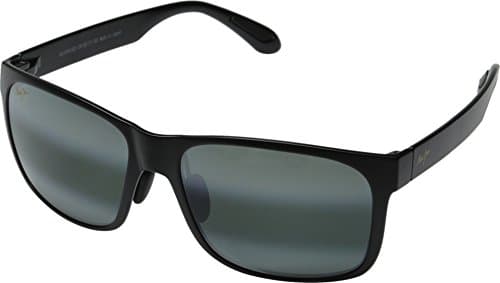
Maui Jim Maui Jim Red Sands (PolarizedPlus2)
Maui Jim Red Sands (PolarizedPlus2)

If glare control and color are the whole point, this is the ceiling — at a ceiling price.

The best-in-class polarized lens
8.2
$259.00Amazon
02
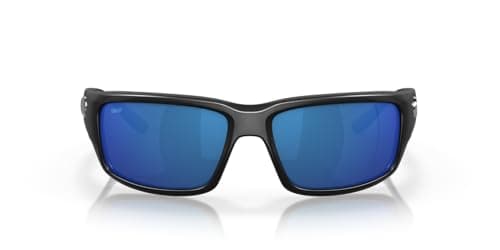
Costa Del Mar Costa Fantail 580P
Costa Fantail 580P

The fishing default. The 580 lens is built to pull fish out of glare, and it does.

Sight-fishing and time on the water
8.4
$212.00Amazon
03
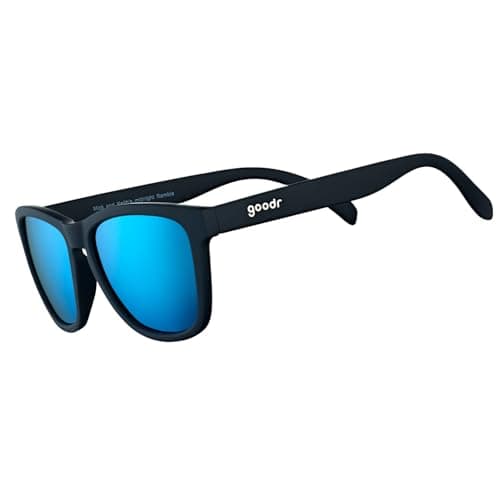
goodr goodr OG (Polarized)
goodr OG (Polarized)

The runner's default: polarized, no-slip, and cheap enough to not baby.

Best running sunglasses overall
8.0
$30.00Amazon
04
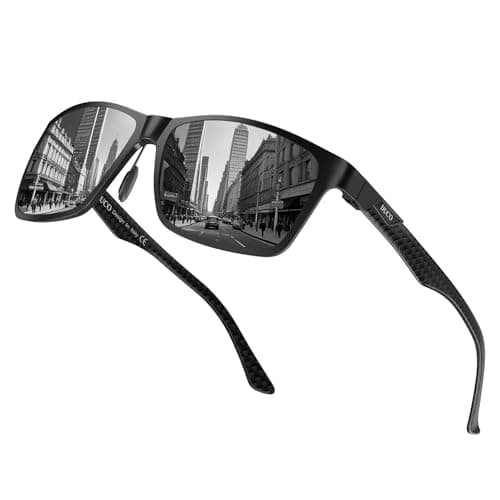
DUCO DUCO Polarized (Al-Mg)
DUCO Polarized (Al-Mg)

A metal-framed polarized pair at a price that makes the premium brands look silly.

A polarized metal frame on a budget
7.4
$34.99Amazon
05
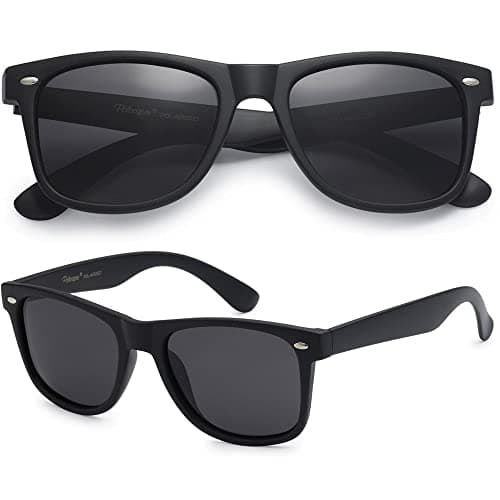
PolarSpex PolarSpex Polarized
PolarSpex Polarized

About as cheap as a genuinely polarized pair gets without becoming a tint pretending to be one.

The spare pair you leave in the car
6.8
$14.95Amazon

#ad · Live prices from the Amazon Product API, as of Sep 4, 2026. Where we have no verified live price, we show none — we would rather leave a gap than print a number that has rotted.

In detail

The picks, in full

01
Maui Jim Maui Jim Red Sands (PolarizedPlus2)

The best-in-class polarized lens

Maui Jim Red Sands (PolarizedPlus2)

PolarizedPlus2MauiPure lensUV + blue-lightNylon frame
8.2/10

If glare control and color are the whole point, this is the ceiling — at a ceiling price.

Glare control
10
Optics
10
Fit & coverage
7
Durability
9
Value
5

Pros

  • Maui Jim's PolarizedPlus2 does more than cut glare — it lifts contrast and color, and the difference off water is real, not marketing
  • MauiPure lenses are lighter than glass and more optically true than most polycarbonate
  • Genuinely excellent build; the pair you keep for a decade

Cons

  • The most expensive pick on this site by a wide margin
  • Like any polarized lens it dims LCD and phone screens — a nuisance at a gas pump or a boat's chartplotter

Don't buy this if…

you lose sunglasses. This is a heirloom-price lens, and the glare math that matters to a buyer is 90% there on pairs costing a fifth as much.

$259.00View on Amazon

Price as of Sep 4, 2026. Prices change — Amazon's is the one that counts.

#ad · we may earn a commission from this link to Maui Jim Red Sands (PolarizedPlus2)

02
Costa Del Mar Costa Fantail 580P

Sight-fishing and time on the water

Costa Fantail 580P

580P polarizedPolycarbonateHydrolite gripVented
8.4/10

The fishing default. The 580 lens is built to pull fish out of glare, and it does.

Glare control
10
Optics
9
Fit & coverage
9
Durability
8
Value
6

Pros

  • Costa's 580 lens filters yellow light to lift contrast — copper/green tints make fish and structure pop against surface glare
  • Hydrolite nose and temple pads grip harder the wetter they get, which is the whole game on a boat
  • 580P (polycarbonate) is the lighter, more impact-resistant option versus the pricier 580G glass

Cons

  • Polycarbonate scratches more easily than Costa's 580G glass — the glass is clearer but heavier and dearer
  • A real premium over budget fishing wraps that also filter glare competently

Don't buy this if…

you fish twice a year off a dock. The 580 lens earns its keep for people who sight-fish; occasional users get most of the benefit from a $30 polarized wrap.

$212.00View on Amazon

Price as of Sep 4, 2026. Prices change — Amazon's is the one that counts.

#ad · we may earn a commission from this link to Costa Fantail 580P

03
goodr goodr OG (Polarized)

Best running sunglasses overall

goodr OG (Polarized)

PolarizedUV400No-slip grip coating~ standard fit
8.0/10

The runner's default: polarized, no-slip, and cheap enough to not baby.

Glare control
8
Optics
7
Fit & coverage
8
Durability
7
Value
10

Pros

  • goodr's grip coating genuinely stops the bounce and slide that ruins a run in a lifestyle frame
  • Polarized and UV400 at a price where losing a pair doesn't sting
  • Light enough that you forget you're wearing them by mile two

Cons

  • One size; a very narrow or very wide face may not get a perfect seal
  • Flat-ish lens gives less side coverage than a true sport shield

Don't buy this if…

you want maximum wraparound coverage or interchangeable lenses for changing light. goodr is fit-and-forget, not a modular system.

$30.00View on Amazon

Price as of Sep 4, 2026. Prices change — Amazon's is the one that counts.

#ad · we may earn a commission from this link to goodr OG (Polarized)

04
DUCO DUCO Polarized (Al-Mg)

A polarized metal frame on a budget

DUCO Polarized (Al-Mg)

Al-Mg framePolarizedUV400Spring hinges
7.4/10

A metal-framed polarized pair at a price that makes the premium brands look silly.

Glare control
8
Optics
7
Fit & coverage
6
Durability
7
Value
9

Pros

  • An aluminum-magnesium frame at this price is unusual — it feels far more substantial than the plastic budget field
  • Polarized and UV400, which covers the two things that actually matter
  • Spring hinges take the abuse of being shoved in a pocket

Cons

  • The lens optics are good, not Maui-Jim good — you notice a touch less clarity at the edges
  • Metal frames are less forgiving than nylon if you sit on them

Don't buy this if…

you want a sport wrap. This is a driving/everyday shape, and metal arms are the wrong tool for a sweaty trail run.

$34.99View on Amazon

$48.0027% off

Price as of Sep 4, 2026. Prices change — Amazon's is the one that counts.

#ad · we may earn a commission from this link to DUCO Polarized (Al-Mg)

05
PolarSpex PolarSpex Polarized

The spare pair you leave in the car

PolarSpex Polarized

PolarizedUV400Lightweight frameMany colorways
6.8/10

About as cheap as a genuinely polarized pair gets without becoming a tint pretending to be one.

Glare control
7
Optics
6
Fit & coverage
6
Durability
5
Value
10

Pros

  • Real polarization and UV400 at a price where owning three is reasonable
  • Light and unfussy — the definition of a knock-around pair
  • Wide colorway range for a budget frame

Cons

  • Build quality is the first thing to go; hinges are the weak point
  • Optical clarity and coating life are at the floor of what we would still recommend

Don't buy this if…

this is your only pair and you wear sunglasses daily. Buy something a tier up that will still be intact next summer.

$14.95View on Amazon

Price as of Sep 4, 2026. Prices change — Amazon's is the one that counts.

#ad · we may earn a commission from this link to PolarSpex Polarized

Deciding how much to spend

Start by naming the job

Sight-fishing and green-reading justify a tuned lens. Driving, beach and everyday do not. The job sets the ceiling before the budget does.

Be honest about how you treat things

If you have lost more than one pair in the last three years, buy at the $30 tier and buy two. Amortized cost is the only honest way to compare.

Buy cheap first to find your shape

A budget pair in the shape you are considering tells you more about whether you will wear it than any review can. Then spend on the shape you reached for.

Check what the money is actually for

Documented lens technology and build quality are worth paying for. A licensed logo on a frame made by someone else is a design purchase — fine, but know which one you are making.

How we picked

We don't run a testing lab

We compile each pair's published specifications — lens material, polarization, coating, frame material, coverage, UV rating and price — normalize them, and score each against a published rubric. The scores are judgments from documented research; they are notmeasurements we took, because we don't own a lab and we're not going to pretend we do. Pairs we claim to have lab-tested: 0.

Questions

Frequently asked

Are expensive sunglasses better for your eyes?
No. UV protection is the eye-health function of sunglasses, and it is unrelated to price — a $15 UV400 lens blocks UVA and UVB as completely as a $400 one. What the premium buys is optical clarity, contrast tuning for specific sports, coating longevity and build quality. Those are real, but none of them is eye safety.
What is the difference between $30 and $300 sunglasses?
Edge-of-lens clarity, coating durability, sport-specific contrast tuning, fit engineering and service programs that replace lenses. What is identical is UV protection and, if both are polarized, the glare removal itself. The premium is refinement and longevity rather than function — the detail is in our cheap polarized guide.
When is it worth buying expensive sunglasses?
Four situations: you sight-fish or read golf greens and want a contrast-tuned lens; you ride or descend fast and want peripheral clarity; you genuinely keep a pair for many years so the cost amortizes; or you want the design object and are honest that this is the purchase. Outside those, the $30 tier does the job.
Do designer sunglasses have better lenses?
Not necessarily. Many fashion-house sunglasses are licensed — the name belongs to the designer and the product is made by an eyewear manufacturer. That does not make them bad, and the frames are often well built, but the lens is usually a good conventional tint rather than a documented technology like Costa's 580 or Oakley's Prizm. Buy them for the design, not for an optical claim.
Is it better to buy one expensive pair or two cheap ones?
For most people, two cheap ones. You get the right shape for two different jobs — a wrap for sport, a flat frame for everyday and driving — and losing one is not painful. Buy one expensive pair when you have already discovered which shape you reach for constantly and you know you will keep it. Our best sunglasses roundup covers both ends.

Keep reading

Receipts

Sources

We do not run a testing lab, and we do not pretend to. Where a spec or measurement came from a manufacturer or a third party, we name and link it. Where we could not verify something, we say so on the page rather than quietly leaving it out. Read our full method.