Skip to content
PolarizedClub

Head to head · Sport shields

Oakley vs Tifosi: Where the Extra Money Goes

One costs several times the other and they cover your eyes about the same amount. Here is exactly what the price gap buys — and when it is worth paying.

By Stephen V.Updated How we rate
#ad

We earn a commission when you buy through our Amazon links, at no extra cost to you. It never affects our rankings, and we say so when the cheaper pair is the better buy. How this works.

Buy Tifosi unless you have a specific reason not to. For a fraction of the Oakley price you get comparable coverage, a genuinely light frame, and a box of interchangeable lenses that solves the real sport problem — light that changes mid-session. Buy Oakley if you want the best single lens made for a sport, want it to last a decade, and are willing to pay several times as much for the last increment of optical quality.

This is the most lopsided price gap on the site, and it is also the one where the cheap answer is most defensible. Both brands make large-coverage sport shields for cyclists and runners. Both use grippy nose and temple materials that hold on a sweaty face. Both are non-polarized by design in their sport lines, because polarization masks the sheen that tells you a corner is wet and dims a bike computer. Where they separate is lens tuning, build longevity, and what is in the box.

FactorOakleyTifosi
LensPrizm — contrast tuned for a specific sport and light conditionGood general tints; no equivalent contrast tuning
Changing lightOne lens per pair; a second lens costs real moneyInterchangeable set in the box on models like the Rail
CoverageTall shields designed for looking up through the top of the lens in the dropsComparable shield sizes on its sport models
GripUnobtainium pads that tack up with sweatHydrophilic grip pads that do the same job
DurabilityExcellent — frames and coatings built for yearsGood; hinges and coatings are the first things to age
PricePremium, several times the TifosiThe value benchmark in the category

The short answer

Quick picks

#ProductBest forScorePrice
01
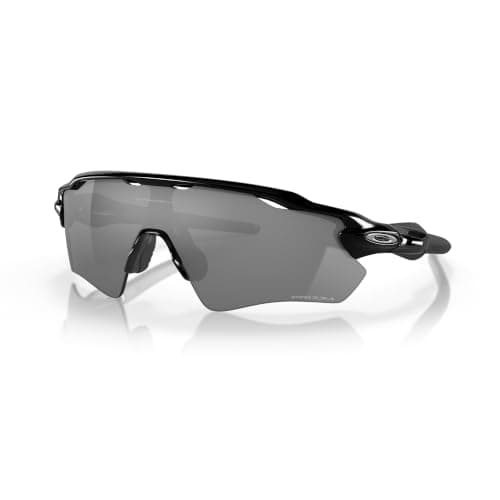
Oakley Oakley Radar EV Path (Prizm)
Oakley Radar EV Path (Prizm)

The pro-peloton default. Prizm contrast, huge coverage, and a price to match.

The premium cycling shield
8.0
$195.20Amazon
02
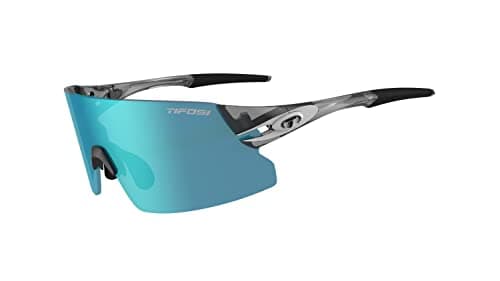
Tifosi Tifosi Rail XC (Interchangeable)
Tifosi Rail XC (Interchangeable)

The value pick for cyclists: big coverage and three lenses for changing light.

Best cycling sunglasses for the money
8.2
$79.95Amazon
03
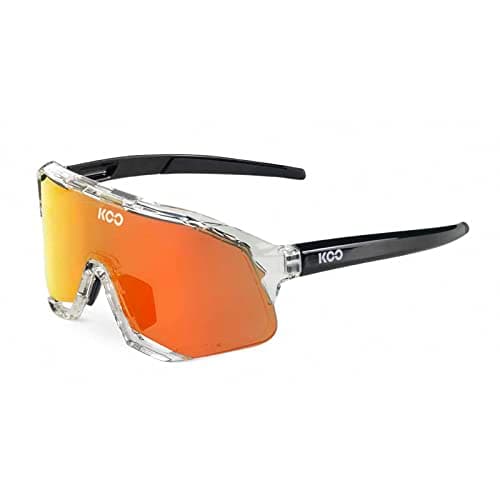
KOO KOO Demos (Zeiss lens)
KOO Demos (Zeiss lens)

Italian cycling eyewear with Zeiss glass optics — style and clarity, premium price.

Design-led cyclists who want Zeiss optics
7.6
$149.93Amazon

#ad · Live prices from the Amazon Product API, as of Sep 5, 2026. Where we have no verified live price, we show none — we would rather leave a gap than print a number that has rotted.

In detail

The picks, in full

01
Oakley Oakley Radar EV Path (Prizm)

The premium cycling shield

Oakley Radar EV Path (Prizm)

Prizm lensPlutoniteTall shieldUnobtainium grip
8.0/10

The pro-peloton default. Prizm contrast, huge coverage, and a price to match.

Glare control
6
Optics
10
Fit & coverage
10
Durability
9
Value
5

Pros

  • Prizm tuning boosts the specific contrasts that matter on the road — you pick out cracks and gravel earlier
  • The tall Path lens gives coverage when you're down in the drops and looking up through the top of the lens
  • Oakley's Unobtainium grips tack up with sweat and the build lasts

Cons

  • Expensive — several times the Tifosi Rail for a contrast advantage most riders won't fully exploit
  • Prizm Road is not polarized (by design for cycling), so don't expect glare-off-water behavior

Don't buy this if…

you're a value-focused rider. The Tifosi Rail delivers the coverage and lens options that matter for a quarter of the money.

$195.20View on Amazon

$244.0020% off

Price as of Sep 5, 2026. Prices change — Amazon's is the one that counts.

#ad · we may earn a commission from this link to Oakley Radar EV Path (Prizm)

02
Tifosi Tifosi Rail XC (Interchangeable)

Best cycling sunglasses for the money

Tifosi Rail XC (Interchangeable)

Interchangeable lensesBig shieldVentedVery light
8.2/10

The value pick for cyclists: big coverage and three lenses for changing light.

Glare control
6
Optics
8
Fit & coverage
10
Durability
8
Value
9

Pros

  • Ships with multiple lenses so you swap for bright sun, overcast and low light — the right answer for a sport where light changes mid-ride
  • Large shield gives the coverage a road or gravel cyclist actually needs at speed
  • A fraction of the price of the Italian marquee brands for comparable coverage

Cons

  • The included lenses are tinted/contrast, not polarized — deliberate, since polarized can mask road sheen and dims a bike computer
  • Big-shield look isn't for everyone off the bike

Don't buy this if…

you want a do-everything lifestyle frame. This is a cycling tool — glorious on the bike, a lot of sunglasses at a cafe.

$79.95View on Amazon

Price as of Sep 5, 2026. Prices change — Amazon's is the one that counts.

#ad · we may earn a commission from this link to Tifosi Rail XC (Interchangeable)

03
KOO KOO Demos (Zeiss lens)

Design-led cyclists who want Zeiss optics

KOO Demos (Zeiss lens)

Zeiss lensAdjustable noseVented shieldLightweight
7.6/10

Italian cycling eyewear with Zeiss glass optics — style and clarity, premium price.

Glare control
6
Optics
9
Fit & coverage
9
Durability
8
Value
6

Pros

  • Zeiss lenses give reference-grade optical clarity — the edges stay sharp where budget lenses smear
  • The Demos shield is a genuine design object, which matters to a lot of cyclists
  • Adjustable nose piece dials in the fit better than fixed-nose budget frames

Cons

  • Premium price for a single lens; no interchangeable set in the box like the Tifosi
  • The bold styling is polarizing (the frame, not the lens)

Don't buy this if…

you want lens options for changing conditions out of the box — the Tifosi Rail's multi-lens kit is the more practical buy.

$149.93View on Amazon

Price as of Sep 5, 2026. Prices change — Amazon's is the one that counts.

#ad · we may earn a commission from this link to KOO Demos (Zeiss lens)

Prizm is real, and it is also oversold

Oakley's Prizm lenses are not a marketing tint. Each variant is engineered to boost specific contrasts — Prizm Road lifts the difference between asphalt, cracks and gravel; Prizm Golf separates the green from the fairway. Oakley publishes the technology detail, and riders who use it consistently report picking out road hazards marginally earlier. That is a genuine, if modest, safety and confidence benefit.

The honest caveat: it is an increment, not a transformation, and it is an increment that most riders will not fully exploit. If you ride twice a week in mixed conditions, a good general tint in a well-shaped shield gives you nearly all of the practical benefit. The riders who genuinely monetize Prizm are the ones descending fast on unfamiliar roads, racing, or riding technical singletrack where reading the surface earlier actually changes an outcome.

Interchangeable lenses beat a better lens, for most people

Here is the argument Tifosi wins on and Oakley cannot easily answer: sport light changes. You leave at seven in flat gray, the sun comes out at nine, and you finish under trees. A single dark lens is wrong twice on that ride. A model like the Tifosi Rail ships with several lenses — a bright tint, an all-condition tint, and usually a clear or low-light option — so you carry the right one and swap in ten seconds.

Against that, the best single lens in the world is still one lens. You can buy additional Oakley lenses, and many riders do, but each one costs a meaningful fraction of what an entire Tifosi package costs. If your light is variable and your budget is finite, the interchangeable set is simply the better engineering answer. If your light is reliably bright and you want one perfect lens, Oakley's case improves considerably.

Where Oakley earns the money honestly

Three places. First, durability: Oakley frames and coatings age slowly, and a pair bought now plausibly outlives three Tifosis. Amortized over a decade, the price gap narrows a great deal. Second, fit engineering: the tall Radar-style shield is genuinely designed for a head-down riding position, so you are looking through lens rather than over it when you glance up at speed. Third, the lens edges: premium optics stay sharp toward the outside of your field of view, where cheaper lenses smear slightly. On a bike at speed, peripheral clarity is not a luxury feature.

There is a fourth, less rational reason, and we will name it rather than pretend: Oakley is a status object in cycling. That is a legitimate thing to spend money on as long as you know that is what you are doing. What is not legitimate is a review site implying you need Prizm to ride safely. You do not.

What about the Italian third option?

The KOO above is the interesting outlier — Zeiss optics in a design-led Italian shield, priced between the two. If you want reference-grade lens clarity but find Oakley's styling ubiquitous, that is the pitch. It ships with a single lens, so it inherits Oakley's changing-light problem without inheriting Oakley's lens catalog. Full context is in the cycling sunglasses roundup.

The verdict

For most cyclists and runners, Tifosi is the correct buy and the money saved is better spent elsewhere on the bike. Upgrade to Oakley when one of these is true: you ride fast on roads you do not know, you want a single pair to last a decade, or peripheral optical clarity at speed genuinely matters to how you ride. And whichever you choose, do not buy polarized for cycling without reading are polarized lenses good for cycling first — it is the one spec that can actively work against you on a bike.

How to spend here

Start with coverage, not brand

A shield that covers your field of view in your actual riding position beats a better lens in a smaller frame. If you ride in the drops, buy tall.

Buy lens options if your light varies

Variable light is the most common real-world problem and an interchangeable set solves it for less than a second premium lens costs.

Skip polarized for the bike

Both brands sell non-polarized sport lenses on purpose. Polarized dims a bike computer and can mask the sheen of a wet corner — the wrong trade at speed.

Then, and only then, pay for Prizm

Contrast tuning is real and it is the last increment. Buy it when the first three decisions are already right and you want the best lens for one specific light.
How we picked

We don't run a testing lab

We compile each pair's published specifications — lens material, polarization, coating, frame material, coverage, UV rating and price — normalize them, and score each against a published rubric. The scores are judgments from documented research; they are notmeasurements we took, because we don't own a lab and we're not going to pretend we do. Pairs we claim to have lab-tested: 0.

Questions

Frequently asked

Is Oakley worth the money over Tifosi?
For most riders, no — Tifosi delivers comparable coverage, comparable grip and a box of interchangeable lenses for a fraction of the price. Oakley earns the premium in three specific places: contrast-tuned Prizm lenses, peripheral optical clarity at speed, and frame and coating durability measured in years rather than seasons. If none of those describes your riding, buy the Tifosi. The full field is in our cycling sunglasses roundup.
Does Prizm actually make a difference?
Yes, but it is an increment rather than a transformation. Prizm variants boost specific contrasts — road surface detail, green-versus-fairway on a golf course — so hazards and transitions register slightly earlier. Riders descending fast on unfamiliar roads notice it most; a rider doing steady weekly miles in mixed light will get most of the practical benefit from any good general tint.
Should cycling sunglasses be polarized?
Usually not. Polarization removes the reflected sheen that tells you a corner is wet, and it dims the LCD on a bike computer — two things you actively want at speed. That is why both Oakley's and Tifosi's sport lines are non-polarized by default. We cover the full argument in are polarized lenses good for cycling.
Can you use Tifosi for running as well as cycling?
Yes — the grip pads and light frames work well for running, and the interchangeable lenses are just as useful for a dawn run as a dawn ride. The only caveat is that big sport shields are a lot of sunglasses for an easy jog; a lighter lifestyle-sport crossover is more comfortable for that. Our running sunglasses roundup covers both ends.
How long do Tifosi sunglasses last?
Longer than the price suggests, but not as long as an Oakley. The frames are Grilamid-class nylon and hold up well; the hinges and the lens coatings are the parts that age first, particularly if the pair lives loose in a jersey pocket. Budget for a few seasons of hard use, and use the case that ships with the interchangeable set.

Keep reading

Receipts

Sources

We do not run a testing lab, and we do not pretend to. Where a spec or measurement came from a manufacturer or a third party, we name and link it. Where we could not verify something, we say so on the page rather than quietly leaving it out. Read our full method.