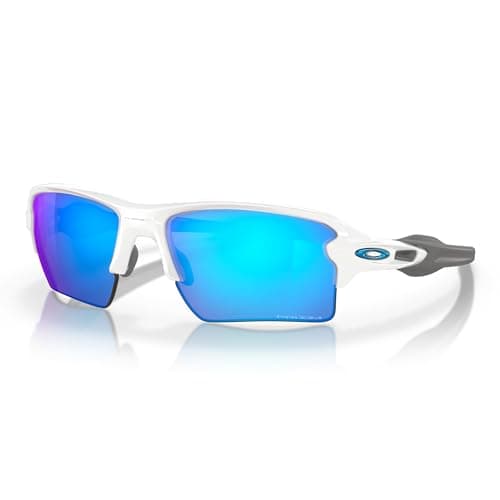
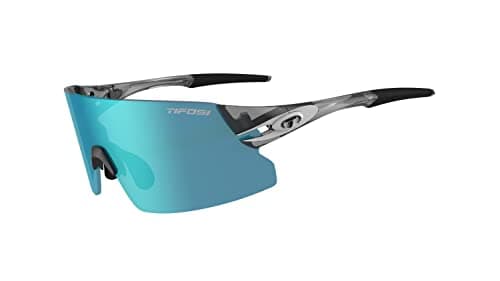
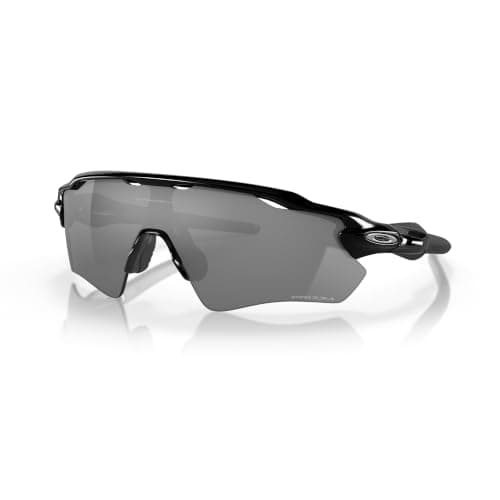
Prizm is Oakley's contrast-tuned tint: a lens engineered to filter specific wavelengths so the details that matter in a given environment stand apart, instead of simply making everything darker. It is worth paying for if you do a sport where reading detail early matters — road cycling, mountain biking, golf, sight-fishing. It is worth very little if you mostly wear sunglasses to stop squinting.
Prizm is also the most misunderstood term in sunglasses, mostly because it is used as if it were a single product when it is a family with sport-specific variants that behave very differently. This page separates what it is, what it is not, and when it earns its money.
1. What Prizm actually is
Oakley's published explanation of Prizm lens technology is that the tint is designed around how the human eye processes color: certain wavelengths are selectively filtered so specific contrasts are amplified, rather than the lens attenuating all light equally the way a plain gray does.
The practical claim is that details register earlier. On a road, that means a patch of fresh asphalt or a damp line under trees. On a trail, dirt separating from root and rock. On a golf course, the grain and slope of a green.
Whether that translates into a measurable performance difference is not something we can tell you, and neither can anyone else without a lab. What we will say is that it is a real engineering approach rather than a marketing coat of paint, that the effect is noticeable side by side against a plain gray lens, and that some people find engineered contrast tints fatiguing over long days and prefer a neutral view. Both reactions are legitimate.
2. What Prizm is not
It is not polarization. These are independent properties. Most Prizm lenses are deliberately notpolarized, because Oakley's sport lenses are aimed at cyclists and athletes who want to keep the reflection that tells them a corner is wet and want their bike computer readable. Oakley does sell Prizm Polarized variants, and if you want both you have to buy the specific one.
It is not UV protection.Oakley's lens material blocks UV as a property of the material rather than of the tint. UV blocking is binary, present on every reputable lens at every price, and recommended at 100% UVA and UVB by the American Optometric Association. You never buy your way to better UV protection.
It is not a coating you can add. It is the tint itself, so choosing Prizm means choosing a lens rather than an option on one.
3. The variants, and which one you actually want
This is where most buying confusion happens: the variants are tuned for different environments and are not interchangeable.
Road variants target tarmac contrast in bright and variable daylight. Trail variants target the browns and greens of dirt and vegetation. Golf variants target grass contrast so slope and grain read more clearly. Deep Water variants exist in polarized form for looking through a water surface. Snow variants target texture in flat white light, and lifestyle variants are general-purpose.
Buying a Trail lens for road riding, or a Golf lens for driving, gets you a tint tuned for the wrong palette. The variant matters more than the word Prizm does, and it is the single most common mistake people make buying Oakley second-hand.
4. Where it genuinely earns its money
Cycling. Reading surface changes a fraction earlier at 25 mph is a real safety and comfort benefit over a long ride. This is the strongest case.
Mountain biking.Same argument, more so, because the ground is more complex and the consequences of misreading it are higher — see best mountain bike sunglasses.
Golf. Grass contrast is a genuine visual task and a golf-specific tint helps read a green. The wider case is in polarized sunglasses for golf.
Ball sports with an upward sightline. Contrast tints separate a small pale object from a bright sky better than a dark neutral, which is why they recur in baseball and tennis.
5. Where it does not
Everyday wear, driving and general glare are all comfort problems rather than detail-resolution problems, and a plain gray polarized lens is arguably the better tool for them: it stays color-honest and it removes reflected glare, which Prizm on its own does not.
If your reason for wearing sunglasses is that the sun is bright, you do not need a contrast lens. You need a lens that is dark enough, UV400, and comfortable — which is available for very little money and ranked in best cheap polarized sunglasses.
6. Is Prizm worth the money?
Honestly: yes for a specific sport, no as a general upgrade. The Oakley premium buys you the contrast tint, an enormous lens catalog, a wide range of fits and a build that lasts. Against a Tifosi at a third of the price you get better optics and better tuning, and you give up two spare lenses.
For most riders most of the time we still point at the value tier — the argument is in Oakley vs Tifosi. For a rider who does long days in variable light and cares about reading the road, Prizm is one of the few premium lens claims we think is defensible on function rather than on brand.
Buying a Prizm lens
1. Pick the variant, not the word
Road, Trail, Golf, Snow and Deep Water are tuned for different palettes and are not interchangeable.
2. Check polarization separately
Most Prizm lenses are not polarized on purpose. If you want both, buy a Prizm Polarized variant explicitly.
3. Do not buy it for UV
UV blocking is a property of the lens material and is binary. It is present on cheap lenses too.
4. Buy it for a sport, not for everyday
Contrast tuning helps where reading detail early matters. For general glare, a gray polarized lens is better.
5. Compare against three lenses for the price
An interchangeable set solves changing light more completely than any single premium tint.