Skip to content
PolarizedClub

Sport · Tennis

The Best Sunglasses for Tennis

Tennis asks you to look directly into the brightest part of the sky on every serve. That single movement rules out most frames before fit or lens even come up.

By Stephen V.Updated How we rate
#ad

We earn a commission when you buy through our Amazon links, at no extra cost to you. It never affects our rankings, and we say so when the cheaper pair is the better buy. How this works.

Buy a light frame with an unobstructed upper sightline and grip material at the nose and temples, in a contrast tint rather than a dark one. The Tifosi Swank XL is our pick for most players because it is barely-there light and grips as you sweat; the Tifosi Vero is the half-frame option if you want nothing at all across the top of your vision. Polarized is optional here and arguably counterproductive — more on that below.

Tennis has a specific eyewear problem that most sports do not. On every first serve you throw a small yellow ball straight up into the brightest part of the sky and then track it back down at speed. Nothing else in the game is as demanding of your eyewear, and nothing else so completely determines which frame is correct.

1. The serve toss decides the frame

When you look almost straight up, a frame with a thick upper rim puts an opaque bar exactly where the ball is. That is not a minor irritation; it is the shot you are trying to hit.

Two shapes solve it. A half-frame shield— a lens held from below with nothing across the top — leaves the upward view completely clear. A thin-rimmed single lens gets most of the way there with a less aggressive look off court. Both beat a conventional frame with a substantial top rim.

This is the same geometry argument the outfield makes in best sunglasses for baseball, and it is why the two sports converge on similar shapes despite everything else being different.

2. Tennis versus pickleball: same idea, different distance

We already cover the short-court version of this in best sunglasses for pickleball, and the difference is worth stating because it changes the recommendation.

Pickleball is fast at very short range, which makes eyewear partly protective — the ball can reach your face before you finish reacting. Tennis is played across a much longer court, so the protective argument is weaker, but the tracking argument is stronger: you are picking up a ball at distance, against sky, and reading spin off the racquet face at the other end. That pushes the priority further toward lens contrast and away from coverage.

Tennis also involves more sustained running than pickleball, which pushes grip and weight up the list. Tifosi's own court-eyewear guide makes the same split between court types.

3. Tint: separate yellow from blue and green

A tennis ball is a specific and unusual color, chosen precisely because it stands out. Your job is not to make the court darker but to make that yellow-green separate from a blue sky, a green or blue court surface, and a green fence.

Contrast tints do that: rose, amber, light copper, and the engineered contrast lenses. A very dark neutral gray does the opposite — it reduces everything equally, which is comfortable in blazing sun and unhelpful for picking a ball out of a background. A too-dark lens is also a real handicap for an evening match under lights.

If you play in both bright afternoon and evening light, a photochromic lens or an interchangeable set is a better answer than compromising on one tint. The trade is set out in lens colors explained and best photochromic sunglasses.

4. The honest case against polarized on court

Polarization removes horizontally aligned reflected light. On a tennis court there is very little of that to remove: a dry hard court, a clay court and a grass court are not strongly reflective surfaces, and the ball is not behind glare.

What polarization can do is subtly reduce the sky texture some players use as a background reference on the toss, and it will dim a phone or a scoreboard screen. Neither is a disaster, but it does mean polarization is close to irrelevant here and occasionally a small negative — which is unusual on this site. If you want one pair for tennis and the drive home, take the polarized version and accept a very small cost on court. If tennis is the only job, a non-polarized contrast lens is technically the better tool. The general argument is in polarized vs non-polarized.

5. Grip and weight beat optics here

A frame that shifts as you push off is worse than no frame, because it pulls your eye at exactly the wrong moment. What holds a frame in a long baseline rally is hydrophilic or rubberized material at the nose and temple tips, which gets tackier as it dampens rather than slicker.

Weight matters as much as grip: a heavier frame generates more downward force every time you plant a foot or change direction. Light and grippy beats optically excellent on a tennis court, which is why the picks here skew toward very light sport frames rather than premium shields. The mechanism is in how to stop sunglasses slipping.

6. UV, which is the part nobody thinks about

Tennis is played outdoors, in summer, often for hours, frequently at midday, on a surface that reflects light back at you. The American Optometric Association recommends lenses that block 100% of UVA and UVB and links cumulative exposure to long-term damage. Every pick here is UV400, and that protection costs essentially nothing — a cheap UV400 lens blocks UV as completely as a premium one. Never buy a dark lens without a confirmed UV rating.

How we ranked these

Upward sightline first, grip and weight second, tint contrast third, price fourth. Scores come from the published rubric on how we rate; they are judgments compiled from published specifications and documented research, not lab measurements. We do not run a lab.

The short answer

Quick picks

#ProductBest forScorePrice
01
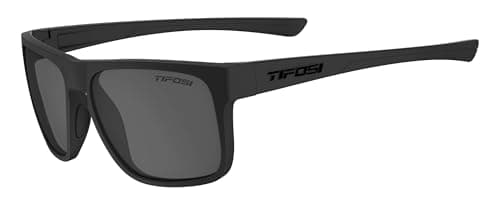
Tifosi Swank XL

The Swank scaled up — the light lifestyle-sport crossover for faces the standard size pinches.

Wider faces wanting a light sport-casual frame
7.2
Check price →
02
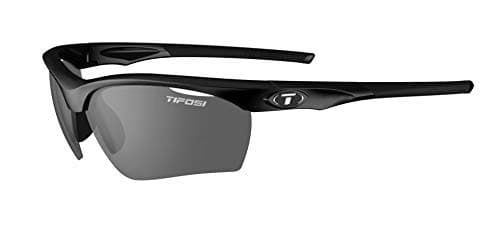
Tifosi Tifosi Vero (Smoke Polarized)
Tifosi Vero (Smoke Polarized)

A half-frame sport shield built for ball sports — open top sightline, grippy, light.

Baseball, softball and open-sightline sport
8.0
$79.95Amazon
03
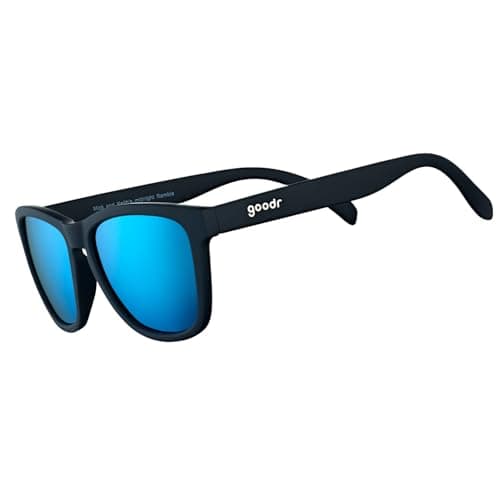
goodr goodr OG (Polarized)
goodr OG (Polarized)

The runner's default: polarized, no-slip, and cheap enough to not baby.

Best running sunglasses overall
8.0
$30.00Amazon
04
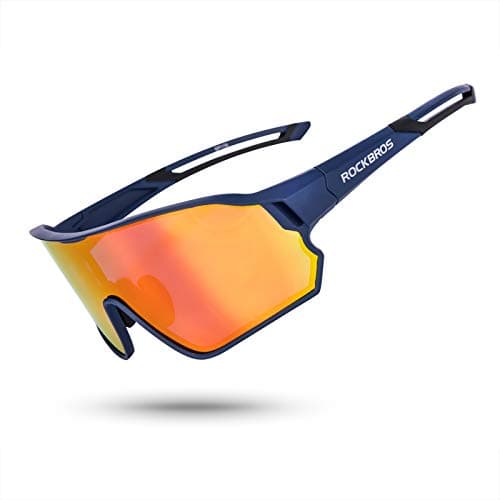
ROCKBROS ROCKBROS Polarized Sport
ROCKBROS Polarized Sport

ROCKBROS's polarized sport wrap — the glare-cutting sibling to its photochromic lens.

Budget sport wrap with real glare control
7.4
$22.59Amazon
05
Tifosi Tifosi Swick
Tifosi Swick

A light, low-cost golf-friendly frame that stays put through the swing.

Best value on the course
7.2
$25.00Amazon

#ad · Live prices from the Amazon Product API, as of Sep 5, 2026. Where we have no verified live price, we show none — we would rather leave a gap than print a number that has rotted.

In detail

The picks, in full

01

Wider faces wanting a light sport-casual frame

Tifosi Swank XL

Grilamid frameXL sizingHydrophilic gripVery light
7.2/10

The Swank scaled up — the light lifestyle-sport crossover for faces the standard size pinches.

Glare control
5
Optics
7
Fit & coverage
8
Durability
7
Value
9

Pros

  • Solves the single most common complaint about light sport-casual frames: that they are too small for a wider face
  • Barely-there weight makes it comfortable for a long session on a court or a walk
  • Grip pads hold as you heat up rather than getting slicker

Cons

  • The base lens is a tint, not polarized — no glare-off-water benefit unless you choose a polarized option
  • Lifestyle shape means less coverage than a true sport shield in low sun

Don't buy this if…

you need polarized glare control or full wrap coverage. This is a light everyday-and-easy-sport frame, and it is honest about that.

Check price on Amazon →

We don't have a verified live price for this right now, so we aren't showing one.

#ad · we may earn a commission from this link to Tifosi Swank XL

02
Tifosi Tifosi Vero (Smoke Polarized)

Baseball, softball and open-sightline sport

Tifosi Vero (Smoke Polarized)

Half-frame shieldPolarized optionHydrophilic gripVented lens
8.0/10

A half-frame sport shield built for ball sports — open top sightline, grippy, light.

Glare control
8
Optics
7
Fit & coverage
9
Durability
8
Value
8

Pros

  • The half-frame leaves the top of your field of view unobstructed, which is exactly what you need looking up at a fly ball
  • Grip pads tack up with sweat so the frame does not shift when you run
  • Vented lens cuts the fogging that kills a sealed shield on a hot field

Cons

  • The polarized version dims LCD screens and can flatten some sky contrast — Tifosi's non-polarized lenses are the alternative for that
  • Half-frame gives up bottom coverage against low sun

Don't buy this if…

you want maximum wraparound coverage. A full shield seals better; the Vero trades some of that for an unobstructed upward sightline.

$79.95View on Amazon

Price as of Sep 5, 2026. Prices change — Amazon's is the one that counts.

#ad · we may earn a commission from this link to Tifosi Vero (Smoke Polarized)

03
goodr goodr OG (Polarized)

Best running sunglasses overall

goodr OG (Polarized)

PolarizedUV400No-slip grip coating~ standard fit
8.0/10

The runner's default: polarized, no-slip, and cheap enough to not baby.

Glare control
8
Optics
7
Fit & coverage
8
Durability
7
Value
10

Pros

  • goodr's grip coating genuinely stops the bounce and slide that ruins a run in a lifestyle frame
  • Polarized and UV400 at a price where losing a pair doesn't sting
  • Light enough that you forget you're wearing them by mile two

Cons

  • One size; a very narrow or very wide face may not get a perfect seal
  • Flat-ish lens gives less side coverage than a true sport shield

Don't buy this if…

you want maximum wraparound coverage or interchangeable lenses for changing light. goodr is fit-and-forget, not a modular system.

$30.00View on Amazon

Price as of Sep 5, 2026. Prices change — Amazon's is the one that counts.

#ad · we may earn a commission from this link to goodr OG (Polarized)

04
ROCKBROS ROCKBROS Polarized Sport

Budget sport wrap with real glare control

ROCKBROS Polarized Sport

PolarizedUV400Sport wrapLightweight frame
7.4/10

ROCKBROS's polarized sport wrap — the glare-cutting sibling to its photochromic lens.

Glare control
8
Optics
6
Fit & coverage
8
Durability
6
Value
9

Pros

  • Polarized rather than photochromic, so it is the better ROCKBROS for wet roads, water and driving
  • Wrap shape controls the side light that a flat lifestyle lens lets straight in
  • Priced where losing a pair on a ride is annoying rather than painful

Cons

  • Polarization is the wrong call for reading a bike computer — the screen dims at some angles
  • Budget hinges and coatings; this is a season-or-two frame

Don't buy this if…

your main use is cycling with a head unit. Take the photochromic version instead — it keeps the screen readable and handles changing light.

$22.59View on Amazon

$29.9925% off

Price as of Sep 5, 2026. Prices change — Amazon's is the one that counts.

#ad · we may earn a commission from this link to ROCKBROS Polarized Sport

05
Tifosi Tifosi Swick

Best value on the course

Tifosi Swick

Grilamid frameSingle lensHydrophilic gripVery light
7.2/10

A light, low-cost golf-friendly frame that stays put through the swing.

Glare control
6
Optics
7
Fit & coverage
7
Durability
7
Value
9

Pros

  • Extremely light and low-profile, so it doesn't intrude at address or through the swing
  • Grip pads tack up with sweat and heat — it stays on when you're walking 18
  • A fraction of the Oakley price for a frame that does the core golf job

Cons

  • The base lens is a general tint, not a green-reading contrast lens like Prizm Golf
  • Less coverage than a wrap in low-angle morning sun

Don't buy this if…

you specifically want a contrast-tuned green-reading lens — that's the one thing the premium golf lenses do that this doesn't.

$25.00View on Amazon

Price as of Sep 5, 2026. Prices change — Amazon's is the one that counts.

#ad · we may earn a commission from this link to Tifosi Swick

Buying for the court

1. Clear the top of your vision

Half-frame or thin-rim. Every serve toss goes through the top of the lens.

2. Grip material, not a tighter frame

Hydrophilic or rubberized nose and temple pads. Squeezing a small frame onto your face just gives you a headache.

3. Contrast tint, not a dark one

Rose, amber or light copper separates a yellow ball from sky, court and fence. Dark gray does not.

4. Polarized is optional here

There is little reflected glare on a court, and the filter costs you a little sky texture. Take it only if the pair does double duty.

5. Light beats premium

Every gram generates force each time you change direction. A very light frame stays put better than a heavy good one.
The cheap stuff that matters

Essentials under $40

The add-ons this page already told you to get. None of these is scored — our rubric measures glare control, optics, fit, durability and value, and four of those mean nothing for a cleaning cloth. So you get a reason and a live price instead of a number we'd have had to invent.

  • SMARTTOP

    SMARTTOP Silicone Eyeglass Ear Grips (18 pairs)

    Soft sleeves that slide onto the temple arms so they grip skin instead of sliding on it. The cheapest real fix for a frame that is otherwise the right size.

  • Chums

    Chums Original Cotton Retainer

    The plain cotton eyewear keeper. Adjustable, washable, and the version most people mean when they say Croakies. Colorways vary on the listing.

  • Generic

    Floating Sunglasses Straps for Water (4-pack)

    A buoyant strap for boats, kayaks and wading. Note what this is: the STRAP provides the flotation. Do not assume any pair floats on its own.

#ad · Live prices as of Sep 5, 2026, hidden when our data goes stale. We may earn a commission, at no cost to you. How this works.

How we picked

We don't run a testing lab

We compile each pair's published specifications — lens material, polarization, coating, frame material, coverage, UV rating and price — normalize them, and score each against a published rubric. The scores are judgments from documented research; they are notmeasurements we took, because we don't own a lab and we're not going to pretend we do. Pairs we claim to have lab-tested: 0.

Questions

Frequently asked

Should tennis players wear sunglasses?
Many do, and the case is strongest for outdoor daytime play: you are looking into the brightest part of the sky on every serve, for hours, on a reflective surface. The frame has to be right though — a conventional frame with a thick top rim puts an obstruction exactly where the ball toss goes.
What lens color is best for tennis?
A contrast tint rather than a dark neutral: rose, amber, light copper or an engineered contrast lens. The task is separating a yellow-green ball from blue sky, a colored court and a green fence, which is a contrast problem rather than a brightness one. Avoid very dark lenses if you play in the evening. More in lens colors explained.
Should tennis sunglasses be polarized?
They do not need to be. A tennis court is not a strongly reflective surface, so there is little glare for the filter to remove, and polarization can slightly reduce the sky texture some players use as a reference on the toss. It is not harmful — if the pair also does duty in the car, take polarized. If tennis is the only use, a non-polarized contrast lens is the better tool.
Are tennis and pickleball sunglasses the same?
Similar requirements, different weighting. Pickleball is fast at short range so eyewear is partly protective; tennis is played over a longer court with more running, so tracking contrast and grip matter more than coverage. Our pickleball guide covers the short-court version.
Do sunglasses affect depth perception in tennis?
A well-made lens with low distortion should not. What does affect it is a badly fitting frame that moves as you run, a lens with visible distortion toward the edges, or a tint dark enough that you lose detail — which is why fit and contrast matter more here than lens branding.

Keep reading

Receipts

Sources

We do not run a testing lab, and we do not pretend to. Where a spec or measurement came from a manufacturer or a third party, we name and link it. Where we could not verify something, we say so on the page rather than quietly leaving it out. Read our full method.