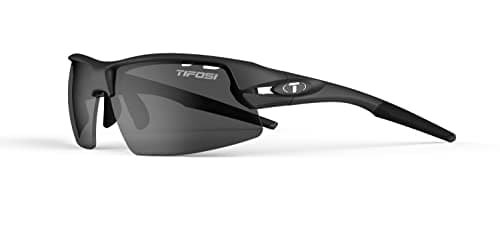
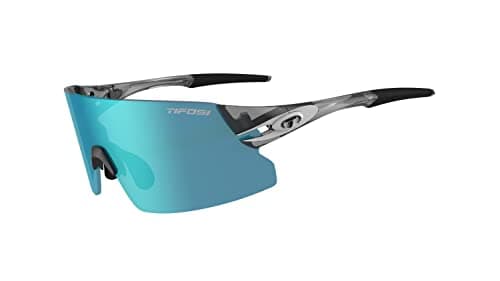
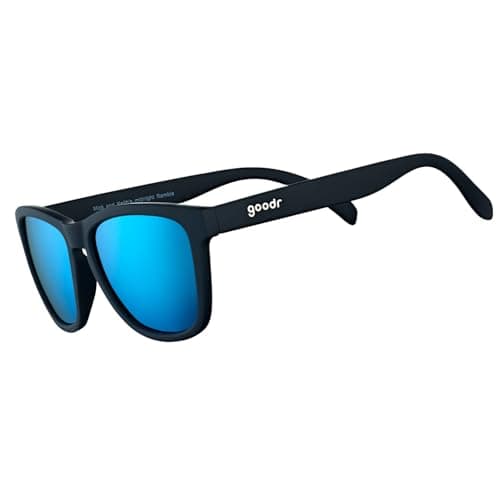
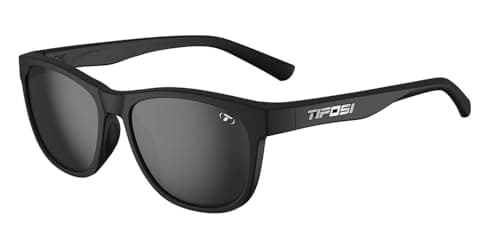
Some are, most are not, and the difference is a line on the listing rather than anything you can see. Tifosi sells a genuine polarized lens on about a dozen frames — the Swank, Swank XL, Swick, Vero, Crit, Sylo, Sanctum and a handful of others — while the sport shields it is best known for ship with tinted, photochromic or contrast lenses that are not polarized at all. That is a design decision, not an omission, and Tifosi says so itself.
This trips up more buyers than any other question about the brand, because the same frame is often sold both ways at two very different prices, in listings whose photographs are nearly identical. Get it wrong in one direction and you have paid roughly double for a filter you did not want on a bike. Get it wrong in the other and you have bought a pair for the boat that does nothing about glare off the water.
Below: what Tifosi's polarized lens actually is, which frames carry it, why the sport range mostly does not, and the pairs worth buying at each end of that split. The brand assessed model by model is in our Tifosi sunglasses review.
1. The short answer, in two lists
Sold with a polarized lens option. Tifosi's own polarized collection currently lists the Swank, Swank S, Swank XL, Swick, Sylo, Stella, Sanctum, Sanctum SL, Vero, Shumo, Crit, Selca, Smirk and Seek FC 2.0. Broadly: the everyday and lifestyle-sport shapes, plus a few frames that straddle both.
Not polarized.The lenses Tifosi is famous for. Fototec, the photochromic lens that "adjusts as the light changes, transmitting less light in bright conditions and more light as conditions get darker," is not polarized in its standard form. Enliven Golf, which Tifosi describes as "a color-enhancing lens made specifically for golf" and is explicit is "not a light-changing lens," is not polarized. The interchange lens kits that ship with the Rail and the other big shields are tinted and contrast lenses, not polarized ones.
Both at once.There is one overlap worth knowing about, and it is the most interesting lens Tifosi makes. Of the six Fototec tints, Tifosi's own FAQ says "two are Polarized Fototec that combine the versatility of polycarbonate Fototec lenses with the glare eliminating properties of polarized lenses" — the Brown and Smoke Polarized Fototec, which "darken in about 12 seconds and return to their original state in two minutes." That is a lens that both tracks the light and cancels reflected glare, which most brands make you choose between.
2. Why the sport lenses are not polarized, in Tifosi's own words
This is the part people read as a cost saving and it is not. In its published lens guide, Tifosi says plainly of golf, cycling and running that "polarized lenses aren't the best fit for those sports because depth perception and screen readability can matter more." Its polarized versus non-polarized explainer makes the same case from the other side: polarized lenses are "ideal for activities such as driving, fishing, and skiing, where glare can be distracting or even dangerous," but they "can make it difficult to see LCD screens clearly," and it lists "harder to see wet or icy surfaces" among the drawbacks.
Both of those matter on a bike specifically. A polarized lens dims a bike computer or a phone mount, which is a real annoyance on a ride you are pacing. More importantly, the sheen a polarized filter removes is the same sheen that warns you a patch of road is wet, oily or iced — a visual cue you actively want back. The full argument, including when it flips, is in our are polarized lenses good for cycling guide.
The same logic explains the golf range. On a green you are reading subtle changes in grass texture and slope, and a polarized filter flattens exactly that kind of low-contrast surface detail, which is why Tifosi built a contrast-enhancing Enliven Golf lens instead of polarizing the golf line. Our polarized sunglasses for golf guide covers where that argument holds and where it does not.
3. What Tifosi's polarized lens actually is
When a Tifosi is polarized, it is properly polarized rather than merely dark. The brand's polarized technology page states that its lenses are "engineered using a layer of injected polarized material, not simply a ‘polarized coating’ used by some other manufacturers that can rub off or fade over time." That distinction is the one that matters at this price. A surface-applied polarizing film is the standard failure mode of a cheap polarized lens: it works on day one and degrades with cleaning and heat. A layer inside the lens cannot wear off, because there is nothing exposed to wear.
The mechanism itself is the same one every polarized lens uses, and Tifosi describes it in one line: "the horizontal polarized light is blocked by vertically oriented polarizers in the lenses." Light bouncing off a flat surface — water, a wet road, a car hood, snow — comes back organized horizontally, and a vertical filter simply refuses to pass it. The Cleveland Clinic explains the same effect in clinical terms, and we go through it in polarized vs non-polarized.
Tifosi publishes the polarized tints it offers: Smoke, Brown, Green Mirror, Emerald, Sky Blue, Clarion Blue and the Smoke Fototec variant. Smoke is the neutral option that changes color relationships least; brown lifts contrast against grass and water at the cost of warming everything slightly. Which one to pick is the same decision as on any brand, and it is laid out in our lens colors guide.
One thing worth separating from polarization entirely: UV. These are not the same feature, and buying polarized for UV reasons is a mistake. Tifosi's FAQ states that "all our Tifosi Standard Polycarbonate lenses provide 100% protection from harmful UVA rays and UVB rays up to 400 nm" — polarized or not — with the low-light Light Night Fototec rated to 380nm. UV400 is the standard the American Optometric Association recommends, and a non-polarized Tifosi meets it just as well as a polarized one.
4. How to tell which one you are looking at, before you pay
On Tifosi's own site the lens is named in the colorway — "Satin Black/Smoke Lens - Polarized" against plain "Blackout/Smoke Lens." On a marketplace listing the word appears in the title or it does not, and the photographs are usually the same. The practical rule: if the listing does not say polarized, assume it is not. Tifosi has no reason to hide the feature on a pair that has it, because it is the reason that pair costs more.
Price is the other tell. The standard tinted Swank and the polarized Swank are the same frame with the same grip pads and the same warranty, and the polarized one costs roughly double. If you are looking at two Tifosi listings for the same model with a large price gap and no obvious difference, the lens is almost always what the gap is.
When the pair arrives, verify it in thirty seconds rather than trusting the box: hold the lens up to an LCD screen and rotate it, and a polarized lens will darken dramatically at about ninety degrees. The full method, including the two-pair version of the test, is in how to tell if sunglasses are polarized.
5. What the rest of the range gives you instead
It is worth understanding what you get when you buy an unpolarized Tifosi, because on the brand's core sport frames it is not simply "less."
Fototecis the photochromic answer to changing light: one lens that darkens and clears rather than a bag of spares. Tifosi's FAQ puts the speed at "about 12 seconds" to darken and "about two minutes" to return. For a ride that starts in shade and finishes in glare, that solves a problem polarization does not touch. We rank the wider field in best photochromic sunglasses.
Interchange kits are the other answer, and the one the Rail ships with: several lenses in a case, swapped to match conditions. Cruder than photochromic and more flexible, since a clear lens for dusk is something no photochromic lens fully replaces.
Clarionis a mirror finish with, in Tifosi's words, "a hydrophobic coating that repels water and sweat" — a coating decision rather than a filter, and it can sit on top of either a polarized or an unpolarized lens.
Enliven Golf is the contrast lens for reading a green, deliberately not light-adaptive and deliberately not polarized.
6. The warranty, read properly
Worth knowing before you choose between the tinted pair and the polarized one, because it applies equally to both. Tifosi's published warranty covers "any sunglass against manufacturer's defects to the original owner for the life of the product," for the original purchaser and US residents only.
What it excludes is the part to read: "normal wear and tear, lost, stolen, dropped, shattered, scratched, sat on, chewed by your pet." Scratches are the way a polycarbonate lens usually dies, and they are outside the cover on every brand that offers this kind of warranty. Tifosi does sell replacement lenses separately, which is the practical fix and a real advantage over budget pairs you simply replace. Note also that processing a warranty submission carries a stated $15 shipping and handling fee. Cleaning a lens correctly is the cheapest way to avoid the whole issue — see how to clean sunglasses.
7. If you want "always polarized" without checking listings
There is a legitimate reason to buy a different brand here: some people do not want a lens decision at all. Brands that polarize their entire range remove the question, and the trade is that they are then the wrong tool for the sports Tifosi is built around.
Cheaper, and always polarized.The grip-coated running default below polarizes every pair it sells, holds a sweaty face better than any Tifosi lifestyle frame, and costs less than the polarized Swank. If the pair is for running and errands rather than riding, it is the simpler buy — assessed in full in are goodr sunglasses good.
More expensive, and polarized to a higher standard. If glare off water is the entire reason you are shopping, the premium glass polarized lenses do a visibly better job than any injected polycarbonate at this price, and they cost several times more. That comparison is in best polarized lenses, and the everyday version of the question is in are expensive sunglasses worth it.
Same money, different job.And if you came here about a bike, the honest answer may be that you want the unpolarized Tifosi after all. The Rail below is the site's value pick for cycling precisely because it is not polarized, and it is reviewed on its own terms in our Tifosi Rail XC review.
How we assessed this
Every lens claim above is Tifosi's own published statement, quoted from its lens technology, collection, FAQ, warranty and blog pages and listed in full below. Scores come from the rubric on how we rate: judgments compiled from published specifications, not lab measurements. We do not run a lab, we have not worn these, and no brand pays for placement. Every pair featured was confirmed in stock with a live price before it was listed, and prices update from the retailer automatically rather than being typed into this page.