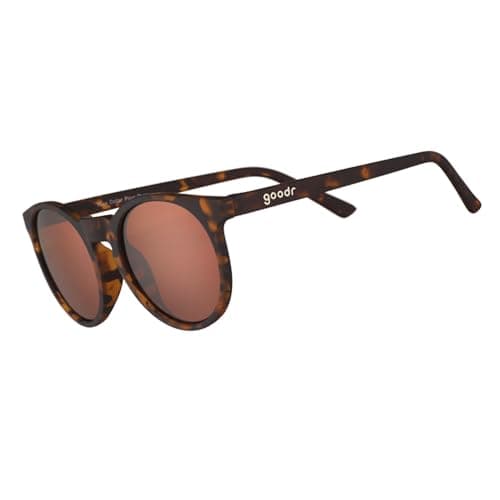
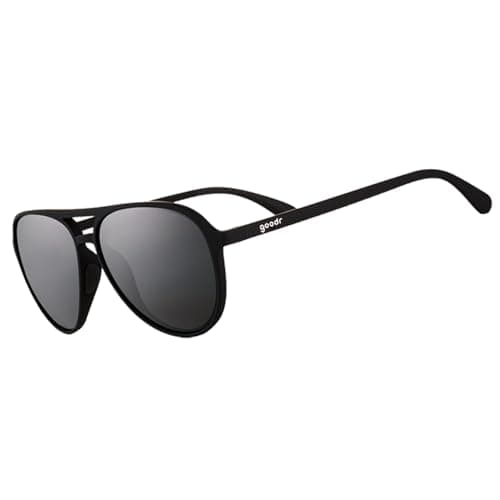
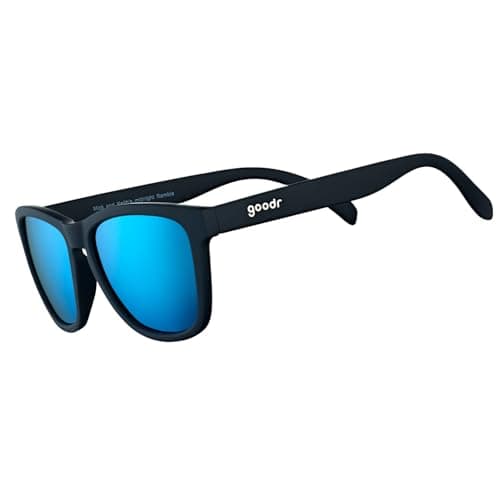
Yes — for running, everyday wear and anything where you would rather not think about your sunglasses, goodr is genuinely good and is the pair we recommend most often on this site. And yes, they are all polarized: goodr states that every pair ships with polarized lenses and UV400. What they are not is an optical instrument, a sport shield, or a pair that will still look new in three years.
goodr is unusual among budget brands because it is not trying to be a cheap version of a premium pair. It picked one problem — sunglasses sliding off a sweaty face — solved it properly, and priced the result so that losing a pair is not an event. That is a coherent product rather than a compromise, and it is why goodr keeps beating pairs costing eight times as much in our roundups.
1. Are goodr sunglasses polarized? Yes, all of them
goodr's own product documentation is unambiguous: "All goodr sunglasses come with polarized lenses" and "All goodr sunglasses are packed with UV400 protection." There is no non-polarized goodr line to accidentally buy, and no upcharge for the polarized version.
That is worth pausing on, because it is the single strongest argument for the brand. UV400 means 100% of UVA and UVB, which is the standard the American Optometric Association recommends — the same protection the flagship brands provide, at the bottom of the market. You genuinely cannot buy better UV protection, at any price.
It does carry one consequence people forget: because every goodr is polarized, a goodr is the wrong pair for reading a bike computer or a watch face at certain angles. If your use is cycling, take a non-polarized pair instead — the argument is in are polarized lenses good for cycling.
2. What the no-slip grip actually solves
goodr describes the design as a "special no-slip grip coating and no-bounce, lightweight frames." Strip the marketing and it is a coating on the nose and temple contacts that gets grippier as it dampens, on a frame light enough not to develop momentum when your foot hits the ground.
That combination is the whole product. Bounce and slide are caused by weight plus a loose contact patch, and a wet face turns smooth plastic into a slide. Most budget sunglasses fail on a run for exactly this reason and no other — the lens was never the problem. If you have ever pushed a pair back up your nose at mile three, you already know what this fixes.
The honest limits: goodr fits are largely one-size, so a very narrow or very wide face will not get a perfect seal, and there is no adjustment to fix it. If a frame slipping is your problem and you already own something you like, silicone temple sleeves are the cheaper first move — see how to stop sunglasses slipping.
3. Where the budget genuinely shows
Three places, and none of them is glare removal.
Optical clarity at the edges. These are injection-molded polycarbonate lenses, and polycarbonate sits at an Abbe value of about 30 against roughly 58 for glass, which means more color fringing toward the edges of your view. In a run you will not notice. Staring at a horizon for an hour, you might.
Coverage.The classic goodr shapes are flat-ish lifestyle frames, not wraps. Side light gets in, and on a fast bike or an exposed ridge that is a real gap. That is a deliberate design choice rather than a defect — it is what makes them wearable off the run too — but it caps what they are good for.
Longevity.Coatings and hinges are where budget shows up over time. A pair worn daily for two years will look it. The brand's answer is that at this price you replace them rather than repair them, which is honest and also means you should not think of a goodr as a long-term purchase.
4. Which goodr, and when to leave the brand
Inside the range, the choice is mostly frame shape and face size rather than performance: the classic shape is the default, the smaller round fits narrower faces that the classic slides on, and the aviator is the dress-up option. The lens is the same story across all of them.
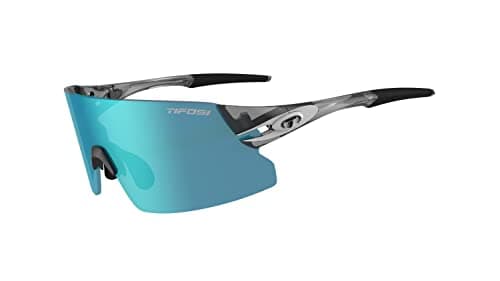
Leave the brand when you need coverage. A vented sport shield with a taller lens is a different tool: it keeps wind, grit and side light out in a way no lifestyle frame does, and on a bike that matters more than grip does.
Leave the brand when you need interchangeable or adaptive lenses. goodr is fit-and-forget: one fixed polarized tint. If you train at dawn and at midday, an interchange set or a photochromic lens is a genuinely better answer, and the field is in best photochromic sunglasses.
Do not leave the brand chasing better polarization. That is the trap. The polarizing film in a goodr does the same job as the one in a flagship lens; what more money buys is material clarity, coatings and coverage. We spell out which of those is worth paying for in the best polarized lenses, compared.
5. Alternatives at each price point
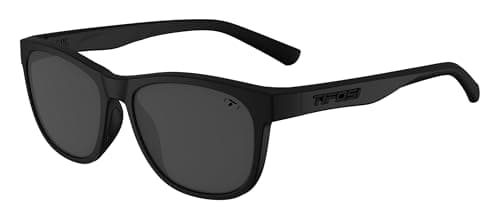
The last two picks below are the honest step-ups. A budget sport frame from a cycling brand costs about the same as a goodr and trades the grip coating for better coverage and a sport fit — the right swap if your problem is wind rather than slide. A mid-price interchange set costs several times more and buys you a genuinely clear low-light lens plus a dark one, which is the upgrade that actually changes what you can do rather than how it feels.
Below goodr, there is a floor. Sub-ten-dollar "polarized" listings are frequently just dark lenses, and a dark unpolarized lens with no UV rating is worse for your eyes than no sunglasses at all because your pupils open behind it. How to spot the difference is in how to tell if sunglasses are polarized.
How we assessed this
goodr's own published product claims plus documented material references, cited inline and listed below. Scores come from the rubric on how we rate: judgments compiled from published specifications, not lab measurements. We do not run a lab and we have not run in these. Prices update from the retailer automatically.