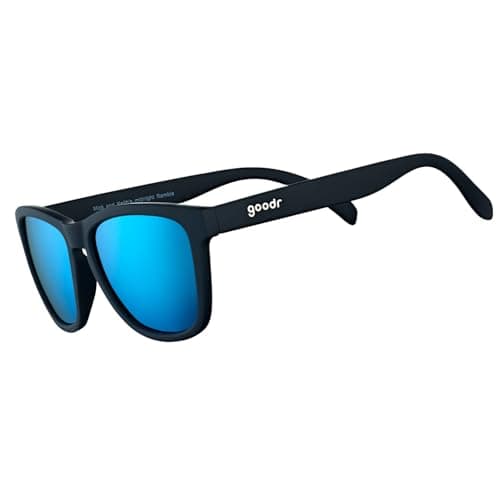
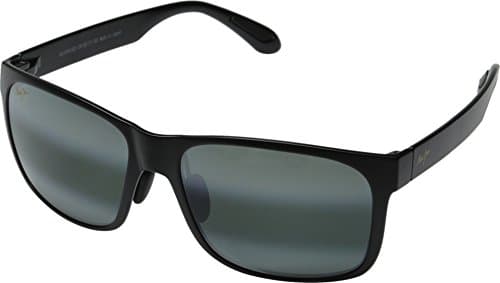
Buy the goodr if your sunglasses lead a hard life, if you run, or if you have ever lost a pair. Buy the Maui Jim if you spend real time on water or in bright open conditions, keep things for years, and want the best optics available. Both remove glare identically — polarization does not improve with price. Everything else about them is different.
Comparing a $30 running frame with a $250 premium lens sounds unfair, and it is exactly why the comparison is useful. It isolates what a lens premium genuinely buys, without the muddle of two similar products at similar prices.
1. Where they are identical
Polarization. Both contain a polarizing filter, and the filter physics does not scale with money. Glare off a wet road or a lake is removed to the same degree by both, as the Cleveland Clinic explains. This is the single most under-reported fact in premium eyewear marketing.
UV protection. Also binary. The American Optometric Association standard is 100% UVA and UVB, and both meet it. Your eyes are equally protected in either.
If those two properties are all you want — and for a lot of people they honestly are — the comparison ends here and the goodr wins on price by a factor of eight.
2. Where Maui Jim genuinely wins
Optical clarity, especially at the edges. A budget lens is clear in the center and softens toward the outer third. A premium lens holds sharpness right across. Walking around you will never notice. Reading water for a fish, or driving into low sun for two hours, you will.
Tint engineering.Maui Jim's published tints do contrast work rather than simply darkening. The differences between gray, bronze and rose are real and deliberate, and the range gives you a lens matched to conditions. goodr gives you a tint.
Materials and coatings. Glass options, harder coatings, and a lens that still looks new after years. This is the difference you notice over time rather than on day one, and it is the strongest practical argument for the premium.
Longevity and service. A premium frame is built to be kept, and supported when it is not. A budget frame is built to be replaced.
The lens vocabulary behind all of this is decoded in Maui Jim lenses explained.
3. Where goodr genuinely wins
It stays on your face.goodr's grip coating is the best-executed thing at its price and it is the reason the brand exists. On a run, a premium lifestyle frame slides down your nose and a goodr does not, and no amount of optical quality compensates for eyewear you are carrying in your hand. The mechanism is in how to stop sunglasses slipping.
Losing them costs nothing. This is a real feature, not a joke. The pair you take to a festival, leave in a rental car, or wear kayaking should be one whose loss is annoying rather than expensive. People with premium sunglasses routinely leave them at home, which means the expensive pair protects their eyes less often than the cheap pair would.
Weight. Very light, which matters for anything with a heart rate.
You can own several. Different tints, different shapes, one in the car and one in the bag, for a fraction of one premium pair.
4. The honest middle
The most common right answer is neither extreme. Most people are best served by one pair in the $60-100 band — where coatings, edge optics and frame durability all improve substantially — plus a cheap grip-coated pair for sport and for losing.
That combination costs less than one premium pair and covers more situations. The middle band is ranked in best sunglasses under $100, and the third pick above is exactly that compromise.
5. Which should you actually buy?
Buy goodr if: you run or do anything sweaty; you have lost sunglasses before; you want more than one pair; you want the eye protection without the anxiety.
Buy Maui Jim if: you spend real time on water or in bright open conditions; you keep things for years; you have noticed edge softness in cheaper lenses; you want one excellent object rather than several adequate ones.
Buy neither if: you want one do-everything pair at a sensible price. Buy the middle. The full field, all price bands, is in best sunglasses.
The comparison, use by use
Driving
Maui Jim, comfortably. Driving is a detail-resolution task at distance in variable light, and it is where edge clarity and a neutral, color-honest tint genuinely pay. It is also a low-risk environment for an expensive pair — the sunglasses live in the car and nothing is going to hit them. The wider driving field is in best sunglasses for driving.
Running and gym-adjacent activity
goodr, and it is not close. A premium lifestyle frame with smooth acetate contact points migrates down your nose in the first mile. The best lens in the world is worthless in your hand.
Fishing and boating
Maui Jim if you sight-fish, because separating a shadow from a shape under a moving surface is precisely the task premium optics are for. goodr plus a floating retainer if you are on a boat casually, because the expected cost of losing a $250 pair over the side is high enough to change the maths — see boating sunglasses.
Travel
Genuinely arguable. Travel is where sunglasses get lost, sat on and left in hotel rooms, which argues for cheap; it is also where you wear them constantly for a fortnight in bright light, which argues for good. Our answer is the middle band plus a cheap spare, which is the recommendation this whole page keeps arriving at.
Everyday, if you only own one pair
Neither, honestly. A $30 running frame is not a frame most people want to wear to work, and a $250 pair is one most people leave at home on the days it might get damaged — which means it protects their eyes less often than a cheaper pair would. The single-pair answer is the middle band.
What eight times the price does not buy
Worth restating because it is the point of the whole comparison and it is the fact premium eyewear marketing works hardest to obscure. It does not buy better UV protection, and it does not buy better polarization. Both are binary properties: the lens either blocks UV up to 400nm or it does not, and it either contains a polarizing layer or it does not. Neither improves by degrees with money.
That means the health-relevant part of a $250 pair is available for $25. Everything above that is being spent on clarity, tint engineering, coatings, materials and how long you will keep it — all real, none of them protective. If somebody tells you an expensive pair protects your eyes better, they are either mistaken or selling. The full ladder is in are expensive sunglasses worth it.
The cost-per-wear argument, done honestly
The standard defense of premium eyewear is cost per wear: a $250 pair worn daily for five years is cheaper per day than three $30 pairs lost in eighteen months. That maths is correct, and it depends entirely on an assumption about you.
If you have kept a pair of sunglasses for more than three years, the premium argument is strong and you should probably take it. If your last three pairs were lost, sat on or scratched into uselessness inside a year, the maths inverts completely and buying premium is buying anxiety. Be honest about which person you are before you spend the money — it is a better predictor than anything about the lenses.
Deciding between them
1. Ask what you are actually buying
Glare removal and UV protection are identical in both. If that is all you want, the decision is already made and the cheap pair wins.
2. Be honest about how long you keep things
The premium argument is a cost-per-wear argument, and it collapses if you lose sunglasses.
3. Match the frame to the activity, not the budget
Grip material for anything sweaty; premium optics for detail work at distance. Neither substitutes for the other.
4. If it is your only pair, buy neither
The $60-100 band covers more situations than either extreme, and costs less than one premium pair.
5. Own two, not one
A mid-tier pair plus a cheap grip-coated pair beats a single purchase at either end for almost everybody.