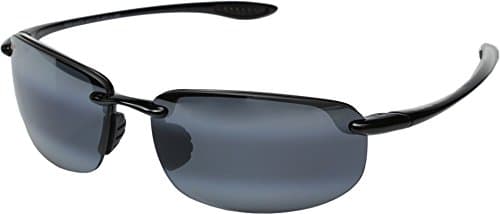
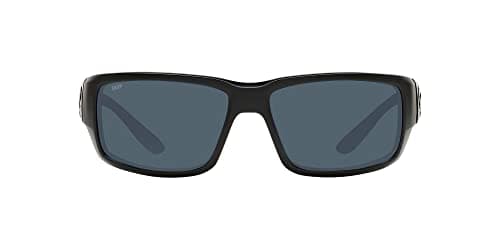
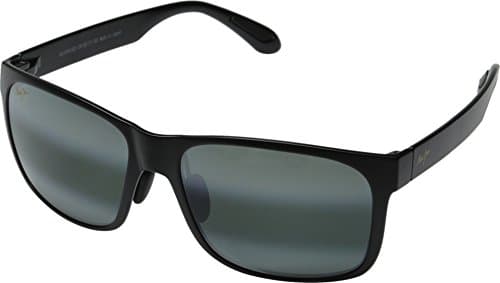
Every Maui Jim lens is three separate decisions stacked together: a material (glass or one of the lightweight plastics), a tint (gray, bronze, rose or a mirror), and the PolarizedPlus2 treatment that Maui Jim applies across its sunglass line. The polarization itself is the same physics as any other polarized lens. What you are paying extra for is the material, the tint engineering and the coatings around it.
Maui Jim's lens naming is the most confusing in the category, which is a shame because the underlying logic is simple. This page separates the three decisions, says which of them actually changes what you see, and answers the two questions people arrive with: whether all Maui Jims are polarized, and whether the price is defensible.
1. PolarizedPlus2 is a stack, not a different kind of polarization
The name causes more confusion than anything else in premium eyewear, so here is the plain version. Polarization is a filter that blocks horizontally aligned reflected light — the glare bouncing off water, wet road or a car bonnet. The Cleveland Clinic describes the mechanism, and it is identical in every polarized lens ever made, at every price.
PolarizedPlus2 is Maui Jim's name for polarization plus the additional treatments it layers around it— the brand publishes it as combining the polarizing filter with UV blocking and with treatments that manage glare and color rather than simply darkening the view. So the "Plus2" is not a stronger polarizer. It is everything else in the sandwich.
That distinction matters commercially. If all you want is glare removed from a wet road, a $25 polarized lens does it as completely as this does. What the premium buys is what the lens does after the glare is gone: how neutral or warm the remaining image is, how sharp it stays at the edges, and how long the coatings survive.
2. The material decides weight, clarity and toughness
Maui Jim publishes several lens materials, and this is the choice that changes the physical experience most.
Glass is the clearest and by far the most scratch-resistant option, and the heaviest. It is also the one that shatters rather than flexes, which is why it belongs on the water and in a car and not on a bike or a court. The full material argument is in best glass lens sunglasses.
The lightweight plastic lenses— MauiPure being the best-known name — trade a little of that optical hardness for much lower weight and far better impact behavior. For all-day wear, travel, or anything active, they are the sensible default even though glass is technically the better optic.
If you are choosing between two otherwise identical Maui Jims and one is glass, the question is simply: will you notice the clarity more than the weight? On a boat at anchor, probably. Walking around a city for eight hours, probably not.
3. The tint decides what the world looks like
Maui Jim names its tints, and the names map onto ordinary tint behavior that applies across every brand.
Neutral grayis the darkest and the most color-honest — it dims everything equally. Correct for bright open sun, driving, and anywhere you need colors to stay true.
Bronze and copper tints are the all-purpose middle: warmer, with a modest lift in contrast, good in mixed conditions and the most common recommendation for general use.
Rose tintsgive the strongest contrast lift and the biggest color shift. Best where separating objects matters more than color accuracy — picking out a fish, a golf line, a ball against sky.
Mirror finishes reflect some light away before it enters the lens, which helps on water and snow specifically. See best mirrored sunglasses.
The general version of this — which applies whatever brand you buy — is in sunglasses lens colors explained.
4. Are all Maui Jim sunglasses polarized?
Effectively yes, and that is unusual. Maui Jim built its entire lens program around polarization — PolarizedPlus2 is applied across the sunglass line rather than offered as an upgrade on some models, which is why the brand answers this question differently from Oakley or Ray-Ban, where polarized is one option among many.
The sensible caveat we apply to every brand still stands: confirm it on the specific listing you are buying, particularly through a marketplace, and verify the pair when it arrives. Both checks take a minute and are in how to tell if sunglasses are polarized.
5. Why they cost what they cost — and whether that is defensible
Four things account for most of the premium, and they are real rather than invented: lens materials at the top of the market including genuine glass; multi-layer treatments and coatings; a lens program the brand controls rather than buys in; and service and warranty support that outlasts most eyewear.
Whether that is worth it depends entirely on what you do. If you spend real time on water, the combination of glare removal and contrast is a genuine functional advantage and the pairs get worn every day for years, which changes the arithmetic. If you wear sunglasses on the school run, you are buying optics you will not use, and a $70 pair will make you just as comfortable.
Our honest position, stated in full in are expensive sunglasses worth it: UV protection and polarization do not improve with price, and everything else does. Buy premium for the everything-else, not for the protection.
6. Maui Jim versus Costa, in one paragraph
Both are premium polarized brands with proprietary lens programs, and both are genuinely good. Costa's 580 lens is explicitly a fishing tool, filtering light at 580 nanometers to lift contrast through water; Maui Jim's range is broader and reads as more of an everyday-premium product. If you fish, start with Costa. If you want one premium pair for life in general, start with Maui Jim. The full head-to-head is in Costa vs Maui Jim.