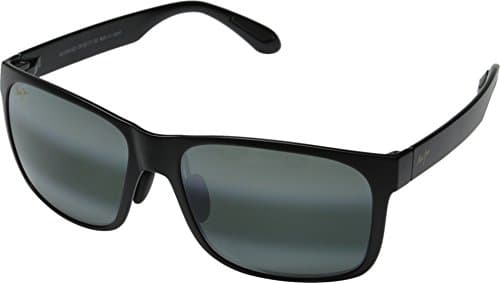
Yes. Every pair of Maui Jim sunglasses is polarized, and unlike most brands Maui Jim says so in writing: its support documentation answers this exact question with "Yes, all Maui Jim sunglasses are polarized with our premium, high-efficiency polarizing film that eliminates 99.9% of glare." There is no non-polarized Maui Jim sunglass model to accidentally buy. That removes the single most expensive mistake in buying premium sunglasses - and it is the real reason to consider the brand, more than any individual frame.
The reason this question gets asked so often is that most of the eyewear market trains you to expect the opposite. At Ray-Ban, Oakley and Tifosi, polarization is a per-listing option: the same frame is sold with and without the filter, usually at different prices, often sitting side by side in the same search results. People carry that habit over to Maui Jim, go looking for the polarized version, and cannot find a non-polarized one to compare it against. There isn't one. Polarization is not a Maui Jim feature; it is the entire premise of the company.
What Maui Jim actually publishes
Two support articles answer this, and both are unambiguous. The polarization article states that all Maui Jim sunglasses are polarized with a high-efficiency polarizing film that eliminates 99.9% of glare, and adds that polarization is only one part of PolarizedPlus2: the lenses also block 100% of harmful UV, carry what the brand calls comprehensive HEV (high-energy visible, i.e. blue-light) protection, and "enhance the colors your eyes naturally perceive." The UV article repeats the same claim from the other direction: all Maui Jim sunglasses are equipped with PolarizedPlus2 lenses with 100% UV protection. Neither article lists a model, tint or lens material as an exception.
That matters because "all" claims in eyewear usually come with a footnote. This one does not, and it holds across the whole lens range. Per SportRx's Maui Jim lens guide, the base tints are Neutral Grey, HCL Bronze, Maui Rose and Maui HT, with Blue Hawaii, MAUIGreen, Hawaii Lava and MAUI Sunrise as mirror finishes - and the polarizing film sits in all of them. The same is true across materials: SuperThin Glass, MauiBrilliant, MauiPure, MauiPure LT and polycarbonate are different answers to weight, clarity and prescription availability, not different answers to polarization.
The three things people really mean by this question
Almost everyone asking is actually asking one of three different things, and they have different answers.
- "Do I need to find the polarized listing?"No. Every Maui Jim sunglass listing is the polarized listing. If a seller is charging you a premium for the "polarized version" of a Maui Jim, there is nothing to upgrade from.
- "Are these real?" This is the useful version of the question. Maui Jim is heavily counterfeited, and the giveaway on a fake is frequently the lens: a pair that fails a ten-second polarization test is not a Maui Jim with a cheaper lens, it is not a Maui Jim. The tests are below.
- "Is the polarization the thing I am paying for?" Partly, and this is where the honest answer gets less flattering. Polarization itself is close to a binary feature. Read on.
What polarization is not, even here
Two things get bundled into the price and should not be.
It is not UV protection. Those are separate lens functions, and UV blocking is the one that protects your eyes. The American Optometric Association recommends 99-100% UVA and UVB blocking regardless of what you spend, and a well-made twenty-dollar UV400 lens meets that bar. Maui Jim clears it too - but so does the budget pair in your glovebox, and paying Maui Jim money for UV protection is paying for something cheap.
And it is not, by itself, worth the premium. A polarizing filter removes light reflected off flat surfaces, and a cheap filter removes the same reflected light as an expensive one - the Cleveland Clinic describes the mechanism in exactly those terms. What Maui Jim money buys on top is lens quality: optical clarity, contrast tuning, mineral-glass options and coating life. Per SportRx, SuperThin Glass is published at an Abbe value of 58 - a measure of how little a lens disperses light into color fringing - against polycarbonate at 30, with Maui Jim's own plastics in the 43-56 range. Those numbers are the real argument for the brand. "It is polarized" is not.
How to check a pair in ten seconds
| Test | What to do | A polarized lens does this |
|---|
| Screen test | Look at an LCD screen and rotate the glasses 90 degrees | The screen darkens or blacks out at one angle |
| Two-lens test | Hold one lens behind another and rotate one of them | The overlapping area goes nearly black |
| Water test | Look at a reflective puddle or car hood, then tilt your head | The surface glare comes and goes as you tilt |
| Darkness | — | Proves nothing - darkness is tint, not polarization |
If a pair sold to you as Maui Jim fails all three, stop and check the purchase rather than the lens. The full method, with the reasons each test works, is in how to tell if sunglasses are polarized.
Who each pick is for
- Maui Jim Red Sands— the answer if you want the brand at its best: a MauiPure lens in a wrapped nylon frame, which is the combination most people picture when they picture a Maui Jim. Honest con: it is the most expensive pair on this site, and the glare math that matters to most buyers is largely there on pairs costing a fifth as much.
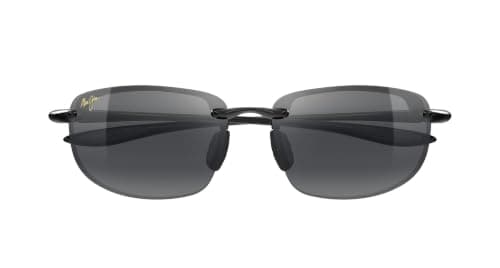
- Maui Jim Hookipa— the medium-fit classic, and the more sensible Maui Jim for everyday wear if a sport wrap is not what you want. Same lens platform, less coverage. Honest con: modest wrap means low, side-on sun gets past the frame, and you are still paying a premium price for a lifestyle shape.
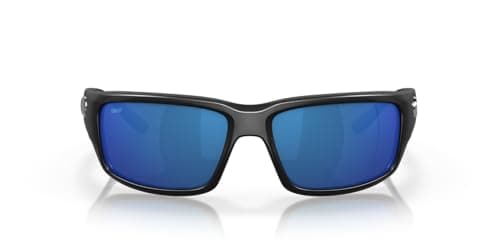
- Costa Fantail 580P— the other brand that polarizes everything it sells, and the one to buy instead if your answer to "what for?" is water. Costa's 580 filter cuts a band at 580nm to lift contrast, which is a fishing-specific argument Maui Jim does not make in the same way. Honest con: priced with Maui Jim, so this is a sideways move, not a saving.
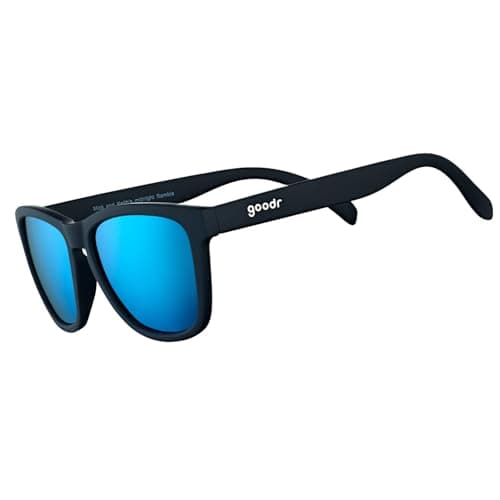
- goodr OG — the cheap end of the same guarantee. goodr publishes that every pair in its line is polarized and UV400, so like Maui Jim there is no wrong listing to click. Honest con: budget polycarbonate, one size per model, and nothing like Maui Jim's optics - you are buying the certainty, not the lens.
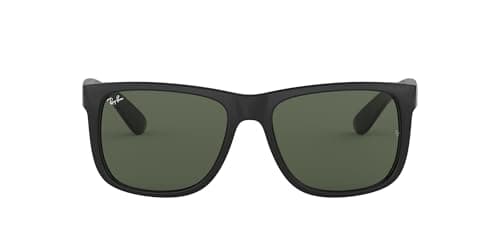
- Ray-Ban Justin (RB4165)— included deliberately as the counter-example, because it is the mistake this question exists to prevent. This is a good pair of sunglasses whose standard listing is not polarized. Per SportRx's Ray-Ban lens guide, polarization at Ray-Ban is a per-listing option marked by a small "P" after the logo on the right lens. Honest con: if glare off water or a wet road is the problem you are solving, this specific listing does not solve it. Read the lens line.
So is "all polarized" actually a reason to buy Maui Jim?
It is a reason to trust Maui Jim, which is not quite the same thing. The practical value is that you cannot get this purchase wrong. You cannot click the cheaper listing and discover six weeks later, squinting off a lake, that you bought the plain-tint version. For a gift, for a first premium pair, or for anyone who finds lens charts exhausting, that is worth real money - and it is the same advantage Costa and goodr offer at two very different price points.
What it is not is evidence that the lens is better. If you want the case for and against Maui Jim's actual price, we argue it properly in are Maui Jim sunglasses worth it - short version: it depends almost entirely on how many hours a year you wear them. If the price is the thing that stopped you, the replacement field is ranked in the best Maui Jim alternatives, and the cheapest honest route into a good polarized lens is in best cheap polarized sunglasses.
The lens names, decoded
Because every Maui Jim is polarized, all the words on the box describe something else - and that is where buyers actually get confused. PolarizedPlus2 is the lens treatment (the polarizing film, plus UV and HEV blocking, plus the rare-earth contrast blend). The materials are a separate axis: per SportRx, SuperThin Glass is published as 20% thinner and 32% lighter than standard laminated glass and is not offered in prescription; MauiBrilliant is the usual prescription choice; MauiPure LT is published as 35% thinner than MauiPure; and polycarbonate is the impact option, offered in four bi-gradient tints. The tint is a third axis again. We take the whole naming system apart in Maui Jim lenses explained.
One genuinely useful consequence: because the polarizing film is constant, choosing between two Maui Jims is only ever a choice about material, tint, fit and price. Nothing you pick changes whether you get the filter.
Where polarization is a problem, Maui Jim included
Being always-polarized is not always an advantage, and a brand that gives you no opt-out hands you the downsides too. A polarizing filter can dim or black out LCD dashboards, chartplotters, head-up displays and phone screens at certain head angles. Tifosi's own lens guide publishes the screen and depth-perception caveat plainly, which is why plenty of cyclists and golfers deliberately avoid polarized lenses. On snow and wet pavement it also removes the sheen that warns you about ice.
If that is your use case, the right answer is a brand where you can choose - which is most of them. We cover the screen problem in do polarized sunglasses block screens, the sport argument in are polarized lenses good for cycling, and the depth-perception question in do polarized sunglasses affect depth perception.
If you want the same guarantee for less
"Every pair is polarized" is a brand policy, not a technology, and three brands in this catalog have it at three price points: Maui Jim at the top, Costa alongside it with a water-specific lens range, and goodr at the bottom. That is the whole field of no-wrong-listing brands we can verify, and it means the certainty you are after is available for the price of a tank of fuel if the optics are not the point for you. For a premium lens that is not Maui Jim, the head-to-head worth reading is Smith vs Maui Jim- Smith's ChromaPop lens is sold both polarized and plain, which is exactly the trade-off this page is about.
Three checks before you buy a Maui Jim
1. Do not pay for "polarized"
It is standard across the range. Any listing or salesperson presenting polarization as a Maui Jim upgrade is selling you something you already get.
2. Choose the material and the tint, because that is the real decision
Glass for clarity and scratch resistance, MauiBrilliant or MauiPure for weight, polycarbonate for impact. Then pick the tint for your light: gray for bright, bronze or rose for mixed, HT for low light.
3. Buy from an authorized retailer, then test the lens
Maui Jim's published warranty runs two years from purchase for the original purchaser, applies only to pairs bought from an authorized retailer, and excludes normal wear such as lens scratching and accidental breakage. Do the screen test when the box arrives.