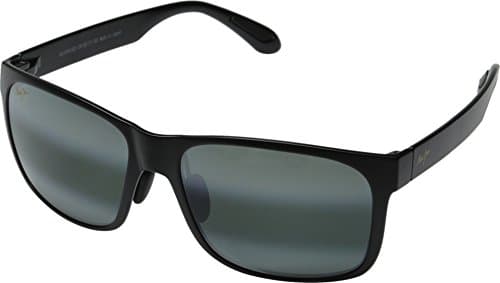
Short answers first. Are all Maui Jim sunglasses polarized?Yes — Maui Jim states plainly that every pair is. Are they worth it? Only if you wear sunglasses most days and keep a pair for years. If you wear them a handful of weekends a year, or you have a history of losing them, you are buying capability you will never use, and the alternatives lower down this page will make you just as happy.
Maui Jim is the most-asked-about brand on this site, and the questions arrive in two flavors: a factual one about polarization and a value one about the price. They deserve separate answers, so this page gives them separately. If you want the lens range decoded rather than the buying decision, that is our Maui Jim lenses explained guide, and the brand-wide assessment with picks is our Maui Jim sunglasses review.
1. Are all Maui Jim sunglasses polarized? Yes — here is the source
This one has a definitive answer rather than an opinion. Maui Jim's own customer service documentation puts it as directly as it can: "Yes, all Maui Jim sunglasses are polarized with our premium, high-efficiency polarizing film that eliminates 99.9% of glare." There is no non-polarized Maui Jim sunglass line to accidentally buy.
Two clarifications worth having, because they are where the confusion usually comes from. First, that statement covers sunglasses. Maui Jim also sells clear prescription eyewear, and a clear lens is not a polarized one — if you are looking at a Maui Jim frame with a clear lens, you are looking at eyeglasses, not sunglasses. Second, "polarized" and "PolarizedPlus2" are not two different strengths. PolarizedPlus2 is Maui Jim's name for the whole lens treatment — the polarizing filter plus UV and blue-light blocking plus its color and glare layers. The polarization inside it is the same physics as any other polarized lens, which the Cleveland Clinic explains in one paragraph.
The practical consequence is one people rarely think about before buying: because every Maui Jim is polarized, there is no Maui Jim that is appropriate for the handful of activities where polarization is a liability. Reading a bike computer, reading a boat chartplotter at certain head angles, spotting black ice, and reading subtle slope reflections on a green all get harder with a polarized lens. If those are your use cases, the answer is not a cheaper Maui Jim — it is a different brand. We set that argument out in polarized vs non-polarized.
2. What the money actually buys
Here is the part the brand will not tell you: the glare removal is not what you are paying for. A competent budget polarized lens removes horizontally reflected glare about as completely as this one does, because polarizing film is a mature and cheap component. What the premium buys is everything that happens after the glare is gone.
Material and optical clarity. Maui Jim publishes an Abbe value of 58 for its SuperThin Glass, which it also describes as 20% thinner and 32% lighter than standard laminated glass. Abbe value measures how much a material splits light into color fringes, and higher is cleaner — for context, the same reference scale puts polycarbonate at 30. That gap is real and it is most visible at the edges of the lens and on high-contrast boundaries. It is also the single biggest optical difference between this and a budget pair.
The lightweight materials are the ones most people should want.MauiPure is published as the second lightest option in the range with "incredible shatter and scratch resistance" and clarity "almost as good" as the glass, and MauiBrilliant as "nearly as clear as glass." Glass wins on paper and loses on the nose after eight hours, and it shatters where plastic flexes. Unless you are sitting on a boat, the plastic is the smarter buy inside the range.
Color and contrast. PolarizedPlus2 layers a patented blend of three rare earth elements to lift reds, greens and blues, plus a bi-gradient mirror and an anti-reflective treatment. That last one matters more than it sounds: back-surface reflection is why a cheap dark lens can feel hazy in exactly the bright conditions it was bought for.
What it does not buy: UV protection. Maui Jim blocks 100% of UV, and so does a reputable budget pair. The American Optometric Association standard is 100% UVA and UVB, and it is met at every price on this page. You cannot buy your way to more UV protection, and any brand implying otherwise is selling you something you already have.
3. The honest cost-per-wear test
We think the whole question resolves to one calculation, and it is not a subtle one.
A premium pair is a five-to-ten-year purchase if you look after it, and Maui Jim frames and coatings are genuinely built to that standard. Spread across a decade of near-daily wear, the cost per wearing lands somewhere between trivial and reasonable, and the optical difference is one you experience every single time. That is a defensible purchase, and we will not pretend otherwise just because the sticker is large.
Spread across four beach days a year, the same money is a very expensive way to look at four beaches. And there is a compounding problem: an expensive pair you are anxious about is a pair you leave in the car, which is exactly how it ends up scratched in a cupholder or gone.
So the test is not "can I afford it." It is: will I wear these most days for years, and have I kept a pair of sunglasses alive for more than two summers? Two yeses and the answer is yes. One no and you should buy something from the next section instead.
4. Where Maui Jim is genuinely beaten
Three specific cases, and we would rather name them than pretend the brand wins everywhere.
Sight-fishing. Costa's 580 lens filters a specific yellow band at 580 nanometers and is tuned for seeing into water rather than making the whole world look better. On a flat or a river, that focus is worth more than breadth. The head-to-head is in Costa vs Maui Jim.
Anything with a screen or a wet-surface read. Cycling, golf green-reading and winter driving all want a non-polarized lens, and every Maui Jim is polarized. No amount of money fixes that mismatch.
Glass optics for less. A mineral-glass photochromic pair sits at roughly half the premium-glass price and gets you the material advantage plus a lens that tracks the light. It is the pick below for anyone who wants the optics argument without the flagship bill.
5. Alternatives at each price point
This is the part of the page that costs us money and belongs here anyway. Ranked below: the two Maui Jims worth owning, then the three honest ways to spend less.
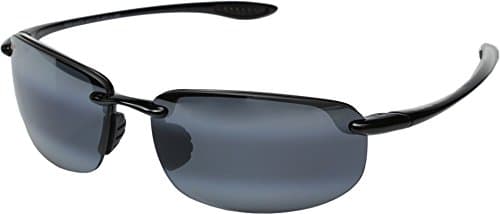
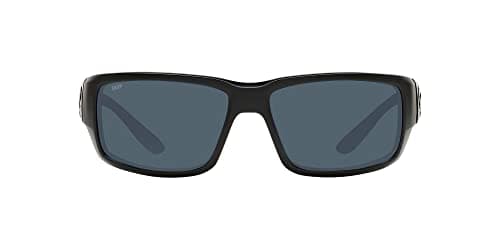
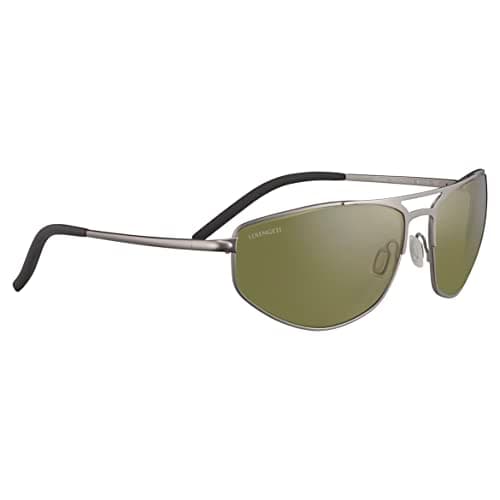
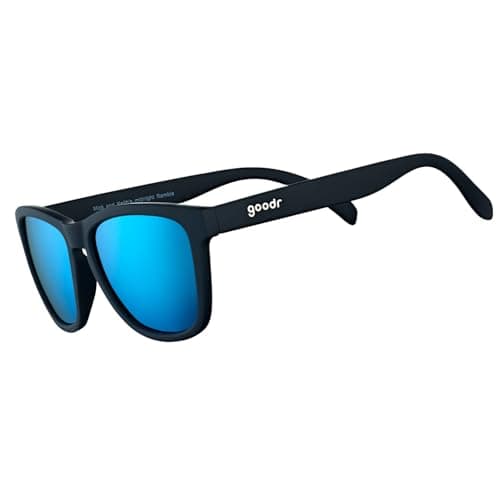
If you want the same league for less, the Hookipa is the cheaper Maui Jim and the same lens program in a lighter, less fashion-driven frame — if the Red Sands is the pair you want and the price is the obstacle, this is the answer before you leave the brand. If you want the optics without the badge, a mineral-glass photochromic pair gets you a high-Abbe material and a lens that darkens and clears, at roughly half. If the water is the point, the Costa is the better tool. And if you are honest that you lose sunglasses, the goodr at the bottom removes glare essentially as well, grips a sweaty face better than any of the premium picks, and costs little enough that losing it is an inconvenience rather than an event. For a fair chunk of readers that is the right answer, and we say so on the polarized sunglasses roundup too.
How we assessed this
Every brand claim above is Maui Jim's own published statement or a documented specification reference, named inline and listed at the bottom. Scores come from the rubric on how we rate: judgments compiled from published specifications, not lab measurements. We have not worn these, we do not run a lab, and we take no free product. Prices update automatically from the retailer rather than being typed into this page.