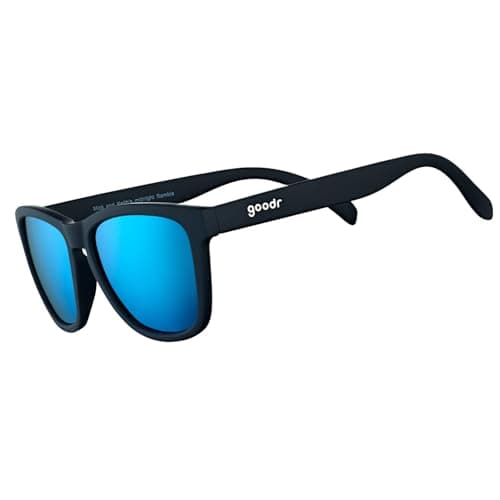
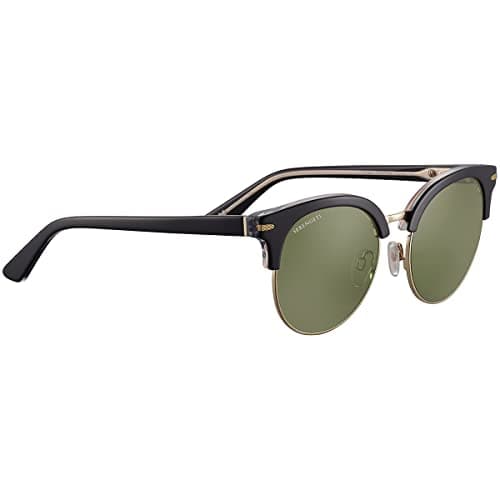
If you want the closest thing to a Maui Jim for meaningfully less money, buy the Serengeti Susan: mineral glass, polarized, with a contrast tint, from the other brand that builds its whole identity around glass optics. If you are replacing Maui Jims because you fish in them, buy the Costa Fantail 580P instead - Costa polarizes every lens it sells and gives you tints chosen for water. And if you are here because you lost a pair and the replacement cost is the whole problem, the honest answer is the goodr OG: it will not match the optics, but it is polarized, it is UV400, and losing it again will not ruin your week.
People look for Maui Jim alternatives for three different reasons, and they do not have the same answer. Some want the same lens for less. Some want a specific thing Maui Jim is not best at - a sport frame, a fishing tint, a shape that suits their face. And a lot of people are standing in a kitchen having just sat on a pair, doing arithmetic. This page ranks for the first group and is explicit about the other two.
What you are actually replacing
Be precise about the thing you are trying to match, because it is narrower than the price suggests. Per SportRx's Maui Jim lens guide, PolarizedPlus2 cuts 99.9% of glare, every lens is 100% UV and HEV blue-light protective, and the contrast comes from a patented blend of three rare earth elements. The material claims are the interesting part: SuperThin Glass is published at an Abbe value of 58 and described as 20% thinner and 32% lighter than standard laminated glass, against polycarbonate at Abbe 30, with Maui Jim's own plastics in the 43-56 range. Abbe value is a measure of how little a lens disperses light into color fringing, and the standard table puts CR-39 at 58 and polycarbonate at 30, so those numbers are real and they are the technical core of what you are paying for.
Two things are not what you are paying for, and both get assumed. The first is glare removal: polarization is close to a binary feature, and the filter in a cheap polarized lens removes the same reflected light as the filter in an expensive one - the Cleveland Clinic describes the mechanism in exactly those terms. The second is UV protection. The American Optometric Association recommends 99-100% UVA and UVB blocking regardless of what you spend, and that standard is met at every price on this page. Anyone selling you a premium lens on eye-health grounds is selling you something you can buy for a tenth of the money.
So the honest shortlist of what the premium actually buys is: optical clarity in the material, contrast tuning in the tint, coating longevity, and a brand that will service the frame. That is what the ranking below is measured against.
How we ranked these
- How much of the lens proposition survives. Mineral glass with a contrast tint ranks above premium polycarbonate, which ranks above a good budget polarized lens. This is the first criterion because it is the only one Maui Jim is genuinely exceptional at.
- Whether every lens is polarized. Maui Jim has no non-polarized sunglass line, so you cannot buy the wrong one. Brands where polarization is a per-listing option put that burden back on you, and that is a real downgrade in the buying experience even when the lens is excellent.
- Price, honestly bracketed. Every number on this page is live and date-stamped - we do not type prices into prose, because they move. What we will say is that the picks below span from roughly half a Maui Jim down to a small fraction of one, and the table shows exactly where each sits today.
- Whether the frame suits a face or a sport. A superb lens in a shape that does not fit you is not an alternative to anything.
- What happens when you break them. A replaceable-lens program or a cheap enough frame both solve this. Nothing in between does.
| If you are replacing Maui Jim because… | Buy | What you give up |
|---|
| You want the glass clarity for less | Serengeti Susan (mineral glass, 555nm) | A narrower frame range, and glass weight |
| You fish in them | Costa Fantail 580P | A sport-leaning frame rather than a lifestyle one |
| You want a lifestyle shape with a documented lens | Oakley Holbrook Prizm Polarized | You must check the listing says Polarized |
| You want maximum shallow-water contrast | Bajío Los Natos (LAPIS glass) | Barely any money - this is a sideways move, not a cheaper one |
| You want the icon shape | Ray-Ban New Wayfarer Polarized | Contrast tuning, and polarization is an option you must select |
| You keep losing them | goodr OG | Optical clarity, materials and fit range |
The short answer
Quick picks
#ad · Live prices from the Amazon Product API, as of October 31, 2026. Where we have no verified live price, we show none — we would rather leave a gap than print a number that has rotted.
In detail
The picks, in full
The cheapest live route into mineral glass
Serengeti Susan (Mineral Polarized 555nm)
Mineral glass lensPolarized555nm contrast tintAcetate and metal frame
Serengeti's mineral glass at the lowest price the brand actually sells it for — in a feminine cat-eye rather than a driving frame.
- Glare control
- 9
- Optics
- 9
- Fit & coverage
- 5
- Durability
- 8
- Value
- 8
Pros
- +Real mineral glass for well under half what the fishing-glass brands charge — the cheapest glass lens on this site by a wide margin
- +The 555nm Spectral Control tint targets the wavelength the eye resolves best, which reads as a lift in contrast rather than a color cast
- +Polarized as well as photochromic — Serengeti splits its range into photochromic-only and polarized models, and this SKU carries both
Cons
- −Category 3 to 3: the published 18%-12% transmission range means it deepens within an already-dark tint and never clears to a light lens
- −A 53mm feminine cat-eye in acetate and metal — a styling frame with modest coverage and no grip material, not a unisex driving wrap
- −Serengeti's Amazon stock is thin and moves between models, so the colorway you see today may not be the one in stock next month
Don't buy this if…
…you want one pair that covers a dark afternoon and a dim morning, or a wrap for the water or the bike. This is a fixed-category glass lens in a lifestyle frame, and side light gets straight past it.
Sight-fishing and time on the water
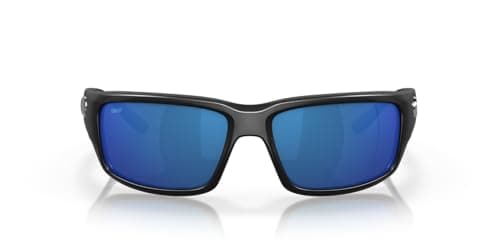
Costa Fantail 580P
580P polarizedPolycarbonateHydrolite gripVented
The fishing default. The 580 lens is built to pull fish out of glare, and it does.
- Glare control
- 10
- Optics
- 9
- Fit & coverage
- 9
- Durability
- 8
- Value
- 6
Pros
- +Costa's 580 lens filters yellow light to lift contrast — copper/green tints make fish and structure pop against surface glare
- +Hydrolite nose and temple pads grip harder the wetter they get, which is the whole game on a boat
- +580P (polycarbonate) is the lighter, more impact-resistant option versus the pricier 580G glass
Cons
- −Polycarbonate scratches more easily than Costa's 580G glass — the glass is clearer but heavier and dearer
- −A real premium over budget fishing wraps that also filter glare competently
Don't buy this if…
…you fish twice a year off a dock. The 580 lens earns its keep for people who sight-fish; occasional users get most of the benefit from a $30 polarized wrap.
Driving, water and everyday Oakley wear
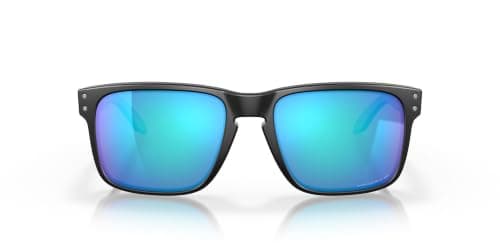
Oakley Holbrook (Prizm Polarized)
Prizm Sapphire PolarizedOO9102 HolbrookPlutonite lensSquare lifestyle frame
Oakley's polarized option in its most wearable frame — the version to buy if you are not buying Oakley for sport.
- Glare control
- 9
- Optics
- 9
- Fit & coverage
- 6
- Durability
- 9
- Value
- 5
Pros
- +Polarization and Prizm contrast tuning in one lens, so you are not choosing between glare control and contrast
- +The Holbrook is the Oakley frame that looks least like sports equipment, which is what most polarized buyers actually want
- +Plutonite and Oakley's frame build are why these survive years of daily wear rather than a season
Cons
- −A real premium over the non-polarized Prizm version of the same frame, for a filter a $25 lens also has
- −Flat-ish lifestyle shape lets side light in — it is not a wrap and does not pretend to be
Don't buy this if…
…your main use is cycling, golf or any sport where you read a head unit or a subtle surface reflection. Oakley leaves most of its sport lenses non-polarized on purpose, and here the polarized upgrade works against you.
Bajío optics in an everyday frame
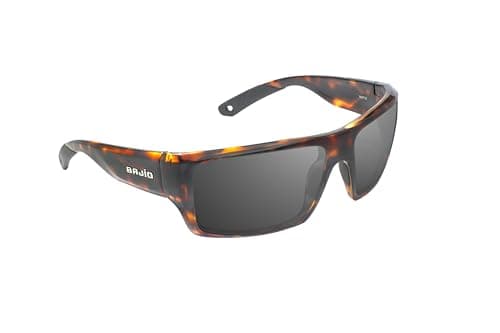
Bajío Los Natos (LAPIS Glass)
LAPIS glass lensPolarizedBlue-light filterLifestyle shape
Bajío's lifestyle shape with the same flats-grade glass lens — the boat-to-bar pick.
- Glare control
- 10
- Optics
- 10
- Fit & coverage
- 7
- Durability
- 8
- Value
- 5
Pros
- +Gets Bajío's blue-light-filtering glass lens into a frame you can wear off the water without looking like you just docked
- +Glass optics are the clearest and the most scratch-resistant option in the catalog
- +A genuine premium alternative to the two brands everyone already owns
Cons
- −Glass is heavier on the nose across a long day than polycarbonate
- −A lifestyle shape gives up the side coverage and venting of the brand's full wraps
Don't buy this if…
…you want maximum coverage on a bright flat. The full-wrap Bales Beach is the better fishing tool; this is the pair for the rest of your life.
Everyday and driving
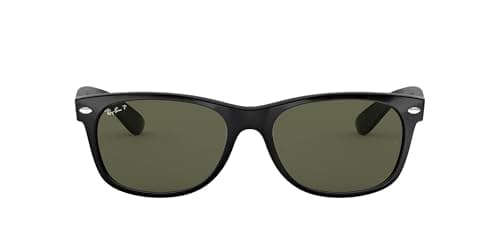
Ray-Ban New Wayfarer (Polarized)
Acetate framePolarized optionCrystal lensIcon shape
The default answer for everyday and driving — an icon shape with a genuinely polarized option.
- Glare control
- 8
- Optics
- 9
- Fit & coverage
- 6
- Durability
- 8
- Value
- 6
Pros
- +The New Wayfarer's slightly smaller, softer profile suits more faces than the original Wayfarer
- +The polarized version cuts glare off wet roads and car hoods, which is exactly what you want driving
- +Crystal (glass) lens options are scratch-resistant in a way the budget acetates here are not
Cons
- −You pay a real brand premium — the same glare control exists for a quarter of the price if the icon status doesn't matter to you
- −Flat lens and modest coverage mean light leaks in from the sides in bright sport settings
Don't buy this if…
…you want a wrap for running, cycling or the flats. This is a lifestyle frame — it will slide down your nose the first time you sweat, and it lets side light straight in.
Best running sunglasses overall
goodr OG (Polarized)
PolarizedUV400No-slip grip coating~ standard fit
The runner's default: polarized, no-slip, and cheap enough to not baby.
- Glare control
- 8
- Optics
- 7
- Fit & coverage
- 8
- Durability
- 7
- Value
- 10
Pros
- +goodr's grip coating genuinely stops the bounce and slide that ruins a run in a lifestyle frame
- +Polarized and UV400 at a price where losing a pair doesn't sting
- +Light enough that you forget you're wearing them by mile two
Cons
- −One size; a very narrow or very wide face may not get a perfect seal
- −Flat-ish lens gives less side coverage than a true sport shield
Don't buy this if…
…you want maximum wraparound coverage or interchangeable lenses for changing light. goodr is fit-and-forget, not a modular system.
Who each pick is for, and what is wrong with it
- Serengeti Susan (Mineral Polarized 555nm)— the closest like-for-like, and the pick of this page. Serengeti is the other brand whose argument is mineral glass: its published technology is Corning borosilicate glass described as 20% thinner and lighter than standard glass, with Spectral Control, photochromic behavior and 99.9% glare elimination. The 555nm tint is a contrast lens in the same spirit as Maui Jim's rare-earth blend rather than a neutral darkener. Honest cons:glass is heavy on a long day and it breaks where polycarbonate deforms, the frame range is much narrower than Maui Jim's, and Serengeti's photochromic behavior means the lens is not always as dark as you expect behind a windshield.
- Costa Fantail 580P— the alternative for anyone whose Maui Jims were really fishing glasses. Per SportRx's 580 explainer, the lens filters at 580nm with 99.9% polarization efficiency, 580P is the polycarbonate version built on a C-WALL bond, and Costa points sport users to it on impact grounds. Costa also matches the one Maui Jim buying-experience advantage: every lens it sells is polarized. Honest cons: the Fantail is a fishing frame and reads like one off the water, 580P does not resolve like glass, and the tint range is tuned for water rather than for general wear.
- Oakley Holbrook (Prizm Polarized)— for the lifestyle shape with a documented lens behind it. Prizm is a contrast-tuning platform, which is the nearest thing in the mainstream to what Maui Jim does with rare earths. Honest cons: Prizm and polarization are separate features, and Rx Safety's explainer is the clearest statement of why that matters - a Prizm lens is not automatically polarized, so you have to buy the listing that says Prizm Polarized or you have bought a tint. It also costs close to Maui Jim money, so this is a swap rather than a saving.
- Bajío Los Natos (LAPIS Glass)— for the reader whose Maui Jims were for shallow water. Bajío attacks blue light rather than simply darkening: per the lens guide, LAPIS blocks 95% of blue light up to 445nm, with per-tint VLT published from 12% on the Blue Mirror to 18% on Rose and Violet. Los Natos puts that lens in a lifestyle shape rather than a wrap. Honest cons: it is not cheaper than a Maui Jim in any meaningful sense, glass again means weight, and the blue-light bias is a specialist choice that some people find aggressive for everyday wear.
- Ray-Ban New Wayfarer (Polarized)— for the reader who wanted the icon shape all along and used Maui Jim as a proxy for quality. Honest cons:this is the weakest lens argument on the page. Per SportRx's Ray-Ban lens guide, polarization is a per-listing option on most tints rather than a standard — so you have to buy the right listing, which we explain in are Ray-Bans polarized— the classic G-15 is published at 15% VLT non-polarized and 11% polarized, and there is no contrast platform in the Maui Jim sense. You are buying a frame, and the frame is genuinely excellent. We wrote the full matchup in Ray-Ban vs Maui Jim.
- goodr OG (Polarized)— the answer nobody wants to hear and a lot of people need. goodr publishes that every pair in its line is polarized and UV400 with a no-slip grip coating, so the two functional essentials are covered and you cannot buy the wrong one. Honest cons: budget polycarbonate does not resolve like premium glass, there is one size per model with no adjustment, and the coatings are a season-or-two proposition rather than a decade. The comparison in full is goodr vs Maui Jim.
The three reasons people leave Maui Jim, in order
1. The replacement arithmetic. This is the most common one and the least discussed. A premium pair makes sense when it survives; it makes no sense at all when you lose a pair a year. If that is you, the rational move is not a cheaper premium pair - it is to stop buying premium pairs. Two good budget polarized pairs in different tints cost a fraction of one Maui Jim, cover two jobs, and cost you nothing emotionally when one goes over the side of a boat. That argument in full is best cheap polarized sunglasses.
2. The lens is excellent and the frame never fit. Fit is not a brand problem you can solve by spending more; it is a measurement problem. If every pair you own slides, pinches or sits crooked, start with how to choose sunglasses size, and if the issue is width specifically, best sunglasses for big heads and best sunglasses for small faces are the two ends of it.
3. You need something Maui Jim does not make. Every Maui Jim is polarized, which is a feature until it is not. A polarized lens can dim an LCD dashboard or a head-up display, it can hide the sheen that warns you about black ice, and plenty of cyclists and golfers deliberately avoid it because depth perception and screen readability matter more to them than glare. If that is why you are shopping, you do not want a Maui Jim alternative - you want a non-polarized sport lens, and the cycling and golf roundups are where those live.
Brands similar to Maui Jim, ranked by how similar they actually are
The autocomplete version of this question is "brands similar to Maui Jim", so here is the brand-level answer without a product attached.
- Serengeti— the closest, and for a specific reason: it is the other mineral-glass brand with a published contrast tint. If what you loved about Maui Jim was the way the world looked through it, start here. Head to head in Maui Jim vs Serengeti.
- Costa— the closest on buying experience, because every lens is polarized and the tint range is deep. Different emphasis: water rather than everyday. See Costa vs Maui Jim.
- Bajío— the closest on the specific trick of making water readable, via blue-light filtering rather than rare earths. Bajío vs Maui Jim.
- Oakley— the closest on contrast engineering, the furthest on styling, and the one where you have to read the listing carefully. Oakley vs Maui Jim.
- Ray-Ban— not similar at all on lenses, extremely similar on who buys them and why. A frame brand with a competent lens.
Is there a cheap pair that matches a Maui Jim lens?
No, and we are not going to pretend otherwise. What a cheap pair matches is the function: polarization, UV400, a dark enough tint. What it does not match is material clarity, the coating that survives three summers, the contrast tuning, or the fit range. If someone tells you a twenty-dollar pair is optically equivalent to a mineral-glass lens, they are describing the glare filter and calling it the whole lens.
The useful version of the question is whether the difference is worth the money for you, and that depends almost entirely on how many hours a year the pair is on your face. Our are expensive sunglasses worth it page does that arithmetic properly, and the best polarized lenses ranks the lens technologies themselves - Costa 580 against PolarizedPlus2 against LAPIS against Prizm - if you want to compare the engineering rather than the brands.
Before you replace them: are they actually broken?
One genuinely money-saving note. A scratched premium lens is often a repair rather than a write-off - Maui Jim, Costa and Oakley all run lens-replacement and service programs, and on a pair at this price a replacement lens is a fraction of a new pair. If the frame is intact and the lens is scratched, check the service route before you shop. The same logic is why we rank replaceable-lens frames well in when to replace sunglasses.
And if the pair is simply dirty rather than damaged - a surprisingly common reason people think their lenses have gone - how to clean sunglasses covers the right way to do it without taking the coating off, which is the usual way a good lens actually dies.
Choosing in four questions
What did you love about the Maui Jims?
The clarity → Serengeti. The way they handled water → Costa or Bajío. The shape → Ray-Ban or Oakley. Nothing in particular → buy the budget pick and keep the difference.
How many days a year are they on your face?
Over 200 → premium genuinely pays back in comfort and coating life. Under 50 → it cannot, and no amount of lens science changes that.
How many pairs have you lost in the last three years?
More than one → the answer is the cheap pick, and it is not a consolation prize. This is the single most useful question on the page.
Do you need polarization at all?
Driving, water and snow → yes. Cycling with a head unit, golf, anything with a screen in your sightline → possibly not, and that changes the whole shortlist. Start at polarized vs non-polarized.
How we picked
We don't run a testing lab
We compile each pair's published specifications — lens material, polarization, coating, frame material, coverage, UV rating and price — normalize them, and score each against a published rubric. The scores are judgments from documented research; they are notmeasurements we took, because we don't own a lab and we're not going to pretend we do. Pairs we claim to have lab-tested: 0.
Questions
Frequently asked
What brand is similar to Maui Jim but cheaper?+
Serengeti is the closest on the thing Maui Jim is best at, because it is the other brand built around mineral glass with a published contrast tint, and it sits well below Maui Jim money. Costa is the closest on buying experience, since every Costa lens is polarized. The full head-to-head is
Maui Jim vs Serengeti.
Are Maui Jim sunglasses worth the money?+
For a near-daily wearer who keeps a pair for years, yes - you are buying material clarity (SuperThin Glass is published at Abbe 58 against polycarbonate at 30), contrast tuning and coating longevity. For an occasional wearer, or anyone who loses pairs, no. We put a verdict on it in
are Maui Jim sunglasses worth it.
Do cheaper sunglasses block glare as well as Maui Jim?+
For the reflected glare off water, roads and snow, effectively yes - that is the polarizing filter, and it is close to a binary feature. What more money buys is optical clarity, contrast tuning, coating life and fit range, not better glare removal. Anyone selling a premium lens purely on glare is overselling it.
Are all Maui Jim sunglasses polarized?+
Yes. Maui Jim publishes that every pair in its sunglass line is polarized, which is why you cannot buy the wrong one by accident - and it is also why Maui Jim is the wrong brand if you specifically need a non-polarized lens for cycling computers, golf greens or LCD dashboards. More in
Maui Jim lenses explained.
What is the best alternative to Maui Jim for fishing?+
Costa, for the tint range and the published repair path, with Bajío as the specialist pick for shallow stained water. Both are covered in the
fishing sunglasses roundup, and
Smith vs Costa covers the other premium matchup anglers ask about.
Can I just buy replacement lenses instead?+
Often, yes, and it is the cheapest fix available. Maui Jim, Costa and Oakley all run lens replacement and service programs, and on a premium frame a replacement lens costs a fraction of a new pair. Check the service route before you shop for a replacement pair - a scratched lens in an intact frame is usually a repair.
Receipts
Sources
- SportRx - Maui Jim lens guide (PolarizedPlus2 cuts 99.9% of glare, 100% UV and HEV blue-light protection, a patented blend of three rare earth elements; SuperThin Glass at Abbe 58, published as 20% thinner and 32% lighter than standard laminated glass and not available in prescription; polycarbonate at Abbe 30; Maui Jim's proprietary plastics Abbe 43-56)
- Maui Jim - customer service documentation (all Maui Jim sunglasses are polarized; the polarizing film eliminates 99.9% of glare)
- Serengeti Eyewear - Our Technologies (official: photochromic, Spectral Control, 99.9% glare elimination, Corning borosilicate mineral glass published as 20% thinner and lighter; verified 2026-10-11, the domain blocks automated fetches)
- SportRx - Costa 580 explainer (580nm filter, 99.9% polarization efficiency, 580G published as 20% thinner and 22% lighter than other polarized glass, 580P C-WALL bond and the impact guidance for sport)
- SportRx - Bajio lens guide (LAPIS blocks 95% of blue light up to 445nm; per-tint VLT: Blue Mirror 12%, Green Mirror 14%, Silver Mirror 16%, Copper 16%, Rose Mirror 18%, Violet Mirror 18%)
- SportRx - Ray-Ban lens guide (polarized lenses carry a distinctive "P" after the Ray-Ban logo on the right lens; G-15 at 15% VLT non-polarized and 11% polarized; G-15, B-15, Blue Solid, Blue Gradient, Grey Gradient, Brown Gradient, Blue Mirror, Silver Mirror and Orange Mirror sold both ways; Copper Mirror non-polarized only; all three Chromance tints polarized-only, polycarbonate, and sold only in Chromance frames; all Ray-Ban lenses 100% UV)
- Rx Safety - Oakley Prizm vs Polarized: what the two technologies each do
- goodr - official product claims (all lenses polarized, UV400, no-slip grip coating)
- Optogrid - lens material Abbe values (CR-39 58, polycarbonate 30, Trivex 43-44)
- American Optometric Association - UV protection and sunglasses guidance
- Cleveland Clinic - Polarized vs non-polarized sunglasses
We do not run a testing lab, and we do not pretend to. Where a spec or measurement came from a manufacturer or a third party, we name and link it. Where we could not verify something, we say so on the page rather than quietly leaving it out. Read our full method.