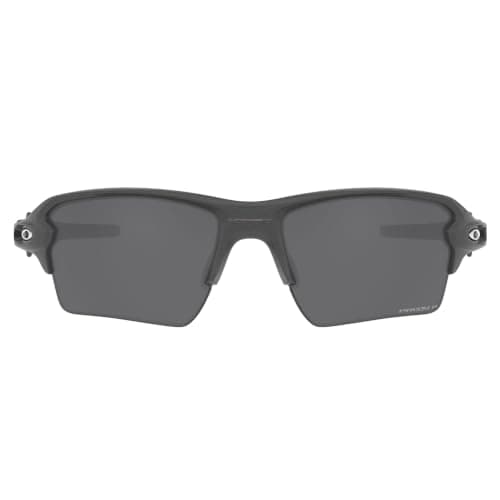
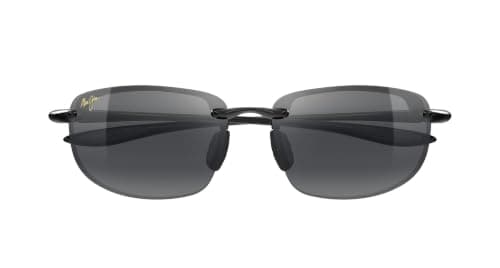
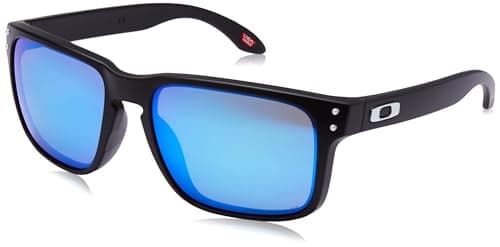
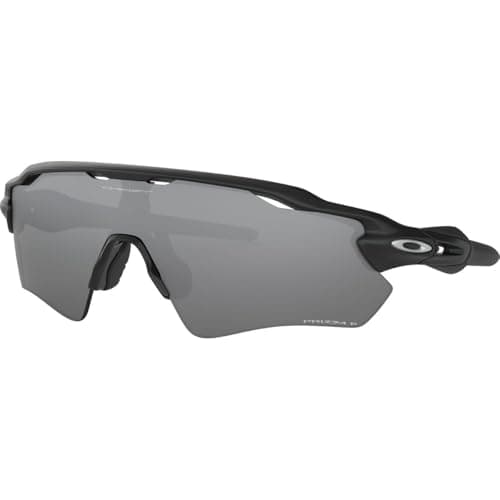
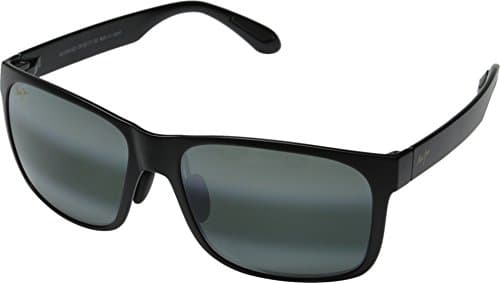
Buy Maui Jim if the lens is the point — if you stand still in bright light near water and want the best colour and glare control money buys, the Red Sands is the pick of this page. Buy Oakley if the face is moving: the Flak 2.0 XL and Radar EV hold a tuned lens still through sport in a way Maui Jim does not attempt. Both are at the top of the market, both are defensible, and neither gives you a single extra percent of UV protection over a $25 pair.
This is a genuine premium-versus-premium matchup rather than a value question, so it is worth being precise about what each brand actually sells. Maui Jim sells a polarized lens stack — PolarizedPlus2 is the brand's treatment applied across its sunglass line, layered onto a choice of materials (glass, MauiPure and other lightweight plastics) and tints. Oakley sells Prizm, a contrast-tuning tint family on Plutonite polycarbonate, with polarization as an additional option rather than the foundation. One brand starts from glare and colour; the other starts from contrast and retention.
| Factor | Maui Jim | Oakley |
|---|
| Lens premise | PolarizedPlus2 — polarization plus colour and contrast lift | Prizm — per-environment contrast tuning, polarization optional |
| Polarized? | Across the sunglass line | Selected lenses; much of the sport range is non-polarized on purpose |
| Materials | Glass, MauiPure and other lightweight plastics | Plutonite polycarbonate |
| Frames | Lifestyle and light sport shapes; nylon and acetate | Sport-first geometry, Unobtainium grip, swappable lenses |
| Coverage | Moderate; side light gets in on open ground | Up to goggle scale on the sport shields |
| Screens | Dimmed — polarized is the product | Your choice — non-polarized Prizm keeps screens readable |
| Best for | Water, bright coastal light, everyday, standing still | Running, cycling, golf, trail, driving |
PolarizedPlus2 is a stack, not a different physics
Maui Jim's marketing can read as though its polarization is a different kind of polarization. It is not — the glare filter is the same physics as any polarized lens, which the Cleveland Clinic describes in plain terms. What Maui Jim adds around it is the lens material, the tint engineering and the coatings, and SportRx's lens guide is the clearest third-party breakdown of how those pieces fit together. The result is a lens most people describe as warmer and more saturated than a neutral grey, and that impression is real even though the underlying filter is ordinary. Our Maui Jim lenses explained page separates the three decisions properly, and are Maui Jim sunglasses worth it answers the price question head on.
Prizm is tuning, and it is not a glare filter
Oakley's claim is narrower and more specific: Prizm filters particular wavelengths so that the details that matter in a given environment stand out more. That is a different job from removing reflected glare, and Oakley is explicit that polarization is a separate lens option. The practical consequence is the one that should drive your decision: a large part of the Prizm sport range is deliberately unpolarized, because an athlete reading wet rock, a bike computer or a rangefinder is using exactly the reflections a polarized lens deletes. We cover that in Oakley Prizm explained and in are Oakley polarized lenses worth it.
Frames decide this more often than lenses do
If you put a Maui Jim Red Sands and an Oakley Flak 2.0 XL side by side, the lenses are both excellent and the frames are not comparable. The Red Sands is a lifestyle shape — nylon, moderate coverage, smooth temples. Wear it on a hot run and it will migrate down your nose; wear it on a boat and it is close to perfect. The Flak is a half-frame sport shield with rubber grip points, XL lens coverage and lenses you can swap yourself. For anything with movement in it, that is not a close call, and it is why Oakley appears all over our running, cycling and golf roundups while Maui Jim does not.
Conversely, almost nobody wears a Radar EV to dinner. If you want one premium pair that reads as clothing rather than equipment and still handles the water, Maui Jim's Hookipa or the Oakley Holbrook in Prizm Polarized are the two honest answers, and they are close. Our Ray-Ban vs Maui Jim page takes that same style-versus-lens argument to its logical end.
What neither brand buys you
UV protection. Both are UV400-class and so is a $20 pair; the American Optometric Association treats that as the health function of a sunglass, and the Vision Council documents how routine that spec has become. Price buys optical polish, coating life, frame engineering and the lens tuning described above. It does not buy more eye protection, and anyone who implies otherwise is selling something. The whole argument is laid out in UV protection explained.
The verdict, stated plainly
Standing still in bright light, especially near water → Maui Jim, Red Sands if you want the showcase lens, Hookipa for a more everyday fit. Moving → Oakley, Flak 2.0 XL as the all-round sport answer and Radar EV Path if you want maximum coverage at speed. One premium pair for a normal life that includes driving and the occasional boat → the Holbrook in Prizm Polarized. And if this entire page reads as too much money for sunglasses, we agree often enough that we wrote best cheap polarized sunglasses and the best sunglasses of 2026, where a $30 pair ranks first on merit.
How to decide in 30 seconds
Does your face move and sweat?
Yes → Oakley. Grip hardware and wrapped coverage are the brand's core competence and Maui Jim does not compete there.
Is water the main condition?
Then Maui Jim's lens is the showcase, though a Costa does the fishing job for less — see Costa vs Maui Jim.
Do you need to read a display?
Oakley, non-polarized Prizm. Maui Jim's sunglass line is polarized, so a dimmed screen comes with it.
Do you want to swap tints seasonally?
Oakley. Replaceable sport lenses are a genuine feature here.
Is this a ten-year purchase?
Both can be, but for different reasons: Maui Jim for lens quality and build, Oakley because you can keep replacing the parts that wear.
How we picked
We don't run a testing lab
We compile each pair's published specifications — lens material, polarization, coating, frame material, coverage, UV rating and price — normalize them, and score each against a published rubric. The scores are judgments from documented research; they are notmeasurements we took, because we don't own a lab and we're not going to pretend we do. Pairs we claim to have lab-tested: 0.