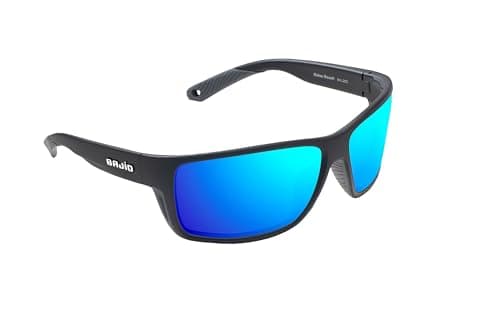
Buy Bajío if you are trying to see fish — the Bales Beach in LAPIS glass is the pick of this page, and the full wrap, the vents and the blue-light filtering are all aimed at that one job. Buy Maui Jim if the pair has to work everywhere: on the water, in town, driving, on holiday, for years. If you want Bajío's optics without glass weight, the poly Bales Beach at rank 3 is the sensible compromise and costs less.
This is the most useful of the premium fishing matchups, because unlike Costa vs Bajío the two brands here are not variations on one idea. Bajío was founded by people who left Costa, and it sells to a narrow audience: flats anglers who need to pick a tailing fish out of glare. Maui Jim sells to everybody, and its lens is tuned for color and clarity rather than for water penetration specifically.
What each lens is actually trying to do
Bajío: filter the light that hides fish. Bajío's pitch, set out on its own site, is LAPIS lens technology — polarization plus blue-light filtering, on the argument that scattered blue light is what turns the surface of shallow water into a wall. The frames follow the same logic: full wrap, vents to stop fogging when you stop moving, and large enough coverage that light does not arrive around the edge of the lens. Available in glass and polycarbonate.
Maui Jim: make the world look right.PolarizedPlus2 is a fixed polarized lens with color-boosting treatment and UV and blue-light claims of its own, offered in SuperThin Glass, MauiPure and MauiBrilliant materials — the SportRx lens guide maps those materials and tints across the range. The frames are lifestyle-first: handsome, comfortable, modest wrap, no vents.
| Factor | Bajío | Maui Jim |
|---|
| Lens pitch | LAPIS: polarized plus blue-light filtering, aimed at seeing into water | PolarizedPlus2: polarized plus color boost, aimed at clarity everywhere |
| Materials | LAPIS glass and LAPIS polycarbonate | SuperThin Glass, MauiPure, MauiBrilliant |
| Frame design | Full wrap, vented, built for spray and sweat | Lifestyle shapes, modest wrap, unvented |
| Sight-fishing | The design target | Good, but not what the lens is optimized for |
| Everyday and town wear | Reads as fishing kit | The design target |
| Fogging when you stop | Vents help | No vents — can fog on a hot, still day |
| Range breadth | Narrow, angler-focused | Very broad, many fits and tints |
The short answer
Quick picks
#ad · Live prices from the Amazon Product API, as of October 19, 2026. Where we have no verified live price, we show none — we would rather leave a gap than print a number that has rotted.
In detail
The picks, in full
Flats and bright-water sight-fishing
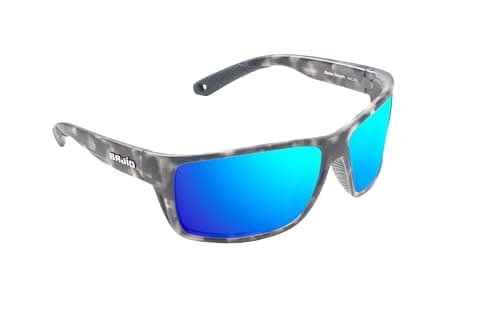
Bajío Bales Beach (Glass)
LAPIS glass lensPolarizedBlue-light filterFull wrap + vents
The flats-fishing specialist's pick — glass lenses with a blue-light filter, full coverage.
- Glare control
- 10
- Optics
- 10
- Fit & coverage
- 9
- Durability
- 8
- Value
- 5
Pros
- +Bajío's LAPIS coating targets blue light specifically, which is the wavelength that washes out a fish on a bright flat
- +Glass lenses give the truest optics here and resist scratches better than any polycarbonate
- +Vented full wrap kills side glare and fogs less than a sealed frame
Cons
- −Glass is heavier on the nose over a long day than Costa's 580P
- −Premium price, and the brand is less of a household name than Costa (which is the point, to some buyers)
Don't buy this if…
…you need impact resistance above all — a stray hook or a dropped pair fares better with polycarbonate than glass.
The best-in-class polarized lens
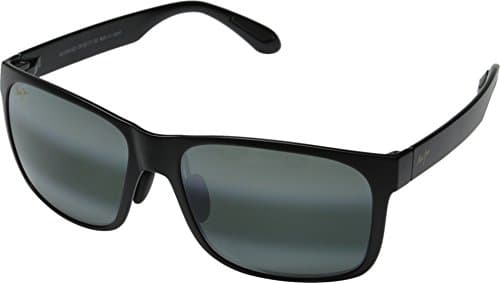
Maui Jim Red Sands (PolarizedPlus2)
PolarizedPlus2MauiPure lensUV + blue-lightNylon frame
If glare control and color are the whole point, this is the ceiling — at a ceiling price.
- Glare control
- 10
- Optics
- 10
- Fit & coverage
- 7
- Durability
- 9
- Value
- 5
Pros
- +Maui Jim's PolarizedPlus2 does more than cut glare — it lifts contrast and color, and the difference off water is real, not marketing
- +MauiPure lenses are lighter than glass and more optically true than most polycarbonate
- +Genuinely excellent build; the pair you keep for a decade
Cons
- −The most expensive pick on this site by a wide margin
- −Like any polarized lens it dims LCD and phone screens — a nuisance at a gas pump or a boat's chartplotter
Don't buy this if…
…you lose sunglasses. This is a heirloom-price lens, and the glare math that matters to a buyer is 90% there on pairs costing a fifth as much.
Bajío optics without the glass weight
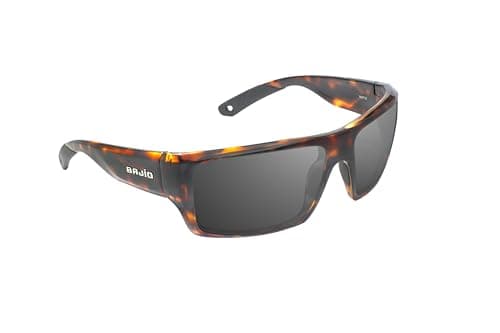
Bajío Bales Beach (Poly)
LAPIS poly lensPolarizedBlue-light filterLarge fit full wrap
The Bajío most anglers should actually buy — same frame and same LAPIS lens, in polycarbonate.
- Glare control
- 10
- Optics
- 9
- Fit & coverage
- 9
- Durability
- 8
- Value
- 6
Pros
- +Identical frame and identical LAPIS blue-light filtering to the glass Bales Beach, at Bajío's lower list tier
- +Polycarbonate is lighter on the nose over a ten-hour day and far more forgiving of a dropped pair or a stray hook
- +Vented large-fit wrap with rubber grip — the shape is built for a bright flat rather than a patio
Cons
- −Scratches more easily than the glass version, and Bajío's warranty does not cover scratches
- −Glass still resolves fine detail slightly more cleanly — if you are straining at forty feet, that gap is the reason glass exists
Don't buy this if…
…scratch resistance matters more to you than weight. The glass Bales Beach is the same pair with the harder lens, and it is the better buy if your sunglasses live on a console rather than in a case.
A premium everyday lens
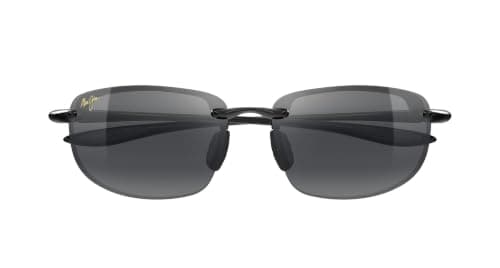
Maui Jim Hookipa (PolarizedPlus2)
PolarizedPlus2MauiPure lensMedium fitUV + blue-light
A classic medium-fit Maui Jim — the premium everyday polarized pair, minus the sport wrap.
- Glare control
- 9
- Optics
- 10
- Fit & coverage
- 6
- Durability
- 9
- Value
- 5
Pros
- +PolarizedPlus2 lifts color and contrast, not just glare — the reason Maui Jim keeps its fans
- +Medium fit and classic shape work for a wide range of faces
- +Lens and build quality are top-tier
Cons
- −Premium price for an everyday (non-sport) frame
- −Polarized lens dims phone and dashboard screens, as all polarized do
Don't buy this if…
…you want a sport or fishing wrap. This is a lifestyle frame — beautiful optics, modest coverage.
Bajío optics in an everyday frame
Bajío Los Natos (LAPIS Glass)
LAPIS glass lensPolarizedBlue-light filterLifestyle shape
Bajío's lifestyle shape with the same flats-grade glass lens — the boat-to-bar pick.
- Glare control
- 10
- Optics
- 10
- Fit & coverage
- 7
- Durability
- 8
- Value
- 5
Pros
- +Gets Bajío's blue-light-filtering glass lens into a frame you can wear off the water without looking like you just docked
- +Glass optics are the clearest and the most scratch-resistant option in the catalog
- +A genuine premium alternative to the two brands everyone already owns
Cons
- −Glass is heavier on the nose across a long day than polycarbonate
- −A lifestyle shape gives up the side coverage and venting of the brand's full wraps
Don't buy this if…
…you want maximum coverage on a bright flat. The full-wrap Bales Beach is the better fishing tool; this is the pair for the rest of your life.
Who each pick is for
- Bajío Bales Beach (glass)— for the flats or bright-water angler who wants the clearest view into the water and will accept the weight.
- Maui Jim Red Sands— for the buyer who wants one premium pair for the water and everything else.
- Bajío Bales Beach (poly)— for Bajío's optics in a lighter, cheaper, impact-resistant lens; the right choice for most people.
- Maui Jim Hookipa— for a medium face, in the same PolarizedPlus2 family as the Red Sands.
- Bajío Los Natos— for LAPIS glass in a frame you can wear to dinner.
Does blue-light filtering actually help you see fish?
The mechanism is plausible and worth stating carefully, because this is exactly where eyewear marketing usually runs ahead of the evidence. Polarization removes the surface reflection that acts like a mirror on shallow water — that part is uncontroversial physics and the Cleveland Clinic describes it in those terms. Cutting short-wavelength blue light on top of that reduces the scattered haze that remains, which should raise the contrast of a dark shape against a light bottom. Anglers consistently report that it does.
What we will not tell you is by how much, because we have not measured it and nobody has published a figure we would stand behind. Treat "blue-light filtering helps you see into water" as a well-reasoned design argument with strong user agreement, not as a tested number. Our do polarized sunglasses help you see fish page goes through what is established and what is not.
The practical differences you will notice first
Fogging. Bajío vents its frames; Maui Jim mostly does not. On a humid morning, poling a flat and then stopping, an unvented lens fogs. This is a small spec that decides real days on the water.
Light leak at the edges.Bajío's full-wrap shapes block light arriving from the side and from below off the water. A Maui Jim lifestyle frame lets some of that in, which partially undoes the work the lens is doing.
Weight.Glass in either brand is heavy on a long day. Bajío's poly LAPIS and Maui Jim's MauiPure both exist for that reason, and both are the version most people should buy.
Where you can wear it.A Maui Jim goes to a restaurant. A wrapped, vented Bajío looks like what it is. If you want one pair for both lives, that is a real argument for Maui Jim — or for Bajío's Los Natos, which is the brand's answer to exactly this complaint.
What neither brand improves
UV protection. The American Academy of Ophthalmology is clear that polarization cuts glare without adding UV protection, and that a correctly labeled inexpensive pair blocks UV as effectively as an expensive one. Spend the money here for the lens behavior, the coverage and the frame engineering. For the budget end of the same use case, see best budget fishing sunglasses.
How to decide in 30 seconds
Are you looking for fish, or avoiding glare?
Looking for fish → Bajío. Avoiding glare while living a normal life → Maui Jim.
Glass or polycarbonate?
Poly, for most people and almost all boat use. Glass only if the pair is looked after and you want the last few percent of clarity.
Will the pair also be your everyday sunglasses?
Then Maui Jim, or Bajío's lifestyle shape rather than its wrap.
Do you fog up when you stop moving?
Then vents matter, and that points at Bajío.
Is this your first premium pair?
Buy poly, buy the frame that fits, and read best lens color for fishingbefore you pick a tint — tint choice changes more than brand does.
How we picked
We don't run a testing lab
We compile each pair's published specifications — lens material, polarization, coating, frame material, coverage, UV rating and price — normalize them, and score each against a published rubric. The scores are judgments from documented research; they are notmeasurements we took, because we don't own a lab and we're not going to pretend we do. Pairs we claim to have lab-tested: 0.
Questions
Frequently asked
Is Bajío better than Maui Jim for fishing?+
For sight-fishing specifically, we rank Bajío first: the full-wrap vented frames and the blue-light-filtering LAPIS lens are both aimed at seeing into water, which is a narrower goal than Maui Jim is designing for. For a pair that fishes occasionally and lives the rest of its life as everyday sunglasses, Maui Jim is the better buy.
Is Bajío just ex-Costa people selling the same thing?+
The founding connection to Costa is real, but the products are not the same. Bajío leans on blue-light filtering in its LAPIS lens as the differentiator, and its frame range is narrower and more wrap-focused. We compare the two directly in
Costa vs Bajío.
Are all Maui Jim sunglasses polarized?+
Effectively yes — PolarizedPlus2 is the premise of the range rather than an upgrade, and the meaningful choice is the lens material and tint rather than whether polarization is present. The detail is in
Maui Jim lenses explained.
Do I need glass lenses for fishing?+
No. Glass is clearer and more scratch-resistant, but it is heavier and it shatters, and a boat is a hard environment. Polycarbonate in either brand is the practical choice for most anglers; buy glass only if you know you look after eyewear.
Which is better value?+
Bajío's polycarbonate models usually undercut Maui Jim's glass while targeting the fishing job more directly, so for anglers it is the stronger value. For a do-everything pair, Maui Jim's breadth of fits is worth something that does not show up in a spec table. If value is the dominant concern, neither brand is the answer — read
best cheap polarized sunglasses.
Receipts
Sources
We do not run a testing lab, and we do not pretend to. Where a spec or measurement came from a manufacturer or a third party, we name and link it. Where we could not verify something, we say so on the page rather than quietly leaving it out. Read our full method.