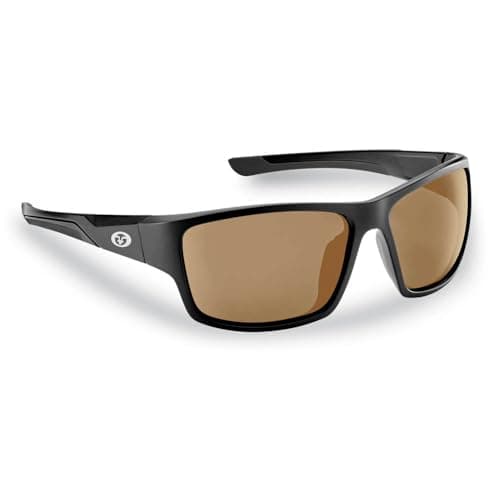
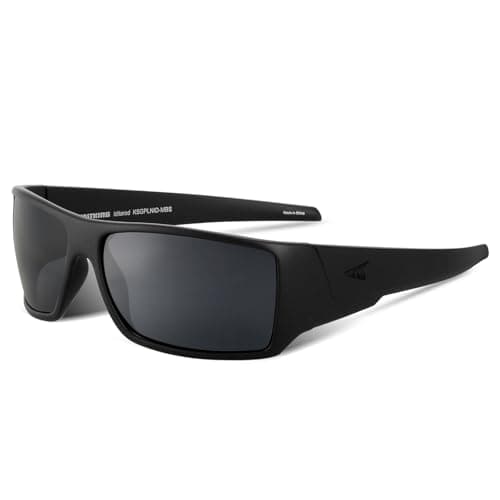
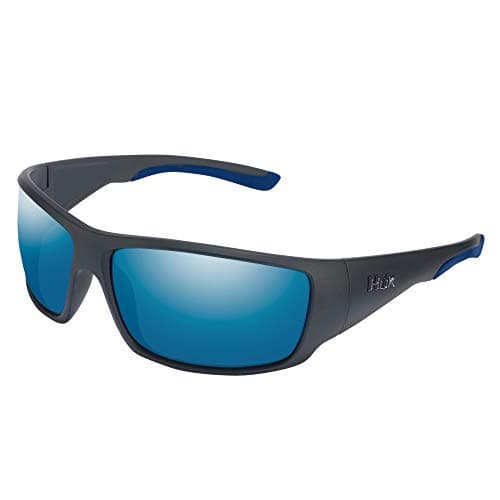
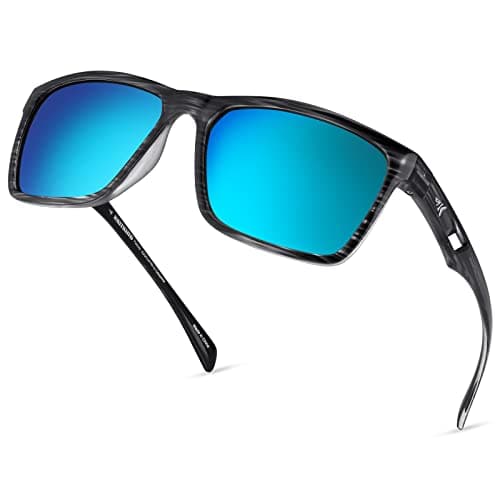
The KastKing FlatRock is the budget fishing pick: a genuinely polarized sport wrap at under thirty dollars that does the one job that matters, which is killing the mirror on the surface of the water. The Flying Fisherman Sand Bank is the amber-tint alternative if you fish low light and shallow water. If you can stretch past $50, the Huk Spearpoint at the bottom of this page is the first pair here that feels like a step up rather than a bargain — and none of these six will cost you sleep if one goes over the side.
Fishing is the use case where cheap polarized sunglasses are most defensible and most risky at the same time. Most defensible, because the dominant benefit — removing the polarized surface reflection off water so you can see through it — is delivered by any honest polarized filter, as the Cleveland Clinic explains. Most risky, because a boat is a brutal environment and the cheapest listings are the ones most likely to be tinted-but-not-polarized.
What matters under $50, in order
1. Actual polarization. Non-negotiable and not guaranteed at this price. Every pick here is a polarized model; many sub-$20 listings are not, whatever the product photo implies. If you want to check a pair you already own, the two-pair rotation test is in how to tell if sunglasses are polarized.
2. 100% UV / UV400. This is the health function, and it is the one spec where price genuinely does not matter. The American Academy of Ophthalmology states that inexpensive pairs marked 100% UV-blocking can be just as effective as pricier options, and Consumer Reports adds the correction people get wrong: polarization is not UV protection, so you need both labels. A full day of reflected light off open water is a serious UV dose.
3. Coverage. On water, light arrives from below as well as above. A wrap shape that blocks the sides is worth more than a tint upgrade, which is why five of the six picks here are sport wraps rather than lifestyle frames.
4. Tint, for the water you actually fish. Copper, amber and brown tints lift contrast in shallow and stained water; gray keeps colors true in bright open conditions. This matters more than brand at any price, and the full breakdown is in best lens color for fishing.
5. Frame material and grip. Grilamid and TR90 frames flex instead of snapping, and rubberized nose pads hold when wet. KastKing publishes Grilamid frames and multi-layer polarized TAC lenses across its sunglasses range, which is a genuinely good spec at this price.
6. A retainer, which costs almost nothing. The single highest-value accessory in fishing. A floating retainer means a pair that goes over the side is recoverable; a $5 cord protects a $30 purchase and a $300 one equally.
What you are giving up against a $250 pair
Being straight about it: edge clarity, scratch resistance, and lens tuning. A premium lens distorts less toward the outside of the lens, which shows up as less eye fatigue after six hours of staring at water. Glass and premium polycarbonate resist the fine scratch haze that dulls a budget lens within a season. And brands like Costa and Bajío tune tints to filter specific wavelengths — Costa documents its 580 approach on its own lens technology page — which is a real advantage when you are hunting a fish rather than just avoiding glare.
What you are not giving up: UV protection, or the basic glare-removal effect. If your fishing is a dozen trips a year from a bank or a small boat, the honest advice is to buy two budget pairs and a retainer rather than one premium pair. If you are on the water weekly and sight-fishing, read fishing sunglasses and Bajío vs Maui Jiminstead. For freshwater bass specifically — stained water, bed fishing, a lens that has to look down rather than across — we rank that field separately in best bass fishing sunglasses.
The short answer
Quick picks
#ad · Live prices from the Amazon Product API, as of October 19, 2026. Where we have no verified live price, we show none — we would rather leave a gap than print a number that has rotted.
In detail
The picks, in full
Best budget fishing pick
KastKing FlatRock Polarized
PolarizedUV400Sport wrapLightweight
The best-value fishing pick. Polarized, floats the budget, and does the core job.
- Glare control
- 8
- Optics
- 6
- Fit & coverage
- 7
- Durability
- 6
- Value
- 10
Pros
- +Polarized glare control for the price of a couple of lures — the single cheapest way to actually see into water
- +Light sport-wrap shape controls side light better than a lifestyle frame
- +KastKing is a real tackle brand, so the frame is built for the environment
Cons
- −The lens lifts contrast less than a Costa 580 — you see less structure in tricky light
- −Budget coatings scratch; keep it in the pouch
Don't buy this if…
…you're on the water most weekends chasing spooky fish. This gets you 80% of the way; the last 20% is what the premium lenses sell.
A cheap second pair for the tackle bag
Flying Fisherman Sand Bank
PolarizedAmber tint100% UVLightweight
A long-time budget-fishing staple with AcuTint-style contrast tinting.
- Glare control
- 8
- Optics
- 6
- Fit & coverage
- 7
- Durability
- 5
- Value
- 9
Pros
- +Amber-tinted polarized lens lifts contrast in low and flat light — good for overcast days on the water
- +Cheap enough to own two and not mourn a pair lost overboard
- +A fishing-focused brand that has made these for years
Cons
- −Optical clarity and coating life are budget-grade
- −Frame feels light-duty next to a Huk or Costa
Don't buy this if…
…you want one nice pair to keep. This is a buy-two-and-abuse-them pick, not a keeper.
Frame quality on a budget-fishing spend
KastKing Iditarod Polarized
Grilamid framePolarized TAC lensUV400Sport wrap
A Grilamid-framed polarized wrap at a price that belongs two tiers higher.
- Glare control
- 8
- Optics
- 6
- Fit & coverage
- 8
- Durability
- 7
- Value
- 10
Pros
- +Grilamid is the frame material premium sport brands use, and finding it at this price is genuinely unusual
- +Polarized wrap coverage that seals out the side light a flat frame lets straight in
- +From a tackle brand, so the design assumptions are a boat deck rather than a sidewalk
Cons
- −A TAC film-laminate lens is optically a step below the molded polycarbonate in premium fishing glasses
- −No contrast tuning — it removes glare but does not lift fish out of the water the way a 580-class lens does
Don't buy this if…
…you sight-fish seriously. The frame punches above its price; the lens is honest budget, and the lens is what a sight-fisher is buying.
Budget sport wrap with real glare control
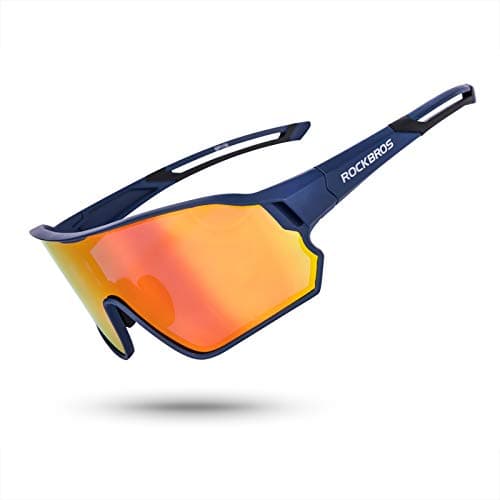
ROCKBROS Polarized Sport
PolarizedUV400Sport wrapLightweight frame
ROCKBROS's polarized sport wrap — the glare-cutting sibling to its photochromic lens.
- Glare control
- 8
- Optics
- 6
- Fit & coverage
- 8
- Durability
- 6
- Value
- 9
Pros
- +Polarized rather than photochromic, so it is the better ROCKBROS for wet roads, water and driving
- +Wrap shape controls the side light that a flat lifestyle lens lets straight in
- +Priced where losing a pair on a ride is annoying rather than painful
Cons
- −Polarization is the wrong call for reading a bike computer — the screen dims at some angles
- −Budget hinges and coatings; this is a season-or-two frame
Don't buy this if…
…your main use is cycling with a head unit. Take the photochromic version instead — it keeps the screen readable and handles changing light.
The cheapest polarized sport wrap worth owning
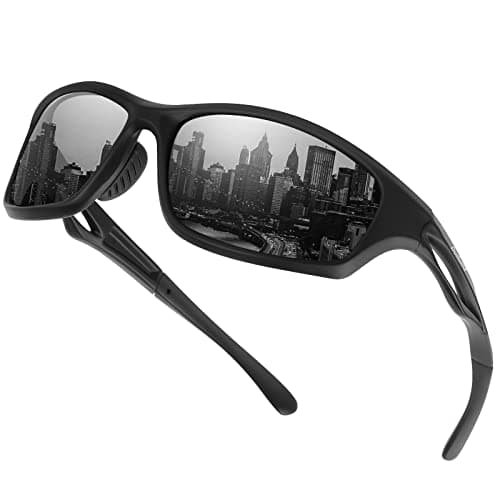
Duduma TR90 Polarized Sport
TR90 framePolarizedUV400Sport wrap
The internet's default cheap sport wrap — polarized, unbreakable-ish, everywhere.
- Glare control
- 7
- Optics
- 6
- Fit & coverage
- 8
- Durability
- 6
- Value
- 10
Pros
- +TR90 frame flexes instead of snapping — it survives being sat on
- +Polarized and UV400 at the bottom of the price range
- +The wrap shape controls side glare better than a flat lifestyle lens
Cons
- −Optics and coatings are exactly what the price implies
- −Fit is generic; no fine adjustment
Don't buy this if…
…you want optical precision or a coating that lasts years. This is a knock-around-and-replace pick.
A step up from budget without Costa money
Huk Spearpoint (Polarized)
PolarizedMirror coatingPerformance frameUV400
A capable polarized fishing wrap from a fishing-apparel brand, at a mid price.
- Glare control
- 8
- Optics
- 7
- Fit & coverage
- 8
- Durability
- 7
- Value
- 8
Pros
- +Sits in the gap between $25 budget wraps and $200 Costas — polarized, mirrored, and built for water
- +Lighter and more wrap-shaped than a lifestyle frame, so side glare is controlled
- +Huk knows the fishing customer; the fit and grip are tuned for it
Cons
- −Lens contrast doesn't match Costa's 580 or Bajío's LAPIS glass for pulling fish out of surface glare
- −Coatings are the first thing to wear at this price point
Don't buy this if…
…you sight-fish seriously and can stretch the budget — the premium fishing lenses genuinely see more, and that's the whole reason to spend up.
Who each pick is for
- KastKing FlatRock— for the angler who wants the best overall package under $30: polarized, UV400, sport wrap, light.
- Flying Fisherman Sand Bank— for shallow, stained or low-light water, where the amber tint earns its place.
- KastKing Iditarod— for a Grilamid frame on a budget-fishing spend, if you have broken cheap frames before.
- ROCKBROS polarized sport— for the cheapest wrap here with real glare control, and a good second pair for the tackle bag.
- Duduma TR90 polarized sport— for a flexible frame that survives being sat on in a boat.
- Huk Spearpoint— for the reader who can stretch past $50 and wants a clear step up without Costa money.
The mistake that wastes a budget purchase
Buying the darkest lens available. Darkness and glare control are different things: a very dark non-polarized lens will still show you a mirror where the water should be, while a medium polarized lens shows you the bottom. If you are choosing between a dark tint and a confirmed polarized filter at this price, take the filter every time.
The second mistake is treating one pair as enough. Light on water changes by the hour and the season; two $27 pairs with different tints — an amber for shallow and overcast, a gray or mirrored for bright open water — is a better system than a single pair at $54, and this is the one price bracket where that strategy is affordable.
Care, because budget lenses punish neglect
Salt is the enemy. Rinse with fresh water at the end of a day and let the pair dry before it goes in a case; dried salt is abrasive, and wiping it off a dry lens with a shirt is how budget lenses get ruined in one season. The method is in how to clean sunglasses, and when to replace sunglasses covers how to tell when a lens is genuinely finished rather than just dirty.
If you fish from a boat specifically
Add two things to the list above: vents or a frame that does not fog when you stop moving, and a retainer that floats rather than one that sinks. Boat-specific advice, including hat and positioning considerations that matter more than lens choice, is in best sunglasses for boating. And if the reason you are buying is to spot fish rather than to be comfortable, read do polarized sunglasses help you see fish first — it sets out what the filter can and cannot do for you.
How to choose in 30 seconds
Is the listing explicitly polarized?
If it does not say so in words, assume it is not and move on.
What water do you fish?
Shallow, stained or overcast → amber or copper. Bright open water → gray or mirrored.
Have you broken a cheap frame before?
Then pay the few extra dollars for Grilamid or TR90 rather than unspecified plastic.
Do you own a retainer?
Buy one with the glasses. It is the cheapest insurance in fishing.
Is $50 really your ceiling?
If you can reach $60, the stretch pick on this page is a genuine upgrade in clarity and build. Below $30, buy two.
The cheap stuff that matters
Essentials under $40
The add-ons this page already told you to get. None of these is scored — our rubric measures glare control, optics, fit, durability and value, and four of those mean nothing for a cleaning cloth. So you get a reason and a live price instead of a number we'd have had to invent.
Generic
Floating Sunglasses Straps for Water (4-pack)
A buoyant strap for boats, kayaks and wading. Note what this is: the STRAP provides the flotation. Do not assume any pair floats on its own.
Chums
Chums Original Cotton Retainer
The plain cotton eyewear keeper. Adjustable, washable, and the version most people mean when they say Croakies. Colorways vary on the listing.
#ad · Live prices as of October 19, 2026, hidden when our data goes stale. We may earn a commission, at no cost to you. How this works.
How we picked
We don't run a testing lab
We compile each pair's published specifications — lens material, polarization, coating, frame material, coverage, UV rating and price — normalize them, and score each against a published rubric. The scores are judgments from documented research; they are notmeasurements we took, because we don't own a lab and we're not going to pretend we do. Pairs we claim to have lab-tested: 0.
Questions
Frequently asked
Are cheap polarized fishing sunglasses worth it?+
Yes, for most anglers. The dominant benefit — removing the polarized glare sheet off the water surface — comes from any honest polarized filter, and UV protection is unrelated to price. What you lose is edge clarity, scratch resistance and tuned tints. If you fish occasionally, two budget pairs and a retainer beat one premium pair. See
are expensive sunglasses worth it.
What lens color is best for budget fishing sunglasses?+
Amber, copper or brown for shallow, stained and low-light water, because they lift contrast between a fish and the bottom. Gray for bright, open, deep water, because it keeps colors true. Mirrored coatings help in extreme brightness. The full breakdown is in
best lens color for fishing.
Do budget fishing sunglasses block UV?+
The ones labeled UV400 or 100% UV do, and that includes every pick on this page. UV blocking is a lens treatment that costs very little to apply, which is why the AAO says inexpensive pairs carrying the label can be just as effective as expensive ones. What you should not assume is that polarized automatically means UV-protected — they are separate specs.
Can I use regular polarized sunglasses for fishing?+
Yes, and they will work. The reasons to buy a fishing-specific pair are coverage (light coming off the water from below), grip when wet, frames that tolerate salt, and tints chosen for water rather than for streets. A lifestyle frame will slide down your nose and let side light in. See
fishing sunglasses.
How long will a $30 pair last?+
With rinsing and a case, a season or two of regular use before scratch haze becomes noticeable; much longer if it only comes out occasionally. The frame usually outlives the lens coating. Treat the pair as a consumable and the budget math works; treat it as an heirloom and it will disappoint.
Receipts
Sources
We do not run a testing lab, and we do not pretend to. Where a spec or measurement came from a manufacturer or a third party, we name and link it. Where we could not verify something, we say so on the page rather than quietly leaving it out. Read our full method.