Yes — dramatically, and more than any other piece of fishing equipment at the price. A water surface acts as a partial mirror, and the light it reflects is polarized in a single plane; a polarized lens blocks that plane, the mirror disappears, and you suddenly see structure, drop-offs and fish that were invisible a second earlier. Any genuinely polarized pair delivers the core effect. Tint and lens quality decide how much detail you pull out of it, which is where a Costa or a Bajío earns its money over a $27 pair.
If you have ever put on polarized sunglasses beside a lake and watched the bottom appear, you have already had the demonstration. The Cleveland Clinic describes the mechanism in clinical terms — polarized lenses reduce glare from reflective surfaces like water — but the practical description is better: the lens deletes the sky reflected off the surface, leaving the light that came up from under it.
What to look for before you buy anything
Genuine polarization, verified.Cheap listings label plain tints "polarized" often enough that it is worth checking. Look at a phone screen through one lens and rotate the glasses 90 degrees — a real polarized lens darkens or blacks the screen out. The full set of tests is in how to tell if sunglasses are polarized, and what "HD polarized" means decodes the vocabulary budget listings use.
A tint matched to your water, not a dark lens. Copper, amber and rose tints lift contrast in the browns and greens of inshore and freshwater; grey keeps colour neutral and suits bright blue open water. A very dark neutral lens cuts brightness without adding contrast, which is the opposite of what sight-fishing wants. Our best lens color for fishing page maps tints to water types properly.
Coverage and a seal against stray light. Light arriving around the lens from the side or below washes out the contrast you just bought. A wrap, or simply a frame sized to your face, does more for what you see than a lens upgrade does.
A retainer. Polarized or not, the pair you dropped overboard sees nothing. A floating strap is $10 and it is the cheapest insurance in fishing.
The short answer
Quick picks
#ad · Live prices from the Amazon Product API, as of October 19, 2026. Where we have no verified live price, we show none — we would rather leave a gap than print a number that has rotted.
In detail
The picks, in full
Sight-fishing and time on the water
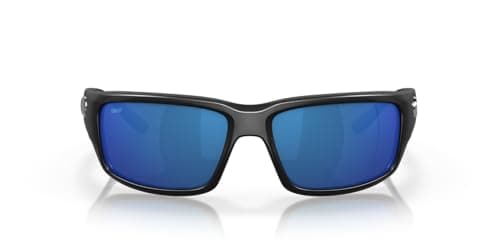
Costa Fantail 580P
580P polarizedPolycarbonateHydrolite gripVented
The fishing default. The 580 lens is built to pull fish out of glare, and it does.
- Glare control
- 10
- Optics
- 9
- Fit & coverage
- 9
- Durability
- 8
- Value
- 6
Pros
- +Costa's 580 lens filters yellow light to lift contrast — copper/green tints make fish and structure pop against surface glare
- +Hydrolite nose and temple pads grip harder the wetter they get, which is the whole game on a boat
- +580P (polycarbonate) is the lighter, more impact-resistant option versus the pricier 580G glass
Cons
- −Polycarbonate scratches more easily than Costa's 580G glass — the glass is clearer but heavier and dearer
- −A real premium over budget fishing wraps that also filter glare competently
Don't buy this if…
…you fish twice a year off a dock. The 580 lens earns its keep for people who sight-fish; occasional users get most of the benefit from a $30 polarized wrap.
Flats and bright-water sight-fishing
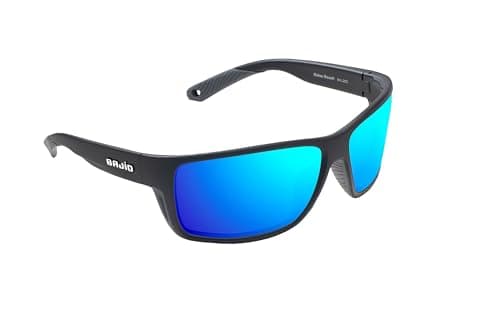
Bajío Bales Beach (Glass)
LAPIS glass lensPolarizedBlue-light filterFull wrap + vents
The flats-fishing specialist's pick — glass lenses with a blue-light filter, full coverage.
- Glare control
- 10
- Optics
- 10
- Fit & coverage
- 9
- Durability
- 8
- Value
- 5
Pros
- +Bajío's LAPIS coating targets blue light specifically, which is the wavelength that washes out a fish on a bright flat
- +Glass lenses give the truest optics here and resist scratches better than any polycarbonate
- +Vented full wrap kills side glare and fogs less than a sealed frame
Cons
- −Glass is heavier on the nose over a long day than Costa's 580P
- −Premium price, and the brand is less of a household name than Costa (which is the point, to some buyers)
Don't buy this if…
…you need impact resistance above all — a stray hook or a dropped pair fares better with polycarbonate than glass.
A step up from budget without Costa money
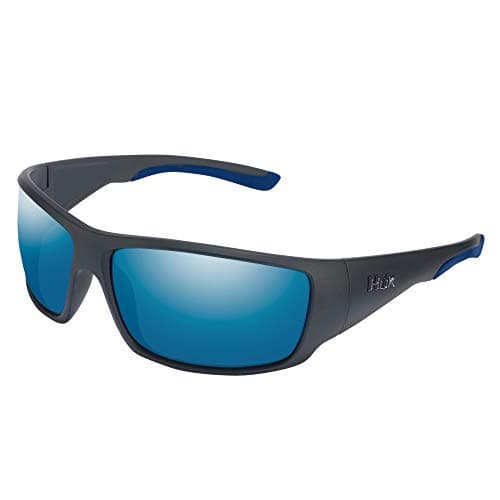
Huk Spearpoint (Polarized)
PolarizedMirror coatingPerformance frameUV400
A capable polarized fishing wrap from a fishing-apparel brand, at a mid price.
- Glare control
- 8
- Optics
- 7
- Fit & coverage
- 8
- Durability
- 7
- Value
- 8
Pros
- +Sits in the gap between $25 budget wraps and $200 Costas — polarized, mirrored, and built for water
- +Lighter and more wrap-shaped than a lifestyle frame, so side glare is controlled
- +Huk knows the fishing customer; the fit and grip are tuned for it
Cons
- −Lens contrast doesn't match Costa's 580 or Bajío's LAPIS glass for pulling fish out of surface glare
- −Coatings are the first thing to wear at this price point
Don't buy this if…
…you sight-fish seriously and can stretch the budget — the premium fishing lenses genuinely see more, and that's the whole reason to spend up.
Best budget fishing pick
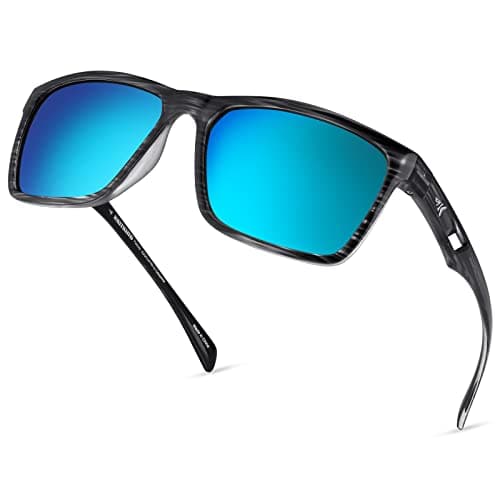
KastKing FlatRock Polarized
PolarizedUV400Sport wrapLightweight
The best-value fishing pick. Polarized, floats the budget, and does the core job.
- Glare control
- 8
- Optics
- 6
- Fit & coverage
- 7
- Durability
- 6
- Value
- 10
Pros
- +Polarized glare control for the price of a couple of lures — the single cheapest way to actually see into water
- +Light sport-wrap shape controls side light better than a lifestyle frame
- +KastKing is a real tackle brand, so the frame is built for the environment
Cons
- −The lens lifts contrast less than a Costa 580 — you see less structure in tricky light
- −Budget coatings scratch; keep it in the pouch
Don't buy this if…
…you're on the water most weekends chasing spooky fish. This gets you 80% of the way; the last 20% is what the premium lenses sell.
The mechanism, in one paragraph
Light that reflects off a flat surface comes away vibrating predominantly in the plane of that surface — for water, that is horizontal. A polarized lens is, in effect, a set of microscopic vertical slots: it passes vertically oscillating light and absorbs the horizontal component. Because surface glare is overwhelmingly horizontal and the light coming up through the water is not, the lens strips the glare and keeps the view. That is why the effect is so much stronger on water than on, say, a brick wall: almost nothing about a brick wall is a flat horizontal mirror.
How much does it actually help?
On flat, clear water in good light, the difference is the difference between seeing nothing and seeing the bottom. In chop, in tannic or muddy water, or under heavy cloud, it is much smaller — there is less specular reflection to remove and less light coming back up through the column. Nobody should promise you fish; what a polarized lens reliably does is remove the surface layer so that whatever contrast exists underneath becomes available to you.
Two honest limits. First, sun angle matters: the polarizing effect of a water surface is strongest at a moderate angle, so glare removal is most dramatic in mid-morning and mid-afternoon and less so with the sun directly overhead. Second, you cannot see through turbidity — no lens adds clarity to water that does not have any.
Where the money goes above $50
Three places, and only three. Tint engineering: Costa describes its 580 lens as filtering a specific band of light to lift the contrast anglers care about, and SportRx quotes 99.9% polarization efficiency for the range; Bajío builds its LAPIS lens around blocking blue light as well. Whether you perceive the gap between an excellent polarized lens and a good one is genuinely person-dependent. Optical quality away from the lens centre, which matters when you are scanning rather than staring. And durability— coatings and frames that survive salt, sun and seasons. None of that changes the fundamental physics, which a $27 KastKing delivers.
Material is the other axis. Glass lenses — Costa's 580G, Bajío's LAPIS glass — are the most scratch-resistant and the most optically honest, at a real weight cost and with a risk of chipping under impact. Our glass lens guideargues both sides. And because every Costa lens is polarized, you cannot get this wrong with that brand — see are all Costa sunglasses polarized.
The one real downside on the water
Your electronics. A polarized lens dims LCD screens, so a fish finder, a chartplotter or a phone can go dark — Sunglass Science notes that polarized lenses can make a screen appear dark or completely black depending on its orientation. Tilting your head rotates the filter and usually recovers the image. It is a nuisance rather than a reason to fish unpolarized. The same page notes polarized lenses can subtly affect depth perception, which we cover in do polarized sunglasses affect depth perception.
The short version
Buy polarized, buy a contrast tint matched to your water, size the frame to your face, and strap it on. The cheapest genuinely polarized pair gives you most of the effect; the expensive ones give you more detail, better optics at the edges and a pair that survives longer. The full ranked field is in the best fishing sunglasses roundup, and if you fish from a boat rather than a bank, read best sunglasses for boating too.
The cheap stuff that matters
Essentials under $40
The add-ons this page already told you to get. None of these is scored — our rubric measures glare control, optics, fit, durability and value, and four of those mean nothing for a cleaning cloth. So you get a reason and a live price instead of a number we'd have had to invent.
Generic
Floating Sunglasses Straps for Water (4-pack)
A buoyant strap for boats, kayaks and wading. Note what this is: the STRAP provides the flotation. Do not assume any pair floats on its own.
Chums
Chums Original Cotton Retainer
The plain cotton eyewear keeper. Adjustable, washable, and the version most people mean when they say Croakies. Colorways vary on the listing.
#ad · Live prices as of October 19, 2026, hidden when our data goes stale. We may earn a commission, at no cost to you. How this works.
How we picked
We don't run a testing lab
We compile each pair's published specifications — lens material, polarization, coating, frame material, coverage, UV rating and price — normalize them, and score each against a published rubric. The scores are judgments from documented research; they are notmeasurements we took, because we don't own a lab and we're not going to pretend we do. Pairs we claim to have lab-tested: 0.
Questions
Frequently asked
Do polarized sunglasses really let you see fish?+
They let you see into the water, which is what makes spotting fish possible. The lens removes the mirror-like reflection off the surface, so whatever contrast exists below it — fish, structure, weed lines, depth changes — becomes visible. How much you then see depends on water clarity, light and your tint, not on the polarization itself.
What lens colour is best for seeing fish?+
Copper, amber and rose tints are the usual answer for inshore, flats and freshwater, because they lift contrast in browns and greens. Grey suits bright, deep, blue water where neutrality matters more than contrast. The detail, by water type, is in
best lens color for fishing.
Is an expensive polarized lens worth it for fishing?+
For someone who sight-fishes regularly, yes — tint engineering and edge optics genuinely add detail over a long day of scanning, and the frames last. For someone who fishes a few weekends a year, a $27 polarized pair delivers the headline effect and the money is better spent elsewhere. Our
are expensive sunglasses worth it page does the arithmetic.
Why do polarized sunglasses work better at some times of day?+
Because the degree to which a water surface polarizes reflected light depends on the angle the light strikes it. At moderate sun angles the reflection is strongly polarized and the lens removes almost all of it; with the sun close to overhead there is less horizontally polarized glare to strip, so the improvement is smaller. Mid-morning and mid-afternoon are where the effect is most striking.
Will polarized lenses mess up my fish finder?+
They will dim it, sometimes severely, because an LCD screen emits polarized light of its own and the two filters can cancel. Tilting your head to rotate the lens relative to the screen usually brings the image back. If you rely heavily on a screen in bright sun, that is the one argument for keeping a non-polarized pair aboard as well.
Receipts
Sources
We do not run a testing lab, and we do not pretend to. Where a spec or measurement came from a manufacturer or a third party, we name and link it. Where we could not verify something, we say so on the page rather than quietly leaving it out. Read our full method.