Skip to content
PolarizedClub

Polarized · Marketing decoded

What Does “HD Polarized” Actually Mean?

Almost nothing. It is a marketing phrase with no standard behind it — unlike UV400, TAC and TR90, which are real. Here is how to read a budget sunglasses listing.

By Stephen V.Updated How we rate
#ad

We earn a commission when you buy through our Amazon links, at no extra cost to you. It never affects our rankings, and we say so when the cheaper pair is the better buy. How this works.

“HD polarized” is a marketing phrase. There is no HD standard for sunglasses, no body that defines it and no test a lens has to pass to use it, so it tells you nothing about the lens. The words on a listing that domean something are UV400, polarized, TAC, polycarbonate and TR90 — and two of those five are the only ones that affect whether the pair is worth buying.

Budget sunglasses listings are written in a dialect of half-real specifications, and the effect is that shoppers end up choosing between two functionally identical pairs on the basis of which one used more impressive words. This page decodes the vocabulary so you can ignore most of it.

1. The terms that are meaningless

HD / High Definition.No standard, no definition, no test. Usually it signals a brown or copper-tinted lens, because warm tints subjectively look "crisper" than gray ones — a real perceptual effect that has nothing to do with resolution. A lens does not have a resolution.

Anti-glare (used on its own). Every tinted lens reduces glare. If the listing means polarized, it will say polarized; if it says anti-glare and not polarized, assume it is not polarized.

Blue-ray blocking / blue light blocking, unquantified. Some genuine premium lenses do publish specific blue-light filtering. On a $15 listing with no figure and no standard cited, treat it as decoration.

Military grade, aviation grade, professional. None of these correspond to a specification anyone can check. Impact resistance has an actual standard, and a listing that meets it cites it by name rather than gesturing at soldiers.

“Mirror” used as a quality claim.A mirror coating is real and does something — it reflects part of the light away before it enters the lens, useful on water and snow, as we cover in best mirrored sunglasses. It is not a mark of quality; cheap lenses take mirror coatings perfectly well.

2. The terms that are real

UV400. The single most important word on the listing. It means the lens blocks wavelengths up to 400 nanometers, which covers UVA and UVB. The American Optometric Association recommends exactly this, and it is binary — a $15 UV400 lens protects as completely as a $400 one. If a dark lens does not state a UV rating, do not buy it: a dark tint opens your pupils, so an unprotected dark lens is worse for your eyes than no sunglasses at all.

Polarized.Also real, also binary, and easy to verify yourself when the pair arrives — rotate them in front of an LCD screen and a genuinely polarized lens goes dark at about 90 degrees. Full method in how to tell if sunglasses are polarized.

TAC.Tri-Acetate Cellulose — a laminated lens construction where a polarizing film is sandwiched between layers. It is the standard way cheap polarized lenses are built and it works. Listings often advertise a layer count; the number is not a quality ranking, it is a description of the sandwich.

Polycarbonate. A genuinely better lens material than TAC or acrylic: tougher, more impact-resistant, and the material used in impact-rated safety eyewear. If one listing says polycarbonate and another says AC (acrylic), that is a real difference worth paying for.

TR90 / Grilamid.Thermoplastic nylons used for frames. Genuinely flexible — they bend and return rather than snapping, which is the most common way cheap frames die. This is the frame-side spec actually worth reading.

CE / EN ISO 12312-1 and lens category 0-4. The European standard for sunglass lenses, including a tint category from 0 (very light) to 4 (glacier-dark, not legal to drive in). A listing that cites the standard and category is telling you something real.

3. What actually separates a good cheap pair from a bad one

Given all of the above, here is the short version of what to check, in order.

A stated UV400 rating. Non-negotiable and free. This is the whole safety question.

Polarized, if the use calls for it.Water, wet roads and snow yes; a forest trail or a bike, not necessarily — see polarized vs non-polarized.

Frame material. TR90-class nylon over unspecified plastic. This decides whether the pair survives a year.

Grip material, for anything active.Rubberized or hydrophilic contact points. Nothing else keeps a frame on a sweating face — see how to stop sunglasses slipping.

A brand willing to put its name on it. Not snobbery: a named brand has something to lose from a listing that misstates UV protection, and an unbranded drop-shipped listing does not.

4. The one genuinely dangerous purchase

Worth isolating because everything else on this page is about value rather than safety. A very dark lens with no confirmed UV protection is actively worse than wearing nothing. Darkness makes your pupils dilate, and dilated pupils behind an unfiltered lens admit more UV to the retina than squinting in daylight would.

That is the failure mode to avoid, and it is entirely avoidable for a few dollars. Everything else — scratchy coatings, soft edge optics, a frame that lasts one season — is a trade, not a hazard. The full explanation is in UV protection explained.

How we ranked these

The picks below are budget pairs whose listings state the things that matter — UV400, genuine polarization, a real frame material — rather than the things that do not. They are not the cheapest pairs available; they are the cheapest we would tell a friend to buy. Scores come from the rubric on how we rate: judgments compiled from published specifications, not lab measurements. We do not run a lab.
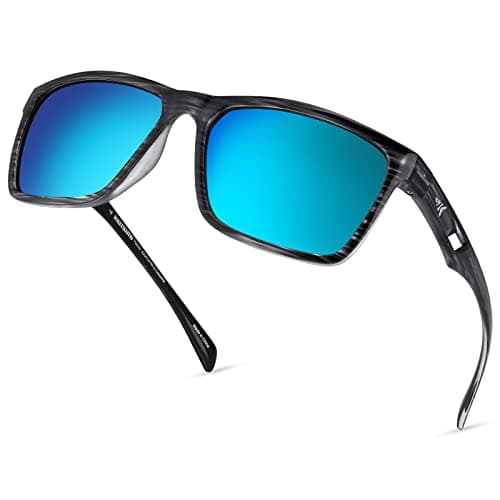
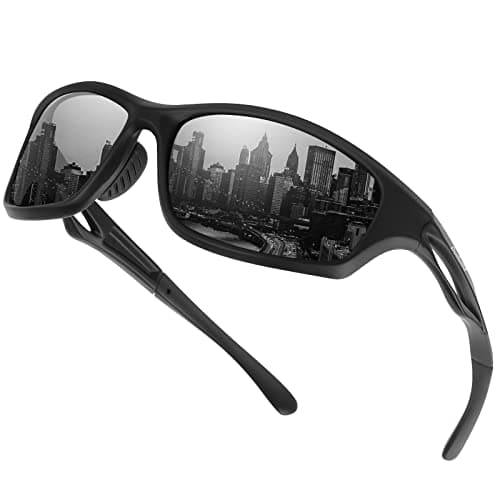
The short answer

Quick picks

#ProductBest forScorePrice
01
Knockaround Polarized (Sport)

The other budget default — polarized, impact-tough, and endlessly restyled.

A do-anything budget pair
7.6
Check price →
02
KastKing KastKing FlatRock Polarized
KastKing FlatRock Polarized

The best-value fishing pick. Polarized, floats the budget, and does the core job.

Best budget fishing pick
7.4
$25.49Amazon
03
Duduma Duduma TR90 Polarized Sport
Duduma TR90 Polarized Sport

The internet's default cheap sport wrap — polarized, unbreakable-ish, everywhere.

The cheapest polarized sport wrap worth owning
7.4
$26.99Amazon

#ad · Live prices from the Amazon Product API, as of Sep 5, 2026. Where we have no verified live price, we show none — we would rather leave a gap than print a number that has rotted.

In detail

The picks, in full

01

A do-anything budget pair

Knockaround Polarized (Sport)

PolarizedUV400Impact-resistantMany colorways
7.6/10

The other budget default — polarized, impact-tough, and endlessly restyled.

Glare control
8
Optics
7
Fit & coverage
7
Durability
7
Value
9

Pros

  • Polarized UV400 for pocket money, from a brand that has sold millions of them
  • Impact-resistant frame and lens shrug off the drops that kill fashion frames
  • Enormous color range if the look matters

Cons

  • Grip isn't as sticky as goodr's coating for high-bounce running
  • Optical clarity is fine, not remarkable

Don't buy this if…

you run hard and hate readjusting — goodr's no-slip coating holds better on a sweaty face than Knockaround's standard arms.

Check price on Amazon →

We don't have a verified live price for this right now, so we aren't showing one.

#ad · we may earn a commission from this link to Knockaround Polarized (Sport)

02
KastKing KastKing FlatRock Polarized

Best budget fishing pick

KastKing FlatRock Polarized

PolarizedUV400Sport wrapLightweight
7.4/10

The best-value fishing pick. Polarized, floats the budget, and does the core job.

Glare control
8
Optics
6
Fit & coverage
7
Durability
6
Value
10

Pros

  • Polarized glare control for the price of a couple of lures — the single cheapest way to actually see into water
  • Light sport-wrap shape controls side light better than a lifestyle frame
  • KastKing is a real tackle brand, so the frame is built for the environment

Cons

  • The lens lifts contrast less than a Costa 580 — you see less structure in tricky light
  • Budget coatings scratch; keep it in the pouch

Don't buy this if…

you're on the water most weekends chasing spooky fish. This gets you 80% of the way; the last 20% is what the premium lenses sell.

$25.49View on Amazon

$29.9915% off

Price as of Sep 5, 2026. Prices change — Amazon's is the one that counts.

#ad · we may earn a commission from this link to KastKing FlatRock Polarized

03
Duduma Duduma TR90 Polarized Sport

The cheapest polarized sport wrap worth owning

Duduma TR90 Polarized Sport

TR90 framePolarizedUV400Sport wrap
7.4/10

The internet's default cheap sport wrap — polarized, unbreakable-ish, everywhere.

Glare control
7
Optics
6
Fit & coverage
8
Durability
6
Value
10

Pros

  • TR90 frame flexes instead of snapping — it survives being sat on
  • Polarized and UV400 at the bottom of the price range
  • The wrap shape controls side glare better than a flat lifestyle lens

Cons

  • Optics and coatings are exactly what the price implies
  • Fit is generic; no fine adjustment

Don't buy this if…

you want optical precision or a coating that lasts years. This is a knock-around-and-replace pick.

$26.99View on Amazon

Price as of Sep 5, 2026. Prices change — Amazon's is the one that counts.

#ad · we may earn a commission from this link to Duduma TR90 Polarized Sport

Reading a budget sunglasses listing

1. Find UV400 or walk away

The only safety-relevant spec, and it is free. A dark lens with no rating is the one genuinely bad buy.

2. Ignore HD, military grade and anti-glare

None of them correspond to a standard. They are adjectives, not specifications.

3. Prefer polycarbonate over AC

Real material difference: tougher and far more impact-resistant than acrylic.

4. Look for TR90 or Grilamid in the frame

Nylon frames flex and return. That is what decides whether the pair survives your bag.

5. Verify polarization when it arrives

Rotate them in front of a phone screen. A real polarized lens goes dark at about 90 degrees.

How we picked

We don't run a testing lab

We compile each pair's published specifications — lens material, polarization, coating, frame material, coverage, UV rating and price — normalize them, and score each against a published rubric. The scores are judgments from documented research; they are notmeasurements we took, because we don't own a lab and we're not going to pretend we do. Pairs we claim to have lab-tested: 0.

Questions

Frequently asked

What does HD polarized mean on sunglasses?
Nothing standardized. There is no HD specification for sunglasses and no test a lens must pass to carry the phrase. In practice it usually indicates a warm brown or copper tint, which subjectively looks crisper than gray — a perceptual effect, not a resolution one. Judge the pair on UV400, polarization and materials instead.
Is a TAC lens good?
TAC (Tri-Acetate Cellulose) is the standard laminated construction for budget polarized lenses, and it works — the polarizing film is genuinely present and genuinely removes glare. It is softer and easier to scratch than polycarbonate, so it belongs at the price it sells at. The advertised layer count is a description, not a quality ranking.
What does UV400 mean?
The lens blocks light at wavelengths up to 400 nanometers, which covers UVA and UVB. It is the protection the American Optometric Association recommends, it is binary rather than a matter of degree, and it costs almost nothing to include — so it is present on cheap lenses as completely as on expensive ones. Full detail in UV protection explained.
Are cheap sunglasses bad for your eyes?
A cheap lens with confirmed UV400 is not. A dark lens with no stated UV protection is, because the dark tint dilates your pupils and lets more UV through than wearing nothing. That is the one genuinely bad purchase in the whole category, and it is avoidable for a few dollars.
What is TR90 in sunglasses?
A thermoplastic nylon used for frames. It flexes and returns to shape rather than snapping, which matters because a broken frame is how cheap sunglasses usually die. It is one of the few frame-side terms on a budget listing that is genuinely worth reading.

Keep reading

Receipts

Sources

We do not run a testing lab, and we do not pretend to. Where a spec or measurement came from a manufacturer or a third party, we name and link it. Where we could not verify something, we say so on the page rather than quietly leaving it out. Read our full method.