Skip to content
PolarizedClub

Brand question · Costa Del Mar

Are All Costa Sunglasses Polarized?

Yes — and the P in 580P does not mean what almost everyone assumes. Here is how to read a Costa lens, and what the range actually offers once you know.

By Stephen V.Updated How we rate
#ad

We earn a commission when you buy through our Amazon links, at no extra cost to you. It never affects our rankings, and we say so when the cheaper pair is the better buy. How this works.

Yes. Costa Del Mar's sunglass range is polarized across the board — there is no non-polarized Costa sunglass lens to accidentally buy. The confusion comes from the lens etching: "580P" means polycarbonate, not polarized, and a lens etched "580" with no P is the glass version. Both are polarized. If you want one pair, buy the Fantail in 580P; choose 580G glass only if scratch resistance and optics matter more to you than weight.

This is one of the most useful things to know about buying at this price, because it removes the single biggest risk. With Ray-Ban and with Oakley, polarization is an option you have to select, and people regularly spend $200 and come home with a plain tint. With Costa that cannot happen. The brand's own lens technology page is the primary source, and SportRx's breakdown of the 580 range states it explicitly: all of Costa's sunglasses are polarized, so the "P" refers to polycarbonate rather than polarization.

How to read a Costa lens in five seconds

Look at the top left of the lens. An etched 580P is the polycarbonate lens: lighter, cheaper, impact-resistant, and the right default for most people and for anything where a hook or a thrown lure could reach your face. An etched 580with no letter is the glass lens, sold as 580G: heavier, the most scratch-resistant option Costa makes, and the most optically true. SportRx notes Costa's claim that its glass is appreciably thinner and lighter than other polarized glass lenses, which narrows the weight penalty without erasing it.

The 580 number itself refers to the light the lens filters rather than the material. Costa describes the lens as cutting a specific band of yellow light to lift the contrast anglers rely on; SportRx quotes a 99.9% polarization efficiency figure for the range and notes that the lenses block UVA, UVB and UVC and filter blue light. Those are the maker's and the retailer's published claims — we have not measured them, and we do not run a lab.

The short answer

Quick picks

#ProductBest forScorePrice
01
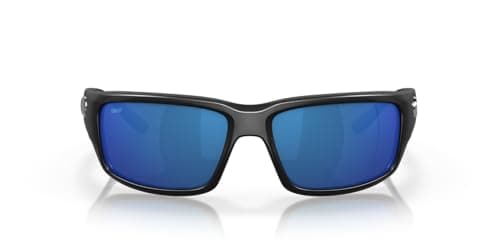
Costa Del Mar Costa Fantail 580P
Costa Fantail 580P

The fishing default. The 580 lens is built to pull fish out of glare, and it does.

Sight-fishing and time on the water
8.4
$233.00Amazon
02
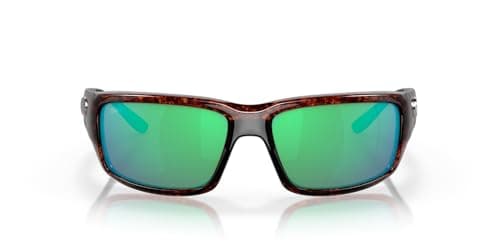
Costa Del Mar Costa Fantail 580G (Glass)
Costa Fantail 580G (Glass)

The same Fantail frame with the glass lens — the clearest, most scratch-resistant thing Costa sells.

Glass optics in a fishing frame
8.2
$296.00Amazon
03
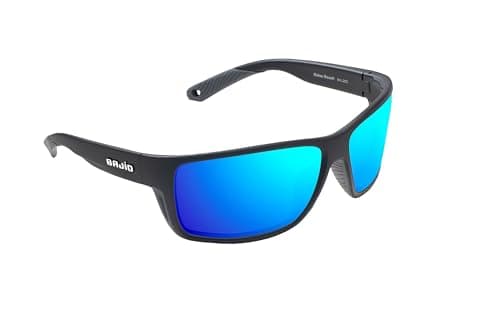
Bajío Bajío Bales Beach (Glass)
Bajío Bales Beach (Glass)

The flats-fishing specialist's pick — glass lenses with a blue-light filter, full coverage.

Flats and bright-water sight-fishing
8.4
$269.00Amazon
04
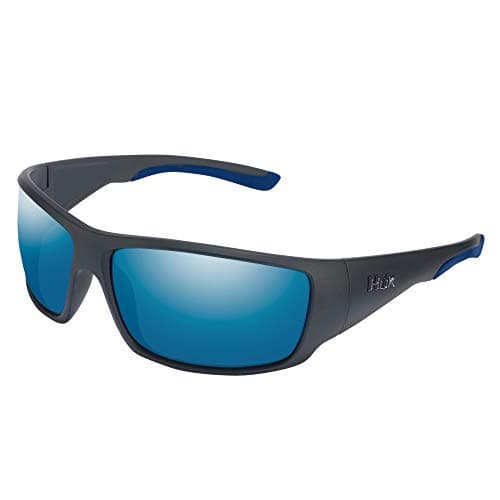
Huk Huk Spearpoint (Polarized)
Huk Spearpoint (Polarized)

A capable polarized fishing wrap from a fishing-apparel brand, at a mid price.

A step up from budget without Costa money
7.6
$54.95Amazon

#ad · Live prices from the Amazon Product API, as of October 19, 2026. Where we have no verified live price, we show none — we would rather leave a gap than print a number that has rotted.

In detail

The picks, in full

01
Costa Del Mar Costa Fantail 580P

Sight-fishing and time on the water

Costa Fantail 580P

580P polarizedPolycarbonateHydrolite gripVented
8.4/10

The fishing default. The 580 lens is built to pull fish out of glare, and it does.

Glare control
10
Optics
9
Fit & coverage
9
Durability
8
Value
6

Pros

  • Costa's 580 lens filters yellow light to lift contrast — copper/green tints make fish and structure pop against surface glare
  • Hydrolite nose and temple pads grip harder the wetter they get, which is the whole game on a boat
  • 580P (polycarbonate) is the lighter, more impact-resistant option versus the pricier 580G glass

Cons

  • Polycarbonate scratches more easily than Costa's 580G glass — the glass is clearer but heavier and dearer
  • A real premium over budget fishing wraps that also filter glare competently

Don't buy this if…

…you fish twice a year off a dock. The 580 lens earns its keep for people who sight-fish; occasional users get most of the benefit from a $30 polarized wrap.

$233.00View on Amazon

Price as of October 19, 2026. Prices change — Amazon's is the one that counts.

#ad · we may earn a commission from this link to Costa Fantail 580P

02
Costa Del Mar Costa Fantail 580G (Glass)

Glass optics in a fishing frame

Costa Fantail 580G (Glass)

580G glass lensPolarizedHydrolite gripVented frame
8.2/10

The same Fantail frame with the glass lens — the clearest, most scratch-resistant thing Costa sells.

Glare control
10
Optics
10
Fit & coverage
9
Durability
7
Value
5

Pros

  • Glass resolves detail more cleanly than polycarbonate and is far harder to scratch — the two reasons anyone pays for glass
  • Costa's 580 filter cuts yellow light to lift contrast, which is what separates a fish from surface glare
  • Identical frame to the 580P Fantail, so the fit and the Hydrolite grip are known quantities

Cons

  • Noticeably heavier on the nose than the 580P version over a full day
  • Glass shatters where polycarbonate flexes — the wrong lens for anywhere a hook or a fall is likely

Don't buy this if…

…you fish from a moving boat in chop or keep your sunglasses loose in a bag. Glass buys you clarity and scratch resistance, and it charges you weight and fragility for both.

$296.00View on Amazon

Price as of October 19, 2026. Prices change — Amazon's is the one that counts.

#ad · we may earn a commission from this link to Costa Fantail 580G (Glass)

03
Bajío Bajío Bales Beach (Glass)

Flats and bright-water sight-fishing

Bajío Bales Beach (Glass)

LAPIS glass lensPolarizedBlue-light filterFull wrap + vents
8.4/10

The flats-fishing specialist's pick — glass lenses with a blue-light filter, full coverage.

Glare control
10
Optics
10
Fit & coverage
9
Durability
8
Value
5

Pros

  • Bajío's LAPIS coating targets blue light specifically, which is the wavelength that washes out a fish on a bright flat
  • Glass lenses give the truest optics here and resist scratches better than any polycarbonate
  • Vented full wrap kills side glare and fogs less than a sealed frame

Cons

  • Glass is heavier on the nose over a long day than Costa's 580P
  • Premium price, and the brand is less of a household name than Costa (which is the point, to some buyers)

Don't buy this if…

…you need impact resistance above all — a stray hook or a dropped pair fares better with polycarbonate than glass.

$269.00View on Amazon

Price as of October 19, 2026. Prices change — Amazon's is the one that counts.

#ad · we may earn a commission from this link to Bajío Bales Beach (Glass)

04
Huk Huk Spearpoint (Polarized)

A step up from budget without Costa money

Huk Spearpoint (Polarized)

PolarizedMirror coatingPerformance frameUV400
7.6/10

A capable polarized fishing wrap from a fishing-apparel brand, at a mid price.

Glare control
8
Optics
7
Fit & coverage
8
Durability
7
Value
8

Pros

  • Sits in the gap between $25 budget wraps and $200 Costas — polarized, mirrored, and built for water
  • Lighter and more wrap-shaped than a lifestyle frame, so side glare is controlled
  • Huk knows the fishing customer; the fit and grip are tuned for it

Cons

  • Lens contrast doesn't match Costa's 580 or Bajío's LAPIS glass for pulling fish out of surface glare
  • Coatings are the first thing to wear at this price point

Don't buy this if…

…you sight-fish seriously and can stretch the budget — the premium fishing lenses genuinely see more, and that's the whole reason to spend up.

$54.95View on Amazon

$59.998% off

Price as of October 19, 2026. Prices change — Amazon's is the one that counts.

#ad · we may earn a commission from this link to Huk Spearpoint (Polarized)

What "all polarized" actually costs you

It is worth being even-handed: an always-polarized range is a constraint as well as a feature. A polarized lens dims LCD screens, so a chartplotter, a fish finder, a phone at a gas pump and a car dashboard will all look darker through any Costa, and there is no Costa SKU that avoids it. For an angler reading a sonar screen in bright sun this is a real nuisance, and the usual workaround is tilting your head to rotate the filter rather than removing the glasses.

If being able to choosenon-polarized matters to you — because you ride with a bike computer, read a rangefinder on a tee, or want surface reflections for reading wet ground — then Costa is the wrong brand and Oakley is the obvious alternative, since much of its Prizm sport range is deliberately unpolarized. We set the two against each other in Costa vs Oakley.

580P or 580G: how to actually choose

Buy 580P polycarbonate if you want the lighter pair, if you are around fast-moving hooks, lures or balls, if the pair will be worn for whole days, or if you would rather spend less. It is the default for a reason.

Buy 580G glass if you are hard on lenses and keep pairs for years, if you spend long sessions sight-fishing and want the most optically honest view available, and if you can live with the extra weight on your nose. Glass will chip or break under a hard impact rather than flex, which is the real argument against it in sport. Our glass lens sunglasses guide makes that case in both directions, and best lens color for fishing matters more than the material for whether you see fish.

Is Costa the right brand at all?

If you fish, it is one of two or three right answers — and it is not the only one. Bajío, founded by former Costa people, builds its LAPIS lens around blocking blue light as well as polarizing, and its glass option is directly comparable; we compare them in Costa vs Bajío. Maui Jim is the other premium alternative and the comparison turns on lens material — see Costa vs Maui Jim.

And if the price is the problem, say so plainly: the Huk Spearpoint in the picks above is polarized, mirrored and performance-framed at roughly a quarter of a Costa, and a KastKing at a tenth still removes the same reflected glare. What you lose is tint engineering, coating life and frame refinement, not the fundamental filter. The whole ladder is in the fishing sunglasses roundup and are Costa sunglasses worth it.

The short version

Every Costa sunglass is polarized. 580P is polycarbonate, 580 is glass, and the number refers to the light the lens filters. You cannot buy an unpolarized Costa by mistake, which is worth real money at this price point; the flip side is that you cannot buy a non-polarized one on purpose either.
How we picked

We don't run a testing lab

We compile each pair's published specifications — lens material, polarization, coating, frame material, coverage, UV rating and price — normalize them, and score each against a published rubric. The scores are judgments from documented research; they are notmeasurements we took, because we don't own a lab and we're not going to pretend we do. Pairs we claim to have lab-tested: 0.

Questions

Frequently asked

Does the P in 580P mean polarized?
No — it means polycarbonate. This is the most common misreading of a Costa lens. Because the entire range is polarized, Costa uses the etching to tell you the material instead: "580P" is the polycarbonate lens and "580" without a letter is the glass lens, sold as 580G.
Are Costa 580G glass lenses polarized too?
Yes. Both 580P and 580G are polarized; the difference between them is lens material, not polarization. Glass is more scratch-resistant and optically truer, polycarbonate is lighter and more impact-resistant.
Do Costa sunglasses block UV?
Yes. Costa and SportRx both describe the 580 lens as blocking UVA, UVB and UVC light as well as filtering blue light. UV protection is the health function of any sunglass and is unrelated to price or polarization — see UV protection explained.
Will my Costas make my fish finder hard to read?
Probably, in bright sun. Any polarized lens dims an LCD screen, and because every Costa is polarized there is no version that avoids it. Tilting your head rotates the filter relative to the screen and usually recovers enough of the image to read it; the alternative is lifting the glasses, or choosing a brand that offers a non-polarized lens.
Which Costa should I buy first?
The Fantail in 580P for most people — a vented, grippy, fishing-shaped frame with the lighter lens. Step up to the 580G glass version only if you keep pairs for years and want maximum scratch resistance and optics. If you want the whole field including the cheaper alternatives, start at the fishing sunglasses roundup.

Keep reading

Receipts

Sources

We do not run a testing lab, and we do not pretend to. Where a spec or measurement came from a manufacturer or a third party, we name and link it. Where we could not verify something, we say so on the page rather than quietly leaving it out. Read our full method.