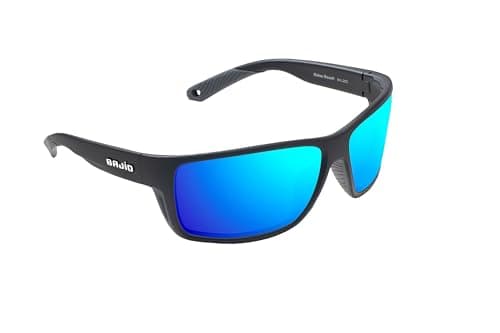
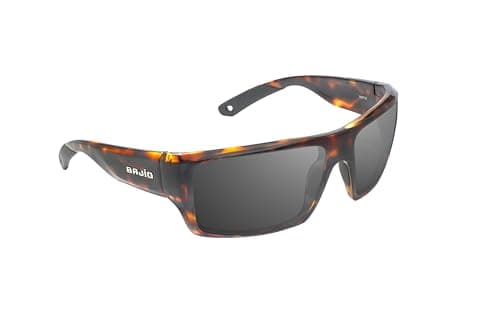
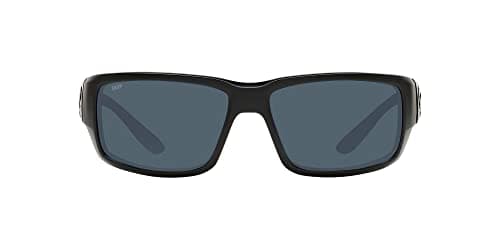
Buy Costa if you want the broadest, most proven fishing lens and the biggest range of frames and service behind it. Buy Bajío if you fish bright, shallow, blue-dominated water and want glass optics as the default rather than the expensive upgrade. Both are genuinely excellent and the gap between them is far smaller than the gap between either and a budget wrap.
This is the comparison serious anglers actually agonize over, because at this price you buy one pair and fish it for years. Both brands clear the same bar by a wide margin: real polarization, full UV protection, contrast engineering aimed specifically at seeing into water, and frames built for a boat deck. The difference is in which part of the spectrum each one attacks, and in what material they default to.
| Factor | Costa Del Mar (580) | Bajío (LAPIS) |
|---|
| Lens mechanism | Filters a band of yellow light to separate the colors either side of it | Targets blue light, which scatters most and creates haze on bright flats |
| Default material | 580P polycarbonate, with 580G glass as the step up | Glass is the headline option; the brand leans on it |
| Best water | Broad — inshore, offshore, freshwater, variable light | Bright shallow flats and blue-dominated water |
| Frame range | Very wide, many fits and sizes | Narrower, with both fishing wraps and lifestyle shapes |
| Weight | 580P is the lighter option for long days | Glass is heavier on the nose bridge |
| Recognition and service | The established name, with a large service network | Smaller brand, smaller network |
Two different attacks on the same problem
Costa's 580 lens cuts a band of yellow light at around 580 nanometers, which sits between the green and red parts of the spectrum. Removing that band increases the perceived separation between the colors on either side of it, so blues and greens read as more distinct and a fish stops blending into the bottom.
Bajío's published approach goes after blue light instead. The reasoning is that short-wavelength blue scatters heavily in the water column and the atmosphere, and that scatter is a large part of the haze that hides a fish on a bright flat. Take out more of the blue and the contrast between fish and substrate rises.
Both sit on top of polarization, which removes the surface mirror. Neither replaces it. And we should be plain about our standard here: we can tell you the mechanisms are coherent and published, and that the effects anglers describe are consistent with them. We did not measure a transmission curve, because we do not run a lab — the rule is on how we rate.
Glass or polycarbonate matters more than the brand
For most buyers this is the more consequential decision, and it cuts across both brands. Glass is optically the clearest material available and by a wide margin the most scratch-resistant — which is exactly what a person straining to resolve a shape at forty feet wants. It is also heavier on the bridge of your nose over a ten-hour day, and less impact-resistant, which matters when a hook, a fly line or a gunwale enters the picture.
Costa gives you a genuine choice with 580P polycarbonate and 580G glass. Bajío leans into glass as its headline. So if you know you want the lighter, tougher option, Costa makes that easy; if you know you want maximum clarity and accept the weight, Bajío is built around that answer. Choose material first, then brand — not the reverse.
Which water suits which
Bright shallow flats.This is Bajío's home ground and where the blue-light argument is strongest. If your fishing is sight-casting on bright, shallow, blue-green water, that is the specialization you are paying for.
Variable inshore and freshwater.Costa's broader range of tints and its deeper frame catalog make it the easier brand to match to changeable conditions, and the copper and amber options are excellent in the flat, gray light that ruins a bright-water lens. Our lens color for fishing guide is the useful companion here, because tint choice matters more than the logo.
Offshore and open blue water.Both work; green and blue mirror finishes suit the brightness, and this is where a mirror coating genuinely earns its place — explained in best mirrored sunglasses.
The practical differences nobody markets
Availability and service. Costa is the larger, longer-established brand with a correspondingly larger service and replacement-lens network. Bajío is smaller. If having a lens replaced rather than replacing the pair matters to you, that is a genuine point of difference.
Frame styling off the water.Costa's catalog leans heavily fishing-first — wraps, vents, rubber. Bajío makes lifestyle-leaning shapes carrying the same lens tech, which is the more sensible buy if the pair also has to work away from the boat. The Los Natos above is that pitch.
Screens. Both are polarized, so both will dim a chartplotter or a phone at some head angles. That is physics rather than a brand flaw, and it is covered in polarized vs non-polarized.
The verdict
For most anglers, Costa — not because the lens is better in the abstract, but because the range, the material choice, the tint options and the service network make it easier to end up with the right pair for your water. For the bright-flats specialist who wants glass and a lens engineered for exactly that condition, Bajío makes a genuinely strong case and is the more interesting buy.
And the answer that applies to more readers than either: if you fish a handful of times a year, neither premium lens will earn its money. A $30 polarized wrap removes the same surface mirror; what it does not do is add the contrast a serious sight-fisher exploits. We rank both ends on the same page in the fishing sunglasses roundup for exactly that reason.
Choosing between them
1. Pick the material first
Glass for maximum clarity and scratch resistance, at a weight and impact penalty. Polycarbonate for lightness and toughness, at a small clarity cost.
2. Then match the lens to your water
Bright shallow flats favor the blue-light approach. Variable inshore and freshwater favor Costa's wider tint range.
3. Consider the frame off the water
If the pair has to work away from the boat, a lifestyle-shaped frame with the same lens is the smarter purchase than a full vented wrap.
4. Count the days before you spend
Both premiums pay back for people who actively hunt fish. Occasional anglers get most of the benefit from a budget polarized wrap.