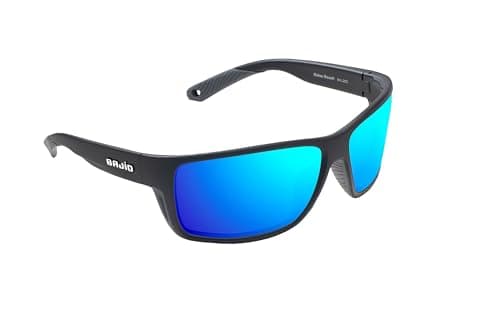
Buy Bajío if your fishing is bright, shallow and stared-into — flats, shorelines, clear lakes — and you want the most aggressive blue-light filter on the market; the glass Bales Beach is the pick of this page. Buy Smith if you want the better frame: the Guide's Choice is a true 8-base wrap with megol grip, and it stays on a sweating face in a way lifestyle-shaped fishing frames do not. If you only fish a handful of times a year, buy neither — the Huk at the bottom of this page is a fifth of the money and the polarizing filter is identical.
These two brands get compared because they are chasing the same buyer and almost nobody explains the actual difference. Both sell premium polarized fishing lenses in glass and polycarbonate, both price at the top of the market, and both market a proprietary tint. The engineering split is real though, and it is specific: Bajío works on what to remove, and Smith works on what to do with what is left.
What you are actually choosing between
Bajío: subtract the blue.Bajío's LAPIS treatment is built into the lens rather than applied as a coating, and per the lens guide it blocks 95% of blue light up to 445nm while letting "good" blue light through. Blue is the wavelength that scatters most in water and air, which is why removing it reads as the haze lifting off the surface. The brand maps tints to water type explicitly: Blue Mirror at 12% VLT for offshore, Green Mirror at 14% for flats and shorelines, Silver Mirror at 16% and Rose Mirror at 18% for treelined rivers and lake fishing, Violet Mirror at 18% for shallow sight-fishing, and Copper at 16% as the do-everything lens.
Smith: re-tune the rest.Smith's ChromaPop is a contrast-and-color lens — the published description on the Guide's Choice listing is that it "cuts glare and enhances color and contrast", with the blue-mirror version rated at 12% VLT. Smith also offers the same frame in Techlite polarized glass, which the same listing describes as cutting glare with enhanced scratch resistance over a polymer lens. Where Bajío's story is about one band of the spectrum, Smith's is about separating colors that sit close together — the difference between a fish and the weed it is sitting in.
Both are real engineering, and both are secondary to the thing that does the heavy lifting: the polarizing filter, which is binary and identical in a $30 lens. Polarized vs non-polarized explains why.
| Factor | Bajío | Smith |
|---|
| Signature lens | LAPIS — blue-light blocking built into the lens | ChromaPop — contrast and color separation |
| Published blue-light claim | 95% of blue light up to 445nm | No equivalent published figure |
| Materials | Glass and polycarbonate, by tint | ChromaPop polycarbonate and Techlite glass |
| Tint-to-water mapping | Explicit, per tint, with VLT published | Looser — tint families rather than a water chart |
| Frame character | Fishing-flavored lifestyle shapes, modest wrap | Purpose-built wraps; 8-base on the Guide's Choice |
| Grip and retention | Standard pads | Megol nose and temple pads that tack up when wet |
| Range beyond fishing | Fishing-first brand | Full sport range — MTB, snow, road |
| Street price | Top of the market | Top of the market — see the live prices above |
Who each pick is for
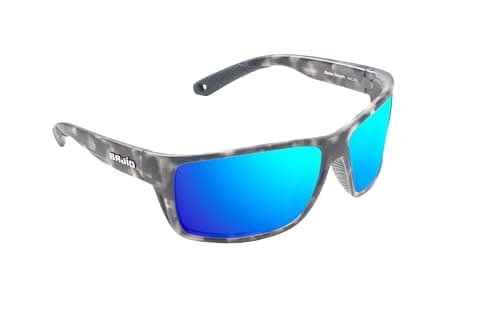
- Bajío Bales Beach (Glass)— the sight-fishing specialist. Glass, the hardest LAPIS lens Bajío builds, for the angler whose whole day is spent looking into shallow water.
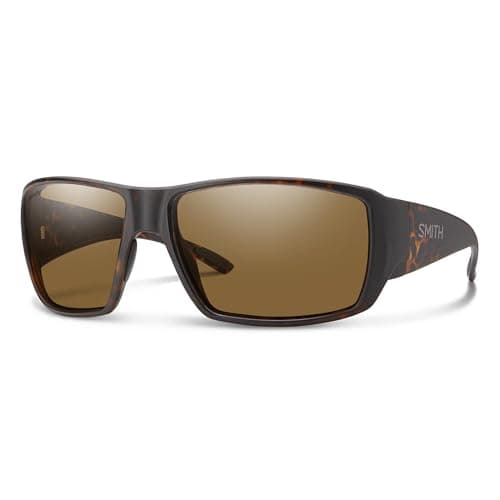
- Smith Guide's Choice— the better frame of the two, full stop. An 8-base wrap, wide temples, megol nose and temple pads and Italian spring hinges. If you have ever lost a pair off a sweating face, this is the answer on the page.
- Bajío Bales Beach (Poly)— the same lens treatment, lighter and impact-resistant. The right choice for a boat deck and the one we would buy of the two Bajíos.
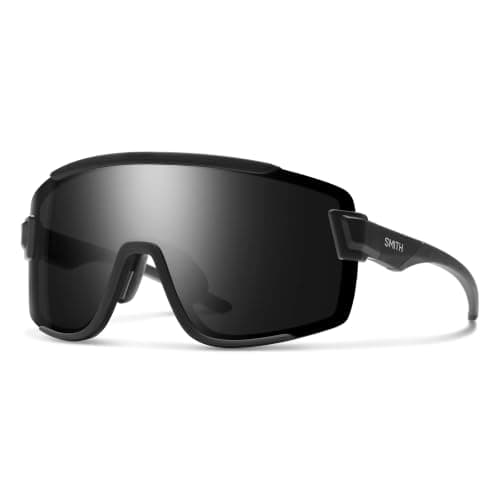
- Smith Wildcat— not a fishing frame, included because it is the honest answer to "what else does Smith do". Goggle-scale coverage for trail riding; see best mountain bike sunglasses.
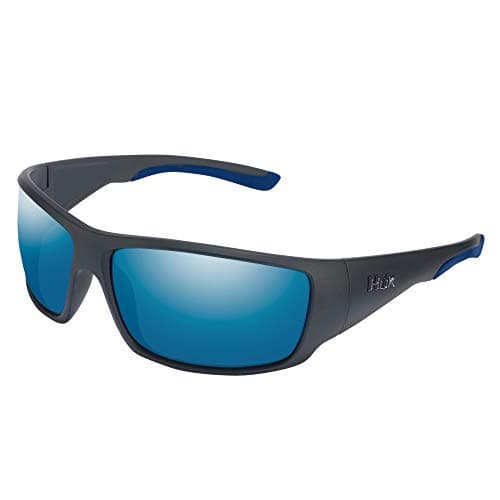
- Huk Spearpoint— the reality check. A fishing-brand wrap at a fraction of either premium pair, with the same polarizing filter doing the same job.
Which lens technology actually matters more?
It depends on what is defeating you. If your problem is haze— a bright, shallow, washed-out view where the surface seems to glow even through a polarized lens — Bajío's blue-light approach is aimed directly at it, and it is the brand we would buy. Blue light scatters hardest, and taking 95% of it out below 445nm is a bigger change to the image than a tint adjustment is.
If your problem is separation— you can see into the water fine but cannot tell a bass from the grass, or a trout from the gravel — the contrast-tuning argument is the more useful one, and Smith is the brand built around it. The same logic drives our lens color guide: contrast beats darkness for finding fish.
One caveat worth stating plainly, because neither brand will: these differences are real but modest next to the step from no polarization to polarization. A reader choosing between a premium pair and their first polarized pair should spend the money. A reader choosing between these two is optimizing at the margin.
Frames: this is where Smith wins
Lens marketing dominates these comparisons and it should not. On the water, the pair that performs is the pair that stays in front of your eyes and blocks light from getting in behind the lens. Bajío builds handsome fishing-flavored shapes with modest wrap; Smith builds the Guide's Choice as an 8-base wraparound with wide temples and megol pads that get grippier as they get wet. For a boat run, a hot deck or a long wade, that is not a small difference.
If coverage is your priority, size the frame properly before you pick a brand — how to choose sunglasses size walks through the measurements, and how to stop sunglasses slipping covers the retention fixes that cost almost nothing.
Glass or polycarbonate, in each range
Both brands sell both. Bajío's glass lenses carry mirrors inside the lens, so the mirror cannot be scratched off, at the cost of weight; the polycarbonate versions are lighter and impact-resistant. Smith's split is ChromaPop polycarbonate against Techlite glass, with the glass described as the more scratch-resistant platform.
Our standing advice does not change by brand: polycarbonate for most anglers, glass if your pair lives on your face and never gets thrown in a bag. A freshwater bass boat is a polycarbonate environment; a flats skiff where you are staring for eight hours is where glass earns it. Both arguments in full in best glass lens sunglasses.
What neither brand is selling you
UV protection. The American Academy of Ophthalmology is explicit that polarization reduces glare from reflective surfaces but does not add UV protection, and both of these brands' lenses are rated 100% UV the same way a $20 UV400 pair is. What the money buys here is optical quality, tint engineering, coverage and build. Real things; not health features.
Where this comparison usually lands
For saltwater flats and clear shallow water, Bajío — the blue-light argument is strongest exactly where the water is brightest. For freshwater, long days and anything where the frame is going to be abused, Smith — better wrap, better grip, and a contrast lens that suits stained water. For a reader who fishes occasionally, neither: buy the Huk, or read best bass fishing sunglasses for the full freshwater field and best budget fishing sunglasses if price is the constraint.
If the real question behind this one is "which premium fishing brand should I buy", the wider set is on the fishing sunglasses hub, and we have Bajío's other head-to-heads in Costa vs Bajío and Bajío vs Maui Jim. Smith's other matchup — against the brand most tournament anglers actually own — is Smith vs Costa, and for moving water rather than flats or reservoirs, see best fly fishing sunglasses.
How to decide in 30 seconds
Is your water bright and clear, or stained?
Bright, clear and shallow → Bajío. Stained, variable, freshwater → Smith.
Does the frame get abused?
Then Smith, in polycarbonate. The 8-base wrap and the megol pads are the most practical feature on this page.
Do you want a published tint chart?
Bajío publishes VLT per tint and maps each to a water type. If you like buying on numbers, that is the more transparent range.
Do you need one pair for fishing and one sport?
Smith has the wider range — the same brand covers trail, snow and road. Bajío is a fishing-first brand and reads like one.
Is this your first polarized pair?
Then buy neither yet. Spend under $60, confirm that polarization changes your day on the water, and upgrade with your own evidence.