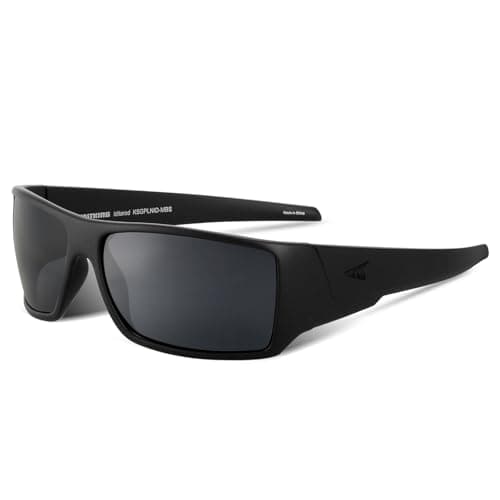
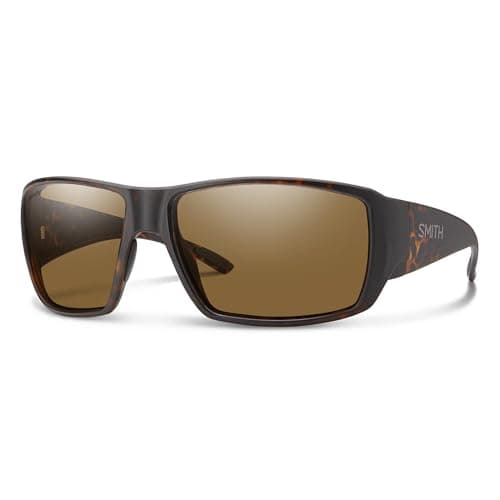
If you fish moving water often and want one pair to do it in, buy the Smith Guide's Choice: its published 8-base wrap and megol pads keep stray light out from the sides, which is the specific thing that ruins reading a seam or spotting a fish from the bank. If you would rather choose the tint than the frame, the Costa Fantail 580P is the better buy, because copper and amber are available across the range and those are the two tints a fly shop will actually hand you. If this is your first pair and the budget is tight, the KastKing Iditarod is a real recommendation rather than a consolation — and the amber Flying Fisherman is the pair you want in the vest for the last hour of light.
Most "best fishing sunglasses" lists are written for a bright saltwater flat. Fly fishing on a river is almost the opposite problem. You are often under trees or a canyon wall, the water is moving so the glare pattern changes with every step, the fish you are looking for is a shadow with a white mouth rather than a silhouette on sand, and the best hour of the day is frequently the one with the least light in it. A very dark blue mirror is a superb flats lens and a poor evening-rise lens.
What fly fishing asks of a lens
We ranked against five requirements, in this order. These are the criteria, not a summary of the picks — a frame that fails the first three has no business on this page at any price.
- A real polarizing filter. Non-negotiable and effectively binary: a budget polarized lens and a premium one both remove the surface reflection. The Fly Shop puts it plainly — polarized lenses "block all the horizontal light waves bouncing off the surface of the water", and they also let you see underwater hazards like a ledge, stump or hole, which matters when you are the one standing in it. Mechanism in polarized vs non-polarized.
- A tint that still works when the light drops.This is the fly-specific requirement and the one most buyers get wrong. Brown, amber and copper "cover the broadest range of light situations" per the same source, and that is why they are the standard single-pair answer on a river.
- Coverage from above and the sides, with airflow.A frame that wraps keeps out stray light; one that seals too tightly fogs the moment you stop moving. The Fly Shop asks for both: "get a pair that wraps a little better and keeps out stray light", and "you definitely need some air flow".
- Impact protection you will probably need.A size 4 streamer in a gust is a projectile. The same guidance is blunt about it: wearing sunglasses whenever fishing, "or even casting on the lawn, will help mitigate a serious eye injury". This is the one place where sunglasses are safety equipment first.
- Honest value. We rank what we would tell a friend to buy, including when that is the cheap one.
| Condition | Tint to buy | What to avoid |
|---|
| One pair for everything on a river | Brown, amber or copper | A very dark blue mirror |
| Dawn, dusk, heavy cover, overcast | Amber, rose or yellow | Anything marketed for bright flats |
| Bright open water, lakes, salt | Blue or green mirror (published at about 10% transmission) | A light low-light tint — you will squint all day |
| Seeing true colors | Gray | Using gray as a sight-fishing tint |
| Wading all day, gentle on gear | Glass, if you accept the weight | Glass if you drop things from a boat deck |
The short answer
Quick picks
#ad · Live prices from the Amazon Product API, as of October 19, 2026. Where we have no verified live price, we show none — we would rather leave a gap than print a number that has rotted.
In detail
The picks, in full
Sight-fishing and all-day water glare
Smith Guide's Choice (ChromaPop Polarized)
ChromaPop polarized8-base wrapMegol nose/temple pads100% UV protection
The purpose-built angling frame in Smith's range — 8-base wrap, megol grip and a contrast-tuned polarized lens.
- Glare control
- 9
- Optics
- 9
- Fit & coverage
- 9
- Durability
- 8
- Value
- 6
Pros
- +Built as a fishing frame rather than a lifestyle shape with a polarized lens dropped in — wide temples and an 8-base wrap cut the side light that gets past a flat lens
- +Megol nose and temple pads tack up as they get wet, which is the difference between a frame that stays put over a hot deck and one that walks down your nose
- +ChromaPop's contrast tuning is aimed squarely at separating a fish from the bottom, and the anti-reflective coating kills the ghost image that bounces off the back of a dark lens
Cons
- −Priced with Costa and Maui Jim, so you are paying premium-brand money for a frame most anglers will treat roughly
- −Medium-large coverage on a wrap this aggressive is a lot of frame on a small face, and the fit has no adjustment beyond the pads
- −The Amazon listing is the ChromaPop polarized lens, not the glass version — if you specifically want Smith's Techlite glass you have to buy it elsewhere and pay more
Don't buy this if…
…you fish a dozen times a year. A $50 polarized fishing wrap finds fish in the same water; this frame earns its price on days 100 through 300, not on day one.
Sight-fishing and time on the water
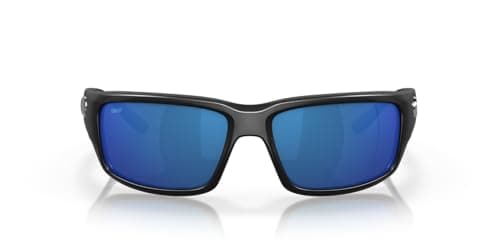
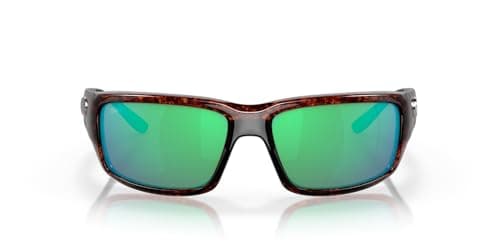
Costa Fantail 580P
580P polarizedPolycarbonateHydrolite gripVented
The fishing default. The 580 lens is built to pull fish out of glare, and it does.
- Glare control
- 10
- Optics
- 9
- Fit & coverage
- 9
- Durability
- 8
- Value
- 6
Pros
- +Costa's 580 lens filters yellow light to lift contrast — copper/green tints make fish and structure pop against surface glare
- +Hydrolite nose and temple pads grip harder the wetter they get, which is the whole game on a boat
- +580P (polycarbonate) is the lighter, more impact-resistant option versus the pricier 580G glass
Cons
- −Polycarbonate scratches more easily than Costa's 580G glass — the glass is clearer but heavier and dearer
- −A real premium over budget fishing wraps that also filter glare competently
Don't buy this if…
…you fish twice a year off a dock. The 580 lens earns its keep for people who sight-fish; occasional users get most of the benefit from a $30 polarized wrap.
Glass optics in a fishing frame
Costa Fantail 580G (Glass)
580G glass lensPolarizedHydrolite gripVented frame
The same Fantail frame with the glass lens — the clearest, most scratch-resistant thing Costa sells.
- Glare control
- 10
- Optics
- 10
- Fit & coverage
- 9
- Durability
- 7
- Value
- 5
Pros
- +Glass resolves detail more cleanly than polycarbonate and is far harder to scratch — the two reasons anyone pays for glass
- +Costa's 580 filter cuts yellow light to lift contrast, which is what separates a fish from surface glare
- +Identical frame to the 580P Fantail, so the fit and the Hydrolite grip are known quantities
Cons
- −Noticeably heavier on the nose than the 580P version over a full day
- −Glass shatters where polycarbonate flexes — the wrong lens for anywhere a hook or a fall is likely
Don't buy this if…
…you fish from a moving boat in chop or keep your sunglasses loose in a bag. Glass buys you clarity and scratch resistance, and it charges you weight and fragility for both.
A cheap second pair for the tackle bag
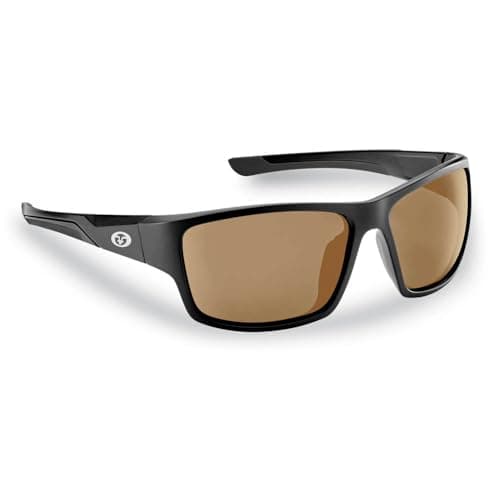
Flying Fisherman Sand Bank
PolarizedAmber tint100% UVLightweight
A long-time budget-fishing staple with AcuTint-style contrast tinting.
- Glare control
- 8
- Optics
- 6
- Fit & coverage
- 7
- Durability
- 5
- Value
- 9
Pros
- +Amber-tinted polarized lens lifts contrast in low and flat light — good for overcast days on the water
- +Cheap enough to own two and not mourn a pair lost overboard
- +A fishing-focused brand that has made these for years
Cons
- −Optical clarity and coating life are budget-grade
- −Frame feels light-duty next to a Huk or Costa
Don't buy this if…
…you want one nice pair to keep. This is a buy-two-and-abuse-them pick, not a keeper.
A step up from budget without Costa money
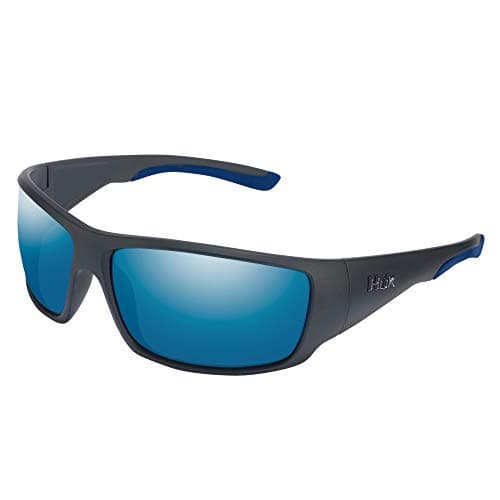
Huk Spearpoint (Polarized)
PolarizedMirror coatingPerformance frameUV400
A capable polarized fishing wrap from a fishing-apparel brand, at a mid price.
- Glare control
- 8
- Optics
- 7
- Fit & coverage
- 8
- Durability
- 7
- Value
- 8
Pros
- +Sits in the gap between $25 budget wraps and $200 Costas — polarized, mirrored, and built for water
- +Lighter and more wrap-shaped than a lifestyle frame, so side glare is controlled
- +Huk knows the fishing customer; the fit and grip are tuned for it
Cons
- −Lens contrast doesn't match Costa's 580 or Bajío's LAPIS glass for pulling fish out of surface glare
- −Coatings are the first thing to wear at this price point
Don't buy this if…
…you sight-fish seriously and can stretch the budget — the premium fishing lenses genuinely see more, and that's the whole reason to spend up.
Frame quality on a budget-fishing spend
KastKing Iditarod Polarized
Grilamid framePolarized TAC lensUV400Sport wrap
A Grilamid-framed polarized wrap at a price that belongs two tiers higher.
- Glare control
- 8
- Optics
- 6
- Fit & coverage
- 8
- Durability
- 7
- Value
- 10
Pros
- +Grilamid is the frame material premium sport brands use, and finding it at this price is genuinely unusual
- +Polarized wrap coverage that seals out the side light a flat frame lets straight in
- +From a tackle brand, so the design assumptions are a boat deck rather than a sidewalk
Cons
- −A TAC film-laminate lens is optically a step below the molded polycarbonate in premium fishing glasses
- −No contrast tuning — it removes glare but does not lift fish out of the water the way a 580-class lens does
Don't buy this if…
…you sight-fish seriously. The frame punches above its price; the lens is honest budget, and the lens is what a sight-fisher is buying.
Who each pick is for
- Smith Guide's Choice— the angler on the water constantly who wants the most complete seal against stray light in one frame. Its published specs are an 8-base wraparound curvature, megol nose and temple pads, Italian spring hinges, 100% UV, anti-reflective and moisture-resistant coatings, and ChromaPop polarized at 12% visible light transmission in the blue mirror. The honest costs are the price and the bulk, and the blue mirror is the wrong tint for an evening rise — buy a warmer one if the shop has it.
- Costa Fantail 580P— the pick if you want to choose the tint rather than inherit it. Costa's 580 line is published at 99.9% polarization efficiency with a 580nm filter, and the copper and green-mirror tints are the ones river anglers keep coming back to. 580P is polycarbonate, which is the right material for a day that involves rocks.
- Costa Fantail 580G (Glass)— for the wading angler who keeps gear for years. Glass is the sharper, far more scratch-resistant optic; 580G is published as around 20% thinner and 22% lighter than other polarized glass. Not the pick if your sunglasses spend half their life loose in a boat.
- Flying Fisherman Sand Bank— the amber pair for the last hour. Cheap enough to own as a second tint, which is how experienced anglers actually solve changing light, and amber is the tint the guides reach for when the sun goes behind the ridge.
- Huk Spearpoint— the mid-budget fishing wrap. Polarized with a mirror coating and a fishing shape, at a price that does not hurt if a pair goes into the current. More on the brand in our Huk sunglasses review.
- KastKing Iditarod— the best frame quality at the bottom of this page: a Grilamid frame with a polarized TAC lens and UV400. The honest first pair, and the one to buy if the whole budget is small — the range is covered in our KastKing sunglasses review. If the budget is smaller still, read best budget fishing sunglasses.
Tint, in the language a fly shop uses
The published guidance from The Fly Shop is the clearest we have found, and it is worth taking literally rather than paraphrasing:
- Brown, amber, copper— "will cover the broadest range of light situations". The single-pair answer.
- Yellow— "best for low-light situations". A specialist lens, not a first pair, but the right call for a dusk hatch under trees.
- Gray— "the best for seeing true colors". Note what that is for: comfort and color fidelity rather than picking a fish out of a riffle.
- Blue and green mirrors— "will block the most light with only 10% light transmission", blue "best used for bright days on open water" and green "better utilized for sight fishing in the flats".
That maps closely onto what tournament bass anglers report from stained freshwater, which we covered using Bassmaster's lens-color roundup in best bass fishing sunglasses— copper around 12% transmission for general use, amber when the light drops, and a lighter mirror when the water itself is eating the light. Two cheap pairs in two tints beat one expensive pair for sight fishing, and that is as true on a trout stream as it is on a reservoir.
Why the evening is the whole argument
A lens is a fixed filter and the light is not. On a river the best fishing frequently happens in the worst light: the hour after the sun leaves the water, under a canopy, in a canyon, on an overcast afternoon when the hatch finally comes off. A lens bought for a Bahamas flat will be too dark to read a seam in those conditions, and you will push it onto your forehead — which is the moment it stops protecting your eyes from a hook and starts waiting to fall in the water.
So the practical hierarchy for a fly angler is: polarized first, a warm mid-transmission tint second, and darkness last. That is the reverse of the saltwater priority, and it is why this page exists separately from the fishing hub.
Glass or polycarbonate for wading?
This is the one fishing context where glass genuinely makes sense for a normal person. A wading angler is gentle on gear: the pair stays on your face, there is no deck to drop it on and no 70mph run across a lake. Glass gives you the sharper image and, as The Fly Shop notes, polycarbonate is the material you "have to be extremely careful not to scratch", while glass "is more durable in the long run".
Against that: glass is heavier over a ten-hour day, and it breaks where polycarbonate deforms. If you fall in rivers, fish from a raft, or own one pair for both the river and the boat, buy polycarbonate. The full argument is in best glass lens sunglasses.
The two things that cost people pairs
No retainer. Wading means bending over moving water with your glasses on your face and a net in your hand. A retainer is the cheapest insurance in fly fishing, and a floating one is the version that matters on a river.
Assuming dark means protected. Polarization and UV are separate features. The American Optometric Association recommends 99–100% UVA and UVB blocking regardless of tint or price, and water reflects UV back up at you all day. Check for UV400 or "100% UV" on every listing, at every price — see UV protection explained.
If you want a brand-level answer instead
The two premium names here are the ones fly anglers argue about, and we put them head to head in Smith vs Costa— tint range and a published repair path against coverage and contrast in one frame. For the wider category the fishing hub ranks everything, and do polarized sunglasses help you see fish is the honest answer to what any of this actually buys you in the water column.
How to choose in 60 seconds
When do you fish?
Mostly bright middays → a darker mirror. Mornings, evenings and under cover → copper or amber, and buy the warmer tint even if the shop pushes the mirror.
Do you wade or float?
Wading, gentle on gear → glass is on the table. Rafts, drift boats, rocks and bags → polycarbonate.
One pair or two?
Two inexpensive pairs in two tints beat one expensive pair for sight fishing, because the light changes and a lens cannot. The cheapest useful upgrade on this page is a second, warmer lens.
Is light getting in at the edges?
If you find yourself cupping a hand at your temple, that is a coverage problem rather than a tint problem — buy the wrap.
Do you wear prescription glasses?
A polarized fit-over worn over your own glasses is the cheap route in, and for the water it needs side coverage and a retainer. We rank them in best fit-over sunglasses for fishing.
The cheap stuff that matters
Essentials under $40
The add-ons this page already told you to get. None of these is scored — our rubric measures glare control, optics, fit, durability and value, and four of those mean nothing for a cleaning cloth. So you get a reason and a live price instead of a number we'd have had to invent.
Generic
Floating Sunglasses Straps for Water (4-pack)
A buoyant strap for boats, kayaks and wading. Note what this is: the STRAP provides the flotation. Do not assume any pair floats on its own.
Chums
Chums Original Cotton Retainer
The plain cotton eyewear keeper. Adjustable, washable, and the version most people mean when they say Croakies. Colorways vary on the listing.
#ad · Live prices as of October 19, 2026, hidden when our data goes stale. We may earn a commission, at no cost to you. How this works.
How we picked
We don't run a testing lab
We compile each pair's published specifications — lens material, polarization, coating, frame material, coverage, UV rating and price — normalize them, and score each against a published rubric. The scores are judgments from documented research; they are notmeasurements we took, because we don't own a lab and we're not going to pretend we do. Pairs we claim to have lab-tested: 0.
Questions
Frequently asked
What lens color is best for fly fishing?+
Brown, amber or copper if you are buying one pair. The Fly Shop's published guidance is that those tints "cover the broadest range of light situations", which is exactly what a river asks for; yellow is the low-light specialist, gray is for seeing true colors, and blue or green mirrors are the bright open-water and flats tints at around 10% light transmission. More detail in
best lens color for fishing.
Do I need polarized sunglasses for fly fishing?+
Yes, and it is the one spec not to compromise on. The polarizing filter removes the horizontal reflection off the surface, which is what hides the fish, the seam and the rock you are about to step on. It is also close to a binary feature — the filter in a cheap polarized lens does the same job as the filter in a premium one.
Are glass lenses worth it for fly fishing?+
More than in any other kind of fishing. A wading angler is gentle on gear, and glass is the sharper and far more scratch-resistant optic. The costs are weight over a long day and the fact that glass breaks where polycarbonate deforms. If you fish from a boat or raft, buy polycarbonate — the argument in full is in
best glass lens sunglasses.
What sunglasses do fly fishing guides wear?+
There is no single answer and anyone who gives you one is guessing. What the published shop guidance and the pro lens-color roundups agree on is the shape of the answer: polarized, a warm mid-transmission tint for mixed light, a frame that wraps enough to cut stray light but vents enough not to fog, and a second tint rather than a second frame. We do not claim to have tested pairs on guided water, because we have not.
Can one pair cover fly fishing and saltwater?+
Yes, if you choose the tint for the harder case. A copper or amber lens is usable on a bright flat and still workable at dusk; a 10%-transmission blue mirror is excellent on the flat and too dark for a river evening. If saltwater is your main water, start at the
fishing hub instead.
Do fishing sunglasses protect your eyes from hooks?+
They help, and this is the least-discussed reason to wear them. A weighted fly in a crosswind is a projectile, and The Fly Shop's own guidance is that wearing sunglasses whenever fishing, or even casting on the lawn, helps mitigate a serious eye injury. Polycarbonate is the impact-resistant material; glass is not.
Receipts
Sources
- The Fly Shop — Choosing your fly fishing sunglasses (published guidance: brown, amber or copper cover the broadest range of light; yellow best for low light; gray best for seeing true colors; blue and green mirrors block the most light at 10% transmission, blue for bright open water and green for sight fishing the flats; polarized lenses block the horizontal light waves bouncing off the surface; wrap a little better to keep out stray light; airflow to stop fogging)
- Feather-Craft Fly Fishing — Smith Guide's Choice published specs (ChromaPop polarized, 12% VLT blue mirror, 8-base wraparound curvature, megol nose and temple pads, Italian spring hinges, 100% UV, anti-reflective and moisture-resistant coatings, Techlite polarized glass option)
- SportRx — Costa 580 explainer (580nm filter, 99.9% polarization efficiency, 580G published as 20% thinner and 22% lighter than other polarized glass, 580P C-WALL bond and the impact guidance for sport)
- Costa Del Mar — 580 lens technology (official)
- Bassmaster — Best lens colors for sight fishing (Elite pros on copper at 12% light transmission, amber, Sunrise Silver Mirror at 30%, and high-contrast yellow for bed fishing)
- American Optometric Association — UV protection and sunglasses guidance
- Cleveland Clinic — Polarized vs non-polarized sunglasses
We do not run a testing lab, and we do not pretend to. Where a spec or measurement came from a manufacturer or a third party, we name and link it. Where we could not verify something, we say so on the page rather than quietly leaving it out. Read our full method.