If you fish bass seriously and want one pair to do it in, buy a copper, amber or green-mirror polarized lens in a frame that wraps — the Smith Guide's Choice is the pick of this page on coverage and contrast. If you fish a dozen weekends a year, the Strike King S11 Rogue does the same job for a fraction of the money and is cheap enough to own in two tints, which is how most anglers actually solve changing light. Everything else here is a rung between those two.
Nearly every "best fishing sunglasses" list is written for saltwater, and that matters more than it sounds. On a flat you are looking across clear, bright water, so the lens is fighting surface glare and a lot of blue light. Bass fishing is the opposite geometry: you are looking downinto a few feet of green, stained or tannic water, usually from a bank or a boat deck, and what you are trying to resolve is a dark fish against a dark bottom — or the pale smudge of a spawning bed against mud. A lens tuned for the Keys is not automatically the right lens for a Tennessee River pocket.
What bass fishing actually asks of a lens
We picked against five requirements, in this order. These are the criteria, not a summary of the picks — a frame that fails the first three does not belong on this page at any price.
- A genuine polarizing filter.Non-negotiable, and it is binary: a budget polarized lens and a premium polarized lens both kill surface reflection. Polarization is the one feature here you cannot buy a better version of. What more money buys is optical clarity, tint choice, coverage and build — which is why the cheap pick on this page is a real recommendation rather than a consolation prize. Our polarized vs non-polarized explainer covers the mechanism.
- A tint built for stained water, not clear water. Copper, amber, brown and green-mirror lenses lift the contrast between a dark fish and a dark bottom. Gray lenses are neutral: excellent for comfort in blinding sun, actively unhelpful for picking a bass out of grass. Full detail in best lens color for fishing.
- Coverage from above and from the side. The light that ruins a down-angle view is the light that gets in around the lens and bounces off the back of it. A wrap with wide temples beats a flat lifestyle frame here by a wide margin, whatever the lens costs.
- Retention at speed and on a sweating face. A boat run is a wind tunnel, and the most common way to lose sunglasses is to make that run with them pushed up on your head. Grip pads and a retainer are not accessories on this page; they are part of the purchase.
- Honest value at the price. We rank what we would tell a friend to buy, including when that is the cheap one.
| Requirement | What to look for | What to ignore |
|---|
| Glare control | Polarized, stated plainly on the listing | "HD", "anti-glare", and darkness as a proxy for polarization |
| Tint | Copper, amber, brown, green mirror | Gray/smoke for sight-fishing — it is a comfort tint |
| Coverage | A 6-base or 8-base wrap, wide temples | Flat acetate frames, however good the lens is |
| Retention | Rubber or megol nose and temple pads, plus a retainer | Spring hinges as a grip feature — they are a comfort feature |
| Lens material | Polycarbonate for most anglers | Glass, unless you genuinely baby your gear |
The short answer
Quick picks
#ad · Live prices from the Amazon Product API, as of October 19, 2026. Where we have no verified live price, we show none — we would rather leave a gap than print a number that has rotted.
In detail
The picks, in full
Sight-fishing and all-day water glare
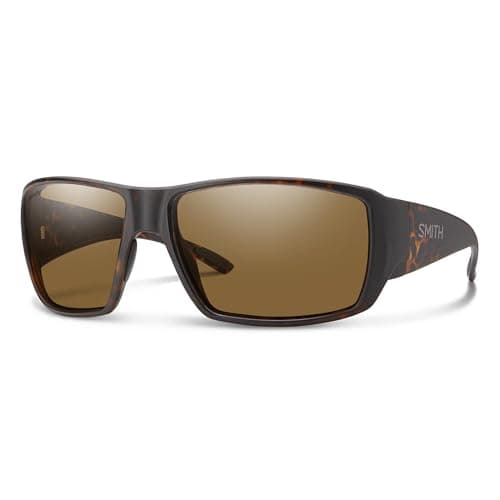
Smith Guide's Choice (ChromaPop Polarized)
ChromaPop polarized8-base wrapMegol nose/temple pads100% UV protection
The purpose-built angling frame in Smith's range — 8-base wrap, megol grip and a contrast-tuned polarized lens.
- Glare control
- 9
- Optics
- 9
- Fit & coverage
- 9
- Durability
- 8
- Value
- 6
Pros
- +Built as a fishing frame rather than a lifestyle shape with a polarized lens dropped in — wide temples and an 8-base wrap cut the side light that gets past a flat lens
- +Megol nose and temple pads tack up as they get wet, which is the difference between a frame that stays put over a hot deck and one that walks down your nose
- +ChromaPop's contrast tuning is aimed squarely at separating a fish from the bottom, and the anti-reflective coating kills the ghost image that bounces off the back of a dark lens
Cons
- −Priced with Costa and Maui Jim, so you are paying premium-brand money for a frame most anglers will treat roughly
- −Medium-large coverage on a wrap this aggressive is a lot of frame on a small face, and the fit has no adjustment beyond the pads
- −The Amazon listing is the ChromaPop polarized lens, not the glass version — if you specifically want Smith's Techlite glass you have to buy it elsewhere and pay more
Don't buy this if…
…you fish a dozen times a year. A $50 polarized fishing wrap finds fish in the same water; this frame earns its price on days 100 through 300, not on day one.
Bass fishing on a real budget
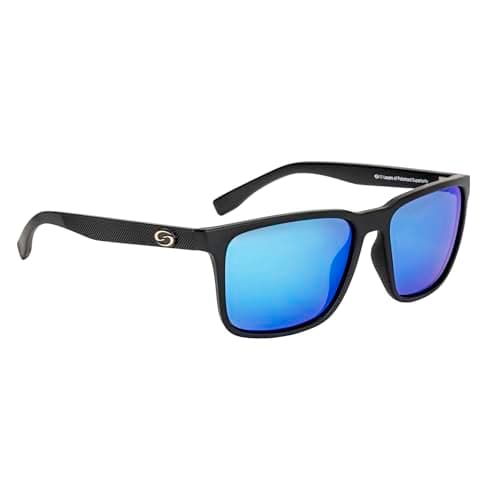
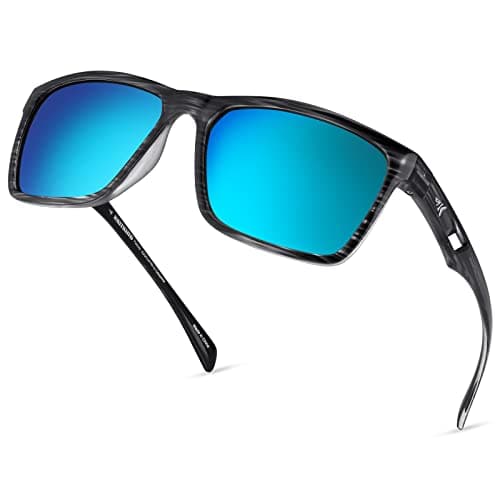
Strike King S11 Rogue (Blue Mirror)
Polarized (11-layer)Bi-gradient mirrorHydrophobic coatingOpen-style frame
A bass-tackle brand's own polarized frame at roughly a fifth of what the fishing-glass names charge.
- Glare control
- 8
- Optics
- 6
- Fit & coverage
- 7
- Durability
- 6
- Value
- 10
Pros
- +Costs about a fifth of a premium fishing frame and still carries the three coatings that matter on the water: polarizing filter, anti-reflective backing and a hydrophobic layer that sheds spray instead of spotting
- +A bi-gradient mirror darkens the top of the lens against the sky and leaves the bottom clearer for looking down into the water, which is the exact geometry of sight-fishing a bank
- +Cheap enough to own two tints — the honest way most anglers solve changing light, instead of buying one expensive lens and hoping
Cons
- −Strike King publishes no VLT number and no ANSI rating for this lens, so you are buying on the brand's description rather than a spec you can check
- −Open-style frame means less side coverage than a wrap — good for airflow on a hot day, worse for low sun coming in from the side
- −Budget hinges and no megol-style grip pads; it will not hold on a sweating face like a $200 fishing frame does
Don't buy this if…
…you fish 200 days a year. At that rate the optics and the build of a premium frame are a genuine upgrade, and this one will be scratched by season two.
Sight-fishing and time on the water
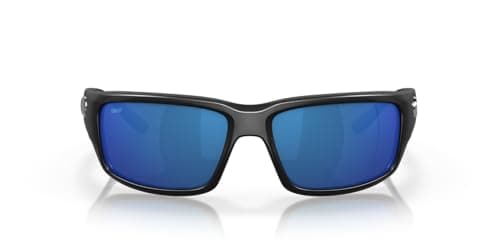
Costa Fantail 580P
580P polarizedPolycarbonateHydrolite gripVented
The fishing default. The 580 lens is built to pull fish out of glare, and it does.
- Glare control
- 10
- Optics
- 9
- Fit & coverage
- 9
- Durability
- 8
- Value
- 6
Pros
- +Costa's 580 lens filters yellow light to lift contrast — copper/green tints make fish and structure pop against surface glare
- +Hydrolite nose and temple pads grip harder the wetter they get, which is the whole game on a boat
- +580P (polycarbonate) is the lighter, more impact-resistant option versus the pricier 580G glass
Cons
- −Polycarbonate scratches more easily than Costa's 580G glass — the glass is clearer but heavier and dearer
- −A real premium over budget fishing wraps that also filter glare competently
Don't buy this if…
…you fish twice a year off a dock. The 580 lens earns its keep for people who sight-fish; occasional users get most of the benefit from a $30 polarized wrap.
Bajío optics without the glass weight
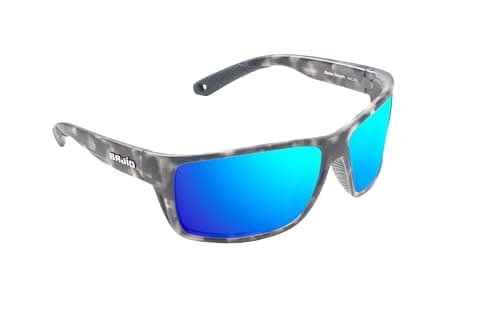
Bajío Bales Beach (Poly)
LAPIS poly lensPolarizedBlue-light filterLarge fit full wrap
The Bajío most anglers should actually buy — same frame and same LAPIS lens, in polycarbonate.
- Glare control
- 10
- Optics
- 9
- Fit & coverage
- 9
- Durability
- 8
- Value
- 6
Pros
- +Identical frame and identical LAPIS blue-light filtering to the glass Bales Beach, at Bajío's lower list tier
- +Polycarbonate is lighter on the nose over a ten-hour day and far more forgiving of a dropped pair or a stray hook
- +Vented large-fit wrap with rubber grip — the shape is built for a bright flat rather than a patio
Cons
- −Scratches more easily than the glass version, and Bajío's warranty does not cover scratches
- −Glass still resolves fine detail slightly more cleanly — if you are straining at forty feet, that gap is the reason glass exists
Don't buy this if…
…scratch resistance matters more to you than weight. The glass Bales Beach is the same pair with the harder lens, and it is the better buy if your sunglasses live on a console rather than in a case.
A step up from budget without Costa money
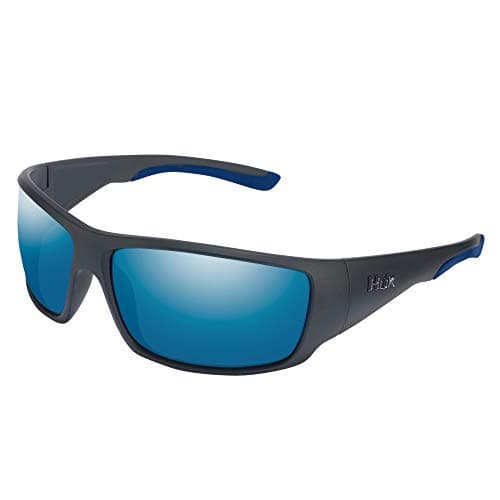
Huk Spearpoint (Polarized)
PolarizedMirror coatingPerformance frameUV400
A capable polarized fishing wrap from a fishing-apparel brand, at a mid price.
- Glare control
- 8
- Optics
- 7
- Fit & coverage
- 8
- Durability
- 7
- Value
- 8
Pros
- +Sits in the gap between $25 budget wraps and $200 Costas — polarized, mirrored, and built for water
- +Lighter and more wrap-shaped than a lifestyle frame, so side glare is controlled
- +Huk knows the fishing customer; the fit and grip are tuned for it
Cons
- −Lens contrast doesn't match Costa's 580 or Bajío's LAPIS glass for pulling fish out of surface glare
- −Coatings are the first thing to wear at this price point
Don't buy this if…
…you sight-fish seriously and can stretch the budget — the premium fishing lenses genuinely see more, and that's the whole reason to spend up.
Best budget fishing pick
KastKing FlatRock Polarized
PolarizedUV400Sport wrapLightweight
The best-value fishing pick. Polarized, floats the budget, and does the core job.
- Glare control
- 8
- Optics
- 6
- Fit & coverage
- 7
- Durability
- 6
- Value
- 10
Pros
- +Polarized glare control for the price of a couple of lures — the single cheapest way to actually see into water
- +Light sport-wrap shape controls side light better than a lifestyle frame
- +KastKing is a real tackle brand, so the frame is built for the environment
Cons
- −The lens lifts contrast less than a Costa 580 — you see less structure in tricky light
- −Budget coatings scratch; keep it in the pouch
Don't buy this if…
…you're on the water most weekends chasing spooky fish. This gets you 80% of the way; the last 20% is what the premium lenses sell.
Who each pick is for
- Smith Guide's Choice— the angler who is on the water constantly and wants the most coverage and contrast on this page. The published specs are an 8-base wraparound curvature, megol nose and temple pads, Italian spring hinges, 100% UV, and anti-reflective plus moisture-resistant coatings, with the blue-mirror ChromaPop lens rated at 12% visible light transmission. The honest costs are the price and the bulk.
- Strike King S11 Rogue— the best value here, and the pick for most readers. Strike King is a bass-tackle company, and its published spec for the S11 lens is eleven layers of polarized construction with an anti-reflective backing, a bi-gradient mirror and a super-hydrophobic coating. The bi-gradient part is the interesting bit for bass: darker at the top against the sky, clearer at the bottom for looking down.
- Costa Fantail 580P— the tournament default, and the reason is the lens range rather than the frame. Costa's 580 lens line includes the copper and green-mirror tints the sight-fishing crowd has standardized on, and 580P is the polycarbonate version — the right material for a boat deck.
- Bajío Bales Beach (Poly)— for the angler who fishes shallow, stained water and wants the most aggressive contrast lens on the page. Bajío's LAPIS treatment attacks blue light rather than yellow light; per the lens guide, it blocks 95% of blue light up to 445nm, and the brand puts its Silver Mirror (16% VLT) and Rose Mirror (18% VLT) tints specifically at river and lake fishing rather than at the flats.
- Huk Spearpoint— the mid-budget fishing-brand wrap. Not the optics of the two premium picks, but a fishing shape with fishing grip at a price that does not hurt when a pair goes overboard.
- KastKing FlatRock— the spare pair that lives in the boat. Buy it as a second tint, or as the pair you hand to whoever forgot theirs, and read best budget fishing sunglasses if this is the whole budget.
Lens color for bass: what the pros actually say
This is the part worth getting right, because it is free. Bassmaster's lens-color roundup is the most useful primary source we know of on the question, and the pros in it do not fully agree — which is itself the finding.
- Copper (about 12% light transmission)— Jacob Powroznik moves to copper in bright midday sun, and Bill Lowen settled on a copper lens for everything, reporting that "copper is good when its cloudy, when its sunny and in clear and tannic water" and that it improved his depth perception. If you buy one lens for bass, buy this one.
- Amber— Timmy Horton fishes amber exclusively and credits it with spotting bottom features at distance on Okeechobee; Michael Iaconelli reaches for amber in dark conditions because "amber illuminates everything more". Amber is the low-light contrast tint.
- Silver mirror (about 30% light transmission)— Powroznik's choice for first light and, counterintuitively, for Florida's dark tannic water, where he rates it above copper even under midday sun. A lighter lens is not a worse lens when the water is already swallowing the light.
- High-contrast yellow— Iaconelli's bed-fishing lens, for picking pale spots off a dark bottom. A specialist choice, not a first pair.
- Gray— Iaconelli uses gray in intense sun on still water. Note what it is for: comfort in brutal light, not seeing fish.
The pattern underneath the disagreement is consistent: warm tints (copper, amber, brown) build contrast, mirrors manage how much light gets through, and the right answer moves with water color and sun angle. That is why the genuinely experienced answer is two inexpensive pairs rather than one expensive one — and why the budget picks here are not a compromise.
Stained, tannic and clear water are three different problems
Stained green water— most reservoirs, most of the year — is the standard case: copper or green mirror, polarized, and get your eyes as close to vertical over the target as the cast allows. Tannic water, the coffee-colored water of Florida and the southern swamps, absorbs so much light that a dark lens leaves you looking at nothing; this is where a lighter silver mirror earns its place. Clear water behaves more like saltwater, and a darker blue or green mirror is both comfortable and effective.
One honest limit on all of it: polarization removes the surface reflection that hides what is under it, which is why it works at all. It does not give you a sonar view. Our do polarized sunglasses help you see fish page is deliberately blunt about how much of the water column you really get back.
Glass or polycarbonate for a bass boat?
Polycarbonate, for nearly everyone. Glass resolves marginally better and resists scratching far better, which is a real argument on a flats skiff where the pair never leaves your face. A bass boat is a harder life: treble hooks, a deck you drop things on, long runs at speed, and a pair that spends half the day pushed up on a cap. Polycarbonate deforms where glass breaks, and it is lighter over a long day. If you want the full argument both ways, we wrote it up in best glass lens sunglasses.
Both premium brands here offer both materials. Bajío builds the Bales Beach in glass and in polycarbonate, and we rank the poly version on purpose. Costa's 580P is the polycarbonate member of the same lens family as the 580G glass.
The part nobody puts on the box
Two things will cost you more pairs than lens quality ever will. The first is retention: a floating retainer is the difference between a pair in the water and a pair on the surface, and it is the cheapest insurance in fishing. The second is UV, and it is worth being precise — polarization and UV protection are separate features. The American Optometric Association recommends lenses that block 99–100% of UVA and UVB regardless of tint or price, and a dark unrated lens is worse than no sunglasses at all, because it opens your pupils behind no filter. Check for UV400 or "100% UV" on the listing every time, at every price.
If you want a brand-level answer instead
The two premium names on this page are the ones bass anglers argue about most, and we compared them directly in Bajío vs Smith— LAPIS blue-light blocking against ChromaPop contrast tuning, glass against polycarbonate, and which one suits freshwater. For the wider field, the fishing sunglasses hub ranks the whole category, and the Costa brand review goes model by model through the range most tournament anglers end up in. The other matchup worth reading before you spend at this level is Smith vs Costa, and if your other water is a trout river rather than a reservoir, the tint argument changes — that is best fly fishing sunglasses.
How to choose in 60 seconds
What color is the water you fish most?
Green and stained → copper or green mirror. Coffee-colored and tannic → a lighter silver mirror, or amber. Clear → a darker blue or green mirror.
How often are you on the water?
Under about 30 days a year → buy the Strike King or the Huk and spend the difference on tackle. Over 150 days → the premium frames genuinely earn it in coverage, comfort and the lens range you can choose from.
One pair or two?
Two inexpensive pairs in different tints beat one expensive pair for sight-fishing, because the light changes and a lens cannot. This is the single most useful line on this page.
Do you run the boat with glasses on your head?
Then buy a retainer in the same order. It is the most common way a pair is lost, and the fix costs less than a pack of worms.
Do you wear prescription glasses?
Costa, Smith and Bajío all run prescription programs, and fit-overs are the cheap route. See prescription polarized sunglasses and sunglasses that fit over glasses.
The cheap stuff that matters
Essentials under $40
The add-ons this page already told you to get. None of these is scored — our rubric measures glare control, optics, fit, durability and value, and four of those mean nothing for a cleaning cloth. So you get a reason and a live price instead of a number we'd have had to invent.
Generic
Floating Sunglasses Straps for Water (4-pack)
A buoyant strap for boats, kayaks and wading. Note what this is: the STRAP provides the flotation. Do not assume any pair floats on its own.
Chums
Chums Original Cotton Retainer
The plain cotton eyewear keeper. Adjustable, washable, and the version most people mean when they say Croakies. Colorways vary on the listing.
#ad · Live prices as of October 19, 2026, hidden when our data goes stale. We may earn a commission, at no cost to you. How this works.
How we picked
We don't run a testing lab
We compile each pair's published specifications — lens material, polarization, coating, frame material, coverage, UV rating and price — normalize them, and score each against a published rubric. The scores are judgments from documented research; they are notmeasurements we took, because we don't own a lab and we're not going to pretend we do. Pairs we claim to have lab-tested: 0.
Questions
Frequently asked
What is the best lens color for bass fishing?+
Copper is the best single answer, and it is what two of the four Elite pros in Bassmaster's lens-color roundup settled on — one of them for all conditions, clear and tannic water alike. Amber is the better low-light pick, and a lighter silver mirror is the surprise answer for dark tannic water. Gray is a comfort tint rather than a sight-fishing tint. Full breakdown in
best lens color for fishing.
Do I need polarized sunglasses for bass fishing?+
Yes, and it is the one spec you should not compromise on. The polarizing filter removes the mirror-like reflection off the water surface, which is what is hiding the bass, the bed and the grass line. It is also a binary feature: the filter in a cheap polarized lens does the same job as the filter in a premium one.
Are expensive fishing sunglasses worth it for bass?+
For glare removal, no — that is the filter, and it is the same filter. For optical clarity, coverage, tint selection, coatings and build over hundreds of days, yes. The honest test is days on the water: if you fish most weekends in a season, a premium frame pays back in comfort and in fewer compromises. If you do not, buy the value pick and a second tint. We do the arithmetic in
are expensive sunglasses worth it.
Is freshwater different from saltwater for sunglasses?+
Yes, in two ways. Freshwater bass water is usually darker and more stained, so you want a contrast tint and often a lighter lens than a saltwater angler would choose. And the viewing angle is different: bass fishing is mostly looking down into shallow water, while flats fishing is looking across bright water at distance. Same polarized filter, different tint.
Will polarized sunglasses let me see bass on the bottom?+
They will let you see through the surface, to the depth the water clarity allows — often a few feet in stained water, more in clear. They do not see through the water column, and no lens color changes that. Bed fishing works because the bed is a pale spot on a dark bottom, not because the lens is magic.
Here is the honest version.
Glass or polycarbonate lenses for bass fishing?+
Polycarbonate for nearly every bass angler. It is lighter, it does not shatter, and a bass boat is full of ways to break a lens. Glass is the better optic and far more scratch-resistant, and it makes sense if your pair lives on your face and never gets thrown in a tackle bag.
Receipts
Sources
- Bassmaster — Best lens colors for sight fishing (Elite pros on copper at 12% light transmission, amber, Sunrise Silver Mirror at 30%, and high-contrast yellow for bed fishing)
- Costa Del Mar — 580 lens technology (official)
- SportRx — Bajío lens guide (LAPIS blocks 95% of blue light up to 445nm; per-tint VLT: Blue Mirror 12%, Green Mirror 14%, Silver Mirror 16%, Copper 16%, Rose Mirror 18%, Violet Mirror 18%)
- Feather-Craft Fly Fishing — Smith Guide's Choice published specs (ChromaPop polarized, 12% VLT blue mirror, 8-base wraparound curvature, megol nose and temple pads, Italian spring hinges, 100% UV, anti-reflective and moisture-resistant coatings)
- Tackle Warehouse — Strike King S11 Optics Rogue published specs (eleven-layer polarized lens, anti-reflective coating, bi-gradient mirror, super hydrophobic coating, open-style frame)
- American Optometric Association — UV protection and sunglasses guidance
- Cleveland Clinic — Polarized vs non-polarized sunglasses
We do not run a testing lab, and we do not pretend to. Where a spec or measurement came from a manufacturer or a third party, we name and link it. Where we could not verify something, we say so on the page rather than quietly leaving it out. Read our full method.