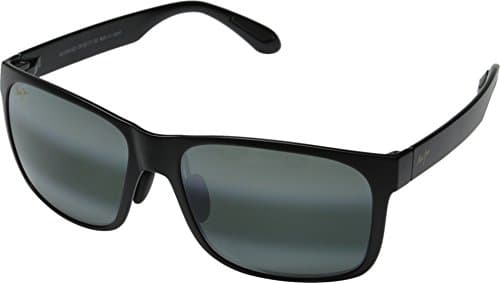
Buy Maui Jim if your glare problem is water, snow or bright open ground and you want the cleanest fixed polarized glass lens on the market — the Red Sands in PolarizedPlus2 is the pick of this page. Buy Serengeti if your glare problem changes through the day, especially behind a windshield: its photochromic mineral lens lightens and darkens on its own, and the Susan is currently the cheapest honest way into a real glass lens by a wide margin — with the caveat that it is a feminine cat-eye frame, not a unisex driver. If you have never owned glass, buy the $35 polarized pair at the bottom of this page first and find out whether you can tell.
These two brands get compared constantly and almost always for the wrong reason. Both sell mineral-glass lenses, both are priced like jewelry, and both market a proprietary tint. But the actual engineering decision is opposite: Maui Jim builds a fixed lens and spends its effort on how clean that one state is, while Serengeti builds a variable lens and spends its effort on how smoothly it moves between states. Everything that matters about this choice falls out of that one difference.
What you are actually choosing between
Maui Jim: one lens state, executed well.Maui Jim's PolarizedPlus2 is a fixed polarized lens with the brand's color-boosting treatment baked in, available in SuperThin Glass, the lighter MauiPure polycarbonate-family material, and MauiBrilliant — the lens guide at SportRx lays the materials and tints out model by model. Nothing about it adapts. You pick a tint for the light you are mostly in and live with it, which is exactly the right trade when your light is predictable: a flats skiff at midday, a ski slope, a beach.
Serengeti: one lens that moves. Serengeti's own technologies page describes three stacked features: photochromic lenses "activated by the amount of UV radiation" that transition gradually from light to dark; Spectral Control, a blue-light filtering treatment applied by passing each lens through a hydrogen-fueled Lehr furnace; and a polarization layer the brand says eliminates 99.9% of disruptive glare. The glass itself is borosilicate optical glass from Corning, which Serengeti says is 20% thinner and lighter than other lenses — the reason a glass Serengeti does not feel like wearing a paperweight.
Two cautions on that spec list, because they change the buying advice. First, not every Serengeti is polarized; the range splits into photochromic-only and polarized-photochromic models, so the specific SKU matters. Second, photochromic lenses are triggered by UV, and a modern car windshield blocks a lot of UV — so a photochromic lens worn in a car often stays lighter than you expect. Serengeti has historically been a driver's brand anyway, because a lens that goes light in a tunnel beats a lens that does not. But if you want a genuinely dark lens behind glass, a fixed tint is the safer purchase. Our polarized vs photochromic page covers that mechanism in full.
| Factor | Maui Jim | Serengeti |
|---|
| Lens behavior | Fixed tint — one state, all day | Photochromic — lightens and darkens with UV |
| Polarized? | Yes, across the range (PolarizedPlus2) | On selected models only — check the SKU |
| Glass option | SuperThin Glass, plus MauiPure and MauiBrilliant non-glass | Corning borosilicate mineral glass, published as 20% thinner/lighter |
| Signature treatment | Color-boosting polarized tints, UV and blue-light claims | Spectral Control blue-light filtering, 555nm contrast tint |
| Behind a windshield | Predictable — the tint you bought is the tint you get | Often lighter than expected, because the glass blocks the UV trigger |
| Best environment | Water, snow, bright open ground — stable, intense light | Changing light: driving, dawn starts, forest to open road |
| Street price in this catalog | Top of the market | Substantially less for a glass lens — see the live prices above |
The short answer
Quick picks
#ad · Live prices from the Amazon Product API, as of October 19, 2026. Where we have no verified live price, we show none — we would rather leave a gap than print a number that has rotted.
In detail
The picks, in full
The best-in-class polarized lens
Maui Jim Red Sands (PolarizedPlus2)
PolarizedPlus2MauiPure lensUV + blue-lightNylon frame
If glare control and color are the whole point, this is the ceiling — at a ceiling price.
- Glare control
- 10
- Optics
- 10
- Fit & coverage
- 7
- Durability
- 9
- Value
- 5
Pros
- +Maui Jim's PolarizedPlus2 does more than cut glare — it lifts contrast and color, and the difference off water is real, not marketing
- +MauiPure lenses are lighter than glass and more optically true than most polycarbonate
- +Genuinely excellent build; the pair you keep for a decade
Cons
- −The most expensive pick on this site by a wide margin
- −Like any polarized lens it dims LCD and phone screens — a nuisance at a gas pump or a boat's chartplotter
Don't buy this if…
…you lose sunglasses. This is a heirloom-price lens, and the glare math that matters to a buyer is 90% there on pairs costing a fifth as much.
The cheapest live route into mineral glass
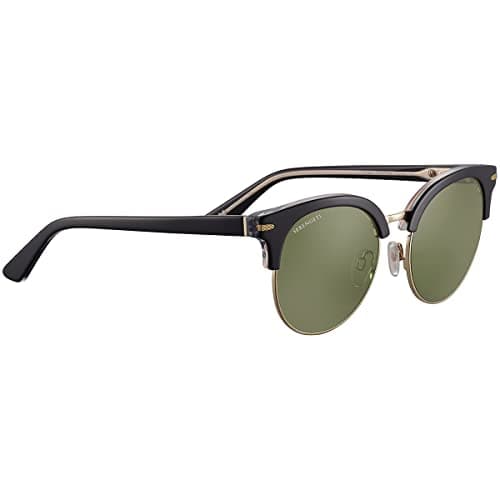
Serengeti Susan (Mineral Polarized 555nm)
Mineral glass lensPolarized555nm contrast tintAcetate and metal frame
Serengeti's mineral glass at the lowest price the brand actually sells it for — in a feminine cat-eye rather than a driving frame.
- Glare control
- 9
- Optics
- 9
- Fit & coverage
- 5
- Durability
- 8
- Value
- 8
Pros
- +Real mineral glass for well under half what the fishing-glass brands charge — the cheapest glass lens on this site by a wide margin
- +The 555nm Spectral Control tint targets the wavelength the eye resolves best, which reads as a lift in contrast rather than a color cast
- +Polarized as well as photochromic — Serengeti splits its range into photochromic-only and polarized models, and this SKU carries both
Cons
- −Category 3 to 3: the published 18%-12% transmission range means it deepens within an already-dark tint and never clears to a light lens
- −A 53mm feminine cat-eye in acetate and metal — a styling frame with modest coverage and no grip material, not a unisex driving wrap
- −Serengeti's Amazon stock is thin and moves between models, so the colorway you see today may not be the one in stock next month
Don't buy this if…
…you want one pair that covers a dark afternoon and a dim morning, or a wrap for the water or the bike. This is a fixed-category glass lens in a lifestyle frame, and side light gets straight past it.
A premium everyday lens
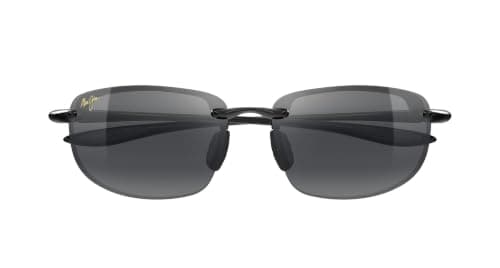
Maui Jim Hookipa (PolarizedPlus2)
PolarizedPlus2MauiPure lensMedium fitUV + blue-light
A classic medium-fit Maui Jim — the premium everyday polarized pair, minus the sport wrap.
- Glare control
- 9
- Optics
- 10
- Fit & coverage
- 6
- Durability
- 9
- Value
- 5
Pros
- +PolarizedPlus2 lifts color and contrast, not just glare — the reason Maui Jim keeps its fans
- +Medium fit and classic shape work for a wide range of faces
- +Lens and build quality are top-tier
Cons
- −Premium price for an everyday (non-sport) frame
- −Polarized lens dims phone and dashboard screens, as all polarized do
Don't buy this if…
…you want a sport or fishing wrap. This is a lifestyle frame — beautiful optics, modest coverage.
Glass optics in a fishing frame
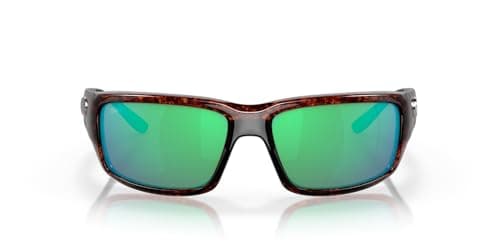
Costa Fantail 580G (Glass)
580G glass lensPolarizedHydrolite gripVented frame
The same Fantail frame with the glass lens — the clearest, most scratch-resistant thing Costa sells.
- Glare control
- 10
- Optics
- 10
- Fit & coverage
- 9
- Durability
- 7
- Value
- 5
Pros
- +Glass resolves detail more cleanly than polycarbonate and is far harder to scratch — the two reasons anyone pays for glass
- +Costa's 580 filter cuts yellow light to lift contrast, which is what separates a fish from surface glare
- +Identical frame to the 580P Fantail, so the fit and the Hydrolite grip are known quantities
Cons
- −Noticeably heavier on the nose than the 580P version over a full day
- −Glass shatters where polycarbonate flexes — the wrong lens for anywhere a hook or a fall is likely
Don't buy this if…
…you fish from a moving boat in chop or keep your sunglasses loose in a bag. Glass buys you clarity and scratch resistance, and it charges you weight and fragility for both.
A polarized metal frame on a budget
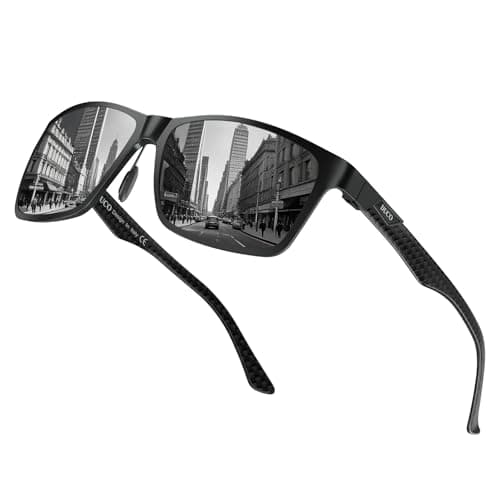
DUCO Polarized (Al-Mg)
Al-Mg framePolarizedUV400Spring hinges
A metal-framed polarized pair at a price that makes the premium brands look silly.
- Glare control
- 8
- Optics
- 7
- Fit & coverage
- 6
- Durability
- 7
- Value
- 9
Pros
- +An aluminum-magnesium frame at this price is unusual — it feels far more substantial than the plastic budget field
- +Polarized and UV400, which covers the two things that actually matter
- +Spring hinges take the abuse of being shoved in a pocket
Cons
- −The lens optics are good, not Maui-Jim good — you notice a touch less clarity at the edges
- −Metal frames are less forgiving than nylon if you sit on them
Don't buy this if…
…you want a sport wrap. This is a driving/everyday shape, and metal arms are the wrong tool for a sweaty trail run.
Who each pick is for
- Maui Jim Red Sands— for the buyer whose light is bright and constant, and who wants the best fixed polarized lens they will ever look through.
- Serengeti Susan— for anyone who wants mineral glass without a four-figure-adjacent spend and is happy in a 53mm feminine cat-eye. It is a Category 3 to 3 lens, so it deepens in strong sun rather than clearing for a dim morning.
- Maui Jim Hookipa— for a medium face that finds the Red Sands too large, in the same lens family.
- Costa Fantail 580G— for the angler who wants glass specifically for sight-fishing rather than for everyday wear.
- DUCO polarized Al-Mg— for the reader who has never owned glass and should find out whether they can tell the difference before spending ten times more.
Does glass actually look better?
Yes, and less than the price gap implies. Mineral glass is harder than polycarbonate, so it resists the fine scratch haze that dulls a plastic lens after a season, and it can be ground with less distortion at the edges. On a bright day over water, looking through good glass is noticeably calmer than looking through a $20 lens: fewer swimming edges when you turn your head, less of the faint plastic warmth that budget lenses add.
The honest caveats are weight and fragility. Glass is heavier — which is the entire point of Serengeti's thinner borosilicate and Maui Jim's SuperThin Glass — and glass shatters where polycarbonate deforms. That is why we do not recommend either brand for sport. If a pair might take a ball, a crank arm or a trail branch, you want polycarbonate; see best glass lens sunglasses for where the line sits.
The thing neither brand sells you
Neither of these lenses gives you more UV protection than a $16 pair, and both brands are careful never to claim otherwise. The American Academy of Ophthalmology is explicit that polarization reduces glare from reflective surfaces but does not add UV protection, and recommends looking for a "100 percent UV protection" or "UV400" label regardless of price. Consumer Reports makes the same point: polarization on its own will not shield your eyes from UV. What the money here buys is optical quality, lens behavior and build — all real, none of them health features. Our are expensive sunglasses worth it page does that arithmetic properly.
Where this comparison usually ends
In our reading of the two ranges, most people asking this question are really asking one of two narrower questions. If it is "which lens will look best on the water", the answer is Maui Jim, and it is not close — a fixed polarized tint tuned for water beats a lens that is trying to be several things. If it is "which should I drive in", the answer is Serengeti, for the same reason in reverse: a commute runs through tunnels, tree lines and underpasses, and a lens that adapts is worth more than a lens that is perfect once.
A third group is really asking "how do I get a glass lens for the least money". At today's prices that is the Serengeti Susan, which is why it sits at rank 2 on a page where Maui Jim wins on optics. For the rest of the glass field, including Costa's 580G, see our Costa vs Maui Jim comparison and the Maui Jim brand review. If the pair is mainly for a commute rather than the water, the more useful matchup is Serengeti vs Ray-Ban.
How to decide in 30 seconds
Is your light constant or changing?
Constant and bright → Maui Jim. Changing through the day, or mostly behind a windshield → Serengeti.
Do you need polarization specifically?
Every Maui Jim lens is polarized. Only some Serengeti models are — check the SKU before you buy, because a photochromic-only lens will not kill water glare.
Will the pair ever be used for sport?
Then buy neither in glass. Both brands offer or are matched by polycarbonate options, and a shattering lens in front of your eye is a bad trade for optics.
Have you owned a glass lens before?
If not, spend $35 first. A good number of people genuinely cannot tell, and finding that out cheaply is worth more than either of these frames.
What about fit?
Both are lifestyle shapes with modest wrap, so side light gets in. If you need coverage, read how to choose sunglasses size.
How we picked
We don't run a testing lab
We compile each pair's published specifications — lens material, polarization, coating, frame material, coverage, UV rating and price — normalize them, and score each against a published rubric. The scores are judgments from documented research; they are notmeasurements we took, because we don't own a lab and we're not going to pretend we do. Pairs we claim to have lab-tested: 0.
Questions
Frequently asked
Is Serengeti as good as Maui Jim?+
On fixed-lens optical quality, Maui Jim is the stronger of the two and charges for it. On adaptability, Serengeti wins outright, because Maui Jim does not offer a comparable photochromic mineral lens across its range. They are not graded versions of the same product — a fixed polarized lens and a photochromic one are different tools.
Are all Serengeti sunglasses polarized?+
No. Serengeti's range splits into photochromic models and polarized-photochromic models, so polarization depends on the specific SKU you buy. This is the opposite of Costa, where every lens in the range is polarized by design — see
are all Costa sunglasses polarized. Always read the lens line on the listing rather than assuming.
Do Serengeti photochromic lenses work in a car?+
Partly. Photochromic lenses are triggered by UV, and a modern laminated windshield blocks a large share of the UV that would darken them, so they typically sit lighter in a car than outdoors. For many drivers that is the point — the lens stays usable in a tunnel. If you want a genuinely dark lens behind glass, buy a fixed tint instead.
What happened to the Serengeti Masten?+
It is discontinued. The Masten was our Serengeti pick here until October 2026, when it sold out on Serengeti's own site and stopped returning any listing on Amazon in any colorway. Our current Serengeti pick is the Susanat rank 2 above — the same mineral polarized 555nm lens, and now the cheapest live route into Serengeti glass. If you want a unisex frame instead, the Winona carries the same lens a little higher up the range.
Is mineral glass worth the extra weight?+
If your pair lives on your face in bright, stable light and never gets thrown in a bag, yes: glass stays clear far longer than plastic and distorts less at the lens edge. If the pair gets abused, dropped or used for sport, no — polycarbonate is the right material and glass is a liability.
Which brand is better for driving?+
Serengeti, on the adaptability argument above, with one caveat: a polarized lens of any brand can dim an LCD dashboard and reveal the stress pattern in laminated glass. If that matters to you, read
why polarized sunglasses make glass look weird and
best sunglasses for driving into the sun.
Receipts
Sources
We do not run a testing lab, and we do not pretend to. Where a spec or measurement came from a manufacturer or a third party, we name and link it. Where we could not verify something, we say so on the page rather than quietly leaving it out. Read our full method.