Skip to content
PolarizedClub

Lens science · Glass and rainbows

Why Polarized Sunglasses Make Glass Look Weird

Spots, stripes, checkerboards and oily rainbows in a car's rear window or an office facade. Your lenses are fine, the glass is fine, and the effect has a name.

By Stephen V.Updated How we rate
#ad

We earn a commission when you buy through our Amazon links, at no extra cost to you. It never affects our rankings, and we say so when the cheaper pair is the better buy. How this works.

Your sunglasses are not faulty and neither is the glass. What you are seeing is the strain pattern left in tempered or heat-strengthened glass by the manufacturing process, made visible because your polarized lens filters light in a single plane. The glass industry calls it a quench pattern, strain pattern, anisotropy or iridescence, and it is explicitly not a defect. If it bothers you, the only fixes are to remove the filter — a flip-up clip, or a non-polarized pair — and all four picks below are one of those two things.

This is one of the most common surprises for a first-time polarized buyer, and it shows up in four places: the rear and side windows of cars, the glass facades of modern buildings, phone and laptop screens, and sometimes a windshield at a particular angle. The screens case has a different cause and we cover it separately in do polarized sunglasses block screens. This page is about glass.

What is actually happening

Toughened glass is made by heating a sheet and then cooling it very fast with jets of air — the quench. That locks the surface into high compression and the core into tension, which is what makes the glass strong. But the cooling is not perfectly uniform: as SAFTI FIRST explains, "glass surfaces directly opposite the nozzles or slots achieve a slightly higher level of surface compression than adjacent areas". Those small differences in internal stress change how the glass handles polarized light — "when polarized light from the sun passes through the heat-treated glass it experiences a phase shift" — and the result is a visible pattern.

Daylight from the sky is already partially polarized, so the pattern is sometimes faintly visible to the naked eye. Put a polarizing filter in front of your eye and you are completing the setup: the pattern jumps out as iridescent blotches, dark bands, a checkerboard, a chain of circles, or a series of stripes in the direction the glass traveled through the furnace. SAFTI notes the pattern is "most apparent under polarized light with a visible horizon and viewed at an oblique viewing angle to the glass surface", which is exactly the geometry of glancing at the back window of the car in front of you.

The industry is unambiguous that this is normal. SAFTI states that "the presence of a strain pattern or the perceivable differences in the strain pattern is not a glass defect or blemish and is not cause for rejection" and that it "does not alter the structural integrity or safety of the glass lite". The National Glass Association and Vitro Architectural Glass both publish technical bulletins on the same phenomenon for architects and glaziers, which is why you see it on office buildings.

Why it shows up where it does

Where you see itWhy
Car rear and side windowsFully tempered glass — required for side and rear glazing, and the most patterned
Office and apartment facadesHeat-strengthened or tempered architectural glass, viewed at an angle against sky
A windshield, occasionallyLaminated rather than tempered, so usually fainter — faint striations at some angles
Phone, laptop and dash screensA different cause: LCDs emit polarized light, so the lens dims them
Not at all, some daysOvercast sky scatters light and reduces the polarization the effect depends on

What you can and cannot do about it

Tilt your head. Rotating the filter relative to the glass changes or extinguishes the pattern. Free, works, and is not a fix you want to rely on while driving.

Buy a flip-up clip. If you wear prescription glasses this is the best answer going: flip the polarized lens up for a second and the glass goes back to normal.

Buy a non-polarized pair. The only complete fix. You give up glare control off wet roads and water, which is a real loss, so most people are better off keeping the polarized pair and accepting the pattern.

What will not help: changing lens color, buying a more expensive polarized lens, or replacing the glass. A better polarizer shows the pattern more clearly, not less.

The short answer

Quick picks

#ProductBest forScorePrice
01
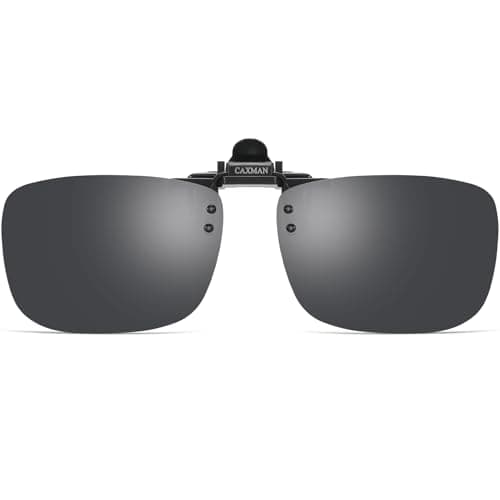
CAXMAN CAXMAN Flip-Up Clip-On (Rimless)
CAXMAN Flip-Up Clip-On (Rimless)

A flip-up clip for people who move in and out of sun constantly and hate taking things off.

Drivers and anyone in and out of shade
7.0
$12.99Amazon
02
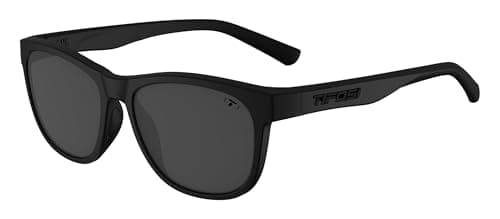
Tifosi Tifosi Swank
Tifosi Swank

A featherweight lifestyle-sport crossover that disappears on your face.

Light everyday and easy runs
7.0
$25.00Amazon
03
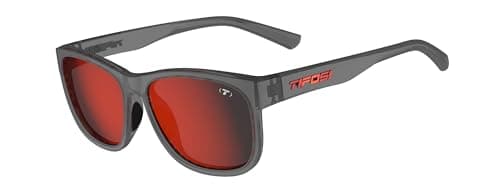
Tifosi Tifosi Swank XL
Tifosi Swank XL

The Swank scaled up — the light lifestyle-sport crossover for faces the standard size pinches.

Wider faces wanting a light sport-casual frame
7.2
$34.95Amazon
04
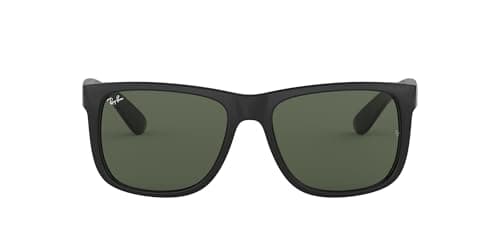
Ray-Ban Ray-Ban Justin (RB4165)
Ray-Ban Justin (RB4165)

The oversized rubberized Wayfarer variant — a style buy, and this listing is not polarized.

A larger, more casual Ray-Ban shape
6.2
$160.00Amazon

#ad · Live prices from the Amazon Product API, as of October 19, 2026. Where we have no verified live price, we show none — we would rather leave a gap than print a number that has rotted.

In detail

The picks, in full

01
CAXMAN CAXMAN Flip-Up Clip-On (Rimless)

Drivers and anyone in and out of shade

CAXMAN Flip-Up Clip-On (Rimless)

Flip-up clipPolarizedRimless lensMetal clip
7.0/10

A flip-up clip for people who move in and out of sun constantly and hate taking things off.

Glare control
8
Optics
6
Fit & coverage
6
Durability
5
Value
10

Pros

  • Flipping the lens up beats removing and pocketing a clip every time you go inside or under trees
  • Rimless construction keeps the weight down on the bridge of your nose
  • Cheapest way to add polarization to glasses you already own

Cons

  • The flip hinge is the moving part, and moving parts at this price are the first thing to loosen
  • The clip's metal contact points can mark a soft lens coating if grit gets in

Don't buy this if…

…you want the most secure fit. A fixed clip or a fit-over stays put better than a hinge; the flip-up trades a little security for a lot of convenience.

$12.99View on Amazon

Price as of October 19, 2026. Prices change — Amazon's is the one that counts.

#ad · we may earn a commission from this link to CAXMAN Flip-Up Clip-On (Rimless)

02
Tifosi Tifosi Swank

Light everyday and easy runs

Tifosi Swank

Grilamid frameSingle lensHydrophilic gripVery light
7.0/10

A featherweight lifestyle-sport crossover that disappears on your face.

Glare control
5
Optics
7
Fit & coverage
7
Durability
7
Value
9

Pros

  • One of the lightest frames here — barely-there for easy runs and all-day wear
  • Tifosi's grip pads tack up with sweat, so it stays put better than a fashion frame
  • Tifosi's build-quality reputation at a genuinely low price

Cons

  • The base Swank lens is a tinted non-polarized lens, not polarized — no glare-off-water benefit
  • Lifestyle shape, so less coverage than Tifosi's true sport shields

Don't buy this if…

…you specifically need polarized glare control. The Swank is a light tinted frame; for glare off wet roads look at a polarized pick instead.

$25.00View on Amazon

Price as of October 19, 2026. Prices change — Amazon's is the one that counts.

#ad · we may earn a commission from this link to Tifosi Swank

03
Tifosi Tifosi Swank XL

Wider faces wanting a light sport-casual frame

Tifosi Swank XL

Grilamid frameXL sizingHydrophilic gripVery light
7.2/10

The Swank scaled up — the light lifestyle-sport crossover for faces the standard size pinches.

Glare control
5
Optics
7
Fit & coverage
8
Durability
7
Value
9

Pros

  • Solves the single most common complaint about light sport-casual frames: that they are too small for a wider face
  • Barely-there weight makes it comfortable for a long session on a court or a walk
  • Grip pads hold as you heat up rather than getting slicker

Cons

  • The base lens is a tint, not polarized — no glare-off-water benefit unless you choose a polarized option
  • Lifestyle shape means less coverage than a true sport shield in low sun

Don't buy this if…

…you need polarized glare control or full wrap coverage. This is a light everyday-and-easy-sport frame, and it is honest about that.

$34.95View on Amazon

Price as of October 19, 2026. Prices change — Amazon's is the one that counts.

#ad · we may earn a commission from this link to Tifosi Swank XL

04
Ray-Ban Ray-Ban Justin (RB4165)

A larger, more casual Ray-Ban shape

Ray-Ban Justin (RB4165)

Rubberized nylon frameOversized squareGreen G-15 lensFull UV protection
6.2/10

The oversized rubberized Wayfarer variant — a style buy, and this listing is not polarized.

Glare control
4
Optics
8
Fit & coverage
7
Durability
7
Value
5

Pros

  • The larger, slightly squarer shape suits wider faces that the standard Wayfarer pinches
  • A rubberized nylon frame is lighter and less fragile than acetate
  • The classic green lens is a genuinely good neutral tint for everyday wear

Cons

  • This colorway is NOT polarized — it is a tinted lens, so it dims glare rather than canceling it
  • Oversized styling overwhelms a smaller face, and there is no size option within the model

Don't buy this if…

…glare control is why you are buying. Take the polarized Wayfarer or Aviator instead — a tint alone will not remove the mirror off a wet road.

$160.00View on Amazon

Price as of October 19, 2026. Prices change — Amazon's is the one that counts.

#ad · we may earn a commission from this link to Ray-Ban Justin (RB4165)

Who each pick is for

  • CAXMAN flip-up clip-on— for glasses wearers, and the best answer on this page: the filter lifts away in a second.
  • Tifosi Swank— for the cheapest honest non-polarized everyday pair, still full UV.
  • Tifosi Swank XL— the same, sized for a wider face.
  • Ray-Ban Justin— for a non-polarized lifestyle pair with the classic G-15 lens, if you want the look as well.

Is it a sign of cheap sunglasses?

The opposite, if anything. The effect requires a working polarizer, so seeing it is weak evidence that your lenses really are polarized rather than just tinted. A more efficient filter produces a more obvious pattern. If you want a proper check on whether a pair is polarized at all, the two-pair rotation test is in how to tell if sunglasses are polarized.

Is it dangerous while driving?

For most drivers, no — it is a cosmetic distraction on other vehicles' windows rather than something obscuring your own view, because windshields are laminated rather than tempered and show the effect much less. Two cases deserve more care. If you find the pattern genuinely distracting, that is a reason to switch to non-polarized rather than to tolerate it. And if your dash is a large LCD display, the screen-dimming effect is a separate and more serious issue — covered in best sunglasses for truck drivers and best sunglasses for driving into the sun.

Aviation is the one domain where authorities draw a firm line on this family of effects. The UK Civil Aviation Authority says polarized lenses can distort cockpit displays and windshields, and that their use "is not encouraged". The full case is in can pilots wear polarized sunglasses.

Related effects you may be noticing at the same time

Dark or black screens. LCD panels emit polarized light, so the lens dims them at some angles. Different cause, same lens.

Patterned car paint or a trailer roof. Some clear coats and plastics are birefringent in the same way as toughened glass, and show their own faint pattern.

Water looking strangely flat.That is the filter working as intended, removing the surface reflection — the reason anglers buy polarized in the first place. See do polarized sunglasses help you see fish.

The sky going unevenly dark as you turn your head. Also expected. Skylight is partially polarized, strongly so at roughly 90 degrees from the sun, which is why a band of sky can look much darker through a polarized lens.

The verdict

Nothing is wrong. The pattern is a documented, harmless characteristic of heat-treated glass interacting with a filter that is doing exactly what you bought it to do. For the great majority of people the right response is to understand it and stop worrying. For the minority who find it genuinely distracting — and some people really do — a flip-up clip or a non-polarized pair is a cheap and complete solution, and both are ranked above.
How we picked

We don't run a testing lab

We compile each pair's published specifications — lens material, polarization, coating, frame material, coverage, UV rating and price — normalize them, and score each against a published rubric. The scores are judgments from documented research; they are notmeasurements we took, because we don't own a lab and we're not going to pretend we do. Pairs we claim to have lab-tested: 0.

Questions

Frequently asked

Why do polarized sunglasses make car windows look rainbow or blotchy?
Because car side and rear windows are fully tempered glass, and the fast cooling used to toughen them leaves small, uneven internal stresses. Those stresses shift the phase of polarized light passing through, which your polarized lens then reveals as iridescent blotches, bands or a checkerboard. The glass industry calls it a strain or quench pattern and states that it is not a defect.
Does the rainbow effect mean my sunglasses are defective?
No — it means they are genuinely polarized. The effect requires a working polarizing filter, and a more efficient filter shows the pattern more clearly. Buying a more expensive polarized lens makes it more visible, not less.
Why do office buildings look striped through polarized sunglasses?
Same cause: architectural glass is heat-strengthened or tempered, and the strain pattern shows under polarized light at an oblique viewing angle. The National Glass Association and Vitro both publish technical bulletins explaining the effect to architects, because building owners ask about it often.
How do I stop polarized sunglasses showing patterns in glass?
Only by taking the filter out of the light path. Tilting your head changes the pattern, a flip-up clip removes it in a second, and a non-polarized pair eliminates it permanently at the cost of glare control. Changing lens color or brand will not help. See best clip-on sunglasses.
Is this the same reason screens go dark through polarized lenses?
No. Screens go dark because LCD panels emit light that is already polarized, so your lens can block it depending on angle. The glass pattern is caused by stress in the glass itself. Two different mechanisms with the same lens — see do polarized sunglasses block screens.

Keep reading

Receipts

Sources

We do not run a testing lab, and we do not pretend to. Where a spec or measurement came from a manufacturer or a third party, we name and link it. Where we could not verify something, we say so on the page rather than quietly leaving it out. Read our full method.