Yes. Most LCD screens emit light that is already polarized, and when your lens filter and the screen's filter end up crossed, the screen goes black. Rotating your head or the device usually brings it back. It is the lens working correctly, not a defect — and if you rely on a screen outdoors, the fix is to own a non-polarized pair for that job rather than to give up polarization everywhere.
This is the single most common complaint about polarized sunglasses, and it catches people out because it is intermittent: fine at one angle, black at another, worse in the car than on foot. Once you understand what is happening the behavior becomes completely predictable.
1. Why it happens
A polarized lens contains a filter that only passes light vibrating on one axis. That is the whole mechanism, and it is why the lens removes glare: light reflecting off a flat surface like water or a wet road becomes horizontally aligned, and a vertically oriented filter blocks it. The Cleveland Clinic sets that out plainly.
The complication is that most LCD panels have a polarizing layer of their own as part of how they produce an image, so the light leaving the screen is already aligned on one axis. Put a second filter in front of it and you have two polarizers in series. When they are aligned, light passes. When they are perpendicular — crossed — almost nothing passes and the screen goes dark.
That is why turning your head, or rotating your phone from portrait to landscape, makes the image reappear. You are changing the angle between the two filters.
2. Where it bites in practice
Phones in a car cradle.The worst case, because the phone is mounted at a fixed angle you cannot casually change and you are wearing sunglasses precisely when you need the navigation. This is the number one complaint from drivers — see best sunglasses for driving.
Car dashboards and infotainment screens. Varies enormously by vehicle. Some are unaffected, some dim, some show a rainbow-ish mottling.
Bike computers.A genuine reason cycling brands leave polarization out. A rider glancing at a small screen at speed cannot spend time tilting their head — the argument is in are polarized lenses good for cycling.
Boat chart plotters and fish finders. Ironic, since the water is the strongest case for polarization. Most people accept the trade and tilt their head.
ATMs, petrol pumps, aircraft instrument panels. The reason pilots and some machine operators are advised away from polarized lenses entirely.
3. The rainbow effect, which is a different thing
Sometimes a screen does not go dark but shows a shifting rainbow pattern. That is not the polarizers crossing — it is stress birefringence in a laminated or tempered layer, most commonly a car windscreen or a tempered-glass screen protector, becoming visible through a polarizing filter.
It is harmless and it is also the reason a windscreen sometimes looks blotchy through polarized sunglasses even with no screen involved. Nothing is wrong with your lens or your car.
4. What to do about it
Rotate. Tilt your head or the device. Free, works most of the time, and for a phone in your hand it is barely an inconvenience.
Turn the brightness up. A brighter screen punches through partial crossing. Helps at intermediate angles, not at full crossing.
Remount the device. If a car phone cradle is unusable, a different mounting angle often solves it completely.
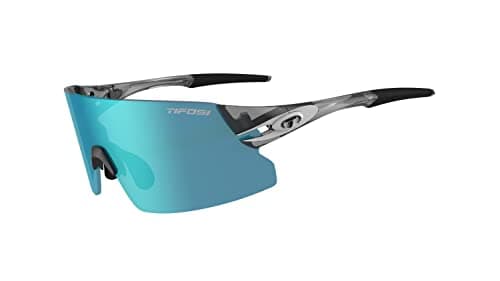
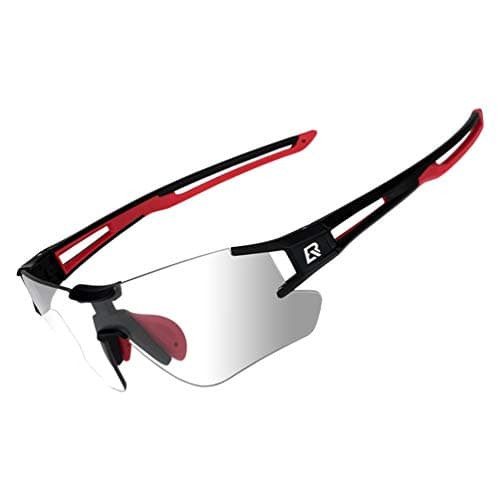
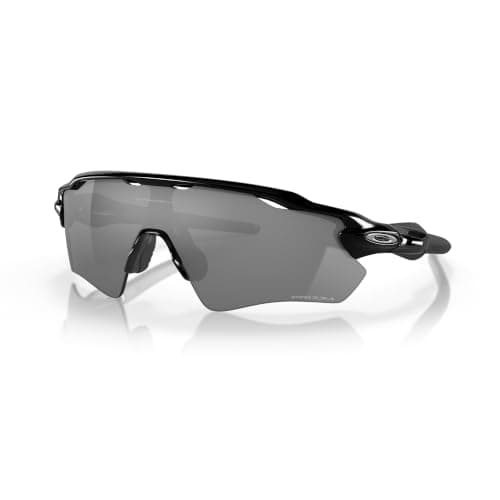
Own a non-polarized pair for screen-heavy jobs. This is the real answer for cyclists with a head unit, pilots, and anyone whose work depends on reading a display outdoors. The picks below are all non-polarized sport lenses for exactly that reason.
Do not buy a lens that claims to fix it. There is no polarized lens that removes glare and leaves LCD screens alone. It is the same filter doing the same thing.
5. Which lenses are affected, and which are not
Only polarized lenses do this. A dark non-polarized lens, a photochromic non-polarized lens and a contrast-tuned lens like Prizm or ChromaPop all leave screens alone — which is one of the reasons cycling eyewear is built the way it is. Photochromic lenses have their own screen-adjacent quirk, incidentally: they do not darken properly behind a windscreen, because a car windscreen blocks the UV that triggers them. More in polarized vs photochromic.
If you are not sure whether a pair you already own is polarized, the LCD test in this page is essentially the same one used to check — hold them in front of a screen and rotate. Full method in how to tell if sunglasses are polarized.
6. Is it a reason to avoid polarized lenses?
For most people, no. On water, on a wet road and in snow, polarization is transformative, and a head tilt at a petrol pump is a small price. For a cyclist with a head unit, a pilot, or a boat skipper who lives on a chart plotter, it is a genuine reason to choose non-polarized for that activity specifically — which is the honest version of the trade we lay out in polarized vs non-polarized.