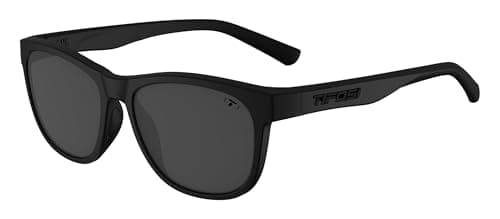
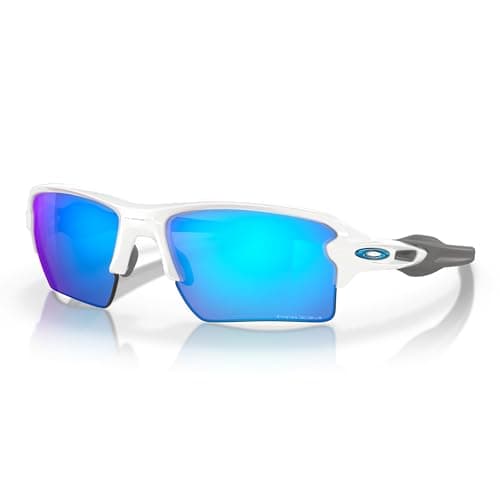
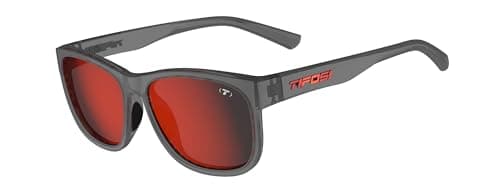
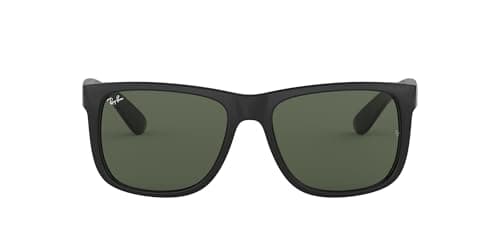
Not prohibited, but discouraged — and the guidance is consistent across authorities. A neutral, non-polarized gray or brown lens is what you want in a cockpit. Of what we stock, the Ray-Ban Justin with the classic G-15 lens is the pick for most general-aviation pilots, and the Tifosi Swank is the inexpensive answer that meets the same brief. All four picks on this page are non-polarized, which is the whole point.
This is a rare page on this site: one where our normal advice — buy polarized — is the wrong answer. It is worth stating why, because the reasoning also applies to anyone working behind a screen-heavy dash, from a truck cab to a crane.
What the authorities actually say
The UK Civil Aviation Authority is the most specific source we found and it is unusually prescriptive. On polarized lenses it notes they can distort cockpit displays and windshields, alter the appearance of cloud, and reduce beneficial ground reflections, concluding that "the use of these sunglasses is not encouraged". It also gives numbers the rest of the field does not: "the tint should be no darker than 80% absorption", the tint should be neutral in color with gray or brown acceptable, and frames "should be well fitting and be large enough to allow sufficient protection from oblique angled sunlight".
The FAA's pilot sunglasses brochure reaches the same conclusion from the same reasoning: polarized lenses are not recommended because of their possible interaction with displays and other materials in the cockpit environment, and gray is the preferred tint because it distorts color least.
The three mechanisms behind the advice
1. Instrument displays. LCD panels emit polarized light. A polarized lens can dim or black out a multi-function display depending on the angle of your head, and an instrument you cannot read is a safety issue rather than an inconvenience. Modern glass cockpits make this worse, not better.
2. The windscreen itself.Aircraft windscreens are laminated and often carry internal stress from manufacture, and a polarized lens reveals that as faint striations or blotches across your forward view. It is the same phenomenon that makes car rear windows look iridescent through polarized lenses — explained in why polarized sunglasses make glass look weird — except here it sits between you and the traffic you are scanning for.
3. See-and-avoid.This is the one most pilots have not thought about. A significant share of the cue that reveals distant traffic is a glint — sunlight flashing off another aircraft's wing, windscreen or prop disc. That glint is a surface reflection, which is precisely what a polarizing filter removes. Taking it away shortens the time you have to see and react.
What to buy instead
Non-polarized, neutral gray or brown. Gray keeps colors truest, which matters for charts, terrain and instrument color-coding. Brown lifts contrast slightly and is explicitly acceptable to the CAA.
Not too dark.The CAA's ceiling of 80% absorption rules out the very darkest lenses — you need to read instruments in shadow as well as handle sun through the canopy.
Not photochromic, either.The CAA discourages these too, on the grounds that they "will not work as effectively in the cockpit environment and do not lighten quick enough in fast changing aviation environments such as descent through cloud". A fixed tint is the safer choice. The mechanism is in polarized vs photochromic.
A frame that clears a headset. Thin temples sit under an ear cup without breaking the seal; thick acetate arms create a gap that lets in noise. Large enough lenses to block oblique sunlight, per the CAA, but a slim temple.
And one specific note for glasses wearers.The CAA states that non-prescription sunglasses worn over prescription glasses are not acceptable, and that a pilot requiring a prescription must have a clear untinted pair available. That rules out the fit-over route we normally recommend to spectacle wearers — see sunglasses that fit over glasses for where it is the right answer. For a cockpit, prescription sunglasses are the answer, with a clear pair in the flight bag.
Who each pick is for
- Ray-Ban Justin (G-15)— for the pilot who wants a classic neutral non-polarized lens in a large, casual frame.
- Tifosi Swank— for the cheapest honest non-polarized option with a slim temple that clears a headset.
- Oakley Flak 2.0 XL (Prizm, non-polarized)— for maximum coverage against oblique sun through a canopy, with the caveat below about tint neutrality.
- Tifosi Swank XL— the slim-temple budget option, sized for a wider head.
One honest caveat on the Oakley: Prizm tints are deliberately contrast-tuned rather than color-neutral, which sits slightly against the CAA's preference for a neutral lens. We rank it third for coverage and build, not as the best match to the guidance. If strict neutrality matters to you, buy a plain gray lens.
Is it actually against the rules?
No. Neither the CAA nor the FAA prohibits polarized lenses — the language is "discouraged" and "not recommended", which is guidance rather than regulation. Plenty of pilots fly in polarized lenses without incident, particularly in older aircraft with analog instruments where the display problem does not arise. Our position is that the guidance is well reasoned and the downside of following it is small: you lose some glare comfort and keep full UV protection.
What you are not giving up
UV protection, which is the part that matters for your eyes. The American Academy of Ophthalmology is clear that polarization reduces glare but adds no UV protection, and recommends 100% UV or UV400 labeling regardless of price — which non-polarized lenses carry just as readily. UV exposure rises with altitude, so this is a spec to check rather than assume. The full picture is in UV protection explained and are polarized sunglasses bad for your eyes.
Who else this advice applies to
The same three mechanisms show up outside aviation, and the same answer follows. Anyone working behind a bank of LCD screens in daylight — a crane cab, a harbor launch, a farm machine with a digital terminal, a long-haul truck with a full digital dash. Our best sunglasses for truck drivers page makes the same call for screen-heavy cabs, and do polarized sunglasses block screens covers the display mechanism on its own.
It also applies in reverse. If you spend your non-flying life on water, driving or walking in bright reflected light, a polarized pair remains the right purchase for that life — just not the pair you take into the cockpit. Two pairs, clearly separated, is the clean solution; see polarized vs non-polarized.
The cockpit checklist
Polarized?
No. Both the CAA and the FAA discourage it, for displays, windscreens and traffic glint.
Photochromic?
Also no, per the CAA — too slow for a descent through cloud and weakened behind glass.
Tint?
Neutral gray or brown, no darker than the CAA's 80% absorption ceiling.
Frame?
Large enough lenses to stop oblique sunlight, with slim temples that clear a headset seal.
Prescription?
Prescription sunglasses plus a clear untinted pair in the bag. A fit-over worn on top of your glasses is not acceptable to the CAA.