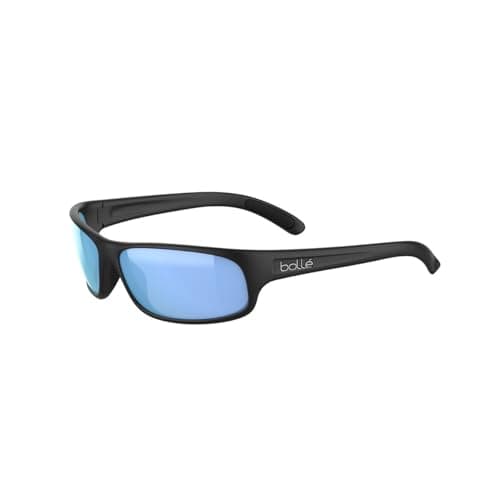
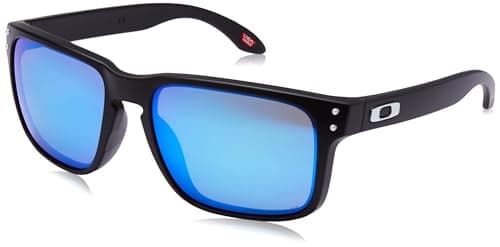
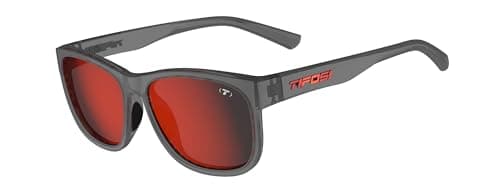
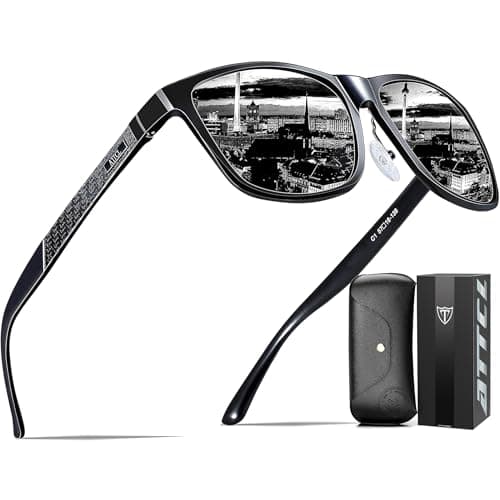
The ATTCL polarized Al-Mg is the pick for most working drivers, and the reason is not optical: at a few tens of grams it is light enough that you forget it is there on hour eleven, which is the only spec that reliably decides whether a pair gets worn. The Bollé Anaconda is the choice if your problem is light arriving from above and the side through a big windshield from a high seat. The Oakley Holbrook in Prizm Polarized is the buy-once answer if you want one good pair. And if your dash is all screens, skip polarized entirely — the non-polarized Tifosi at the bottom of this page exists for exactly that.
Most "sunglasses for driving" advice is written for a 25-minute commute, including our own driving sunglasses roundup. A working cab is a different problem in four specific ways, and once you take them seriously the ranking changes.
What a twelve-hour day actually demands
Weight, and where it sits.A frame that is pleasant for an hour becomes a pressure point by hour eight — usually on the bridge of the nose or behind one ear. This is the single most common reason a driver stops wearing an expensive pair. Aluminum-magnesium and Grilamid frames with adjustable or silicone nose pads are the answer; heavy acetate and glass lenses are not. Our why sunglasses give you a headache page covers the pressure mechanics in detail.
Coverage above the frame. You sit high, and the windshield is enormous. Light comes in over the top rim of a small lens and under the visor, which is the route a commuter in a low car rarely deals with. A taller lens or a light wrap closes it. This is a geometry problem, not a tint problem.
Screens.An ELD, a tablet mount, a backup camera and increasingly a full-digital dash all emit polarized light, which a polarized lens dims — sometimes to unreadable. This is the same effect that makes aviation authorities discourage polarized lenses in cockpits. You have three ways out: a flip-up clip, a non-polarized pair, or tilting your head slightly, which is not a solution at 65 mph. Decide before you buy.
The cab destroys sunglasses. Heat, dust, sat-on, lost at a truck stop. This is the environment where we actively recommend keeping a cheap spare in the door pocket, because a pair you do not have with you is worth nothing.
What to look for, in plain terms
Polarized for reflected glare, yes.Wet tarmac, the hood of the car in front, the flare off a trailer — all polarized by the surface they bounce from, all largely removed by the filter, per the Cleveland Clinic. It is the right default for a road.
Gray or brown, in category 3.Neutral gray keeps signal and brake-light colors truest; brown and copper lift contrast slightly in haze. Avoid category 4 lenses — too dark to drive in legally in many places — and avoid yellow "night driving" lenses entirely, which reduce the light reaching your eye when you need all of it. See can you wear sunglasses at night.
Mirror finishes: be careful. A mirror reflects light before it enters, which helps in high ambient brightness, but it also throws cab interior reflections and your own face back at you. In a dark-dashboard cab at dusk that trade often goes the wrong way.
100% UV, at any price. A driver takes a real cumulative dose through side glass, and the American Academy of Ophthalmology is clear that this is the health function of a sunglass and that it is unrelated to price. Polarization is a comfort and safety feature; UV blocking is the medical one.
Who each pick is for
- ATTCL polarized Al-Mg— for the driver who wants the pair to disappear on hour eleven. Ultralight metal frame, real polarized lens, cheap enough to replace.
- Bollé Anaconda— for a high seat and a wide windshield, where the problem is light arriving from above and the side.
- Oakley Holbrook (Prizm Polarized)— for the driver who wants one premium pair and keeps things for years.
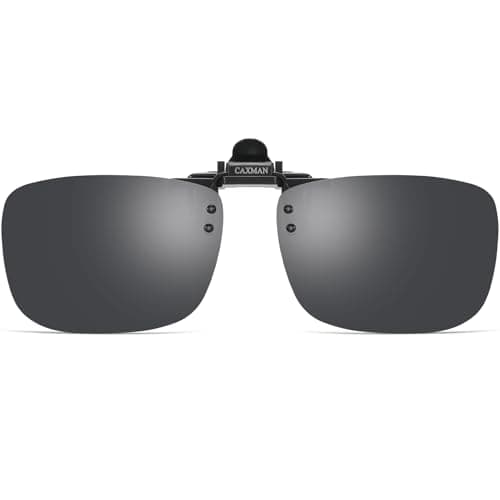
- CAXMAN flip-up clip-on— for drivers in prescription glasses: flip the filter up and the ELD screen comes back.
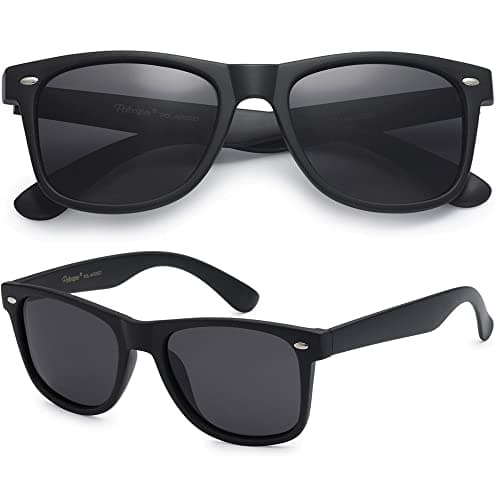
- PolarSpex polarized— for the spare that lives in the door pocket and costs nothing to lose.
- Tifosi Swank XL— non-polarized and XL-sized, for a screen-heavy dash or a wider face.
The polarized-or-not decision, settled
| Your cab | Buy | Why |
|---|
| Analog gauges, one small ELD screen | Polarized | Reflected road glare is the dominant problem and the filter removes it |
| Full digital dash, tablet mount, camera displays | Non-polarized, or a flip-up clip | Polarized lenses dim LCD panels, sometimes to unreadable |
| You wear prescription glasses | Flip-up clip-on | Cheapest route, and the filter comes out of the way in a second |
| Mostly night and dawn running | A light-tint pair, kept for dawn only | Dark lenses after dusk are a hazard, not a help |
| High seat, huge windshield, open country | A taller lens or a light wrap | Coverage above the rim beats any tint upgrade |
Two pairs is the right answer for a cab
Not an upsell — a consequence of the job. One good pair that fits properly and gets worn all day, and one cheap polarized spare in the door pocket for the day the good one is on a counter at a truck stop in another state. The spare is the pair that protects your eyes on the day it matters. At these prices, the second pair costs less than a meal.
The things that help more than sunglasses
Worth saying because they are free. Clean the inside of the windshield: the haze film that builds up from a hot dashboard scatters direct sun across your entire field of view, and no lens fixes that. Use the visor's edge to block the sun specifically rather than darkening everything. Increase following distance when you are driving into low sun, because your ability to see brake lights is genuinely reduced. And take the lane position that puts a tree line or structure between you and the sun when the road offers one.
For the specific case of a sunrise or sunset run straight into the sun, we have a dedicated page — polarization does least in exactly that condition, and best sunglasses for driving into the sun explains why darkness and coverage matter more there.
Fit, specifically for a wider face
A frame that is too narrow pinches at the temples within a couple of hours and leaves marks. If standard frames feel tight, buy XL-sized versions rather than pushing the arms out — best sunglasses for big heads ranks the wider field, and how to choose sunglasses size explains how to read the numbers on a listing.
How to choose in 30 seconds
How many screens are on your dash?
More than one → buy non-polarized or a flip-up clip. One or none → buy polarized.
Does your current pair hurt by the afternoon?
Then weight and nose pads are your problem, not lens technology. Go ultralight.
Does light come in over the top of your frames?
Buy a taller lens or a light wrap. This is geometry and no tint will fix it.
Do you have a spare pair in the cab?
If not, that is the cheapest improvement available to you today.
Do you wear prescription glasses?
Start with a flip-up clip rather than a second prescription — see best clip-on sunglasses.
The cheap stuff that matters
Essentials under $40
The add-ons this page already told you to get. None of these is scored — our rubric measures glare control, optics, fit, durability and value, and four of those mean nothing for a cleaning cloth. So you get a reason and a live price instead of a number we'd have had to invent.
SMARTTOP
SMARTTOP Silicone Eyeglass Ear Grips (18 pairs)
Soft sleeves that slide onto the temple arms so they grip skin instead of sliding on it. The cheapest real fix for a frame that is otherwise the right size.
Chums
Chums Original Cotton Retainer
The plain cotton eyewear keeper. Adjustable, washable, and the version most people mean when they say Croakies. Colorways vary on the listing.
Generic
Floating Sunglasses Straps for Water (4-pack)
A buoyant strap for boats, kayaks and wading. Note what this is: the STRAP provides the flotation. Do not assume any pair floats on its own.
#ad · Live prices as of October 19, 2026, hidden when our data goes stale. We may earn a commission, at no cost to you. How this works.