Skip to content
PolarizedClub

Lens science · Eye health

Are Polarized Sunglasses Bad for Your Eyes?

The short answer is no. The useful answer is that polarization and UV protection are different specs, only one of them protects your eyes, and a $16 pair can do that job as well as a $260 one.

By Stephen V.Updated How we rate
#ad

We earn a commission when you buy through our Amazon links, at no extra cost to you. It never affects our rankings, and we say so when the cheaper pair is the better buy. How this works.

No. There is no mechanism by which a polarizing filter damages your eyes, and no authority we can find that warns against them on health grounds. What polarization does is remove reflected glare. What it does notdo is block ultraviolet light — that is a separate lens treatment, and it is the one that actually protects your eyes. So the real answer to this question is: polarized lenses are safe, and you should still check the pair says 100% UV or UV400 on the label, at any price.

This question gets asked a lot, and we think it comes from conflating three different things that all live on a lens: the tint (how dark), the polarization (which reflections get removed), and the UV coating (what reaches your retina and lens). Pulling them apart answers almost every version of the worry.

What polarization actually is

Light bouncing off a flat surface — water, wet road, a car hood, snow — comes away oscillating mostly in one plane. A polarizing filter is oriented to block that plane, so the reflection largely disappears while the rest of the scene comes through. The Cleveland Clinic describes the mechanism in those terms and notes how useful it is for driving and time on water. It is a selective filter, not a chemical, a coating that outgasses, or anything that interacts with your eye.

What protects your eyes, and what does not

UV blocking does. The American Academy of Ophthalmology recommends sunglasses that block UVA and UVB as completely as possible, labeled "100 percent UV protection" or "UV400", and notes that less expensive pairs carrying that label can be just as effective as pricier options. The American Optometric Association takes the same position, and cumulative UV exposure is associated with cataract and other long-term eye damage.

Polarization does not. Consumer Reports states the point directly: polarization on its own will not shield your eyes from UV, and you should make sure any polarized pair you are interested in also carries a UV protection label. This is the single most important sentence on this page. A pair can be polarized and not UV-rated; a pair can be UV400 and not polarized. You want both.

Darkness does not, either. A very dark lens with no UV coating is arguably worse than no sunglasses at all, because the dark lens opens your pupil while letting UV through. Tint depth and UV protection are unrelated specs. Our UV protection explained page covers this properly.

The real complaints people have, and what causes them

None of these are eye damage, but they are genuine and they are why the question gets asked.

"They make me dizzy or give me a headache." Usually fit or lens quality rather than polarization: a frame pressing on the bridge or temples, a prescription mismatch, or cheap lens geometry that distorts toward the edges. Occasionally it is the stress-pattern effect in glass described below. Why sunglasses give you a headache works through each cause.

"Screens go dark." Correct and expected. LCD panels emit polarized light, so a polarized lens dims them depending on angle. That is covered in do polarized sunglasses block screens.

"Glass looks blotchy and rainbow-colored."Also expected, and not a fault in the glasses — it is the strain pattern in heat-treated glass becoming visible. See why polarized sunglasses make glass look weird.

"I misjudge distance or miss ice."The depth-perception question is real enough to take seriously in specific situations — spotting black ice, judging a ball in flight, flying an aircraft. It is dealt with in do polarized sunglasses affect depth perception, and the aviation case in can pilots wear polarized sunglasses.

The short answer

Quick picks

#ProductBest forScorePrice
01
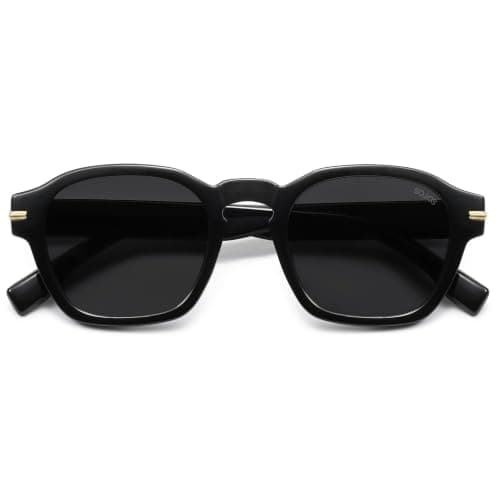
SOJOS SOJOS Retro Square Polarized
SOJOS Retro Square Polarized

A trend-led polarized frame at a price that makes it an easy yes.

A cheap, on-trend everyday pair
6.8
$15.99Amazon
02
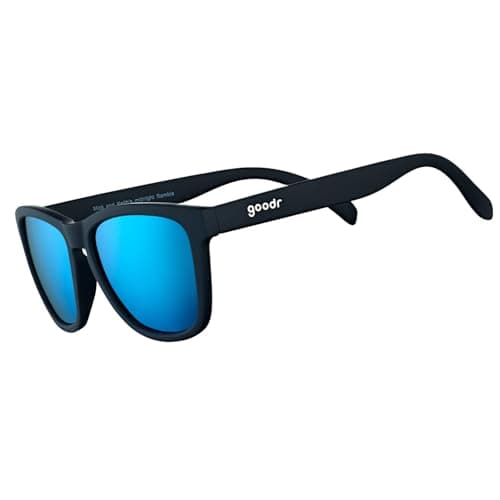
goodr goodr OG (Polarized)
goodr OG (Polarized)

The runner's default: polarized, no-slip, and cheap enough to not baby.

Best running sunglasses overall
8.0
$30.00Amazon
03
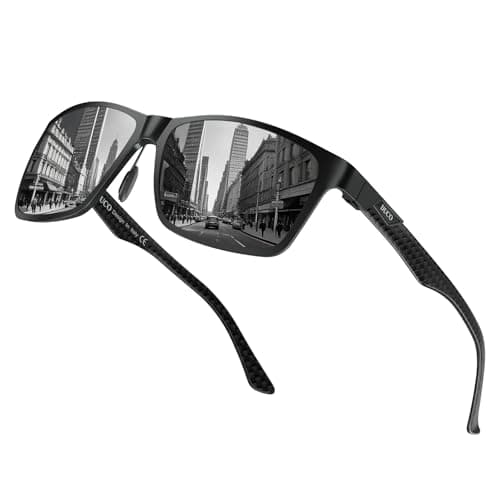
DUCO DUCO Polarized (Al-Mg)
DUCO Polarized (Al-Mg)

A metal-framed polarized pair at a price that makes the premium brands look silly.

A polarized metal frame on a budget
7.4
$34.99Amazon
04
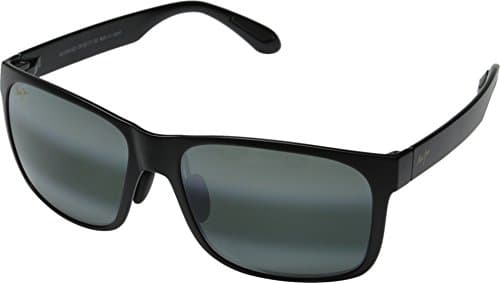
Maui Jim Maui Jim Red Sands (PolarizedPlus2)
Maui Jim Red Sands (PolarizedPlus2)

If glare control and color are the whole point, this is the ceiling — at a ceiling price.

The best-in-class polarized lens
8.2
$259.00Amazon

#ad · Live prices from the Amazon Product API, as of October 19, 2026. Where we have no verified live price, we show none — we would rather leave a gap than print a number that has rotted.

In detail

The picks, in full

01
SOJOS SOJOS Retro Square Polarized

A cheap, on-trend everyday pair

SOJOS Retro Square Polarized

PolarizedUV400Square retro shapeTAC lens
6.8/10

A trend-led polarized frame at a price that makes it an easy yes.

Glare control
7
Optics
6
Fit & coverage
6
Durability
5
Value
10

Pros

  • Polarized and UV400 for the price of lunch — the fundamentals are covered
  • The retro square shape is a current look without a designer price
  • Light and comfortable for all-day casual wear

Cons

  • TAC (film-laminate) lens optics and coatings are budget-grade
  • Fashion-first build; not made for sport or abuse

Don't buy this if…

…you want optical precision or a pair that lasts years. This is a fun, replaceable everyday frame.

$15.99View on Amazon

$19.9920% off

Price as of October 19, 2026. Prices change — Amazon's is the one that counts.

#ad · we may earn a commission from this link to SOJOS Retro Square Polarized

02
goodr goodr OG (Polarized)

Best running sunglasses overall

goodr OG (Polarized)

PolarizedUV400No-slip grip coating~ standard fit
8.0/10

The runner's default: polarized, no-slip, and cheap enough to not baby.

Glare control
8
Optics
7
Fit & coverage
8
Durability
7
Value
10

Pros

  • goodr's grip coating genuinely stops the bounce and slide that ruins a run in a lifestyle frame
  • Polarized and UV400 at a price where losing a pair doesn't sting
  • Light enough that you forget you're wearing them by mile two

Cons

  • One size; a very narrow or very wide face may not get a perfect seal
  • Flat-ish lens gives less side coverage than a true sport shield

Don't buy this if…

…you want maximum wraparound coverage or interchangeable lenses for changing light. goodr is fit-and-forget, not a modular system.

$30.00View on Amazon

Price as of October 19, 2026. Prices change — Amazon's is the one that counts.

#ad · we may earn a commission from this link to goodr OG (Polarized)

03
DUCO DUCO Polarized (Al-Mg)

A polarized metal frame on a budget

DUCO Polarized (Al-Mg)

Al-Mg framePolarizedUV400Spring hinges
7.4/10

A metal-framed polarized pair at a price that makes the premium brands look silly.

Glare control
8
Optics
7
Fit & coverage
6
Durability
7
Value
9

Pros

  • An aluminum-magnesium frame at this price is unusual — it feels far more substantial than the plastic budget field
  • Polarized and UV400, which covers the two things that actually matter
  • Spring hinges take the abuse of being shoved in a pocket

Cons

  • The lens optics are good, not Maui-Jim good — you notice a touch less clarity at the edges
  • Metal frames are less forgiving than nylon if you sit on them

Don't buy this if…

…you want a sport wrap. This is a driving/everyday shape, and metal arms are the wrong tool for a sweaty trail run.

$34.99View on Amazon

Price as of October 19, 2026. Prices change — Amazon's is the one that counts.

#ad · we may earn a commission from this link to DUCO Polarized (Al-Mg)

04
Maui Jim Maui Jim Red Sands (PolarizedPlus2)

The best-in-class polarized lens

Maui Jim Red Sands (PolarizedPlus2)

PolarizedPlus2MauiPure lensUV + blue-lightNylon frame
8.2/10

If glare control and color are the whole point, this is the ceiling — at a ceiling price.

Glare control
10
Optics
10
Fit & coverage
7
Durability
9
Value
5

Pros

  • Maui Jim's PolarizedPlus2 does more than cut glare — it lifts contrast and color, and the difference off water is real, not marketing
  • MauiPure lenses are lighter than glass and more optically true than most polycarbonate
  • Genuinely excellent build; the pair you keep for a decade

Cons

  • The most expensive pick on this site by a wide margin
  • Like any polarized lens it dims LCD and phone screens — a nuisance at a gas pump or a boat's chartplotter

Don't buy this if…

…you lose sunglasses. This is a heirloom-price lens, and the glare math that matters to a buyer is 90% there on pairs costing a fifth as much.

$259.00View on Amazon

Price as of October 19, 2026. Prices change — Amazon's is the one that counts.

#ad · we may earn a commission from this link to Maui Jim Red Sands (PolarizedPlus2)

Who each pick is for

  • SOJOS Retro Square— for the reader who wants the cheapest honest proof that protection does not require spending: polarized, UV400, under $20.
  • goodr OG— for someone active who wants a polarized UV400 pair that stays on a moving face.
  • DUCO polarized Al-Mg— for an everyday metal frame with a real polarized lens at a modest price.
  • Maui Jim Red Sands— for the buyer who wants the best optics available, with the understanding that the UV protection is the same standard as the $16 pair.

When a polarized lens is the wrong choice

Not for health reasons — for functional ones. Four cases where we would tell you to buy non-polarized:

  • You fly. Aviation authorities discourage polarized lenses in the cockpit because of instrument displays and laminated windscreens. The UK Civil Aviation Authority states that their use "is not encouraged".
  • You need to see ice or water on a surface. The filter removes exactly the reflection that reveals a wet or icy patch.
  • You read LCD screens constantly— a digital dash, a yard crane cab, a tablet-based job.
  • Some ball sports and downhill skiing, where reading surface texture and reflections off a ball or a slope matters more than comfort.

In every one of those cases, buy a non-polarized lens that is still 100% UV. You are giving up glare comfort, not protection. The broader comparison is in polarized vs non-polarized.

Are they bad for children's eyes?

No, and children arguably need UV protection more than adults do because their lenses transmit more UV. The relevant advice is the same as for anyone: 100% UV or UV400, a frame that fits so it is actually worn, and a price low enough that losing it does not matter. Polarization is a comfort feature for a child, not a risk.

Can polarized lenses make your eyes lazy or dependent?

There is no mechanism for it and no authority we can find that suggests it. Your eyes do adapt to a given light level, so stepping out of dark lenses into bright sun feels harsh for a minute — but that is adaptation, not weakening. If anything the causation runs the other way: squinting into unfiltered glare all day causes fatigue and headaches.

What to actually check before you buy

Three lines on the listing. Does it say polarized(not just "tinted" or "UV-protected")? Does it say 100% UV or UV400? And does the lens category or tint depth suit what you will be doing? If a listing is vague on any of the three, pick a different one — at these prices there is no reason to gamble. To verify a pair you already own, the rotation test is in how to tell if sunglasses are polarized.
How we picked

We don't run a testing lab

We compile each pair's published specifications — lens material, polarization, coating, frame material, coverage, UV rating and price — normalize them, and score each against a published rubric. The scores are judgments from documented research; they are notmeasurements we took, because we don't own a lab and we're not going to pretend we do. Pairs we claim to have lab-tested: 0.

Questions

Frequently asked

Are polarized sunglasses bad for your eyes?
No. A polarizing filter removes reflected glare and has no mechanism for harming your eyes, and no eye-health authority we can find warns against them on health grounds. The thing to check is separate: make sure the pair is also labeled 100% UV or UV400, because polarization by itself provides no UV protection.
Do polarized sunglasses have UV protection?
Not automatically. They are two different lens features, and Consumer Reports and the AAO both make a point of saying so. Most reputable polarized sunglasses also carry 100% UV protection, but you should confirm it on the listing rather than assume it. See UV protection explained.
Why do polarized sunglasses make me dizzy?
Usually fit or lens quality rather than the filter: pressure on the bridge or temples, a prescription mismatch, or distortion toward the edge of a cheap lens. Occasionally it is the iridescent stress pattern that polarized lenses reveal in car and building glass, which some people find disorienting. Both causes are covered in why sunglasses give you a headache.
Can polarized sunglasses be too dark?
A lens can be too dark for a task — category 4 lenses are too dark for driving in many jurisdictions, and any dark lens is dangerous after dusk. But darkness and polarization are independent: a polarized lens can be light, and a very dark lens can be unpolarized and unprotected. See can you wear sunglasses at night.
Are cheap polarized sunglasses safe?
Yes, when they are labeled 100% UV or UV400. The AAO's position is that inexpensive pairs carrying that label can be just as effective as expensive ones, because UV blocking is a cheap lens treatment. What you get for more money is optical clarity, build quality and lens tuning — not more protection.
Should children wear polarized sunglasses?
They can, safely. The priority for children is 100% UV protection and a frame that fits well enough to stay on, since young eyes transmit more UV than adult eyes. Polarization is a comfort upgrade rather than a safety one, and an inexpensive pair that gets worn beats an expensive pair that gets lost.

Keep reading

Receipts

Sources

We do not run a testing lab, and we do not pretend to. Where a spec or measurement came from a manufacturer or a third party, we name and link it. Where we could not verify something, we say so on the page rather than quietly leaving it out. Read our full method.