Top pick
Top pick
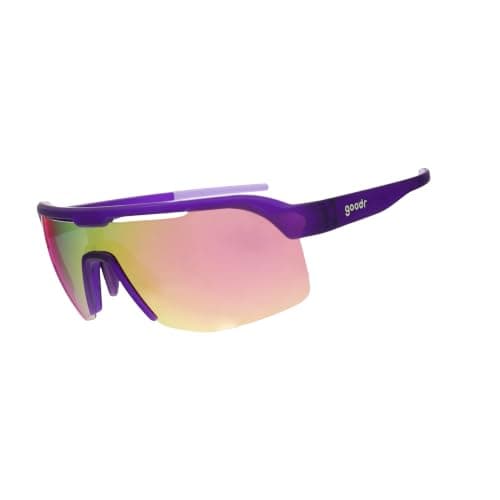
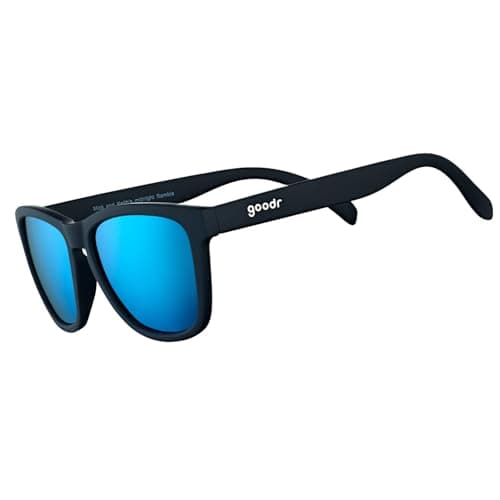
goodr OG (Polarized)
Best for: Best running sunglasses overall
The default no-slip running pair and the one most runners should buy. goodr publishes polarization, UV400 and a no-slip grip coating across its whole range, so there is no wrong listing to pick, and the frame is light enough that there is very little mass to bounce in the first place. Best for road running, treadmill-to-street and everyday wear.
Budget pick
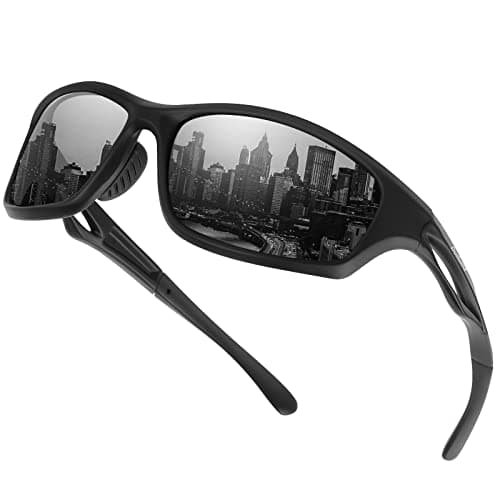
Duduma TR90 Polarized Sport
Best for: The cheapest polarized sport wrap worth owning
The cheap polarized sport wrap that still has rubber at both contact points. Buy it if you want a grippy wrap for under half the price of the step-up picks and can live with generic documentation and basic coatings.
#ad · we may earn a commission. Live prices from the Amazon Product API, as of November 23, 2026. Where we have no verified live price we show none.
The best no-slip running sunglasses for most people are the goodr OG: goodr publishes a no-slip grip coating, polarization and UV400 on every pair it sells, and the frame is light enough that there is barely any mass to bounce. Best for road running. If you sweat heavily or run long, the Tifosi Vero is the better buy — Tifosi publishes hydrophilic rubber nose and ear pads that increase grip the more you sweat, plus fully adjustable arms. The Oakley Radar EV Path is the premium benchmark, with Unobtainium grip at both contact points. If your frames slip because they are the wrong size, go to the Tifosi Swick (narrow faces) or the Swank XL (wide faces) instead of buying grippier rubber. The budget pick is the Duduma TR90. Live prices below, with the date they were checked.
Almost nobody searching for no-slip running sunglasses has a lens problem. They have a pair that creeps down the nose at mile three, or bounces hard enough to be a distraction on a descent, and they want to know which frames do not do that. That is a hardware question with three separate answers — grip material, weight and size — and most roundups only talk about the first one. This page ranks on all three, and says plainly when the fix is not a new pair of sunglasses at all.
Why running sunglasses slip, in order of how often it is the cause
One: the contact points are smooth plastic.A frame whose nose pads and temple tips are the same hard material as the rest of the frame has nothing to hold on to once skin is damp. Sport frames solve this with rubber at both points, and the better ones use a hydrophilic compound — a rubber engineered to tack up as it gets wet rather than go slick. Tifosi publishes exactly that claim on its sport range: “hydrophilic rubber pads that increase grip the more you sweat”. goodr publishes a no-slip grip coating across its range, and Oakley's Unobtainium is described as the proprietary grip technology embedded in all its sport sunglasses, there to keep the frame securely on your face while you move.
Two: the frame is too heavy for the job. Bounce is mass multiplied by the acceleration your stride puts through it. A heavy lifestyle frame with thick acetate arms will bounce on a runner no matter what the nose pads are made of; a 30-gram sport shield has almost nothing to throw around. This is the reason a cheap, light sport wrap frequently out-performs an expensive heavy one on a run, and it is why every pick on this page is a lightweight frame.
Three — and this is the one people misdiagnose — the frame is the wrong size. A frame wider than your head rests on nothing but the nose, so it walks downward with every footfall; a frame narrower than your head is held only by pressure at the temples, which loosens as soon as you warm up. No grip compound fixes either. If your current pair slides no matter what you do, read how to choose sunglasses size before you buy anything, and look at the two size-specific picks below.
How we ranked these
- Published grip mechanism at both contact points.Nose and temple tips, not one or the other. A frame that grips at the nose and slides at the ears still slides. We take the maker's published claim and say which it is — hydrophilic compound, a grip coating, or plain rubber.
- Weight class. Everything here is a lightweight frame. Where a maker publishes a weight, we say so; where it does not, we do not invent one.
- Fit range. Models that come in more than one size score higher, because slipping is a sizing problem at least as often as it is a grip problem.
- Adjustability. An adjustable nose piece or temple arm lets you fix a near-miss fit. Fixed one-piece frames do not.
- Whether the lens suits running at all. Coverage, venting and tint. A frame that stays put but fogs on a climb is not a solution.
- Price honesty. Every number on this page is live and date-stamped. We do not type prices into prose, because they move.
| If your problem is | Buy | The catch |
|---|
| A normal road run, nothing exotic | goodr OG (Polarized) | One size only, ordinary optics, limited side coverage |
| Heavy sweat, long runs, hot climates | Tifosi Vero (Smoke Polarized) | Large half-frame shield; looks like race gear |
| You want the benchmark and will pay for it | Oakley Radar EV Path (Prizm) | Several times the price of everything else here; this lens is not polarized |
| Wind, dust or low sun from the side | goodr Bolt G (Polarized Wrap) | No interchangeable lens; top of goodr's price range |
| A narrow or small face the standard fit slides off | Tifosi Swick | This listing is not polarized; single fixed lens |
| A wide face that pushes a standard frame off the nose | Tifosi Swank XL | This listing is not polarized; lifestyle-sport shape rather than a race shield |
| The cheapest grippy wrap worth owning | Duduma TR90 Polarized Sport (budget pick) | Generic rubber, no published documentation, basic coatings |
The short answer
Quick picks
#ad · Live prices from the Amazon Product API, as of November 23, 2026. Where we have no verified live price, we show none — we would rather leave a gap than print a number that has rotted.
In detail
The picks, in full
Best running sunglasses overall
goodr OG (Polarized)
PolarizedUV400No-slip grip coating~ standard fit
The runner's default: polarized, no-slip, and cheap enough to not baby.
- Glare control
- 8
- Optics
- 7
- Fit & coverage
- 8
- Durability
- 7
- Value
- 10
Pros
- +goodr's grip coating genuinely stops the bounce and slide that ruins a run in a lifestyle frame
- +Polarized and UV400 at a price where losing a pair doesn't sting
- +Light enough that you forget you're wearing them by mile two
Cons
- −One size; a very narrow or very wide face may not get a perfect seal
- −Flat-ish lens gives less side coverage than a true sport shield
Don't buy this if…
…you want maximum wraparound coverage or interchangeable lenses for changing light. goodr is fit-and-forget, not a modular system.
Baseball, softball and open-sightline sport
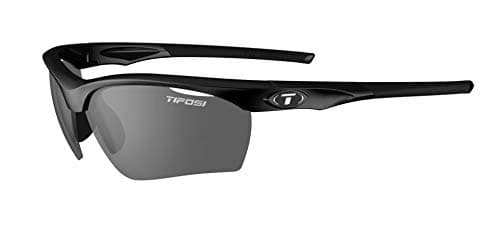
Tifosi Vero (Smoke Polarized)
Half-frame shieldPolarized optionHydrophilic gripVented lens
A half-frame sport shield built for ball sports — open top sightline, grippy, light.
- Glare control
- 8
- Optics
- 7
- Fit & coverage
- 9
- Durability
- 8
- Value
- 8
Pros
- +The half-frame leaves the top of your field of view unobstructed, which is exactly what you need looking up at a fly ball
- +Grip pads tack up with sweat so the frame does not shift when you run
- +Vented lens cuts the fogging that kills a sealed shield on a hot field
Cons
- −The polarized version dims LCD screens and can flatten some sky contrast — Tifosi's non-polarized lenses are the alternative for that
- −Half-frame gives up bottom coverage against low sun
Don't buy this if…
…you want maximum wraparound coverage. A full shield seals better; the Vero trades some of that for an unobstructed upward sightline.
The premium cycling shield
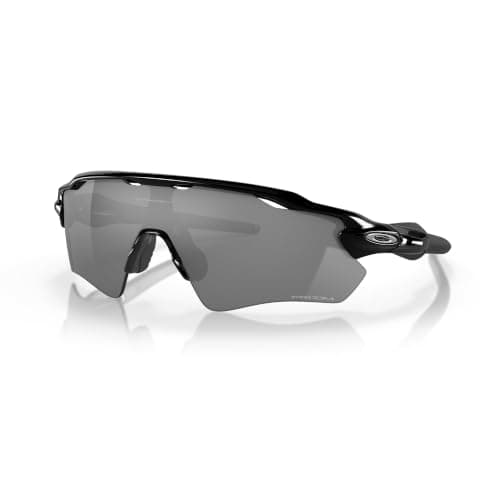
Oakley Radar EV Path (Prizm)
Prizm lensPlutoniteTall shieldUnobtainium grip
The pro-peloton default. Prizm contrast, huge coverage, and a price to match.
- Glare control
- 6
- Optics
- 10
- Fit & coverage
- 10
- Durability
- 9
- Value
- 5
Pros
- +Prizm tuning boosts the specific contrasts that matter on the road — you pick out cracks and gravel earlier
- +The tall Path lens gives coverage when you're down in the drops and looking up through the top of the lens
- +Oakley's Unobtainium grips tack up with sweat and the build lasts
Cons
- −Expensive — several times the Tifosi Rail for a contrast advantage most riders won't fully exploit
- −Prizm Road is not polarized (by design for cycling), so don't expect glare-off-water behavior
Don't buy this if…
…you're a value-focused rider. The Tifosi Rail delivers the coverage and lens options that matter for a quarter of the money.
Coverage without giving up the grip
goodr Bolt G (Polarized Wrap)
PolarizedUV400Vented wrap lensAdjustable nose piece
The OG's grip coating in a vented wrap — goodr for runners who want coverage rather than a lifestyle shape.
- Glare control
- 8
- Optics
- 7
- Fit & coverage
- 9
- Durability
- 7
- Value
- 8
Pros
- +A wrap lens seals out the low, side-on sun that gets straight past goodr's flat OG frame
- +The adjustable nose piece is the thing the OG does not have — it is how you stop a wrap sitting wrong on a narrow or a high bridge
- +Same polarized UV400 lens and no-slip grip coating as the rest of the goodr line, so nothing is traded for the extra coverage
Cons
- −Half again the price of the OG, which is a lot for goodr money
- −More lens close to your face means more to fog at a slow, humid pace than the open OG frame, vents or not
- −goodr colorways rotate constantly and each listing is one color in one size — the exact pair here may sell through
Don't buy this if…
…you want one pair that works on the run and at dinner. The wrap reads as sports equipment in a way the OG does not, and that is the entire point of it.
Best value on the course
Tifosi Swick
Grilamid frameSingle lensHydrophilic gripVery light
A light, low-cost golf-friendly frame that stays put through the swing.
- Glare control
- 6
- Optics
- 7
- Fit & coverage
- 7
- Durability
- 7
- Value
- 9
Pros
- +Extremely light and low-profile, so it doesn't intrude at address or through the swing
- +Grip pads tack up with sweat and heat — it stays on when you're walking 18
- +A fraction of the Oakley price for a frame that does the core golf job
Cons
- −The base lens is a general tint, not a green-reading contrast lens like Prizm Golf
- −Less coverage than a wrap in low-angle morning sun
Don't buy this if…
…you specifically want a contrast-tuned green-reading lens — that's the one thing the premium golf lenses do that this doesn't.
Wider faces wanting a light sport-casual frame
Tifosi Swank XL
Grilamid frameXL sizingHydrophilic gripVery light
The Swank scaled up — the light lifestyle-sport crossover for faces the standard size pinches.
- Glare control
- 5
- Optics
- 7
- Fit & coverage
- 8
- Durability
- 7
- Value
- 9
Pros
- +Solves the single most common complaint about light sport-casual frames: that they are too small for a wider face
- +Barely-there weight makes it comfortable for a long session on a court or a walk
- +Grip pads hold as you heat up rather than getting slicker
Cons
- −The base lens is a tint, not polarized — no glare-off-water benefit unless you choose a polarized option
- −Lifestyle shape means less coverage than a true sport shield in low sun
Don't buy this if…
…you need polarized glare control or full wrap coverage. This is a light everyday-and-easy-sport frame, and it is honest about that.
The cheapest polarized sport wrap worth owning
Duduma TR90 Polarized Sport
TR90 framePolarizedUV400Sport wrap
The internet's default cheap sport wrap — polarized, unbreakable-ish, everywhere.
- Glare control
- 7
- Optics
- 6
- Fit & coverage
- 8
- Durability
- 6
- Value
- 10
Pros
- +TR90 frame flexes instead of snapping — it survives being sat on
- +Polarized and UV400 at the bottom of the price range
- +The wrap shape controls side glare better than a flat lifestyle lens
Cons
- −Optics and coatings are exactly what the price implies
- −Fit is generic; no fine adjustment
Don't buy this if…
…you want optical precision or a coating that lasts years. This is a knock-around-and-replace pick.
Who each pick is for, and what is wrong with it
- goodr OG (Polarized) — Best for: road running, and the default for most people. goodr publishes a no-slip grip across its running range along with polarization and UV400 as standard, which matters for a practical reason: you cannot accidentally buy the version without the grip or without the polarized lens. The frame is light, the grip coating runs the length of the contact surfaces, and the whole thing costs little enough that you will not baby it — which is the real test of a running pair. Honest cons: one size per model with no adjustment anywhere, so if it does not fit your head it will not be made to; the optics are ordinary polycarbonate; the coatings are a season-or-two proposition rather than a decade; and the flat lens shape leaves the sides open to low sun and wind. Full write-up in the goodr review, and if you want to know what else does this job, we ranked the field in goodr alternatives.
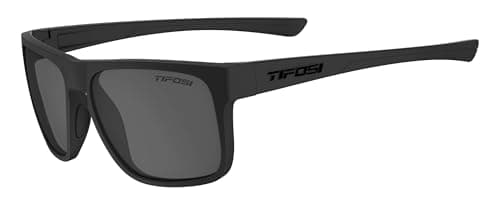
- Tifosi Vero (Smoke Polarized) — Best for:heavy sweaters and long runs. This is the strongest published retention claim on the page. Tifosi writes, on the Vero's own product page, that it added hydrophilic rubber nose and ear pads so its glasses stay in place, and lists the frame as a vented half frame with fully adjustable arms and hydrophilic pads that increase grip the more you sweat. That is a different and better mechanism than a grip coating: it is designed to improve exactly when a coating would be failing. The half-frame shield also leaves your upper sightline clear, and Tifosi publishes lifetime cover for manufacturer's defects to the original owner. Honest cons:it is a big frame that looks like race gear, which not everyone wants on a neighborhood run; the warranty explicitly excludes dropped, sat-on, scratched, lost or stolen pairs and charges shipping per claim; and a polarized lens on a road run has a real downside — it flattens the reflective cues that tell you a patch of asphalt is wet. See polarized vs non-polarized for the full trade-off.
- Oakley Radar EV Path (Prizm) — Best for:the benchmark, if you are willing to pay for it. Oakley's grip material is the reference point every other brand is implicitly competing with: SportRx describes Unobtainium as the proprietary grip technology embedded in all Oakley sport sunglasses, there to keep the frame securely on your face so you are not readjusting mid-effort, and the Three Point Fit system as one that evenly distributes weight between your temples and nose bridge rather than loading the nose. On a running frame, that weight distribution is at least as important as the rubber. The tall shield is also the most coverage here. Honest cons: it costs several times what the rest of this list does, and the grip math does not improve several-fold with it. The Prizm lens on this listing is a contrast lens, not a polarized one — fine for running, but not what you want if glare off water is the problem. And Oakley's published warranty is two years against defects, not lifetime, and covers neither scratches nor accidental damage.
- goodr Bolt G (Polarized Wrap) — Best for:keeping goodr's grip but adding coverage. The pick if your runs involve wind, dust, or sun low enough to come in from the side — the flat goodr shapes leave that gap and this one does not. goodr publishes a vented wrap lens with an adjustable nose piece here, which is the one adjustment the OG does not give you, and the CDC specifically recommends sunglasses that wrap around. Honest cons:it sits at the top of goodr's price range, there is no interchangeable lens for low light, and the wrap is a visible sport shape rather than a discreet one.
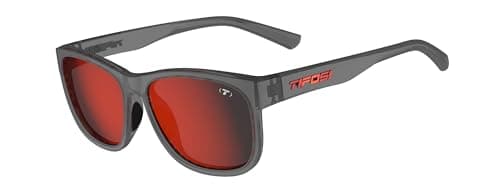
- Tifosi Swick — Best for:narrow and smaller faces, where slipping is really a sizing problem. Buying grippier rubber to fix a frame that is too wide for your head is treating a symptom. The Swick is Tifosi's small, very light Grilamid frame with the same hydrophilic grip as the rest of the sport range, and for a lot of runners it is the actual answer to this query. Honest cons: this listing is a single fixed lens and is not one of Tifosi's polarized options — if you need polarization, the Swank Polarized is the sibling to buy; there is no interchange; and it is a slim frame, so coverage is modest. The wider shortlist is in best sunglasses for small faces.
- Tifosi Swank XL — Best for: wide faces and larger heads. The other half of the sizing answer. A frame that is too small grips with pressure at the temples, that pressure eases as your head warms and swells slightly, and then the whole thing slides forward. The Swank XL is the scaled-up version of the same light Grilamid frame with hydrophilic grip. Honest cons: like the Swick this listing is not polarized, it is a lifestyle-sport crossover rather than a race shield, and there is no interchange. If a wide fit is your main constraint, read best sunglasses for big heads.
- Duduma TR90 Polarized Sport — Best for: the budget pick. A polarized TR90 sport wrap with rubber at the nose and temple tips, for a fraction of what the step-up picks cost. It does the mechanical job: light frame, rubber at both contact points, real polarization and UV400 per the listing. Honest cons: there is no published documentation behind the grip compound, so we cannot tell you it is hydrophilic rather than ordinary rubber; the coatings are basic; there is no warranty worth the name; and the fit is one generic size. Buy it as a second pair, or as a first sport pair while you work out what size you actually need. More at this level in best budget running sunglasses.
Grip coating vs hydrophilic rubber: the difference that matters
These two are used interchangeably in marketing copy and they are not the same thing. A grip coating is a textured or tacky surface applied where the frame touches you; it works dry and it works damp, and it wears off over a couple of seasons of use and cleaning. A hydrophilic compound is a rubber chosen because water makes it tackier — Tifosi's published wording is pads “that increase grip the more you sweat”. The practical difference shows up at the exact moment you care: thirty minutes into a hot run. If you are a light sweater on short runs, the coating is plenty and the goodr is the cheaper, better buy. If you finish runs with sweat running off your face, pay for the compound.
Neither one survives being caked in sunscreen. Oil-based sunscreen on your temples and the bridge of your nose will defeat any grip material made, which is worth knowing before you conclude the sunglasses are the problem. Our full guide to stopping sunglasses from slipping covers that and the other fixes for a pair you already own.
Should a running pair be polarized at all?
It depends where you run, and this is one of the few places where the honest answer argues against the lens this site is named for. Polarization is a filter that removes reflected, horizontally oriented light — the Cleveland Clinic describes it that way — and on a run that reflected light is sometimes information you want. A wet patch of road, a sheet of black ice, a puddle at the bottom of a hill: all of those announce themselves by glare, and a polarized lens quietly removes the announcement. If you run on roads in wet or freezing conditions, a non-polarized contrast lens is the safer choice.
If you run near water, on sand, or on bright concrete in summer, polarized is clearly better: the glare is the problem rather than the signal. Both lens types fully cover UV — the American Optometric Association recommends 99-100% UVA and UVB blocking at any price, and every pick here publishes it — so this is purely a visibility decision, not a safety one. Our ranked polarized list is best polarized running sunglasses.
Cheaper fixes to try before you buy anything
If the frame you own is the right size and the right weight and simply has slick arms, the fix costs a couple of dollars rather than the price of a new pair. Silicone ear-grip sleeves slide onto the temple arms and turn a smooth surface into a grippy one; a cotton retainer removes the problem entirely at the cost of looking like a retainer. We list both below because this page's own advice calls for them, not to pad the page out. For a frame that is the wrong size, neither helps, and a different frame is the only real answer.
The honest limit of this page
Nobody can tell you from a spec sheet whether a given frame will stay on yourface, because that depends on the width of your head, the shape of your nose bridge, how much you sweat and whether you wear a hat. What a spec sheet can tell you is which frames were designed for the problem and which were not, and that is what this page ranks. Buy from somewhere with a returns window, run in them once properly, and send them back if they move — that is a far better test than any amount of reading.
Choosing in four questions
Do your current sunglasses slide, or bounce?
Slide → it is grip or size. Start with the goodr OG, or the Swick or Swank XL if the fit is clearly wrong. Bounce → it is weight and coverage, so go to a light sport shield: the Tifosi Vero or the Radar EV Path.
How much do you sweat?
A little, on short runs → a grip coating is enough, and the goodr is the better value. A lot, or in heat → pay for the hydrophilic compound: the Tifosi Vero, or the Radar EV Path if budget is not the constraint.
Where do you run?
Roads in wet or cold weather → favor a non-polarized contrast lens, so the Radar EV Path with Prizm. Open sun, water, sand, summer concrete → polarized, so the goodr OG, the Bolt G or the Vero. Trails and dappled light → see best sunglasses for trail running.
Is the frame the right size for your head?
If you genuinely do not know, that is the thing to settle first — how to choose sunglasses sizeshows how to read the numbers on your current pair. Narrow → Swick. Wide → Swank XL. Standard → anything on this page.
The cheap stuff that matters
Essentials under $40
The add-ons this page already told you to get. None of these is scored — our rubric measures glare control, optics, fit, durability and value, and four of those mean nothing for a cleaning cloth. So you get a reason and a live price instead of a number we'd have had to invent.
SMARTTOP
SMARTTOP Silicone Eyeglass Ear Grips (18 pairs)
Soft sleeves that slide onto the temple arms so they grip skin instead of sliding on it. The cheapest real fix for a frame that is otherwise the right size.
Chums
Chums Original Cotton Retainer
The plain cotton eyewear keeper. Adjustable, washable, and the version most people mean when they say Croakies. Colorways vary on the listing.
#ad · Live prices as of November 23, 2026, hidden when our data goes stale. We may earn a commission, at no cost to you. How this works.
How we picked
We don't run a testing lab
We compile each pair's published specifications — lens material, polarization, coating, frame material, coverage, UV rating and price — normalize them, and score each against a published rubric. The scores are judgments from documented research; they are notmeasurements we took, because we don't own a lab and we're not going to pretend we do. Pairs we claim to have lab-tested: 0.
Questions
Frequently asked
What are the best no-slip running sunglasses?+
The goodr OG for most runners — goodr publishes a no-slip grip coating, polarization and UV400 across its whole range, so every listing has the grip, and the frame is light enough that there is little mass to bounce. If you sweat heavily, the Tifosi Vero is the better buy because Tifosi publishes hydrophilic rubber nose and ear pads that increase grip the more you sweat. The Oakley Radar EV Path is the premium benchmark, with Unobtainium grip at both contact points.
Why do my sunglasses slip down my nose when I run?+
One of three reasons. The contact points are smooth plastic with nothing to hold on to once your skin is damp; the frame is heavy enough that your stride shakes it loose; or the frame is the wrong width for your head, so it rests on your nose alone and walks downward. Sunscreen on the nose bridge and temples makes all three worse. The first two are solved by buying a lighter frame with rubber at the nose and ear; the third is not solved by any grip material, only by a different size.
Do hydrophilic rubber nose pads really grip better when you sweat?+
That is the published claim, and it is a design intent rather than something we measured. Tifosi states on its own product pages that it fitted hydrophilic rubber nose and ear pads so its glasses stay in place, and describes them as pads “that increase grip the more you sweat”. We have no lab, so we report the claim and who makes it. What we can say is that the mechanism is different from a grip coating: a coating works the same wet or dry and wears off over time, while a hydrophilic compound is chosen specifically because moisture makes it tackier.
Should running sunglasses be polarized?+
Only if your problem is glare rather than contrast. Near water, on sand or on bright summer concrete, polarized is clearly better. On roads in wet or freezing weather it is arguably worse, because polarization removes exactly the reflections that tell you a patch of asphalt is wet or iced. UV protection is identical either way. See
polarized vs non-polarized for the full comparison, and
best polarized running sunglasses if you have decided you want the filter.
Is a strap or retainer better than buying no-slip sunglasses?+
A retainer is the cheapest guaranteed fix and the least pleasant to wear; a silicone ear-grip sleeve is a better-looking middle option for a frame that is otherwise the right size. Neither fixes a frame that is the wrong width for your head, because the problem there is where the weight sits rather than how much friction there is. If you are going to buy a new pair anyway, buy one engineered for the problem and skip the accessory.
Are cheap running sunglasses grippy enough?+
Often, yes. The Duduma TR90 on this page has rubber at both contact points and a light frame, which is most of the mechanism. What you give up at that price is published documentation (we cannot tell you which rubber compound it is), coating life, and any fit range — one generic size. If that size happens to suit your head, a cheap sport wrap is a perfectly good answer, and
best budget running sunglasses has more of them.
Receipts
Sources
- Tifosi Optics - Vero product page (official, verbatim: “To ensure that our sun and safety glasses stay in place during your game, we’ve added hydrophilic rubber nose and ear pads”, with a spec list reading “Vented half frame, fully adjustable arms, hydrophilic rubber pads that increase grip the more you sweat” on a Grilamid TR-90 frame)
- Tifosi Optics - warranty information (official, verbatim: Tifosi will “warranty any sunglass against manufacturer’s defects to the original owner for the life of the product”; excludes normal wear and tear, lost, stolen, dropped, shattered, scratched or sat-on product, excludes scratched lenses, US residents and original purchaser only, does not cover prescription sunglasses, and carries a shipping and handling fee per claim)
- Tifosi Optics - Fototec vs Enliven vs Clarion vs Polarized: the honest Tifosi lens guide (official - states which Tifosi lens families are polarized and which are not, and that Fototec is the photochromic family)
- goodr - running sunglasses collection (published claims: polarized, UV400 and a no-slip, no-bounce grip across the running range)
- goodr - published product claims (polarized, UV400 and a no-slip grip coating across the range)
- goodr - Bolt G collection (published claims: vented wrap lens, adjustable nose piece, polarized, UV400)
- SportRx - Oakley sunglasses buyer’s guide (describes Unobtainium as the proprietary grip technology “embedded in all Oakley sport sunglasses” which “keeps the sunglasses securely on your face”, and the Three Point Fit System as frames that “evenly distribute weight between your temples and nose bridge”)
- Oakley - Prizm lens technology (official; Prizm is a contrast lens family and is sold separately from Oakley’s polarized options)
- Oakley - warranty policy (published US terms: eyewear warranted against breakage due to material or workmanship defect for two years from purchase with valid proof of purchase; scratches, accidental damage, loss and theft are not covered)
- Oberson - how to choose sunglasses for running and cycling (retailer guidance on coverage, venting, grip and lens choice for endurance sport)
- Cleveland Clinic - polarized vs non-polarized sunglasses (polarization described as a filter that removes reflected, horizontally oriented light)
- American Optometric Association - UV protection and sunglasses guidance (99-100% UVA and UVB blocking recommended at any price; lens darkness is not a measure of UV protection)
- CDC - sun safety (UV is strongest 10 a.m. to 4 p.m., reaches you on cloudy days, and reflects off water, cement, sand and snow; “Wear sunglasses that wrap around and block both UVA and UVB rays”)
We do not run a testing lab, and we do not pretend to. Where a spec or measurement came from a manufacturer or a third party, we name and link it. Where we could not verify something, we say so on the page rather than quietly leaving it out. Read our full method.