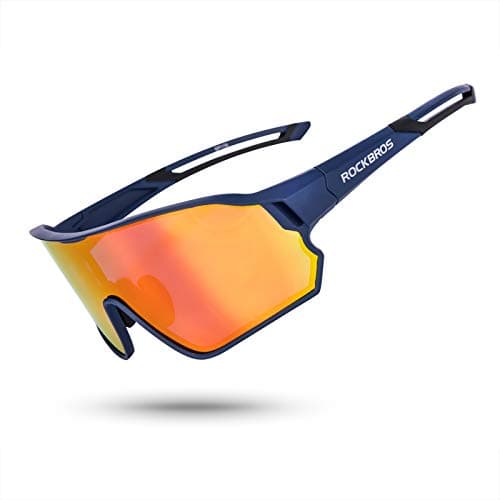
Are ROCKBROS sunglasses good? The short answer
Yes, for a cyclist on a budget — and especially for one who wears glasses. ROCKBROS is the cheapest reliable route to two features that normally cost several times more: a photochromic lens that darkens and clears with the light, and a myopia insert that puts your own prescription behind a wraparound sport frame. It is not good in the way a premium sport brand is good. The frame finish, the coating life and the optical clarity are all at the level the price implies, and you should expect to replace rather than repair.
The most useful way to think about it: ROCKBROS is a problem-solver at the bottom of the market rather than a cheap copy of something better. Most budget brands sell you a worse version of a normal pair of sunglasses. ROCKBROS sells you a feature that the mid-market mostly does not offer at all, with budget execution attached. If that feature is one you need, the trade is good. If it is not, a plain budget polarized pair will serve you better.
What to buy instead, at each price
Cheaper, and simpler: if you do not need photochromic or an insert, a plain budget polarized sport wrap costs less and gives you better glare control on the road and the water. The field is in best cheap polarized sunglasses.
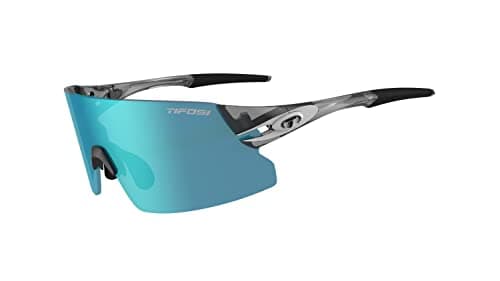
About double, and better built: a Tifosi interchange set gives you a proper clear low-light lens as well as a dark one, in a frame with better hinges and grip. That is the upgrade most riders should make when they are ready, and it is the third pick below.
Several times more, and a different class: a premium sport shield buys coverage, contrast tuning and a decade of coating life. Whether that premium is worth paying is argued in are expensive sunglasses worth it and, for the lens specifically, in the best polarized lenses, compared.
The rest of this review is the detail behind that verdict: what the photochromic lens really does, how the insert works, which ROCKBROS models are polarized, and exactly where the budget shows.
Why ROCKBROS is interesting
Most budget sunglasses brands compete on one axis: how cheaply can you make a polarized lens in a frame that does not snap. ROCKBROS is more interesting than that, because it ships two things at the bottom of the market that usually cost a great deal more — a photochromic lens that darkens and clears with the light, and a myopia insert that lets a glasses wearer use a wraparound sport frame with their own prescription.
Both of those are answers to real cycling problems rather than spec-sheet padding. Light on a ride changes constantly, and a single fixed tint is wrong at least once every time you go out. And glasses wearers are consistently underserved by sport eyewear, usually being told to buy prescription sports sunglasses at a price that dwarfs the bike computer on their handlebars. ROCKBROS addresses both for pocket money, and that is worth taking seriously even with the compromises attached.
The photochromic lens, honestly assessed
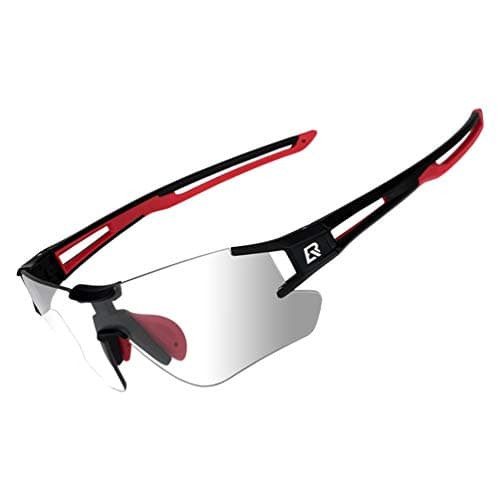
The lens genuinely works: it darkens in bright sun and clears in shade, so one lens covers a ride that starts in flat morning light and finishes in glare. For a rider who does not want to carry and swap spares, this is the correct mechanism, and it is arguably a better choice than polarization on a bike anyway — photochromic lenses do not dim a head unit screen or mask the sheen that tells you a corner is wet, both of which polarized lenses do. We make that argument in full in are polarized lenses good for cycling.
The limits are the ones every photochromic lens has, and they are worth knowing before you buy. The transition is slower in cold weather. The lens never gets as dark at its darkest as a dedicated bright-sun tint. And because the reaction is triggered by UV, photochromic lenses activate poorly behind a car windshield, which blocks most UV — so this is not the pair for driving. Our lens colors guide covers how photochromic compares with fixed tints.
The myopia insert
The insert is a small carrier that sits behind the main lens and holds two prescription lenses, which your optician glazes. It is the option almost nobody mentions to glasses-wearing cyclists, and for the right person it is the best answer available: full wraparound coverage, correct vision, nothing clipped to your face, and a total cost far below prescription sport sunglasses.
It is not free of drawbacks. An insert sits close to the eye and can fog on a hard effort or a slow climb. Optical quality depends on the insert being centered correctly for your pupils, which is worth asking your optician about rather than assuming. And you still need an optician, so it is not an off-the-shelf purchase. We cover all four prescription routes in our prescription polarized guide.
The polarized models
ROCKBROS also makes conventional polarized sport wraps, and these are the ones to buy if your use is not cycling. Polarization is the right choice for wet roads, driving and time near water, and the ROCKBROS polarized frames deliver it with the same light frames and wrap coverage. Just be deliberate about the choice: the photochromic model and the polarized model solve different problems, and buying the wrong one for your use is the most common ROCKBROS mistake.
Where the budget shows
Hinges. The consistent weak point across the line. The frames are light and the lenses are the interesting part; the hinges are ordinary and are the first component to loosen with repeated folding.
Coatings. As across this whole tier, expect fine scratching sooner than on a premium lens. On a photochromic lens this matters slightly more, because the photochromic layer is part of the lens system rather than a coating you can ignore.
Fit is fixed. Light frames, fixed nose pieces on most models, no size options. A wrap that does not seal against your face gives up much of the coverage advantage it was bought for.
No lens tuning. ROCKBROS does not do what Oakley's Prizm does — boosting the specific contrasts that make road surface detail register earlier. That is the honest gap between this brand and the premium sport shields, and it is covered in Oakley vs Tifosi.
ROCKBROS versus Tifosi
Tifosi is the natural step up, and it is the comparison worth making. Tifosi's sport models ship with a set of interchangeable lenses rather than one photochromic lens, which is the more flexible solution if you are willing to carry spares, and Tifosi's frames, hinges and grip materials are a clear tier above. ROCKBROS wins on price and on the elegance of not having to carry anything. If your rides are long and the light swings hard, the photochromic answer is genuinely nice; if you want the better-built frame and the option of a proper low-light lens, Tifosi is the buy. Both are ranked in our cycling sunglasses roundup.
Are ROCKBROS sunglasses worth it?
For a cyclist on a budget, especially one who wears glasses, yes — the photochromic lens and the insert together solve two genuine problems for less than the cost of a single premium lens. For anyone wanting the best optics, the most durable frame, or a lens tuned to a specific sport, no. ROCKBROS is a clever budget product with predictable budget compromises, and it is a much better first sport pair than a generic wrap for the rider it suits.