Buy brown or copper if you want the most useful driving lens: it lifts contrast against gray pavement and in haze, which is what helps you read the road. Buy neutral gray if you would rather reduce brightness without shifting color — a fair preference, and the better choice if your drive is mostly bright and open. Either way, buy it polarized, keep it in the standard category 3 darkness, and wear nothing tinted at all after dark.
Lens color is the cheapest upgrade in driving eyewear, because you choose it at the moment of purchase and it costs nothing extra. It is also where the most nonsense is sold. So this page separates the three things that actually matter — tint, polarization and darkness — and then deals with the yellow-lens question properly, because the evidence on that one is clear and it is not what the marketing says.
The tints, and what each is for
| Lens color | What it does | Best for |
|---|
| Brown, copper, amber | Lifts contrast; warms the image | Gray roads, haze, mixed light, long drives |
| Neutral gray / smoke | Reduces brightness evenly; truest color | Bright, open, high-sun driving |
| Green | Near-neutral with a slight contrast lift | A middle choice; the classic driving tint |
| Rose / red | Strong contrast, strong color shift | Flat overcast light; a preference, not a default |
| Blue, violet, dark mirrors | Block the most light | Bright open water and snow — not a road tint |
| Yellow | Raises apparent contrast in low light | Nothing, for driving — see the night section |
| Clear | Nothing optically | Night driving, if you want a physical barrier only |
Two independent sources support the shape of that table. The published tint guidance used in the fishing trade puts brown, amber and copper as the tints that "cover the broadest range of light situations", gray as "the best for seeing true colors", and blue and green mirrors as the very dark options at around 10% light transmission. And Tifosi's own lens guide describes smoke as the bright-conditions lens, clear as the low-light lens, and its contrast tint as the one for "cloudy or variable" light — while listing driving among the uses it recommends polarization for.
Polarization matters more than color
If you only change one thing, change this rather than the tint. The glare that tires you out on a bright drive is mostly reflected light: a sheet of white off a wet road, the sun off your own hood, a low sun smeared across a dirty windshield. Tifosi describes a polarized lens as one that filters "harsh reflected light that bounces off flat surfaces like water, snow, and pavement", and the Cleveland Clinic describes the same mechanism. A darker non-polarized lens dims that glare; a polarized lens removes it.
The one real caveat is your car rather than your eyes. Polarized lenses can dim or black out some LCD instrument clusters and head-up displays at certain head angles. Test your own car before you commit — sit in it, put the lenses on, tilt your head while looking at each screen. If a display disappears, a non-polarized brown lens is the sane alternative for that vehicle. The mechanism is in do polarized sunglasses block screens.
How dark, and why it is not a free choice
Darkness is measured as visible light transmission, and the published numbers are a useful reality check. SportRx's Ray-Ban lens guide publishes the classic G-15 lens at 15% transmission non-polarized and 11% polarized, which is standard category 3 territory — the right level for driving. Category 4 lenses, the very dark tints sold for glacier and high-altitude use, are not intended for driving and are not permitted for it in many places. A tint that makes a tunnel briefly disabling is not a safety feature.
Who each pick is for
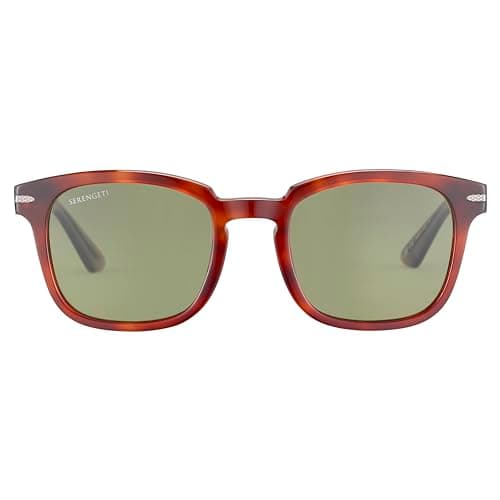
- Serengeti Ethan (Mineral Polarized 555nm)— the best driving lens here, and the reason is that it does not hold still. Serengeti publishes a photochromic mineral glass lens with its 555nm Spectral Control tint and 99.9% glare elimination, which is the combination driving actually asks for: contrast tuning plus a lens that lightens as the sun drops. Glass is heavier and this is the priciest option.
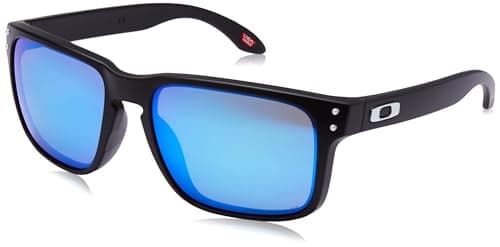
- Oakley Holbrook (Prizm Polarized)— for the driver who wants one everyday pair with a documented contrast lens and a genuine polarizing filter. Note the word Polarized in the name: a Prizm lens on its own is a contrast tint, not a polarized one.
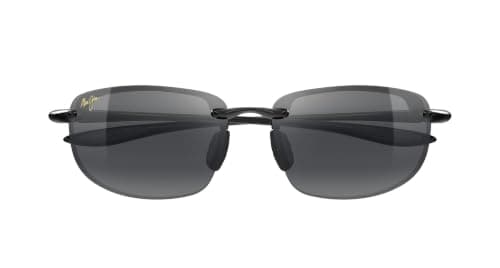
- Maui Jim Hookipa (PolarizedPlus2)— the premium everyday choice, for anyone who prioritises optical quality over everything else. Choose the tint deliberately: Maui Jim publishes both neutral and warm-contrast lenses in the same frame.
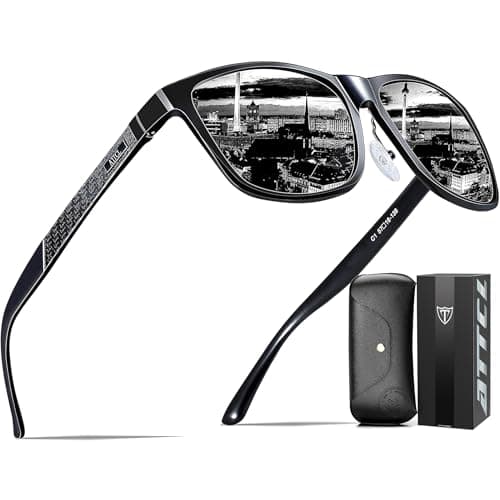
- ATTCL Polarized Al-Mg (Driving)— the budget answer and a genuine recommendation. A polarized Al-Mg frame that is light enough to wear all day and cheap enough to live in the car, which is where a driving pair should live. The brand is unfamiliar to most readers, so we reviewed it: ATTCL sunglasses review.
Night driving: the yellow-lens question, settled
Yellow lenses are sold specifically as night-driving glasses, and the best available evidence says they do not work. A driving-simulator study published in JAMA Ophthalmology in 2019 (Hwang, Tuccar-Burak and Peli) compared pedestrian detection with and without yellow-lens glasses, with and without headlight glare. The authors reported that yellow-lens night-driving glasses did not appear to improve pedestrian detection at night, that response times were marginally longer with the lenses in every condition though not significantly so, and that their findings do not support eye care professionals advising patients to use them.
The same study found headlight glare slowed detection far more for older participants — about 1.5 seconds against 0.3 seconds for younger ones. That is the real finding for anyone who has started dreading night driving: the problem is likely to be inside your eye rather than on the shelf. Any tint reduces the light reaching your retina, which is the opposite of what you want after dark.
What does help with night glare: a windshield cleaned on the inside as well as the outside, an up-to-date prescription, an anti-reflective coating on your own spectacle lenses, dipping your rear-view mirror, and getting cataract changes checked. The longer version is in can you wear sunglasses at night.
Specific conditions, specific answers
Driving into a low sun. The worst case, and tint is only part of the answer: you want a polarized brown or copper lens, a clean windshield and the visor down. We wrote the whole thing up in best sunglasses for driving into the sun.
Snow and bright winter roads.The brightest driving environment there is, and the one case for a darker lens — still category 3, still polarized, because the glare is reflected off a flat white surface. A mirror coating genuinely helps here.
Rain and spray. Polarized, and a contrast tint. Wet pavement is the textbook reflected-glare surface, and brown lifts the contrast between a dark road and darker markings.
Dusk.The hardest light to buy for. A lens dark enough for noon is too dark here, which is the best argument on this page for a photochromic lens — or for keeping a lighter second pair in the car. See best photochromic sunglasses.
Long days in a high cab. Different problem again, because the glare arrives from more angles and the day is longer. That is best sunglasses for truck drivers.
What about prescription glasses?
The tint logic is identical; only the route changes. A polarized clip-on or flip-up gives you the filter over your own frames with no bulk, a fit-over adds side coverage, and prescription sunglasses are the best experience at the highest cost. The driving-specific version of that decision, including the flip-up argument for tunnels, is in best fit-over sunglasses for driving.
The short version
Brown or copper, polarized, category 3, and a pair that lives in the car so you have it. Gray if you prefer true color. Photochromic if you drive at dusk a lot. Nothing tinted at night, and no yellow lenses at all. Everything else is preference, and preference is fine — just do not pay for a tint that the evidence says does nothing.
To turn the tint into a purchase, the driving sunglasses roundup ranks the field, and sunglasses lens colors explained covers every other use.
Pick your tint in 30 seconds
Mostly bright, open roads?
Neutral gray, polarized. Comfortable and color-true.
Mixed light, haze, gray pavement, rain?
Brown or copper, polarized. The most useful single driving tint.
A lot of dusk driving?
Photochromic, or a lighter second pair in the door pocket.
LCD dash or head-up display?
Test polarized in your own car first; if a screen blanks, take a non-polarized brown.
Night?
Nothing tinted. Clean the glass, check the prescription, and skip the yellow lenses.